
PongalCelebration
Celebrate Pongal Harvest Traditional Festivities with Happiffie, bringing Bhogi bonfires, Surya Pooja and Tamil culture to life.
2
Explore Other Festival celebrations
3
Explore Styles Celebrate By Style
4
View All Cities Popular Cities
Jaipur
300+ Celebrations Hosted
Royal Grandeur in Pink
Goa
350+ Celebrations Hosted
Where Celebrations Meet Sunshine
Chennai
500+ Celebrations Hosted
Tradition Meets Coastal Elegance
Hyderabad
400+ Celebrations Hosted
Heritage, Grandeur and Warmth
Kochi
250+ Celebrations Hosted
Where Heritage Meets Backwaters
Mumbai
600+ Celebrations Hosted
Bold Energy, Endless Celebrations
Bengaluru
450+ Celebrations Hosted
Modern Spirit, Creative Celebrations
Pune
350+ Celebrations Hosted
Culture, Charm and Celebration
Delhi
550+ Celebrations Hosted
Where History Meets Grandeur
Coimbatore
200+ Celebrations Hosted
Tradition Rooted in Tranquility
Kolkata
300+ Celebrations Hosted
Culture, Emotion and Celebration
Ahmedabad
200+ Celebrations Hosted
Tradition with Vibrant Energy
5
View All Popular Experiences
6
Festival Snapshot™
30+
Festival Types
500+
Festival Experiences
2000+
Celebration Venues
1500+
Event Partners
50+
Cities
1000+
Festivals Celebrated
12
Related Celebration Universes
Explore more ways to celebrate life.


Ready to Plan Your Pongal Celebration?
Hiya & Hanu are here to help you create unforgettable moments with the perfect venues, experiences, and trusted event partners—all in one place.

◆
Celebrating Pongal Harvest Traditional Festivities with Timeless Tamil Culture and Warmth
◆The Spirit Behind Pongal Harvest Traditional Festivities
Few celebrations capture the rhythm of rural and urban Tamil life quite like Pongal Harvest Traditional Festivities. Marked over four days across Tamil Nadu and by Tamil communities worldwide, this festival is a heartfelt tribute to the sun, the land and the farmers whose labour brings in the harvest. At its core, Pongal Harvest Traditional Festivities are about gratitude — thanking nature for abundance and welcoming a new agricultural cycle with warmth, colour and community spirit.
For many families, this is the year's most anticipated gathering. Homes are cleaned and decorated, kolam patterns stretch across doorsteps, and the aroma of freshly cooked sweet pongal fills kitchens from dawn. Whether celebrated in a modest home or organised as a larger community event, Pongal Harvest Traditional Festivities carry a sense of renewal that resonates deeply within Tamil culture. At Happiffie, we help individuals, families and organisations bring this festival to life with authentic touches, thoughtful planning and genuine respect for tradition.
Understanding Bhogi Celebrations, the First Day
The festivities begin with Bhogi celebrations, a day dedicated to letting go of the old to make way for the new. Traditionally, families light bonfires early in the morning, burning discarded household items as a symbolic act of renewal. Homes are given a thorough clean, and doorways are adorned with fresh kolams, often using rice flour and vibrant coloured powders.
Bhogi celebrations also mark the beginning of festive cooking, with many households preparing traditional sweets and savouries ahead of the main Pongal day. For event organisers or families hosting guests, Bhogi celebrations offer an excellent opportunity to set the tone for the days ahead — think decorative lighting, traditional music and a warm, welcoming atmosphere that signals the start of something meaningful.
Surya Pooja and the Significance of the Main Pongal Day
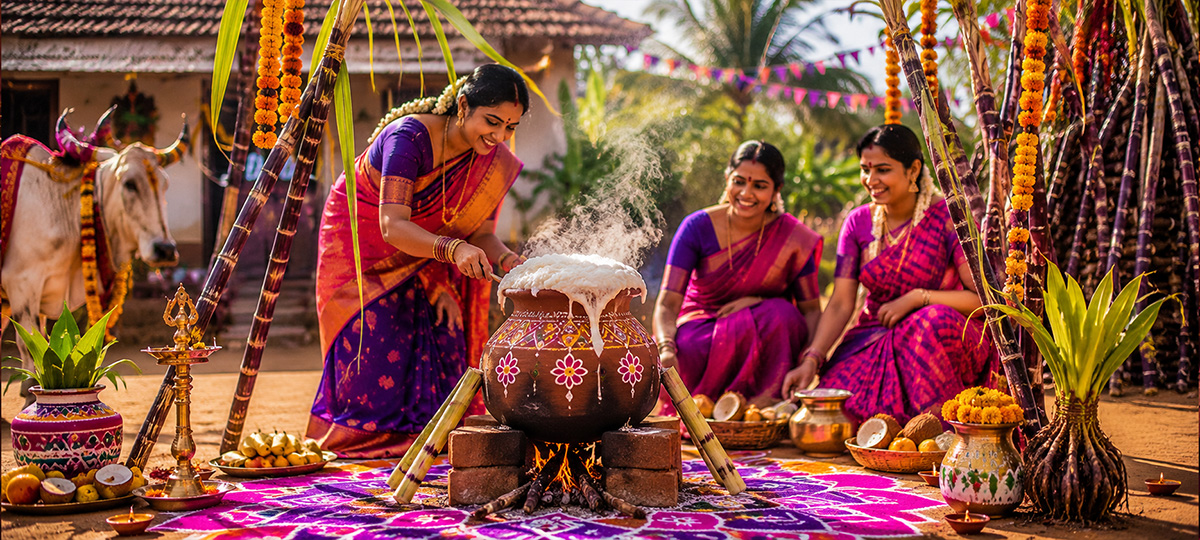
The second day is the heart of the festival, where the Surya Pooja takes centre stage. This ritual honours the sun god for nourishing crops throughout the year, and it culminates in the boiling over of milk and rice in a clay pot — a moment celebrated with joyful shouts of "Pongalo Pongal!" The overflowing pot symbolises prosperity and abundance for the year ahead.
Surya Pooja is typically performed at sunrise, often in the courtyard or an open space where the family gathers together. Fresh turmeric plants, sugarcane stalks and banana leaves are commonly used as decorative and ritual elements. For those planning a larger gathering, recreating an authentic Surya Pooja setup with the right props, seating and ritual arrangements can make the occasion feel deeply rooted in tradition, even in an urban setting. Happiffie's team can source traditional decor items, arrange priests where required, and manage the finer ritual details so the family can focus on the moment itself.
Mattu Pongal and Kaanum Pongal, Honouring Cattle and Community
The third day, Mattu Pongal, is dedicated to cattle, who are honoured for their role in agriculture throughout the year. Cattle are bathed, decorated with garlands, bells and painted horns, and offered a share of the harvest. This day reflects the deep connection between Tamil agrarian life and the animals that support it.
The fourth day, Kaanum Pongal, is about reconnecting with extended family and friends. Many families travel to visit relatives, exchange gifts and share festive meals together. It's a day built around togetherness, making it an ideal time for community events, family reunions or larger social gatherings that bring people back into the same space after a busy year.
Pongal Harvest Traditional Festivities as a Reflection of Tamizhar Thirunal
Pongal is often referred to as Tamizhar Thirunal, meaning the festival of the Tamil people, and this title speaks to how deeply embedded the celebration is within Tamil identity. Unlike festivals tied strictly to religious calendars, Pongal Harvest Traditional Festivities are rooted in the agricultural cycle and the solar calendar, making them a celebration shared across communities regardless of individual faith.
This inclusive, cultural nature is part of what makes Tamizhar Thirunal so special. It's not confined to temples or religious spaces — it plays out in homes, streets, villages and cities alike. Recognising this broader cultural significance helps organisers design events that genuinely honour the occasion, rather than reducing it to surface-level decor.
How Pongal Connects with Makar Sankranti Across India
While Pongal is unique to Tamil culture, it shares its timing and underlying theme with Makar Sankranti, celebrated across much of India as the sun's transition into Capricorn. Both festivals mark the end of winter and the beginning of the harvest season, and both centre around gratitude for the sun and the land.
Understanding this connection helps explain why the same period sees kite-flying in northern states, bonfires in the south, and various regional harvest celebrations across the country. For anyone planning a multicultural event or a workplace celebration with employees from different states, drawing this link between Pongal Harvest Traditional Festivities and Makar Sankranti can help create a celebration that feels inclusive of India's broader harvest traditions while still staying rooted in authentic Tamil customs.
Planning an Authentic Pongal Celebration
Whether you're hosting a family gathering, a community event or a corporate celebration, thoughtful planning makes all the difference in bringing Pongal Harvest Traditional Festivities to life. A few areas deserve particular attention:
Decor and setting: Kolam art, banana leaf motifs, sugarcane stalks and marigold garlands instantly create a festive, traditional atmosphere. Natural materials and earthy tones work well to reflect the harvest theme.
Food and catering: Sweet pongal, ven pongal, vadai, and traditional South Indian thalis are central to the celebration. Serving food on banana leaves adds an authentic touch that guests genuinely appreciate.
Ritual arrangements: If a Surya Pooja is part of your event, ensure appropriate ritual items, seating and space are arranged in advance, ideally with guidance from someone familiar with the traditional process.
Music and entertainment: Live folk music, traditional dance performances or a curated playlist of Tamil festive songs can elevate the atmosphere considerably.
Guest experience: For larger events, consider small cultural touches like kolam-making stations or traditional attire corners, which give guests something interactive to engage with beyond just eating and socialising.
Happiffie works with clients to bring each of these elements together, whether the celebration is an intimate family function or a large-scale community event.
Who Organises Pongal Celebrations
Pongal Harvest Traditional Festivities are celebrated by a wide range of hosts, including:
- Families hosting traditional home celebrations with extended relatives
- Housing societies and residential communities organising shared festivities
- Corporate offices celebrating cultural diversity among Tamil employees
- Cultural associations and community groups hosting larger public events
- Educational institutions introducing students to Tamil harvest traditions
Regardless of scale, the essence remains the same: honouring the harvest, the sun and the community that makes the celebration meaningful.
Why Choose Happiffie for Your Pongal Celebration
Happiffie brings genuine cultural understanding and event planning expertise together to help you host Pongal Harvest Traditional Festivities that feel authentic and memorable. From sourcing traditional decor and arranging Surya Pooja essentials to coordinating catering and entertainment, our team manages every detail with care and respect for tradition. We understand that Tamizhar Thirunal isn't just another event on the calendar — it's a deeply meaningful occasion that deserves thoughtful execution.
If you're planning Bhogi celebrations, a full four-day Pongal experience, or a single-day cultural gathering aligned with Makar Sankranti, Happiffie is ready to help you create a celebration rooted in authenticity. Get in touch with our team today to start planning a Pongal event that truly honours Tamil culture.
Frequently Asked Questions
1. What are Pongal Harvest Traditional Festivities?
Pongal Harvest Traditional Festivities are a four-day Tamil harvest festival celebrating gratitude to the sun and the land, marked by rituals, Surya Pooja, family gatherings and traditional food.
2. What is the significance of Bhogi celebrations on the first day?
Bhogi celebrations mark the start of Pongal and symbolise letting go of the old, with bonfires, home cleaning and kolam decorations preparing the household for the festive days ahead.
3. How is Surya Pooja performed during Pongal?
Surya Pooja is typically performed at sunrise, involving boiling milk and rice in a clay pot until it overflows, symbolising prosperity, accompanied by offerings and traditional decor.
4. Why is Pongal called Tamizhar Thirunal?
Pongal is known as Tamizhar Thirunal, meaning the festival of the Tamil people, because it is rooted in Tamil agricultural and cultural identity rather than a single religious tradition.
5. How is Pongal connected to Makar Sankranti?
Both festivals fall around the same time and mark the sun's transition and the start of the harvest season, though Pongal follows distinct Tamil customs and rituals.
6. What happens on Mattu Pongal and Kaanum Pongal?
Mattu Pongal honours cattle for their agricultural contribution, while Kaanum Pongal is dedicated to visiting family and friends, closing the festival on a note of togetherness.
7. Can Happiffie help organise a corporate Pongal celebration?
Yes, Happiffie helps corporates plan authentic Pongal celebrations, including decor, catering, cultural performances and ritual arrangements suited to office environments.
8. What food is traditionally served during Pongal celebrations?
Sweet pongal, ven pongal, vadai and South Indian thalis served on banana leaves are traditional staples central to any Pongal celebration.
9. How far in advance should I plan a Pongal event?
For a mid-sized celebration, 4 to 6 weeks of planning is usually sufficient, while larger community events may require 8 to 10 weeks for full coordination.
10. How do I book Happiffie for Pongal Harvest Traditional Festivities?
You can reach out through the Happiffie website or contact our events team directly to discuss your requirements for an authentic Pongal celebration.