
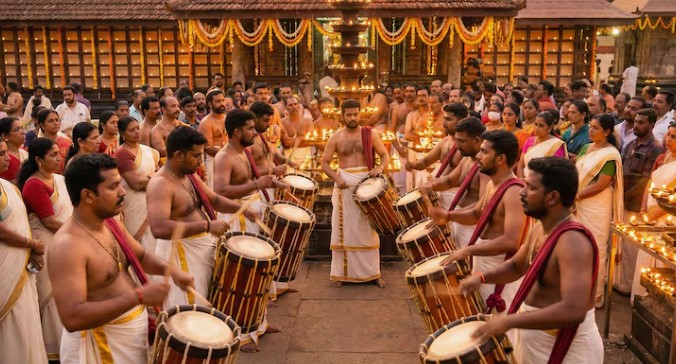
Sacred Sounds for Every Celebration
Entertainment in Vizag
Traditional Temple Instrument Ensemble in Vizag
A Traditional Temple Instrument Ensemble transforms any sacred occasion in Visakhapatnam into a deeply moving spiritual experience. From the resonant drone of the nadaswaram to the thunderous rhythm of the thavil and the ceremonial brass of panchamukha vadyam, these performers carry centuries of Andhra and Telugu devotional tradition. Whether you are planning a beachside wedding reception near RK Beach, a griha pravesham in Rushikonda, or a large upanayanam in MVP Colony, a temple music performers group anchors every ritual moment with authentic sound. Happiffie connects Vizag families with vetted ensembles offering mangalavadhyam performance and auspicious live music for pooja, ensuring every muhurtham rings with the right sacred energy.
Quick Answer
A Traditional Temple Instrument Ensemble is a group of trained musicians who perform classical South Indian ritual instruments — primarily nadaswaram, thavil, panchamukha vadyam, and shehnai — at weddings, poojas, and religious ceremonies. In Vizag, these ensembles are hired to mark auspicious moments such as the muhurtham, aarti, and processions, creating an authentic devotional atmosphere rooted in Andhra and Telugu cultural heritage.
What Is a Traditional Temple Instrument Ensemble and Why Does It Matter?
A Traditional Temple Instrument Ensemble is a curated group of hereditary or classically trained musicians who play sacred wind, percussion, and brass instruments specific to South Indian temple and wedding rituals. The core lineup typically includes the nadaswaram (a long double-reed wind instrument considered inherently auspicious), the thavil (a barrel drum played with padded fingers and a stick), and supporting instruments such as the ottu (drone pipe) and kombu (curved brass horn). In Vizag's Telugu Hindu community, no shaadi or upanayanam is considered complete without this soundscape. The ensemble does not merely provide background music — it marks precise ritual timings, signals the start of the muhurtham, accompanies the bride's procession, and sanctifies the space with vibrations considered to invite divine blessings. Engaging a proper Hindu ritual music band rather than a general DJ or folk group ensures every note aligns with Vedic custom and the specific requirements of your pandit or family elder.
The Core Instruments and Their Ceremonial Roles
Understanding what each instrument contributes helps you book the right configuration for your event. The nadaswaram is the centrepiece of any mangalavadhyam performance — its penetrating, joyful tone is believed to ward off negative energy and draw prosperity. The thavil provides rhythmic grounding, its loud, earthy beats energising the crowd during baraat-style processions even in Telugu weddings. Panchamukha vadyam, a rare five-instrument ensemble traditionally reserved for temple processions, is increasingly requested at premium Vizag weddings in venues like those along the Bheemunipatnam coastal belt. The shehnai, though more associated with North India, is also woven into Telugu ceremonies by classically trained devotional instrument troupes who blend regional styles. A classical Carnatic percussion group may additionally include mridangam and ghatam for more seated, meditative rituals such as satyanarayana pooja or satabhishekam. Each instrument type carries a distinct ceremonial purpose, so discussing your event programme with the ensemble lead before booking is essential.
How Much Does a Traditional Temple Instrument Ensemble Cost in Vizag?
Pricing for a Traditional Temple Instrument Ensemble in Visakhapatnam typically ranges from INR 8,000 to INR 60,000 per session, depending on ensemble size, duration, instrument rarity, and travel distance. A basic two-piece nadaswaram-thavil duo for a one-hour muhurtham slot generally costs between INR 8,000 and INR 15,000. A mid-tier five-piece Hindu ritual music band covering the full morning ceremony including the procession and aarti is priced from INR 20,000 to INR 35,000. Premium panchamukha vadyam ensembles or classical Carnatic percussion groups with senior hereditary musicians command INR 40,000 to INR 60,000 per event. Travel surcharges of INR 500 to INR 2,000 apply for venues in outlying areas such as Anakapalle or Bheemunipatnam. For destination events in Araku Valley resorts, overnight costs add INR 5,000 to INR 10,000 per musician. Always confirm whether microphone amplification equipment and a sound technician are included, as open-air venues near the beach or large banquet halls in Gajuwaka often need assisted amplification to carry the sound effectively.
Choosing the Right Ensemble Size for Your Vizag Celebration
Matching ensemble size to your event scale avoids both underwhelming intimacy and unnecessary expense. For private griha pravesham ceremonies in apartments or independent houses in areas like Seethammadhara or Madhurawada, a two- or three-piece devotional instrument troupe is ideal — intimate, non-intrusive, and deeply sincere. For mid-scale functions of 100 to 300 guests at convention halls in Dwaraka Nagar or Steel Plant area, a five-piece setup with full nadaswaram, thavil, ottu, kombu, and cymbals creates the right festive energy without overwhelming indoor acoustics. Large Telugu Brahmin or Kamma community weddings in standalone marriage gardens near NAD Junction or Kommadi with 500-plus guests call for a full mangalavadhyam performance team of eight to twelve musicians, sometimes amplified through a dedicated sound system. The auspicious live music for pooja component — typically a shorter, quieter seated recital during the homam — can often be handled by a subset of the larger ensemble at no extra cost if negotiated upfront.
What Should You Confirm Before Booking Temple Music Performers in Vizag?
Before finalising any Traditional Temple Instrument Ensemble, verify at least six key details. First, confirm the lead musician's lineage or training — hereditary nadaswaram vadhyars from families with documented temple affiliations bring unmatched authenticity to a South Indian ritual soundscape. Second, clarify the exact session duration and the number of breaks included; many families expect continuous performance across a three-hour muhurtham window, which requires artist rotation. Third, ask whether the troupe provides its own amplification equipment, especially important for large open-air venues near Vizag's coastal corridors. Fourth, discuss the specific ragas or ritual compositions your pandit requires — not all temple music performers know the full Sapta Swaras or occasion-specific kirtanas. Fifth, confirm cancellation terms; most ensembles in Vizag require 25–50% advance and have strict rescheduling policies during peak wedding season from October to February. Sixth, check whether the Hindu ritual music band has experience performing for your specific community's customs, as Telugu, Tamil, and Kannada wedding rituals differ in timing and composition requirements.
Traditional Temple Instrument Ensemble Setup Types Compared
Expert Recommendation
Best for intimate home ceremonies
Best for grand Telugu weddings with 500+ guests
Best for destination resort events in Araku Valley
Best for budget-conscious families
Best for traditional temple processions
Best for upanayanam and satyanarayana poojas
How to Choose the Right Option
✅ Pre-booking Checklist
- Confirm the lead musician's training lineage or hereditary temple affiliation before booking
- Share the full event programme and muhurtham timings with the ensemble lead at least four weeks ahead
- Clarify whether amplification equipment and a sound technician are included in the quoted price
- Ask the ensemble if they have performed for your specific community's customs — Telugu, Tamil, or Kannada rituals differ
- Negotiate a bundled rate if you need coverage for both the morning ceremony and evening reception
- Confirm cancellation and rescheduling terms, especially during peak season October to February
- Arrange a brief pre-event rehearsal or sound check, particularly for coastal or outdoor Vizag venues
- Coordinate with your caterer and decorator on stage space and seating to ensure musicians have adequate room
🎯 Selection Criteria
- Musical authenticity — does the ensemble use traditional instruments and classical compositions specific to Telugu ceremonies
- Experience with similar event scale — intimate home ceremony versus grand wedding with 500 guests requires different skill sets
- Availability and reliability — check whether the troupe has a backup plan if a lead musician falls ill
- Acoustic or amplified capability — confirm the setup matches your venue type, indoor hall or open outdoor space
- Flexibility in programme — can the ensemble adapt to last-minute timing changes from the pandit or family elders
- Clear pricing structure — ensure travel, setup, breaks, and overtime rates are itemised in the quote
💰 Cost / Quality Factors
- Ensemble size directly drives cost — each additional musician adds INR 2,000 to INR 5,000 to the session fee
- Instrument rarity — panchamukha vadyam and certain brass instruments command a premium due to few trained practitioners
- Venue distance — travel beyond 30 km from central Vizag typically attracts a surcharge
- Session duration — overtime beyond the contracted hours is billed at 20–30% of the hourly rate
- Season and date — auspicious Telugu calendar dates command 15–25% premium pricing across all entertainment categories
- Amplification inclusion — PA system rental can add INR 3,000 to INR 8,000 if not provided by the ensemble
⚠️ Common Mistakes to Avoid
- Booking a generic folk music group instead of a trained traditional temple instrument ensemble for sacred rituals
- Overlooking venue acoustics — not testing whether nadaswaram volume works indoors without distortion
- Failing to communicate the pandit's specific raga or composition requirements to the ensemble lead
- Not confirming whether the quoted price includes breaks, travel, and overtime to avoid surprise charges
- Leaving the booking too late — peak season availability for authentic ensembles in Vizag dries up three months ahead
- Ignoring space requirements — a twelve-piece ensemble needs at least 15 square metres of dedicated stage area
People Also Ask
What instruments are included in a traditional temple instrument ensemble?
How early should I book a temple music performers group in Vizag?
Is a traditional temple instrument ensemble suitable for destination weddings in Araku Valley?
Can a devotional instrument troupe perform at both the muhurtham and the evening reception?
What is the difference between a nadaswaram duo and a full mangalavadhyam performance?
Do temple music performers in Vizag provide their own sound equipment?
What is the typical session length for a temple ensemble at a Telugu wedding?
Is amplification necessary for a traditional temple instrument ensemble at a beachside venue in Vizag?
Related Experiences on Happiffie
Sacred Music for Every Delhi Ceremony
Sacred Sounds for Every Ceremony
Authentic Homemade Wedding Delicacies
Live Music That Moves Vizag
Sacred Sounds for Your Delhi Wedding
All Wedding & Event Services
Frequently Asked Questions
What does a traditional temple instrument ensemble typically include for a Telugu wedding in Vizag?
How much does a traditional temple instrument ensemble cost for a one-day wedding in Visakhapatnam?
Can I book a traditional temple instrument ensemble for a griha pravesham in a Vizag apartment complex?
Do traditional temple instrument ensemble performers in Vizag know community-specific Telugu rituals?
Is a traditional temple instrument ensemble required for a satyanarayana pooja or only for weddings?
What neighbourhoods in Vizag have the highest availability of temple music performers?
Can a traditional temple instrument ensemble perform at outdoor beach wedding venues in Vizag?
How do I compare and shortlist a traditional temple instrument ensemble on Happiffie for my Vizag event?
Key Takeaways
- A Traditional Temple Instrument Ensemble anchors Telugu wedding and pooja rituals with authentic nadaswaram, thavil, and brass instruments rooted in Andhra devotional tradition.
- Pricing in Vizag ranges from INR 8,000 for a basic nadaswaram duo to INR 60,000 for a full mangalavadhyam performance with twelve musicians.
- Ensemble size should match your guest count — a two-piece duo suits intimate home ceremonies while grand wedding venues near Kommadi or NAD Junction need eight or more musicians.
- Always confirm instrument lineup, session duration, amplification, and community-specific repertoire before signing a booking agreement.
- Peak Telugu wedding season from October to February requires bookings three to six months in advance for reputed ensembles.
- Coastal and outdoor Vizag venues require dedicated PA systems even for traditionally acoustic nadaswaram-thavil performances.
- Happiffie allows you to compare vetted traditional temple instrument ensemble options across Vizag neighbourhoods with transparent pricing and direct enquiry.
Book Your Sacred Ensemble for Vizag
Connect with verified Traditional Temple Instrument Ensemble performers across Visakhapatnam — from intimate home poojas to grand wedding celebrations.
Get Free Quotes
Are you a Vendor? Grow Your Business with Happiffie!
- High intent verified leads
- Reverse auction opportunities
- AI business tools & insights
- Dedicated vendor dashboard
- Grow your business, your way
It's free & takes less than 2 minutes!