
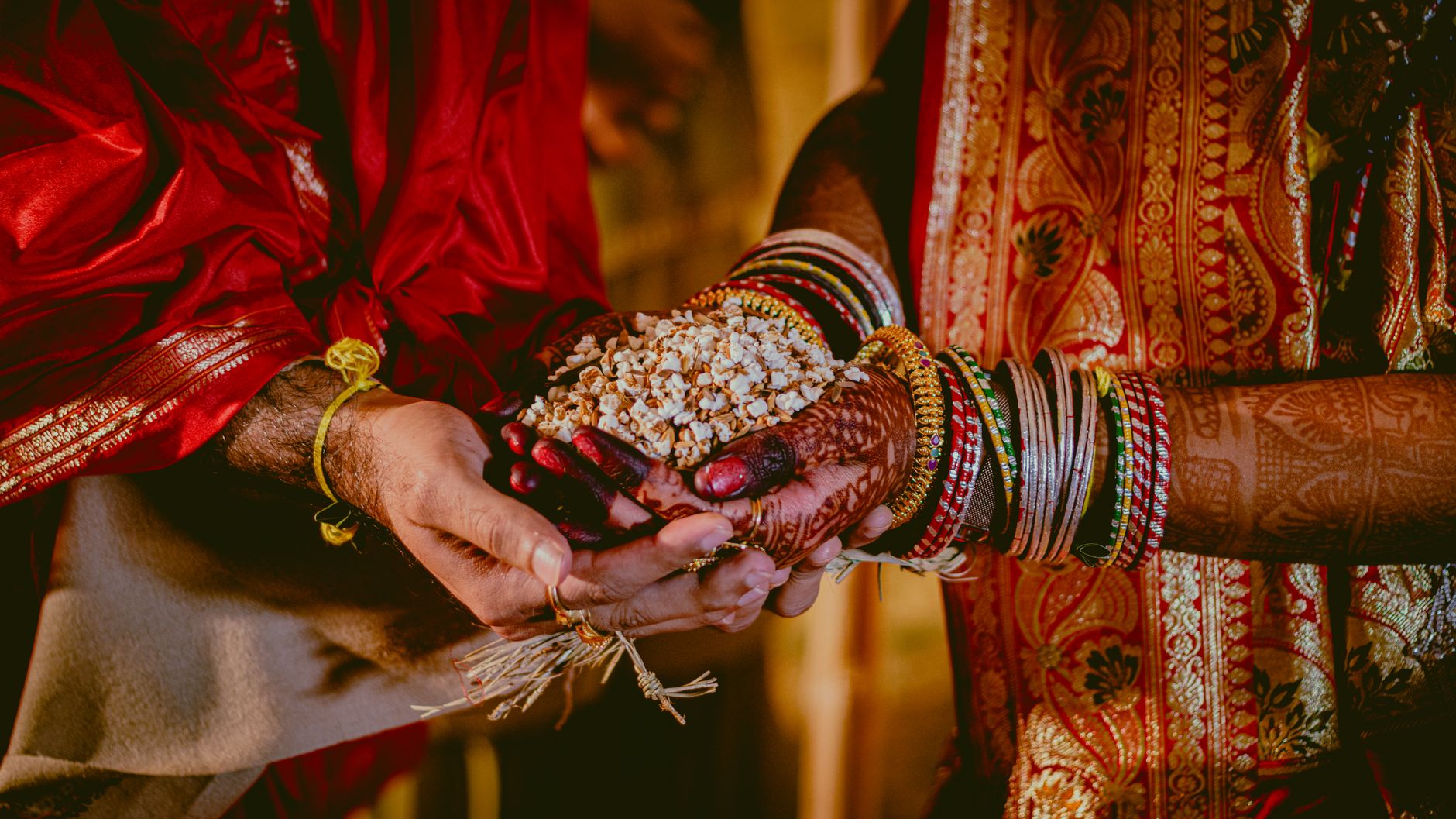
Sacred Samagri for Your Karnataka Wedding
Religious cermony in Munnar
Karnataka Traditional Marriage Items for Munnar Weddings
Munnar's misty hills and serene resort venues have quietly become one of South India's most sought-after destinations for intimate and mid-size weddings. Couples from Karnataka and Kerala are increasingly choosing these lush estates to exchange vows — but sourcing authentic Karnataka Traditional Marriage Items in an unfamiliar hill-station city requires careful advance planning. From the sacred panchapatra and udharini to the symbolic kankanam and turmeric-dyed mango-leaf toran, every article carries deep ritual meaning in a Kannada vivaha samagri checklist. Happiffie connects you with verified suppliers and South Indian wedding pooja essentials so your ceremony stays true to tradition, even 500 km from Bengaluru.
Quick Answer
Karnataka Traditional Marriage Items are the ritual objects, sacred materials, and ceremonial accessories required for a Kannada Hindu wedding — including panchapatra-udharini sets, kankanam thread, turmeric, betel leaves, coconuts, mango-leaf torans, and Kanakabhisheka gold. When planning a destination ceremony in Munnar, these items must be sourced or couriered in advance because local hill-station markets rarely stock the full range of South Indian wedding pooja essentials. Budget roughly ₹15,000–₹60,000 for a complete ritual supply kit depending on guest count and ceremony elaborateness.
What Are Karnataka Traditional Marriage Items and Why Do They Matter?
Karnataka Traditional Marriage Items are the physical embodiments of Vedic and regional Kannada customs that make a wedding spiritually valid and culturally complete. The list typically spans five broad categories: puja vessels (panchapatra, udharini, kalasha), sacred consumables (turmeric, kumkuma, sandalwood paste, akshathe — the yellow rice grains), organic ritual elements (betel leaves, areca nuts, coconuts, mango leaves, banana stems), ceremonial textiles (silk vastras, kashi yatra dhoti, kankanam threads), and auspicious ornaments linked to the Kanakabhisheka gold-shower ritual. Each item has a specific moment in the vivaha sequence where it is used, from the Naandi ceremony on the eve of the wedding to the Saptapadi fire ritual and the Mangalya Dharana. Missing even one category can interrupt the priest's rhythm and require last-minute scrambling. In a destination city like Munnar — where retail focus is tea, spices, and tourism — this makes pre-planning your Kannada vivaha samagri list non-negotiable.
Sourcing Hindu Wedding Ceremony Supplies in Munnar: What Is Realistically Available?
Munnar's local market in the town centre and the Mattupetty Road shops do carry everyday puja items — camphor, agarbatti, kumkuma, and loose flowers — but they rarely stock the specialised Karnataka Traditional Marriage Items that a full Kannada vivaha demands. Items like the traditional silk uttariya cloth, the specific silver panchapatra sets, or the particular variety of akshathe rice are almost never found here. What Munnar does offer in abundance is fresh banana stems, marigold garlands, jackfruit leaves, and fresh coconuts from nearby farms, which satisfy a good portion of the organic ritual elements list. For everything else, the most reliable approaches are: (1) courier from Bengaluru or Mysuru 7–10 days before the wedding, ensuring temperature-stable packing for fragile clay and brass items; (2) request your resort or Munnar destination wedding planning coordinator to liaise with a Kochi-based supplier who can deliver to the hills; or (3) use Happiffie's vendor network to pre-book a ritual supply package through a Karnataka-based seller who ships pan-India. Hindu wedding ceremony supplies sourced early prevent the most common last-minute chaos at hill-station weddings.
Complete Kannada Vivaha Samagri Checklist for a Munnar Ceremony
A well-organised Kannada vivaha samagri list removes ambiguity between families, priests, and suppliers. Core vessel items: brass or silver panchapatra with matching udharini (min. two sets — one for each family), a copper kalasha with coconut and mango leaves, and a small silver or brass deepa (lamp). Sacred powders and grains: turmeric whole and powdered, kumkuma, sandalwood powder, vibhuti, and at least 2 kg of akshathe rice dyed yellow. Organic materials: 21 or 108 betel leaves (quantity depends on your family tradition), areca nuts, 11 coconuts minimum, banana stems for mandap pillars, and fresh mango-leaf strings. Ceremonial threads: kankanam (yellow or red thread for tying on the wrist), the sacred yagnopavita if the groom is from a brahmin family, and separate mouli threads for guests. Ritual textiles: two sets of fresh silk vastras (one for the bride, one for the groom), the kashi yatra costume set, and a hand-woven cotton uttariya. Finally, if your family follows the Kanakabhisheka tradition, a measured quantity of gold ornaments or gold coins designated for the ritual must be pre-arranged and stored safely. This is the backbone of Karnataka Traditional Marriage Items regardless of venue.
How Does a Kerala-Karnataka Cross-Cultural Wedding Change the Samagri Requirements?
Many Munnar weddings are Kerala-Karnataka cross-cultural weddings where the bride's family follows Malayali traditions and the groom's follows Kannada customs — or vice versa. This creates a layered samagri requirement that is larger than either tradition alone. On the Karnataka side, traditional bridal trousseau items such as the Dharwad-style gold necklace set, the green glass bangles (symbolising prosperity), and the kum-kum bharani (a decorated box for sindoor) are essential. On the Kerala side, the nirapara (a brass vessel of paddy grains), the ashtamangalya set, and white-and-gold kasavu silk sarees take precedence. Sharing a single mandap for both traditions — which many eco-friendly resort venues in Munnar now accommodate — requires your priest to merge the two ritual sequences without omitting either family's South Indian wedding pooja essentials. Happiffie recommends booking a bilingual priest (fluent in Kannada and Malayalam mantras) at least 60 days ahead, as availability in Munnar is limited. A combined samagri checklist from both families, reconciled with the priest, should be finalised 30 days before the ceremony to give couriers and vendors adequate lead time.
What Does a Full Karnataka Traditional Marriage Items Package Cost in Munnar?
Pricing for Karnataka Traditional Marriage Items in the context of a Munnar destination wedding depends on three variables: the number of guests, the elaborateness of rituals, and the sourcing method. For an intimate ceremony of 30–60 guests, a basic samagri kit (vessels, consumables, organic items, threads) sourced from Bengaluru and couriered costs approximately ₹12,000–₹20,000 including transport. A mid-range kit for 100–150 guests with full Kanakabhisheka gold-shower accessories and premium silk vastras typically falls between ₹30,000–₹55,000. Adding professional wedding ritual decoration setup — the mandap frame, floral columns, brass lamp stands, and silk canopy — can push the combined materials-and-décor budget to ₹80,000–₹1,50,000 for a resort lawn ceremony. Couples who choose eco-friendly wedding ceremony products (clay diyas instead of plastic, organic cotton wicks, chemical-free kumkuma) pay a 15–20% premium but benefit from alignment with Munnar's eco-sensitive hill-station environment, which some resort venues now mandate. Book samagri suppliers through Happiffie to compare verified quotes and avoid paying tourist-price markups that offline Munnar vendors sometimes apply to out-of-state families.
Karnataka Traditional Marriage Items: Sourcing Options Compared for Munnar Weddings
Expert Recommendation
Best for Intimate Celebrations (Under 50 Guests)
Best for Kerala-Karnataka Cross-Cultural Weddings
Best for Large Guest Counts (200+)
Best for Budget-Conscious Couples
Best for Eco-Sensitive Destination Venues
Best for Traditional Families Prioritising Full Ritual Sequence
How to Choose the Right Option
✅ Pre-booking Checklist
- Confirm the full ritual sequence with your priest and extract a ceremony-specific samagri list before buying anything
- Separate your list into three groups: courier from Karnataka, buy fresh in Munnar, and request from resort
- Place orders for Karnataka Traditional Marriage Items at least 21 days before the wedding date
- Pack fragile items — brass panchapatra, clay kalasha, glass bangles — individually in bubble wrap inside a hard-shell suitcase
- Confirm your resort's policy on open-flame rituals (yagna fire) and eco-sensitive materials before finalising the mandap setup
- Assign one family member to cross-check the samagri checklist against deliveries 48 hours before the ceremony
- Keep a small emergency kit (extra kumkuma, camphor, betel leaves, mouli thread) in hand luggage in case a courier is delayed
- Photograph each item category on arrival in Munnar so the priest can verify completeness before the ceremony morning
🎯 Selection Criteria
- Authenticity: does the supplier provide region-specific Karnataka items or generic South Indian alternatives?
- Completeness: can a single vendor supply all five samagri categories — vessels, consumables, organics, threads, and textiles?
- Delivery reliability: does the vendor have a track record of delivering to hill-station destinations on schedule?
- Priest alignment: has your Kannada priest reviewed and approved the vendor's product list for ritual suitability?
- Eco-compliance: do the products meet your Munnar venue's sustainability requirements?
- Price transparency: are costs quoted in INR with clear breakdowns for each item category?
💰 Cost / Quality Factors
- Guest count directly scales the quantity of akshathe, betel leaves, coconuts, and kankanam thread needed
- Ceremony elaborateness (number of sub-rituals) determines whether you need a 40-item or 100-item samagri list
- Sourcing distance from Karnataka adds courier costs of ₹800–₹3,000 depending on package weight and speed
- Premium materials (silver vs. brass vessels, pure silk vs. art silk vastras) can double the core samagri budget
- Eco-friendly wedding ceremony products carry a 15–20% price premium over conventional equivalents
- Last-minute sourcing in Munnar can cost 40–60% more than pre-planned orders from Bengaluru
⚠️ Common Mistakes to Avoid
- Assuming Munnar local markets stock the full Kannada vivaha samagri list — they do not
- Ordering samagri without first getting a ceremony-specific list from your priest, leading to wrong items or quantities
- Ignoring transit time — a 7-day courier timeline is the minimum; during peak wedding season, add 3 extra buffer days
- Forgetting to separate Kanakabhisheka gold items from bulk samagri boxes, causing confusion during the ceremony
- Not confirming eco and fire-safety policies with the Munnar resort before planning the yagna or open-flame rituals
- Treating traditional bridal trousseau items as optional add-ons rather than as ceremonially significant items with fixed ritual timing
People Also Ask
Which Karnataka Traditional Marriage Items are hardest to find in Munnar?
How far in advance should I book a Kannada priest for a Munnar wedding?
Can I use eco-friendly alternatives for traditional wedding samagri without violating ritual rules?
What is the Kanakabhisheka ritual and what items does it need?
Is it possible to have a Munnar destination wedding while keeping Karnataka traditions intact?
How many betel leaves and coconuts are typically needed for a Kannada wedding with 100 guests?
What is the difference between Kannada vivaha samagri and a generic Hindu puja kit?
Can Happiffie help me source traditional bridal trousseau items along with ceremony supplies?
Related Experiences on Happiffie
Sacred Sounds for Your South Indian Wedding
Kannada Vivaha Items Delivered to Ooty
Sacred Supplies for Your Mumbai Wedding
Authentic Gujarati Lagna Essentials in Munnar
Dream Destination Weddings, Crafted in Mumbai
Authentic Malayalam Weddings in Kolkata
Wear Green, Celebrate Beautiful
Celebrate Two Worlds, One Wedding
Frequently Asked Questions
What are the must-have Karnataka Traditional Marriage Items that cannot be substituted?
Can I courier Karnataka Traditional Marriage Items to a Munnar resort safely?
How do I find a Kannada priest in Munnar for a Hindu wedding ceremony?
What is akshathe and how much do I need for a 100-guest Munnar wedding?
Are there Munnar vendors who specialise in South Indian wedding pooja essentials?
How do Karnataka Traditional Marriage Items differ by sub-caste or regional community?
Is the Kanakabhisheka ritual mandatory in all Karnataka weddings?
What is the best time of year to hold a Karnataka traditional wedding in Munnar?
Key Takeaways
- Karnataka Traditional Marriage Items cover five categories — puja vessels, sacred consumables, organic elements, ceremonial threads, and ritual textiles — all required for a complete Kannada vivaha.
- Munnar's local markets supply fresh organics well but almost never stock specialised Kannada vivaha samagri; plan to courier the majority from Bengaluru or Mysuru at least 21 days ahead.
- A basic samagri kit for 30–60 guests costs ₹12,000–₹20,000; a full elaborated package with wedding ritual decoration setup for 100–150 guests ranges from ₹80,000–₹1,50,000.
- Kerala-Karnataka cross-cultural weddings in Munnar require a reconciled dual-tradition checklist and a bilingual priest booked at least 60 days in advance.
- Eco-friendly wedding ceremony products are increasingly mandated by Munnar's eco-sensitive resort venues; clay diyas, organic turmeric, and natural-dye silks satisfy both ritual and venue requirements.
- Happiffie's verified vendor network lets couples compare INR-priced samagri packages remotely, avoiding tourist-rate markups from unfamiliar local vendors.
- A dedicated family samagri coordinator who cross-checks deliveries 48 hours before the ceremony is the single most effective safeguard against last-minute ritual disruptions.
Plan Your Karnataka Wedding in Munnar with Happiffie
Browse verified samagri suppliers, bilingual priests, and Munnar resort packages — compare prices in INR and book everything in one place.
Explore Wedding Vendors
Are you a Vendor? Grow Your Business with Happiffie!
- High intent verified leads
- Reverse auction opportunities
- AI business tools & insights
- Dedicated vendor dashboard
- Grow your business, your way
It's free & takes less than 2 minutes!