
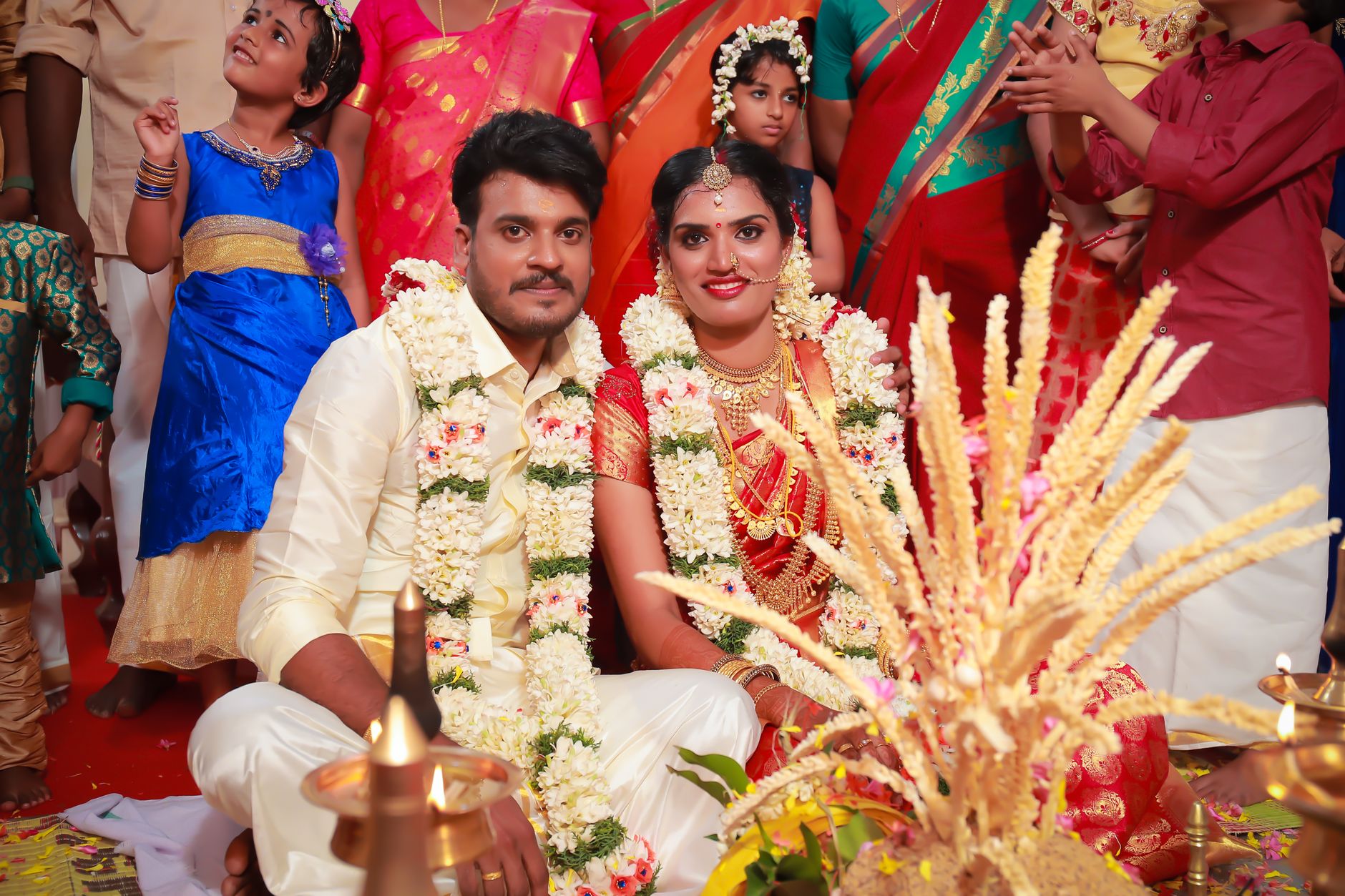
Authentic Kannada Wedding Rituals in Kumarakom
Religious cermony in Kumarakom
Kannada Sacred Marriage Articles for Kumarakom Weddings
Kumarakom's serene backwater setting has become a sought-after destination for couples seeking a spiritually grounded celebration, and sourcing the right Kannada Sacred Marriage Articles is the first step toward an authentic ceremony. From the sacred mangalsutra and akshata to the panchapatra and darbha grass, every item used in a Kannada Vivaha Samagri kit carries centuries of Vedic meaning. Happiffie connects you with verified ritual suppliers, experienced priests, and Kerala backwater wedding venues so that your Shastriya marriage ceremony materials arrive complete, correctly blessed, and ready for every muhurta-specific ritual that tradition demands.
Quick Answer
Kannada Sacred Marriage Articles are the collection of religiously mandated objects — including akshata, darbha, panchapatra, mangalsutra, and homam materials — used in a traditional Kannada Hindu wedding. Each item corresponds to a specific Vedic ritual step. In Kumarakom, couples can source complete Kannada Vivaha Samagri kits through local suppliers or curated marketplace platforms, ensuring every article is ritually pure and available before the auspicious muhurta begins.
What Are Kannada Sacred Marriage Articles and Why Do They Matter?
Kannada Sacred Marriage Articles are the tangible, Vedic-sanctioned objects without which a traditional Kannada wedding cannot be considered shastrically complete. The list typically includes darbha (sacred grass), akshata (turmeric-coated rice), panchapatra and uddharini (vessel and spoon for holy water), tambula (betel leaves and areca nuts), coconuts, turmeric, kumkum, ghee for homam, and the mangalsutra itself. Each article maps directly to a specific ritual — for example, akshata is showered at the time of Saptapadi, while darbha is used to purify the ceremonial space. Sourcing Kannada wedding pooja essentials from a knowledgeable supplier ensures that quantities are correct, items are ritually pure, and nothing delays a time-sensitive muhurta. Families planning a Kumarakom destination wedding often underestimate how difficult it can be to find authentic Karnataka-style ritual goods in Kerala, making advance procurement and supplier verification absolutely critical.
The Complete List of Kannada Vivaha Samagri for a Kumarakom Ceremony
A standard Kannada Vivaha Samagri checklist for a mid-scale ceremony in Kumarakom typically spans 40 to 60 individual items. Core homam materials include ghee, samidha (sacred firewood sticks), and navadhanyas (nine grains). Ritual vessels such as the panchapatra, kalasha, and banana-leaf plates are essential for abhishekam and mangala snanam stages. Decorative and auspicious items — banana stems, mango leaves, and marigold garlands — frame the mandap in line with Kannada convention. Shastriya marriage ceremony materials for the Naandi and Gotra Pravara rituals require specific dried herbs and copper coins. When booking through Happiffie, families can request a ceremony-specific samagri manifest from their assigned priest, cross-checked against the exact number of rituals planned, so nothing is purchased twice and nothing is missed.
How Much Does Sourcing Kannada Sacred Marriage Articles in Kumarakom Cost?
Pricing for Kannada Sacred Marriage Articles in Kumarakom varies based on the scale of the ceremony, the purity grade of materials, and whether items are shipped from Bengaluru or Mysuru versus sourced locally in Kerala. A basic Kannada wedding pooja essentials kit for an intimate 50-guest ceremony typically costs between INR 8,000 and INR 15,000. A comprehensive kit for 200 or more guests, including homam samagri, multiple kalashas, and premium silk vastras for the couple, can range from INR 25,000 to INR 50,000. Shipping Kannada Vivaha Samagri from Karnataka to Kumarakom adds INR 800 to INR 2,500 depending on weight and speed. Families opting for a Kerala backwater wedding venue should budget an additional INR 3,000 to INR 6,000 for mandap-dressing materials not typically stocked by Kerala-based vendors. Always request an itemised quote so you can verify against your priest's ritual checklist.
Choosing the Right Wedding Priest Services in Kumarakom for Kannada Rituals
The quality of your Kannada Sacred Marriage Articles is only as meaningful as the priest who knows how to deploy them correctly. In Kumarakom, most local priests are trained in Kerala Brahmin or Namboothiri traditions, which differ significantly from Smartha or Madhwa Kannada sampradayas. When you require a priest fluent in Kannada Veda recitation and familiar with Shastriya marriage ceremony materials specific to Karnataka customs, it is essential to either bring a pandit from Bengaluru or verify credentials carefully. Wedding priest services Kerala platforms increasingly list Karnataka-trained pandits who have relocated to backwater resort towns. An experienced priest will also provide a revised samagri list tailored to the family's gotra and kula devata, ensuring your auspicious muhurta booking in Kumarakom is spiritually complete. Happiffie's vendor network includes priests who can conduct ceremonies in both Kannada and Sanskrit.
What Common Mistakes Should Families Avoid When Ordering Ritual Items?
One of the most frequent errors families make is ordering Kannada Sacred Marriage Articles without first consulting their assigned priest. Every Kannada wedding subregion — whether Bangalore Brahmin, Kodava, Vokkaligas, or Lingayat — has distinct ritual sequences that demand different samagri compositions. Ordering a generic South Indian pooja kit often results in missing items like specific types of darbha or the correct grade of camphor for homam. Another common mistake is underestimating quantities: akshata, for instance, is used by every guest during Saptapadi and needs to be available in bulk. South Indian interfaith wedding planning adds another layer of complexity if one partner follows a different tradition. Families should also avoid ordering online samagri kits that lack freshness certification for perishable items like turmeric and flowers, especially when the delivery window to a Kumarakom resort is longer than expected.
Kannada Sacred Marriage Articles Sourcing Options for Kumarakom Weddings
Expert Recommendation
Best for intimate backwater ceremonies (under 75 guests)
Best for large multi-day weddings (200+ guests)
Best for budget-conscious families
Best for traditional Brahmin ceremonies
Best for South Indian interfaith couples
Best for destination couples relocating from abroad
How to Choose the Right Option
✅ Pre-booking Checklist
- Confirm your priest's sampradaya and obtain a ritual-specific Kannada Sacred Marriage Articles list before ordering anything
- Verify that your Kumarakom venue permits homam or open-flame rituals and has a designated mandap area
- Separate perishable and non-perishable samagri and plan separate sourcing timelines for each
- Book your auspicious muhurta with a jyotishi at least two months in advance and align all logistics to that window
- Confirm shipping transit time from Karnataka to Kumarakom and add a two-day buffer for delays
- Request itemised invoices for all samagri to cross-check against the priest's manifest on arrival
- Arrange a ritual purity inspection with your priest the evening before the wedding to identify any missing items
- Brief the venue coordinator on mandap layout, fire pit placement, and banana-stem decoration requirements
🎯 Selection Criteria
- Priest compatibility: choose a pandit fluent in your specific Kannada sampradaya and Vedic recitation style
- Samagri completeness: ensure every article on the gotra-specific ritual list is covered, not just generic South Indian items
- Supplier reliability: prefer vendors with documented experience supplying Karnataka-style ritual goods to Kerala destination weddings
- Freshness assurance: confirm that perishable items like flowers and turmeric will be sourced within 24 hours of the ceremony
- Venue alignment: verify the venue can accommodate the physical setup required by your Kannada ritual traditions
- Budget transparency: request itemised quotes that separate priest fees, samagri costs, and logistics charges
💰 Cost / Quality Factors
- Grade of ritual purity for items like darbha and ghee significantly affects both cost and shastric validity
- Distance from Karnataka suppliers to Kumarakom drives shipping cost and risk; budget INR 800 to INR 2,500 accordingly
- Number of ritual sub-events — Naandi, Gotra Pravara, Saptapadi — directly scales the samagri quantity and cost
- Community tradition (Brahmin, Vokkaliga, Lingayat) determines specialist items unavailable in generic South Indian kits
- Seasonal demand during peak wedding season (November to February) raises samagri prices by 10 to 20 percent
- Mandap decoration materials sourced locally in Kerala may cost less but may not match Karnataka aesthetic conventions
⚠️ Common Mistakes to Avoid
- Ordering a generic South Indian pooja kit instead of a community-specific Kannada wedding pooja essentials list
- Failing to confirm fire-ritual permissions with the Kumarakom venue before finalising the ceremony structure
- Underestimating akshata and tambula quantities needed for large guest counts during Saptapadi
- Not building a two-day buffer for shipping delays, which can cause critical articles to arrive after the muhurta
- Neglecting to bring a Karnataka-trained priest when local Kerala pandits are unfamiliar with Kannada ritual sequences
- Overlooking the need for copper or silver vessels, which are rarely stocked by Kerala-based pooja shops
People Also Ask
What items are included in a Kannada Sacred Marriage Articles kit?
Can I source Kannada Vivaha Samagri in Kumarakom itself?
How early should I order Kannada wedding pooja essentials for a Kumarakom destination wedding?
Do Kerala backwater wedding venues accommodate Kannada ritual setups?
What is the role of the mangalsutra in Kannada Sacred Marriage Articles?
Is it possible to hire a Kannada-speaking priest for a wedding in Kumarakom?
How does South Indian interfaith wedding planning affect the samagri list?
What is an auspicious muhurta and how does it affect Kannada wedding rituals?
Related Experiences on Happiffie
Kannada Vivaha Items Delivered to Ooty
Sacred Supplies for Your Mumbai Wedding
Ganapathi Pooja Items for Coorg Celebrations
Sacred Pooja Materials for Your Kerala Wedding
See Your Dream Venue Before You Book
Sacred Sounds for Your South Indian Wedding
Sacred Kerala Wedding Rituals in Chennai
Frequently Asked Questions
What are Kannada Sacred Marriage Articles and which ones are absolutely non-negotiable?
How do I find a supplier for Kannada wedding pooja essentials in or near Kumarakom?
What is the difference between Shastriya marriage ceremony materials and a standard pooja kit?
Can a Kumarakom resort mandap accommodate traditional Kannada homam rituals?
How does auspicious muhurta booking in Kumarakom work for a Kannada wedding?
What is the approximate total budget for Kannada Sacred Marriage Articles for a 150-guest Kumarakom wedding?
Are there priests in Kumarakom trained in Kannada wedding rituals?
Does the community tradition affect which Kannada Sacred Marriage Articles are required?
Key Takeaways
- Kannada Sacred Marriage Articles are Vedic-mandated ritual objects whose correct sourcing directly determines the shastric validity of a Kannada wedding ceremony.
- Kumarakom's Kerala location means Karnataka-specific samagri must be planned in advance, typically shipped from Bengaluru or Mysuru with a 3-5 day buffer.
- A complete Kannada Vivaha Samagri kit for an average ceremony costs between INR 8,000 and INR 50,000 depending on guest count, community, and material grade.
- Priest selection is inseparable from samagri selection — the pandit's sampradaya expertise determines the final ritual item manifest.
- Perishable and non-perishable articles should be sourced separately, with local Kerala vendors handling fresh flowers and leaves on the wedding day.
- Auspicious muhurta booking in Kumarakom must be locked before logistical planning begins, as all samagri timelines depend on this sacred window.
- Happiffie's marketplace connects Kumarakom-bound Kannada families with verified samagri suppliers, Karnataka-trained priests, and backwater wedding venues in one coordinated workflow.
Plan Your Kannada Wedding in Kumarakom with Happiffie
Connect with verified samagri suppliers, Karnataka-trained priests, and stunning Kerala backwater venues — all in one place.
Start Planning Now
Are you a Vendor? Grow Your Business with Happiffie!
- High intent verified leads
- Reverse auction opportunities
- AI business tools & insights
- Dedicated vendor dashboard
- Grow your business, your way
It's free & takes less than 2 minutes!