
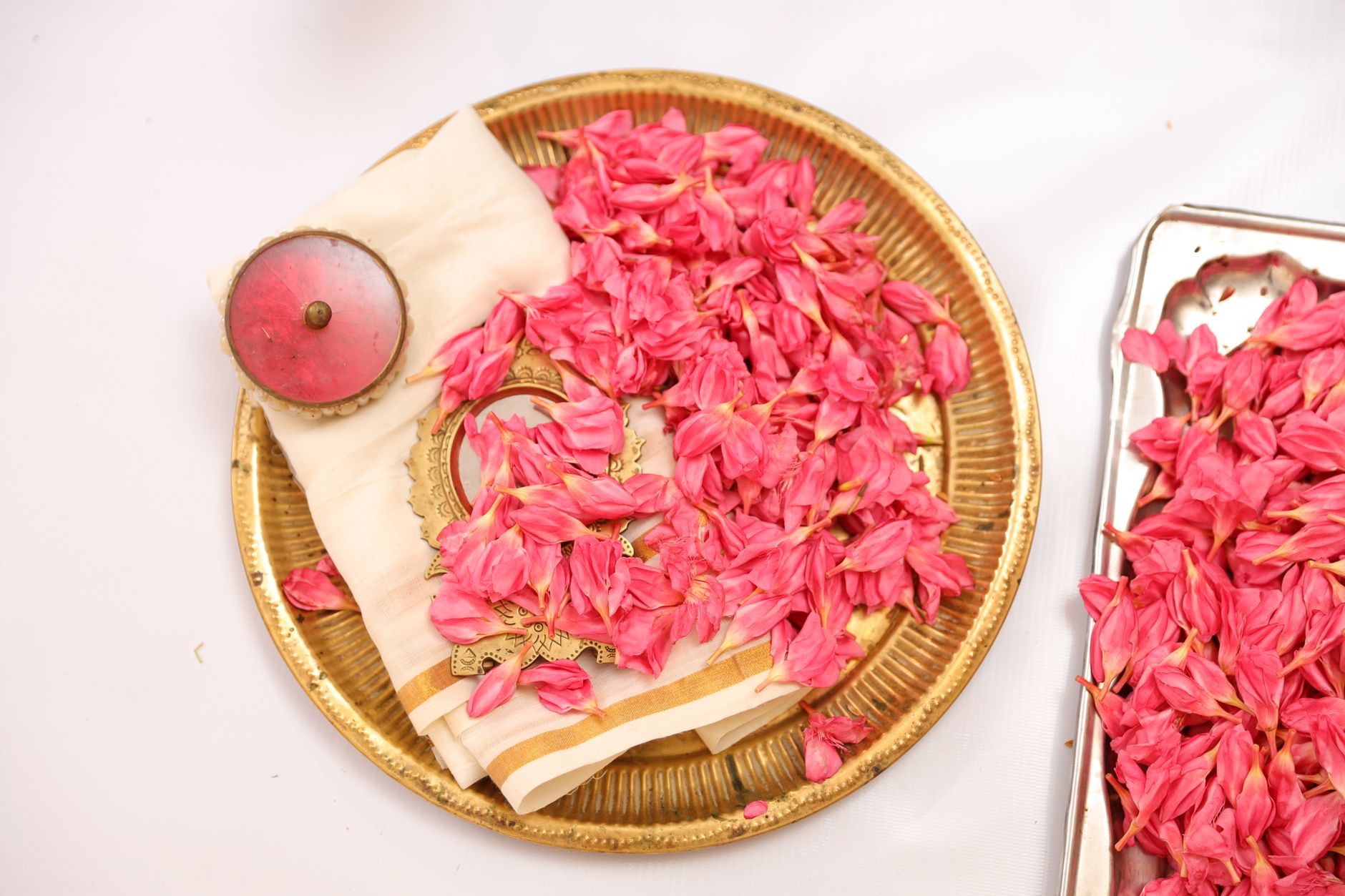
Telugu Seer Plate Presentation in Goa
Religious cermony in Goa
Heritage Telugu Seer Plate Presentation in Goa — A Complete Guide
A Heritage Telugu Seer Plate Presentation is one of the most visually magnificent and emotionally resonant pre-wedding rituals in South Indian culture, and more Telugu families are now choosing Goa's stunning venues — from North Goa's heritage havelis to South Goa's beachside mandaps — to host this cherished ceremony. The ritual involves the groom's family presenting the bride with elaborately decorated trays of sarees, jewellery, dry fruits, sweets, flowers, and auspicious items, all arranged in strict traditional order. As a form of Telugu wedding trousseau presentation, it symbolises the groom's family's respect and affection. With South Indian wedding rituals in Goa becoming increasingly popular among Telugu diaspora and NRI families, finding the right specialists who understand both the ceremonial protocol and the logistical demands of a destination wedding has never been more important. Happiffie connects you with experienced decorators, packing artists, and ceremony coordinators across Goa.
Quick Answer
A Heritage Telugu Seer Plate Presentation is a traditional pre-wedding ceremony where the groom's family gifts the bride curated trays of sarees, gold jewellery, sweets, fruits, and auspicious items, arranged decoratively and presented before the wedding day. In Goa, this ritual is hosted at banquet halls, heritage villas, or beachside venues, typically accommodating 50–400 guests. Professional decorators and ceremony stylists specialising in Telugu customs are available through platforms like Happiffie.
What Is a Heritage Telugu Seer Plate Presentation and Why Does It Matter?
A Heritage Telugu Seer Plate Presentation is a ceremonial exchange tradition rooted in the Telugu-speaking communities of Andhra Pradesh and Telangana. The word 'Seer' loosely translates to 'gifts' or 'trousseau,' and the ritual involves the groom's family visiting the bride's home or venue with large decorative trays — typically brass, silver, or gold-plated — laden with sarees, blouses, bangles, jewellery, dry fruits, coconuts, turmeric, kumkum, sweets, and sometimes cash envelopes. Each tray is arranged with painstaking care, often decorated with flower petals, banana leaves, and gold thread. The presentation is not merely a gift exchange; it is a declaration of the groom's family's prosperity, generosity, and respect for the bride's lineage. For families hosting South Indian wedding rituals in Goa, this ceremony usually takes place one or two days before the muhurtham, giving the bride's family time to display the seer items during the wedding itself. The Andhra Seer Varisai Display — meaning the formal row-by-row showcase of all gifted trays — is a significant moment that guests photograph and admire, making the aesthetic arrangement as important as the items themselves. Increasingly, Telugu families relocating to Goa or choosing it as a destination wedding hub want this ritual executed with full cultural accuracy while leveraging the state's scenic venues and catering infrastructure.
How Is a Telugu Seer Plate Arrangement Set Up in Goa?
Setting up a Telugu Seer Plate Arrangement in Goa requires coordination between multiple vendors — decorators, packing specialists, priests, and caterers — all working within a specific ceremonial timeline. The process begins about two weeks before the wedding when families finalise the number of trays, typically ranging from 11 to 51 depending on the family's custom and budget. Each tray is lined with banana leaves or silk cloth, and items are placed in culturally prescribed positions. In Goa, specialists familiar with Telugu wedding trousseau presentation norms will sort items into categories: clothing trays, jewellery trays, fruit-and-dry-fruit trays, sweet trays, and utility trays containing items like mirrors, combs, and turmeric sets. The entire display is then arranged in a dedicated room or mandap space, often with a traditional lamp (deepam) lit at the centre. For venues across Panjim, Margao, Vasco, and resort corridors in Candolim or Cavelossim, decorators typically arrive six to eight hours before the ceremony to complete the setup. Traditional ceremony venue in Goa options range from heritage mansions in Fontainhas to grand ballrooms in five-star resorts. Families should communicate any family-specific variations — such as including a specific number of sarees from a particular regional tradition — well in advance so the arranger can source or request those items in time.
Telugu Wedding Decor Setup: Flowers, Colours, and Auspicious Elements
The Telugu wedding decor setup for a Seer Plate ceremony is deeply symbolic. Marigolds, jasmine garlands, and rose petals dominate the colour palette, reflecting prosperity and purity. Brass lamps flanking the display area, mango leaf torans above the entrance, and banana plant stems placed at either side of the main presentation table are all standard auspicious elements. The backdrop is often a silk drape in red, gold, or mango yellow — colours considered highly auspicious in Telugu culture. In Goa, decorators integrate these traditional elements with the venue's existing aesthetic; for instance, a Portuguese-style villa in Aldona might blend terracotta pots of marigolds with stone archways to create a fusion effect that feels both rooted and photogenic. For the Andhra Seer Varisai Display specifically, the trays are arranged in descending order of importance — jewellery and sarees closest to the bride's seat, followed by food items, and utility gifts placed at the outer rows. Lighting plays a critical role: warm, golden LED lighting enhances the metallic sheen of brass and silver trays, while diyas (oil lamps) are used during the actual ritual moment. A bridal trousseau packing service can also provide ready-decorated presentation boxes and trays if families prefer a more modern, minimal aesthetic while retaining the ceremonial structure.
What Does a Heritage Telugu Seer Plate Presentation Cost in Goa?
The cost of a Heritage Telugu Seer Plate Presentation in Goa varies significantly based on the number of trays, decoration complexity, venue type, and whether you hire a full-service coordinator or individual vendors. As a general benchmark, a basic Telugu Seer Plate Arrangement covering 11 to 21 trays with standard flower decoration and brass utensils typically costs between INR 25,000 and INR 60,000. A mid-range setup with 31 to 41 trays, premium flower arrangements, custom backdrop, and coordination support can range from INR 75,000 to INR 1,50,000. For families seeking a grand, fully styled Traditional Telugu Bride Seer Ceremony with 51 or more trays, silver-plated vessels, jewellery display frames, professional lighting, and a dedicated ceremony stylist, budgets of INR 2,00,000 to INR 4,00,000 are not uncommon, particularly at luxury resort venues. South Indian wedding rituals in Goa often attract a premium because fewer vendors here specialise in Telugu customs compared to cities like Hyderabad or Vijayawada, so experienced specialists may charge a travel and expertise surcharge. Additional costs to factor in include priest dakshina (INR 5,000–INR 15,000), bridal trousseau packing service fees if items are being sourced and packed externally (INR 10,000–INR 40,000), and photography packages specifically for the ceremony. Always ask vendors for an itemised quote that separates decoration, logistics, and professional fees to avoid surprises.
How Do You Choose the Right Specialist for a Traditional Telugu Bride Seer Ceremony in Goa?
Choosing the right specialist for a Traditional Telugu Bride Seer Ceremony in Goa involves evaluating cultural knowledge, execution track record, and logistical reliability. First, confirm that the vendor has prior experience specifically with Telugu rituals — not just generic South Indian weddings. Ask to see portfolios of past Andhra Seer Varisai Display setups and request references from Telugu families they have served. Second, verify their network: do they have access to Telugu-specific items like Kanjivaram sarees, Annapoorna sweet boxes, and traditional brass or silver seer trays, or will you need to source these yourself? Third, assess their familiarity with Goa's venue ecosystem. A decorator experienced with traditional ceremony venue in Goa options — from the mandap-friendly grounds of Dona Paula to the intimate courtyards of Fontainhas heritage homes — will anticipate logistics challenges like narrow doorways, outdoor humidity affecting flower garlands, and venue-specific setup time windows. Fourth, discuss their coordination style: will they work directly with your family pandit, or do they bring their own priest? Fifth, clarify payment terms, cancellation policies, and what happens if procured items are unavailable. As part of your Telugu wedding decor setup, also ask whether they offer a post-ceremony dismantling and packing service so the seer items are properly stored for the bride. Finally, use a trusted marketplace like Happiffie to compare multiple vetted specialists, read verified feedback, and secure bookings with transparent pricing — reducing the guesswork that often accompanies destination weddings.
Heritage Telugu Seer Plate Presentation: Setup Types Compared
Expert Recommendation
Best for Intimate Family Ceremonies (20–60 Guests)
Best for Grand Destination Weddings (200–400 Guests)
Best for NRI and Cross-Cultural Families
Best for Budget-Conscious Celebrations (INR 30,000–75,000)
Best for Tradition-First Families
Best for Modern Aesthetic Brides
How to Choose the Right Option
✅ Pre-booking Checklist
- Confirm the number of seer trays with both families and get agreement in writing at least 2 months before the ceremony.
- Book a Telugu-speaking priest in Goa or arrange travel and accommodation for one from Hyderabad or Vijayawada.
- Finalise the venue and check it permits external decorators, permits a sacred fire (havan) if needed, and has adequate power supply.
- Hire a bridal trousseau packing service to professionally arrange and wrap items inside each tray at least one week before the event.
- Arrange sourcing or shipping of regional items (Pochampally sarees, specific sweet varieties, brass seer trays) from Andhra Pradesh or Telangana.
- Brief the photographer and videographer on the complete Telugu ritual timeline so key ceremonial moments are captured.
- Confirm catering arrangements for guests attending the ceremony, including traditional Telugu tiffin or meals.
- Plan for post-ceremony storage and transport of all seer items back to the bride's accommodation safely.
🎯 Selection Criteria
- Vendor's prior experience with Telugu-specific rituals, not just generic South Indian ceremonies.
- Quality and authenticity of decoration materials — natural flowers, brass or silver trays, silk drapes preferred over plastic substitutes.
- Priest's fluency in Telugu Vedic recitations and familiarity with regional family variations.
- Venue suitability for the scale of the Andhra Seer Varisai Display — adequate floor space, lighting infrastructure, and access for setup teams.
- Vendor's reliability and emergency backup plan in case of last-minute item unavailability.
- Transparent itemised pricing covering decoration, priest fees, packing, and any travel or logistics surcharges.
💰 Cost / Quality Factors
- Number of seer trays: each additional tray increases both the cost of items and decoration labour proportionately.
- Venue type: heritage villas and luxury resorts command a premium for external vendor access compared to standalone banquet halls.
- Seasonal demand: Goa wedding season (November–February) and auspicious Telugu calendar dates drive up specialist availability and pricing.
- Sourcing complexity: items like specific regional sweets or handcrafted brass trays shipped from Andhra Pradesh add logistics costs.
- Ancillary services: adding Nadaswaram performers, drone photography, or bilingual anchoring adds to the overall budget.
- Customisation level: fully customised floral designs and backdrops cost more than standard template setups offered by decorators.
⚠️ Common Mistakes to Avoid
- Hiring a decorator without specific Telugu ceremony experience — generic South Indian decor often misses culturally significant details.
- Underestimating setup time and booking the venue for too short a window, causing a rushed and incomplete Andhra Seer Varisai Display.
- Skipping a written agreement on tray count and item categories, leading to last-minute disputes between families.
- Ignoring Goa's humidity and choosing fresh flowers that wilt quickly — backup floral supplies or humidity-resistant alternatives should always be on hand.
- Forgetting to arrange for post-ceremony packing and transport of the seer items, which are precious and should be handled with care.
- Booking vendors in isolation rather than through a coordinated approach, creating timing conflicts between the priest, decorator, caterer, and photographer on the ceremony day.
People Also Ask
What items are traditionally included in a Heritage Telugu Seer Plate Presentation?
How many seer plates are required for a Telugu wedding?
Can I host a Heritage Telugu Seer Plate Presentation at a beach venue in Goa?
How long does the seer plate ceremony typically last?
Do I need a priest for a Telugu Seer Plate ceremony in Goa?
What is the difference between a Seer Plate ceremony and a Pellikoduku ceremony?
Can I hire a bridal trousseau packing service separately from the seer ceremony decorator?
What is the Andhra Seer Varisai Display format?
What venues in Goa are best suited for a Telugu Seer Plate ceremony?
How far in advance should I book vendors for a Telugu Seer ceremony in Goa?
Is a Heritage Telugu Seer Plate Presentation suitable for NRI families organising a destination wedding in Goa?
What photography or videography tips apply specifically to a Seer Plate ceremony?
Related Experiences on Happiffie
Telugu Seer Plates – Crafted with Tradition
Telugu Mangalasnanam Essentials in Pune
Wrap Her Dreams in Pure Elegance
Sacred Mangalasnanam Setup for Telugu Weddings
Trousseau Packing That Tells Your Story
Sacred Aarthi Plates for Goa Weddings
Frequently Asked Questions
What is a Heritage Telugu Seer Plate Presentation and how is it different from a regular gift exchange?
Are there Telugu ceremony specialists specifically available in Goa?
How do I transport brass seer trays and jewellery safely to a Goa venue?
Can the Heritage Telugu Seer Plate Presentation be combined with other pre-wedding functions in Goa?
What catering is traditionally served during a Telugu Seer Plate ceremony?
Is it possible to do a Telugu Seer Plate ceremony outdoors in Goa during winter?
How much does a Telugu priest charge for a Seer Plate ceremony in Goa?
Can I customise the Heritage Telugu Seer Plate Presentation for a modern aesthetic?
What role does the bridal trousseau packing service play in the seer ceremony?
Does Happiffie offer end-to-end packages for Telugu Seer ceremonies in Goa?
What is the ideal guest count for a Heritage Telugu Seer Plate Presentation in Goa?
Are there any Goa-specific permits or restrictions for hosting a Telugu religious ceremony?
Key Takeaways
- A Heritage Telugu Seer Plate Presentation is a culturally significant pre-wedding ritual where the groom's family presents the bride with decorated trays of sarees, jewellery, sweets, and auspicious items.
- In Goa, this ceremony can be hosted at heritage villas, resort ballrooms, or garden venues, with costs ranging from INR 25,000 for a basic setup to over INR 4,00,000 for a grand destination wedding display.
- The Andhra Seer Varisai Display — the formal row-by-row showcase of all gifted trays — is the visual centrepiece of the ceremony and requires dedicated floor space and professional styling.
- Booking a Telugu-speaking priest, a specialist bridal trousseau packing service, and an experienced Telugu ceremony decorator separately or through a coordinated package is essential for authenticity.
- Families should book vendors 3–6 months in advance, especially for peak Goa wedding season (November–February) and auspicious Telugu calendar dates.
- NRI families find Goa an ideal destination for a Traditional Telugu Bride Seer Ceremony due to its international accessibility, scenic venues, and growing network of South Indian event specialists.
- Happiffie's vetted vendor network helps families compare specialists, check portfolios, and secure bookings for all components of a Heritage Telugu Seer Plate Presentation in Goa.
Plan Your Heritage Telugu Seer Plate Presentation in Goa
Connect with Goa's top Telugu ceremony specialists, decorators, and priests — all verified and reviewed on Happiffie.
Find Specialists Now
Are you a Vendor? Grow Your Business with Happiffie!
- High intent verified leads
- Reverse auction opportunities
- AI business tools & insights
- Dedicated vendor dashboard
- Grow your business, your way
It's free & takes less than 2 minutes!