
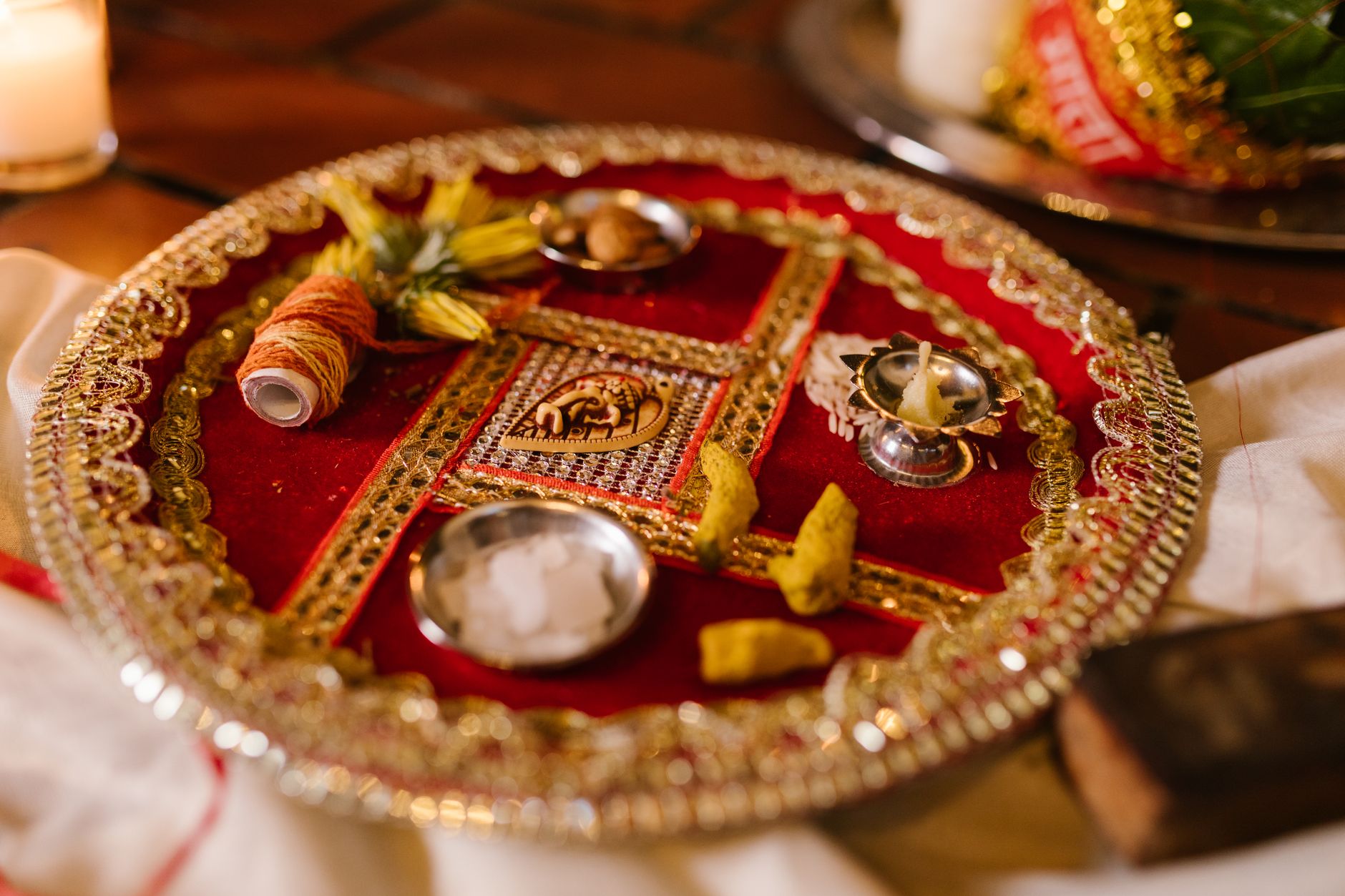
Sacred Aarthi Plates for Goa Weddings
Religious cermony in Goa
Traditional Welcome Aarthi Ceremony Plates in Goa
In Goa's vibrant wedding culture, where the scent of frangipani mingles with sea breeze and temple bells, every ritual moment deserves to be crafted with intention. Traditional Welcome Aarthi Ceremony Plates sit at the very heart of this sacred beginning — the first gesture of love and blessing as the groom's procession or a cherished guest crosses the threshold. Whether you are hosting an intimate Catholic-Hindu fusion celebration in Panjim, a grand multi-day affair in a South Goa resort, or a beachfront ceremony in Calangute, the right pooja thali setup for welcome ceremony transforms a simple arrival into a memory etched in gold. From marigold-draped brass thalis to artisan silver plates adorned with diyas, kumkum, and akshat, Goa's event specialists offer setups that honour Hindu wedding ceremony essentials while complementing the state's naturally tropical aesthetic.
Quick Answer
Traditional Welcome Aarthi Ceremony Plates are decorated ritual thalis used at Indian weddings and religious events to welcome guests, the groom's baraat, or the bride with aarti, diya, kumkum, rice, and flowers. In Goa, these plates typically feature brass or silver thalis layered with marigold petals, coconut, betel leaves, and lit diyas. Prices range from roughly INR 800 to INR 6,000 per set depending on material, decoration complexity, and the number of plates required.
What Are Traditional Welcome Aarthi Ceremony Plates and Why Do They Matter?
Traditional Welcome Aarthi Ceremony Plates are ritually prepared thalis that form the centrepiece of the aarthi welcome ritual in Hindu and many regional Indian wedding traditions. Each plate is assembled with specific sacred items: a lit diya or oil lamp, kumkum (vermilion), haldi (turmeric), akshat (unbroken rice grains), betel leaves, coconut, and fresh flowers — most commonly marigold and rose petals. In Goa, local custodians of the tradition also add toddy-palm flowers or champa blooms to give the arrangement a distinctly Goan character. The significance extends well beyond aesthetics. Performing the welcome aarti is believed to ward off the evil eye, invite divine blessings, and mark the sanctity of the moment when two families unite. For the groom stepping into the mandap, or for elderly relatives crossing the threshold, the plate is a gesture of deep respect rooted in Vedic hospitality. For wedding planners and families in Goa, getting the aarthi plate decoration for weddings right is both a spiritual responsibility and a visual statement. A poorly assembled thali — mismatched materials, wilted flowers, or an extinguished diya — can feel inauspicious. Conversely, a thoughtfully decorated plate, coordinated with the wedding colour palette and venue style, elevates the entire ceremony entrance experience. Goa's multicultural weddings increasingly blend Konkani Hindu customs with coastal aesthetics, meaning these plates often appear at beach-facing resort venues, heritage mansions in Fontainhas, and open-air garden setups in Margao. Understanding what goes into the plate, and why, helps families make informed choices that honour both tradition and personal taste.
Styles and Materials: Choosing the Right Setup for Your Goa Wedding
The choice of material for your Traditional Welcome Aarthi Ceremony Plates sets the tone for the entire ritual. Brass thalis are the most traditional option — warm in colour, easy to engrave, and widely available through Goa's pooja supply markets in Panjim and Margao. Brass plates patinated with age carry an authentic sacred quality that many families specifically seek. Prices for a basic decorated brass set start at around INR 800–1,200 per plate. Silver-plated thalis are the preferred choice for upscale weddings at five-star South Goa resorts or destination wedding properties in Vagator and Morjim. These are often hired rather than purchased, with rental rates between INR 1,500 and INR 3,500 per decorated plate depending on the silverwork intricacy. Some heritage properties in Goa maintain their own sets, which can be incorporated into your ceremony for an added sense of place. For eco-conscious or boho-beach weddings in North Goa, decorative welcome thali arrangements crafted from banana leaves, terracotta, or woven cane have gained popularity. These align with the relaxed Goa beach wedding rituals aesthetic while still honouring ritual integrity. Terracotta sets typically cost INR 600–1,000 per plate, and the organic textures photograph beautifully in golden-hour light. Modern acrylic and resin thalis with LED diya inserts have also emerged for evening or indoor celebrations where open flames are restricted — particularly relevant in air-conditioned banquet halls in Goa. While traditionalists may prefer oil lamps, these alternatives ensure safety and compliance with venue rules. Your event manager on Happiffie can guide you on which style best suits your venue type, guest count, and ritual requirements.
How Much Do Traditional Welcome Aarthi Ceremony Plates Cost in Goa?
Pricing for Traditional Welcome Aarthi Ceremony Plates in Goa varies based on four primary factors: material quality, decoration complexity, the number of plates needed, and whether you are purchasing, renting, or commissioning a full styling service. At the entry level, a simple brass thali with kumkum, rice, diya, and fresh flowers costs approximately INR 800–1,500 per set when self-assembled using Panjim market supplies. Mid-range decorative welcome thali arrangements prepared by a professional pooja decorator typically run INR 2,000–3,500 per plate and include coordinated flower work, themed colour ribbons, and premium diyas. Premium silver or artisan copper setups with elaborate floral garlands and personalised engraving can reach INR 4,500–6,000 per plate. For a standard baraat welcome with four plates (one for the groom, one for each parent pairing), a mid-range fully styled arrangement comes to roughly INR 8,000–14,000 total. Larger weddings with multiple welcome points — say, a 400-guest reception at a Cavelossim beach resort — may require 8–12 plates across different entry stations, pushing total costs to INR 20,000–40,000 depending on the tier chosen. Additional costs to budget for include: priest or purohit fees if a pandit is involved in the ritual (INR 2,000–5,000), coordination charges from your wedding planner, and any venue-specific charges for open-flame diyas. Happiffie vendors in Goa are transparent about these add-ons at the inquiry stage, helping families avoid last-minute surprises. Always request an itemised quote that separates plate preparation, decoration labour, and consumables.
Integrating Aarthi Plates with Your Goa Wedding Ceremony Design
The most memorable weddings in Goa are those where every ritual element feels intentional and cohesive. Integrating your bridal welcome ritual thali into the broader ceremony design starts with a conversation between your decorator, pandit, and venue coordinator — ideally facilitated through a single platform like Happiffie. Colour coordination is a great starting point. If your wedding palette is gold and ivory, opt for brass thalis with white jasmine and golden marigold arrangements. For a jewel-toned Konkani wedding with deep reds and purples, kumkum-heavy plates edged with red kanakambara flowers and purple orchids create a visually striking ritual moment. Your photographer will thank you — aarthi plate photography has become one of the most shared moments on wedding Instagram pages. Venue entrance decor Goa-style often frames the aarthi ritual with banana leaf arches, marigold garlands, and earthen oil lamp pathways. The Traditional Welcome Aarthi Ceremony Plates should sit within this frame, not compete with it. Ask your decorator to present a mood board that shows the plates in context with the full entrance setup. For beach weddings along the Sinquerim or Palolem coastline, wind is a practical concern for diya flames. Experienced Goa decorators use low-profile wind-resistant diya holders or camphor-based flame alternatives that stay lit even in coastal breezes. This is a detail many first-time couples overlook until the actual ceremony. Finally, the festive flower and diya arrangements on the plates should be prepared no more than two hours before the ritual begins. Fresh flowers wilt quickly in Goa's humidity, especially from April through June. Schedule your decorator's arrival time accordingly and ensure cold storage is available for pre-made garlands if your ceremony is an evening event.
How Do You Find and Book the Best Aarthi Plate Services in Goa?
Finding the right vendor for Traditional Welcome Aarthi Ceremony Plates in Goa requires evaluating both their ritual knowledge and their execution capability. A vendor who understands the symbolic meaning of each item — why akshat must be unbroken, why the coconut faces inward, why the diya is lit before the plate is carried — will prepare a thali that feels genuinely sacred rather than merely decorative. Start your search at least 8–10 weeks before the wedding date, especially if your event falls during peak wedding season (November through February) when Goa's best pooja decorators and event stylists are heavily booked. Happiffie's Goa vendor directory lists verified professionals who specialise in Hindu wedding ceremony essentials and religious ceremony styling, complete with portfolio images so you can assess their style before initiating contact. Request a physical or video sample of their typical pooja thali setup for welcome ceremony. A reliable vendor will provide references from past Goa weddings and be willing to customise the arrangement to match your specific traditions — Saraswat Brahmin customs differ from GSB Konkani customs, and both differ from North Indian traditions brought in by destination wedding guests. Key questions to ask at booking: Do they supply all consumables or does the family need to source items like coconut and betel leaves? Is a backup set available in case of last-minute damage? Will they be present on-site to reset the plates between multiple welcome rituals? Do they have experience with your specific venue's entry layout? On Happiffie, you can compare multiple Goa-based vendors side by side, read verified reviews, and request quotes in a single session — saving the hours typically spent calling individual vendors or relying on informal referrals from family friends.
Traditional Welcome Aarthi Ceremony Plates: Setup Types Compared for Goa Weddings
Expert Recommendation
Best for intimate family ceremonies
Best for destination beach weddings
Best for large multi-day weddings
Best for budget-conscious families
Best for luxury resort weddings
Best for fusion or intercultural weddings
How to Choose the Right Option
✅ Pre-booking Checklist
- Confirm your wedding date and venue type (beach, resort, banquet, heritage home) before selecting plate material
- Determine the number of welcome points and rituals requiring aarthi plates — baraat entry, mandap welcome, reception
- Book your aarthi plate decorator or pooja stylist at least 8–10 weeks before the wedding during peak Goa season
- Clarify with the venue whether open-flame diyas are permitted or if camphor and LED alternatives are required
- Request a physical or photo sample of the decorated plate from your vendor before final confirmation
- Confirm whether the vendor supplies all consumables (flowers, kumkum, coconut) or if the family must source them
- Schedule plate assembly to begin no more than two hours before the ritual to ensure flower freshness in Goa's humidity
- Prepare two to three backup plates in case of accidental damage or last-minute guest additions
🎯 Selection Criteria
- Vendor's knowledge of regional Konkani Hindu customs and ritual item placement
- Portfolio evidence showing experience with Goa-specific weddings and venue types
- Flexibility to customise decoration to match wedding colour palette and style
- Ability to be present on-site and reset plates between multiple ritual moments
- Transparent itemised pricing covering materials, labour, and any add-on services
- Availability of backup materials and contingency plan for weather or venue changes
💰 Cost / Quality Factors
- Material quality — brass vs silver vs terracotta directly affects price and visual impact
- Flower type and freshness — tropical flowers hold better in Goa's coastal climate than delicate varieties
- Number of plates required — more welcome points means higher total cost
- Level of decoration complexity — basic ritual assembly vs elaborate floral styling
- Whether you purchase, hire, or commission plates as part of a full-service package
- Venue-specific requirements such as open-flame restrictions that may require premium diya alternatives
⚠️ Common Mistakes to Avoid
- Booking a vendor without verifying their knowledge of regional Konkani or Saraswat ritual customs
- Assembling plates too far in advance, causing flowers to wilt and diyas to extinguish before the ceremony
- Overlooking wind conditions at beach venues and not arranging wind-resistant diya holders
- Forgetting to budget for consumables like fresh flowers, coconut, and kumkum that need daily replenishment
- Choosing a plate style that clashes visually with the overall wedding entrance decor theme
- Not confirming venue open-flame policy and arriving with oil-lamp diyas at a no-flame banquet hall
People Also Ask
What items are traditionally placed on a welcome aarthi plate at an Indian wedding?
How many aarthi plates do I need for my wedding ceremony in Goa?
Can I hire someone to decorate aarthi plates for my Goa wedding, or should I DIY?
What is the difference between a pooja thali and an aarthi ceremony plate?
Are there any Goa-specific customs that affect how welcome aarthi plates are arranged?
How far in advance should I book aarthi plate styling services in Goa?
What is a typical budget for complete aarthi plate arrangements at a destination wedding in Goa?
Can aarthi ceremony plates be used at non-Hindu or fusion weddings in Goa?
What flowers work best for aarthi plates in Goa's humid climate?
Is it necessary to have a pandit present when the welcome aarthi is performed?
Where can I source raw materials for aarthi plates in Goa?
How should aarthi plates be stored and transported on the wedding day?
Related Experiences on Happiffie
Sacred Aarthi Plates, Beautifully Crafted
Telugu Addutera Ceremonies, Beautifully Done
Arrive in Style on Goa's Shores
Sacred Ceremonies, Perfectly Arranged
Transform Your Destination Wedding Dreams
Floral Baskets for Your Church Wedding
Frequently Asked Questions
What is the significance of Traditional Welcome Aarthi Ceremony Plates at a Goa wedding?
Which areas in Goa are best for sourcing aarthi plate materials?
How is a Goa Konkani aarthi plate different from a North Indian style thali?
Can Traditional Welcome Aarthi Ceremony Plates be personalised with the couple's names?
Are LED diya alternatives acceptable for religious rituals in Goa weddings?
How do I ensure the flowers on the aarthi plates stay fresh throughout a long evening ceremony?
Is it possible to have aarthi plates for a morning wedding ceremony in Goa?
Do I need separate aarthi plates for the mehendi, haldi, and wedding day rituals?
What is the average time needed to set up aarthi plates at a Goa wedding venue?
Can I find vendors on Happiffie who specialise in both aarthi plates and overall puja arrangements?
Are there vendors in Goa who can deliver pre-assembled aarthi plates to the venue?
What should I look for in a portfolio when evaluating an aarthi plate decorator in Goa?
Key Takeaways
- Traditional Welcome Aarthi Ceremony Plates are sacred ritual thalis containing a diya, kumkum, akshat, flowers, betel leaves, and coconut — central to Hindu wedding welcome customs across Goa.
- Material choice (brass, silver-plated, terracotta, or acrylic) directly affects both the ritual authenticity and the visual impact of your ceremony entrance.
- In Goa, prices range from INR 800 for a basic brass setup to INR 6,000 per plate for premium silver arrangements, with full-service styled packages reaching INR 15,000–35,000.
- Wind-resistant diya holders and heat-tolerant tropical flowers are non-negotiable practical considerations for Goa beach wedding setups.
- Book vendors 8–10 weeks in advance during Goa's November–February peak wedding season to secure experienced pooja decorators.
- Plates should be assembled within two hours of the ceremony in Goa's humid coastal climate to maintain flower and flame freshness.
- Happiffie's verified Goa vendor listings allow you to compare portfolios, ritual expertise, and pricing in one place before committing to a booking.
- Fusion and intercultural weddings in Goa can adapt Traditional Welcome Aarthi Ceremony Plates into inclusive welcome gestures by modifying items while retaining the festive warmth and symbolic intent.
Find the Perfect Aarthi Plate Setup for Your Goa Wedding
Explore Happiffie's curated network of Goa-based religious ceremony specialists who craft Traditional Welcome Aarthi Ceremony Plates with ritual authenticity and stunning visual artistry. Get quotes, compare portfolios, and book with confidence.
Explore Goa Vendors
Are you a Vendor? Grow Your Business with Happiffie!
- High intent verified leads
- Reverse auction opportunities
- AI business tools & insights
- Dedicated vendor dashboard
- Grow your business, your way
It's free & takes less than 2 minutes!