
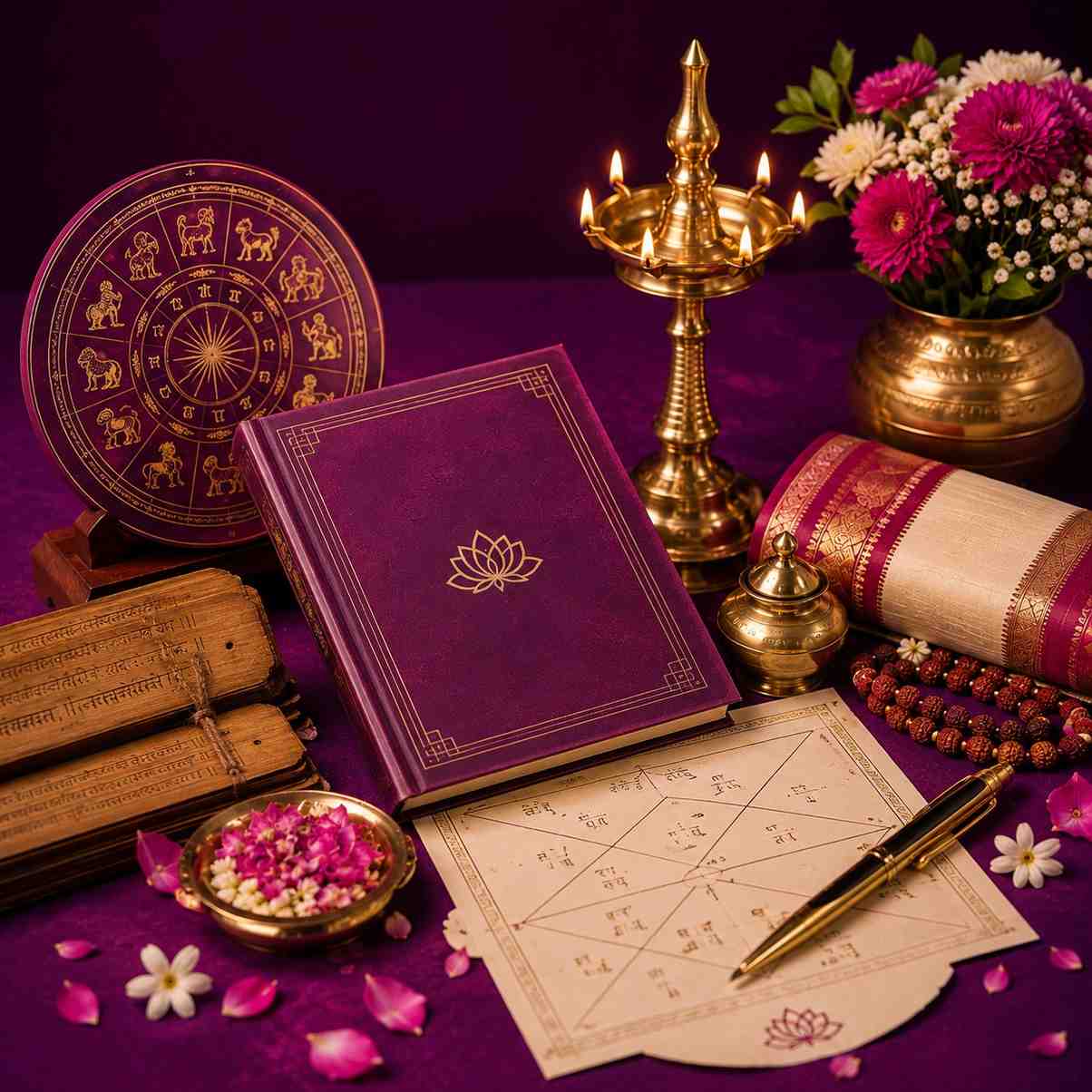
Wedding Astrologers
Find the right time for your special day with Wedding Muhurtham Astrologers offering traditional guidance on auspicious marriage dates, ceremony timings, horoscope considerations, and wedding rituals based on established astrological practices.
Explore Religious Ceremony Experiences
Explore Other Experiences




Explore by Occasion

Wedding Muhurtham Astrologers for Marriage Horoscope & Auspicious Wedding Timing in India
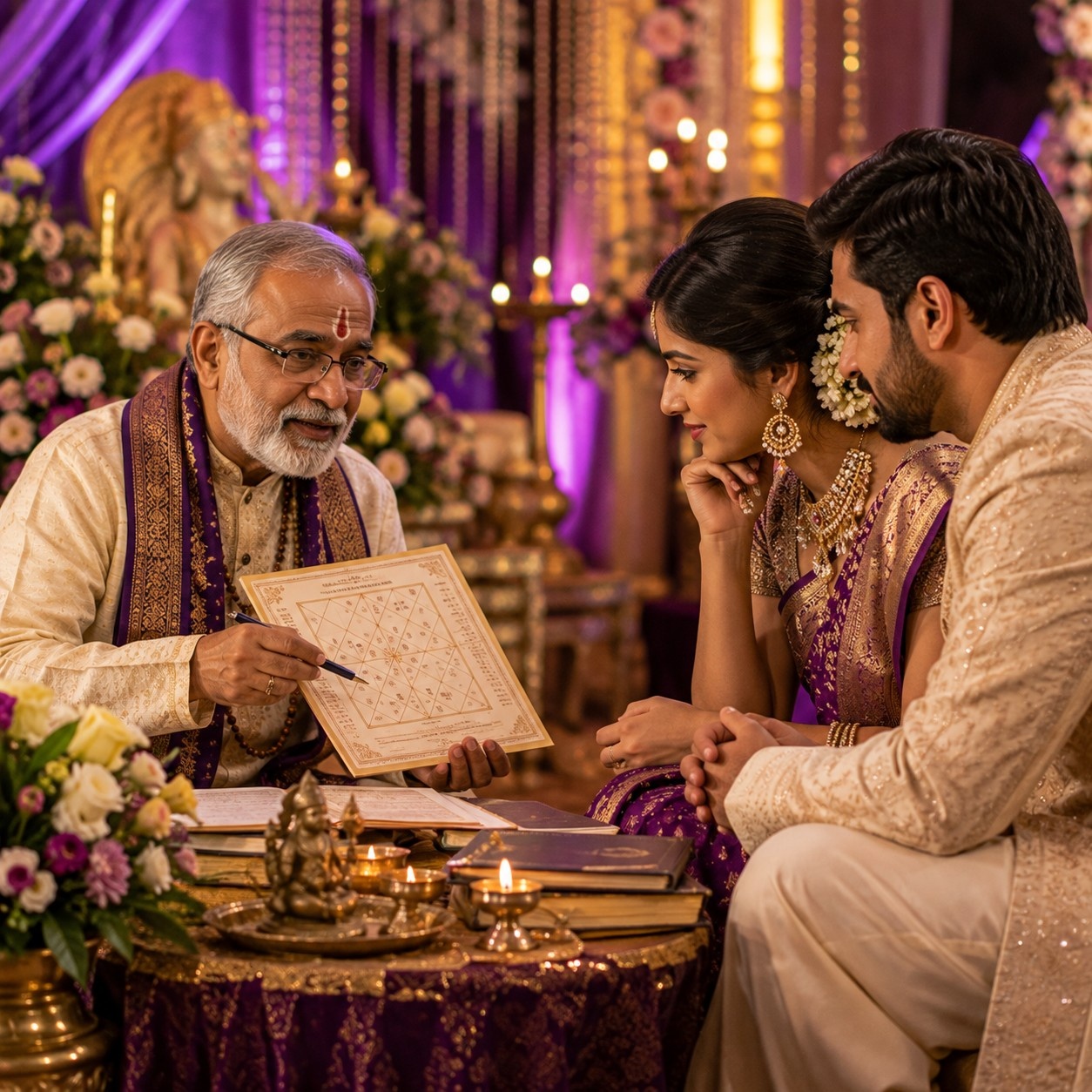
◆Wedding Muhurtham astrologers help couples and families identify auspicious timings and understand traditional astrological considerations associated with marriage ceremonies. Their services may include marriage horoscope analysis, Kundli matching, Lagna consultation, Panchang consultation, Muhurtham selection, and guidance based on regional and family traditions.
In India, astrology and traditional Panchang calculations are followed by many families while planning important wedding milestones. Selecting a suitable Muhurtham may be considered an important part of preparing for the wedding ceremony, particularly when families follow specific religious, regional, or community customs.
Marriage astrology services can help families review birth details, horoscope charts, Nakshatra, Rashi, Lagna, Panchang elements, and other traditional astrological factors. The exact methods used can differ between astrologers, regions, communities, and schools of astrology.
Wedding Muhurtham consultation generally begins with collecting the birth details of the bride and groom. Depending on the astrologer's practice, this may include date of birth, exact time of birth, and place of birth. Accurate information is important when preparing traditional horoscope calculations.
Marriage horoscope analysis may be used to examine traditional astrological factors associated with compatibility and wedding planning. Astrologers may interpret planetary positions, houses, Nakshatras, Dashas, and other elements according to the system of astrology they follow.
Kundli matching is a traditional service used by some families before finalising a marriage. The astrologer compares the horoscopes of the prospective bride and groom and may evaluate factors such as Guna Milan, Nakshatra compatibility, Rashi relationships, and other customary considerations.
The approach to Kundli matching can vary significantly. Some astrologers follow Ashtakoota or Guna Milan methods, while others use additional horoscope factors and regional practices. Families should understand the methodology being used during a consultation.
Muhurtham selection focuses on identifying a suitable date and time for the wedding ceremony according to traditional Panchang and astrological considerations. The selected timing may be based on Tithi, Vara, Nakshatra, Yoga, Karana, Lagna, planetary positions, and other factors depending on the astrologer's method.
Panchang consultation is commonly associated with Muhurtham planning. A Panchang provides traditional information about the day, including Tithi, weekday, Nakshatra, Yoga, Karana, sunrise, sunset, and other calendrical details.
Wedding Muhurtham may also consider the Lagna or ascendant at the proposed ceremony time. Astrologers may evaluate the selected Lagna according to their traditional interpretation and the requirements of the wedding ceremony.
Regional wedding customs can influence Muhurtham selection. Families in Karnataka, Kerala, Tamil Nadu, Andhra Pradesh, Telangana, Maharashtra, Gujarat, Rajasthan, North India, and other regions may follow different traditions and terminology.
South Indian wedding astrology may include considerations such as Nakshatra, Rashi, Panchang, Lagna, and regional Muhurtham traditions. The specific procedure can vary between communities and family customs.
Tamil, Kannada, Telugu, and Malayalam wedding traditions may each have their own approaches to selecting auspicious wedding dates and times. Families often consult an astrologer who understands the relevant regional Panchang and ceremonial customs.
Wedding Muhurtham consultation can be particularly useful when venue and vendor bookings depend on a fixed ceremony date. Once the family confirms the preferred auspicious dates, planners can coordinate the venue, invitations, catering, photography, décor, travel, and other wedding services.
Astrologers may provide multiple Muhurtham options rather than a single date and time. This can give families flexibility when coordinating venue availability, guest travel, priest schedules, and other wedding requirements.
For destination weddings, Muhurtham consultation may involve coordinating the auspicious ceremony time with the destination's local time zone and sunrise or sunset calculations. Families should ensure that the astrologer and wedding team are working with the correct location and local timing.
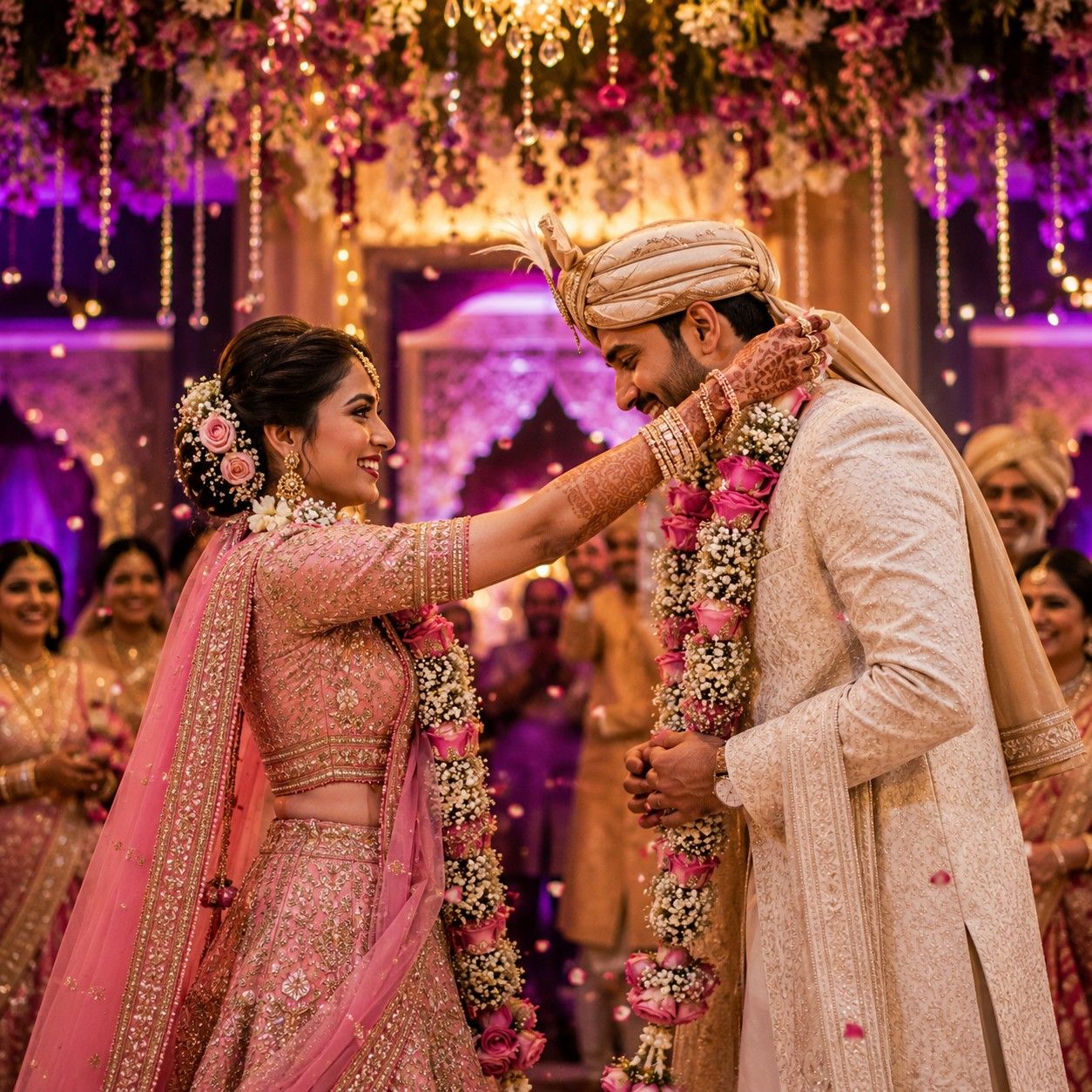
Lagna consultation can also be considered when planning the ceremony sequence. Wedding planners and priests may use the selected Muhurtham to schedule rituals such as the exchange of garlands, Kanyadaan, Mangalya Dharana, Saptapadi, or other community-specific ceremonies.
Panchang-based consultation can extend beyond the wedding ceremony itself. Families may request suitable timings for engagement ceremonies, wedding invitations, Haldi, Mehndi, housewarming, reception, travel, or other associated events depending on their traditions.
Some astrologers also provide consultation for pre-wedding rituals. Dates for engagement, Nishchay Tamulam, Nischitartham, Vratham, Mehndi, Haldi, or other regional ceremonies may be selected according to family preferences and traditional practices.
Wedding horoscope consultations can be conducted in person or through online platforms. Digital consultations may involve sharing birth details, horoscope charts, Panchang information, and receiving the consultation through video calls, phone calls, or written reports.
Astrology reports may include compatibility observations, suggested Muhurtham dates, Panchang details, horoscope charts, or general traditional guidance. The format depends on the astrologer's service offering.
Families may also request horoscope matching before booking major wedding services. Completing the consultation early can provide more time to evaluate available dates and coordinate family schedules.
Accuracy of birth information is important for traditional horoscope calculations. If the exact birth time is uncertain, families should inform the astrologer rather than providing an estimated time without clarification.
Astrologers may sometimes discuss traditional considerations such as Doshas, Manglik or Kuja Dosha, Nadi, Bhakoot, Gana, Yoni, Graha Maitri, and other compatibility factors. These interpretations vary by astrological tradition and should be understood in the context of the specific methodology being followed.
Some families may seek remedial or traditional religious guidance after horoscope consultation. Such practices can vary widely and may include prayers, temple visits, rituals, donations, or other culturally specific practices. Any such recommendations should be understood as traditional or spiritual practices rather than guaranteed outcomes.
Wedding astrology should not be treated as a substitute for practical relationship, financial, legal, or medical advice. Couples and families can consider cultural and spiritual traditions while also making decisions based on communication, mutual respect, compatibility, and practical circumstances.
Privacy is important when sharing personal birth details. Families should use reputable astrologers and understand how their information will be stored and used, particularly when consultations are conducted online.
Professional wedding planners can coordinate astrologer consultations as part of the wider wedding planning process. They can help align the selected Muhurtham with venue availability, priest schedules, guest travel, décor setup, photography, catering, and the ceremony programme.
For large weddings, multiple family members may be involved in the consultation process. Clear communication between the couple, parents, elders, priest, astrologer, and planner can help avoid confusion when finalising the ceremony date and timing.
Muhurtham selection can also influence invitation planning. Once the date and ceremony timing are confirmed, couples can finalise invitations, save-the-date announcements, guest travel plans, accommodation, and other arrangements.
The wedding ceremony schedule should allow sufficient time for preparation before the Muhurtham. Hair and makeup, photography, bridal entry, groom arrival, venue setup, guest seating, and priest preparations may need to be completed before the auspicious ceremony begins.
In conclusion, Wedding Muhurtham astrologers provide traditional astrology and Panchang-based consultation for families who follow these practices when planning marriage ceremonies. From marriage horoscope analysis and Kundli matching to Lagna consultation, Panchang interpretation, and auspicious Muhurtham selection, these services can help families organise their wedding timeline according to their cultural traditions. By providing accurate birth details, consulting an astrologer familiar with the relevant regional customs, and coordinating the selected timing with practical wedding arrangements, couples can plan their ceremony in a structured and culturally meaningful way.
FAQ Section
Q1: What does a Wedding Muhurtham astrologer do?
A Wedding Muhurtham astrologer provides traditional astrology consultation related to marriage, which may include horoscope analysis, Kundli matching, Panchang consultation, Lagna evaluation, and selection of an auspicious wedding date and time.
Q2: What information is required for marriage horoscope matching?
Astrologers generally require the bride's and groom's date of birth, exact or available birth time, and place of birth to prepare and compare traditional horoscope charts.
Q3: What is Kundli matching?
Kundli matching is a traditional astrological practice in which the horoscopes of two prospective partners are compared for compatibility using methods that may include Guna Milan and other horoscope factors.
Q4: What is a wedding Muhurtham?
Wedding Muhurtham refers to an auspicious date and time selected for conducting the marriage ceremony according to traditional astrology and Panchang considerations.
Q5: What is Panchang consultation?
Panchang consultation involves examining traditional Hindu calendrical factors such as Tithi, Vara, Nakshatra, Yoga, Karana, sunrise, sunset, and other relevant elements when considering auspicious timings.
Q6: What is Lagna consultation for a wedding?
Lagna consultation involves considering the ascendant or rising sign at the proposed ceremony time as part of traditional Muhurtham selection.
Q7: Can an astrologer provide multiple wedding dates?
Yes. An astrologer may provide several suitable Muhurtham options so families can compare them with venue availability, guest schedules, priest availability, and other practical requirements.
Q8: Can Muhurtham consultation be done online?
Yes. Many astrologers offer online consultations through video calls, phone consultations, digital horoscope reports, and other remote formats.
Q9: Can Muhurtham be selected for destination weddings?
Yes. Traditional Muhurtham consultation can be performed for weddings at different locations, with the local location and time zone considered when determining the ceremony timing.
Q10: How can Happiffie help with Wedding Muhurtham Astrologers?
Happiffie helps couples and families discover astrologers and traditional wedding consultants offering marriage horoscope analysis, Kundli matching, Panchang consultation, Lagna guidance, Muhurtham selection, and regional wedding astrology services for different Indian wedding traditions.