
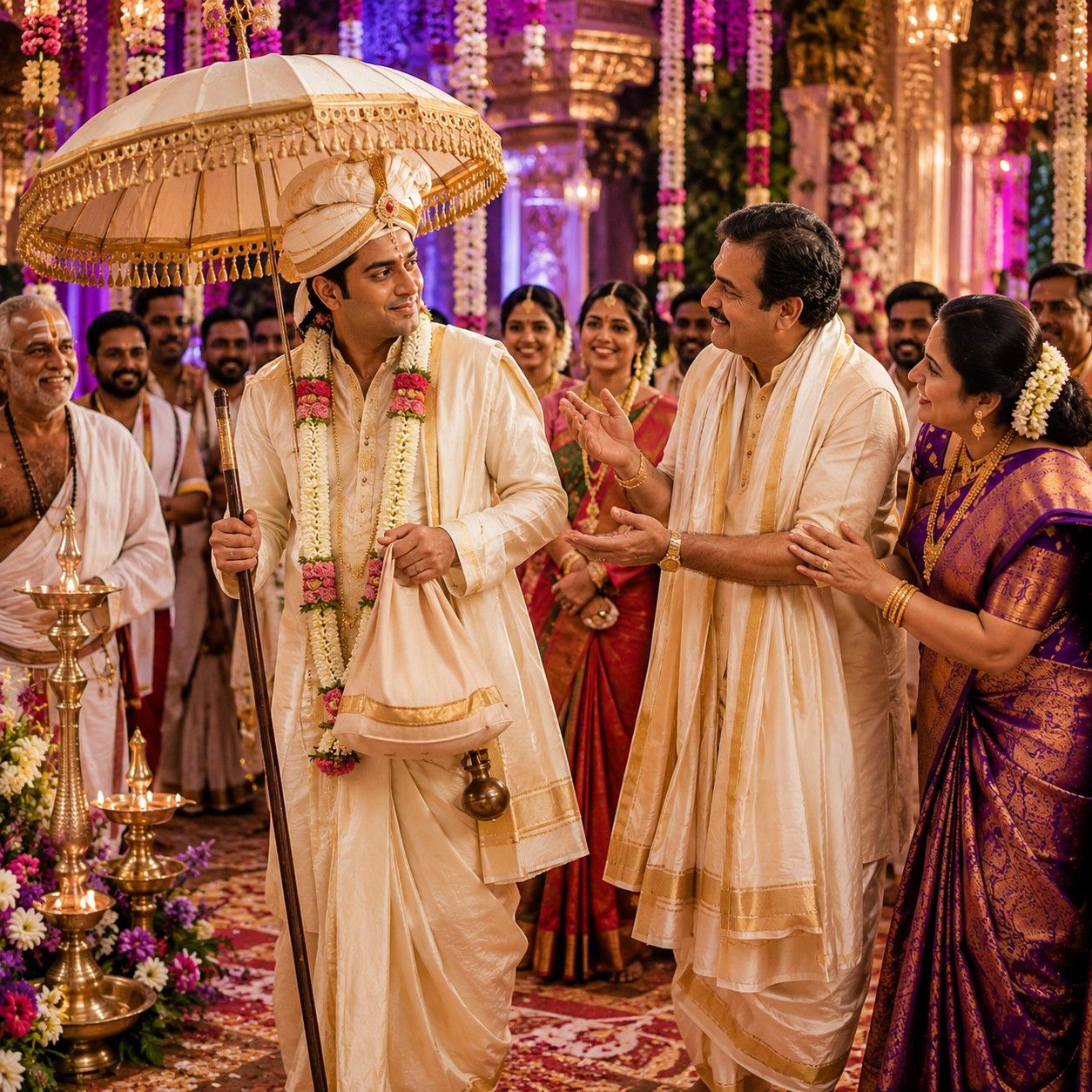
Kasiyatra Brahmin Wedding
Traditional Kasiyatra Brahmin wedding essentials featuring a Kashi Yatra set, dhoti and umbrella, prepared for Iyer marriages and meaningful Vedic wedding rituals.
Explore Religious Ceremony Experiences

Explore Other Experiences








Explore by Occasion



Kasiyatra Brahmin Wedding with Kashi Yatra Set, Dhoti & Umbrella for Iyer Marriage Rituals
◆Brahmin weddings are known for their rich traditions, spiritual significance and carefully observed Vedic ceremonies. Among the distinctive rituals found in many South Indian Brahmin marriages, Kashi Yatra is a memorable ceremonial moment that brings symbolism, family participation and traditional attire together.
A Kasiyatra Brahmin wedding often requires specific ceremonial clothing and accessories associated with this ritual. The traditional dhoti, umbrella and supporting accessories create the recognisable appearance of the groom as he symbolically prepares to leave worldly responsibilities behind and pursue a spiritual path.
For families arranging an Iyer marriage, understanding the requirements of the ceremony can help ensure that the groom is appropriately dressed and that the necessary accessories are prepared before the wedding rituals begin.
Understanding the Kashi Yatra Ceremony
Kashi Yatra is a symbolic ritual performed during certain South Indian Hindu wedding traditions. The groom traditionally takes on the appearance of someone preparing to leave for Kashi, associated with spiritual learning and renunciation.
The ritual represents a symbolic choice between pursuing a life of renunciation and accepting the responsibilities of household life. The bride's family, particularly her father or another elder, traditionally intervenes and invites the groom to return and enter married life.
The exact customs and sequence can vary between families, communities and regional traditions. Therefore, families should follow the practices prescribed by their wedding priests and family elders.
Traditional Kashi Yatra Set
A Kashi Yatra set brings together the principal accessories used to create the groom's traditional appearance during the ceremony. The exact contents may differ according to family custom and regional practice.
A traditional set may centre around the groom's dhoti along with an umbrella and other ceremonial accessories. The coordinated appearance helps distinguish the ritual from the other wedding ceremonies taking place throughout the day.
Preparing the complete set beforehand is useful because the Kashi Yatra ceremony can take place within a busy wedding schedule. Having the required items together ensures that the groom can change or arrange his ceremonial appearance without unnecessary delays.
Dhoti for the Ceremony
The dhoti is an important part of traditional South Indian men's wedding attire. For a Brahmin wedding, the groom may wear a traditional veshti or dhoti according to family and regional customs.
For the Kashi Yatra ritual, the dhoti contributes to the simple and traditional appearance associated with the ceremony. White or cream-coloured fabrics with traditional borders are commonly associated with South Indian ceremonial attire.
The choice of fabric, border and draping style should follow the family's preferred tradition. Silk versions may be selected for the wedding ceremony, while a simpler ceremonial dhoti may be appropriate for particular ritual stages.
The Symbolism of the Umbrella
The umbrella is one of the most recognisable accessories associated with the Kashi Yatra ritual. When carried by the groom, it forms part of the symbolic appearance of a person preparing for a spiritual journey.
Beyond its visual role, the umbrella contributes to the ceremonial storytelling of the ritual. It helps guests understand the symbolic transition taking place as the bride's family approaches the groom.
Traditional umbrellas can vary in colour, material and decoration. Families may select an option that complements the groom's attire while remaining appropriate to the customs of the ceremony.
Iyer Marriage Traditions
Iyer marriages follow a detailed sequence of traditional ceremonies that may vary according to family practice. Vedic chants, sacred rituals and participation from elders form an important part of the wedding experience.
Kashi Yatra is one of the recognisable moments in the broader wedding sequence. The groom's traditional attire and ceremonial accessories help visually distinguish the ritual.
Because individual families may follow different customs, the priest guiding the marriage is the best source for confirming the exact requirements, timing and sequence.
Vedic Significance
Vedic wedding ceremonies are deeply connected with concepts of dharma, family responsibility and spiritual life. Rituals are performed with prescribed mantras and symbolic actions that convey important values.
The Kashi Yatra moment is particularly distinctive because it presents a symbolic decision between renunciation and household responsibilities. The bride's family encourages the groom to accept the responsibilities associated with married life.
The ceremony therefore combines a light-hearted public moment with deeper traditional symbolism.
Groom's Traditional Wedding Appearance
The groom's attire changes according to the stage of the wedding. Different ceremonies may require different garments and accessories.
A Kashi Yatra appearance is generally more restrained and traditional, helping distinguish the ritual from the more elaborate wedding attire used during the main ceremony.
The dhoti, umbrella and other accessories should be comfortable enough for the groom to move easily while participating in the ritual. Proper preparation also helps maintain a neat appearance during photographs and ceremonial proceedings.
Choosing the Right Dhoti
When selecting a dhoti for the ceremony, families should consider fabric, comfort, size and traditional preferences. Cotton can offer comfort for warm-weather ceremonies, while silk provides a more ceremonial appearance.
The length and width should allow the groom to drape the garment securely. This is particularly important because wedding ceremonies can involve standing, walking and sitting for extended periods.
Traditional borders can add visual distinction without compromising the simplicity of the attire.
Selecting a Suitable Umbrella
The umbrella should complement the ceremonial appearance without becoming unnecessarily elaborate. Traditional designs can provide an authentic visual character while remaining practical to carry.
The handle should be comfortable, especially if the groom needs to hold it throughout the ritual. The size should also be appropriate for the venue and ceremony space.
Families may select a design that coordinates with the dhoti or other wedding accessories while maintaining the traditional character of the Kashi Yatra.
Preparing the Complete Set
Preparing the Kashi Yatra accessories in advance can make the wedding schedule easier to manage. The dhoti, umbrella and any additional items should be checked before the ceremony.
It is useful to keep the set in a clearly identified location with the groom's other wedding garments. A family member or wedding coordinator can be responsible for ensuring that everything is available at the appropriate time.
This small amount of preparation can prevent last-minute searching during an already busy wedding day.
Cultural and Family Preferences
Indian wedding traditions are often passed down through families, and the same ritual may be performed slightly differently by different households.
Some families may have specific preferences regarding the groom's dhoti, umbrella, accessories or the way the ritual is conducted. These preferences should be respected when preparing the ceremonial set.
Consulting family elders and the wedding priest helps ensure that the chosen items are appropriate for the particular marriage tradition.
Photography and the Kashi Yatra Moment
Kashi Yatra often creates memorable wedding photographs because of its distinctive visual character. The groom carrying the umbrella while participating in the symbolic journey provides an opportunity to capture candid and traditional images.
Photographers can document the interaction between the groom and the bride's family as the ritual progresses. These photographs can become an important part of the wedding album.
A well-prepared outfit ensures that the groom looks comfortable and presentable throughout the moment.
Comfort During the Wedding
Traditional attire should not only look appropriate but also allow the groom to participate comfortably in the ceremony. Wedding days can be long, particularly when multiple rituals are scheduled.
The dhoti should be properly fitted and securely draped. The umbrella should be easy to carry, and accessories should not interfere with movement.
Comfort becomes especially important when the ceremony takes place outdoors or in a warm environment.
Preserving Traditional Elements
Modern weddings often incorporate contemporary décor, photography and event planning while retaining traditional ceremonies. Kashi Yatra provides an opportunity to preserve an important cultural element within a modern wedding experience.
Choosing traditional clothing and accessories allows families to maintain continuity with previous generations. At the same time, thoughtful styling and professional photography can present the ritual beautifully for today's wedding celebrations.
The balance between heritage and modern presentation can make the ceremony meaningful for both elders and younger family members.
Planning for a South Indian Wedding
A South Indian wedding can involve numerous garments and accessories for the groom and bride. Planning each ceremony separately helps prevent confusion.
The Kashi Yatra set should be identified as a separate requirement so that it is not mixed with the garments needed for the main wedding ceremony or reception.
A simple checklist can help families organise the dhoti, umbrella and any other items requested by the priest.
A Meaningful Wedding Tradition
Kashi Yatra is more than a visually distinctive wedding ritual. It represents a symbolic transition from an individual spiritual journey towards the responsibilities of married life.
The groom's traditional appearance, including the dhoti and umbrella, helps communicate this story through ceremonial action.
For families celebrating an Iyer marriage, preparing the appropriate attire and accessories allows the ritual to take place with dignity while preserving its traditional character.
Respecting the Ritual
The most important aspect of a Brahmin wedding is not simply the appearance of the ceremony but the meaning and traditions behind it. Clothing and accessories support the ritual, while the Vedic procedures and family customs provide its deeper significance.
Families should therefore prioritise guidance from their priest and elders when preparing the Kashi Yatra ceremony. This ensures that the celebration remains respectful of the family's traditions.
A Traditional Groom's Ceremony Set
A carefully prepared Kashi Yatra set brings together the practical and visual requirements of this distinctive wedding moment. A suitable dhoti provides traditional attire, while the umbrella completes the symbolic appearance.
For families planning a Brahmin or Iyer wedding, preparing these essentials ahead of time can make the ceremony smoother and more organised.
With thoughtful preparation, traditional attire and respect for family customs, the Kashi Yatra ceremony can remain a meaningful part of the wedding celebration while creating memorable moments for the couple and their families.
Frequently Asked Questions
1. What is Kashi Yatra in a Brahmin wedding?
Kashi Yatra is a symbolic wedding ritual in which the groom traditionally presents himself as preparing to leave for a spiritual journey before being encouraged to enter household life.
2. What is included in a Kashi Yatra set?
The exact contents vary by family and tradition, but the set commonly centres around traditional dhoti attire and an umbrella, along with any additional items prescribed for the ceremony.
3. Why does the groom carry an umbrella?
The umbrella forms part of the traditional visual representation of the groom's symbolic journey during the Kashi Yatra ritual.
4. What type of dhoti is suitable?
A traditional veshti or dhoti in a style preferred by the family can be used. Fabric, border and colour should follow the family's customs.
5. Is Kashi Yatra part of every Iyer wedding?
Wedding customs can vary between families. The priest and family elders should confirm whether and how the ritual is performed.
6. Can the Kashi Yatra set be customised?
Yes. Families can select the dhoti style, fabric and suitable umbrella according to their traditional preferences.
7. When should the Kashi Yatra accessories be prepared?
It is best to prepare and check the complete set before the wedding day so the required items are readily available during the ceremony.
8. Can the Kashi Yatra ceremony be photographed?
Yes. Its distinctive traditional appearance and family interaction make it an important moment for wedding photography.
9. Should the groom wear the same dhoti throughout the wedding?
Not necessarily. Different stages of a traditional wedding may call for different garments according to family customs and the priest's guidance.
10. Who should confirm the exact Kashi Yatra requirements?
The wedding priest and knowledgeable family elders should confirm the specific ritual sequence, attire and accessories required for the family's tradition.