
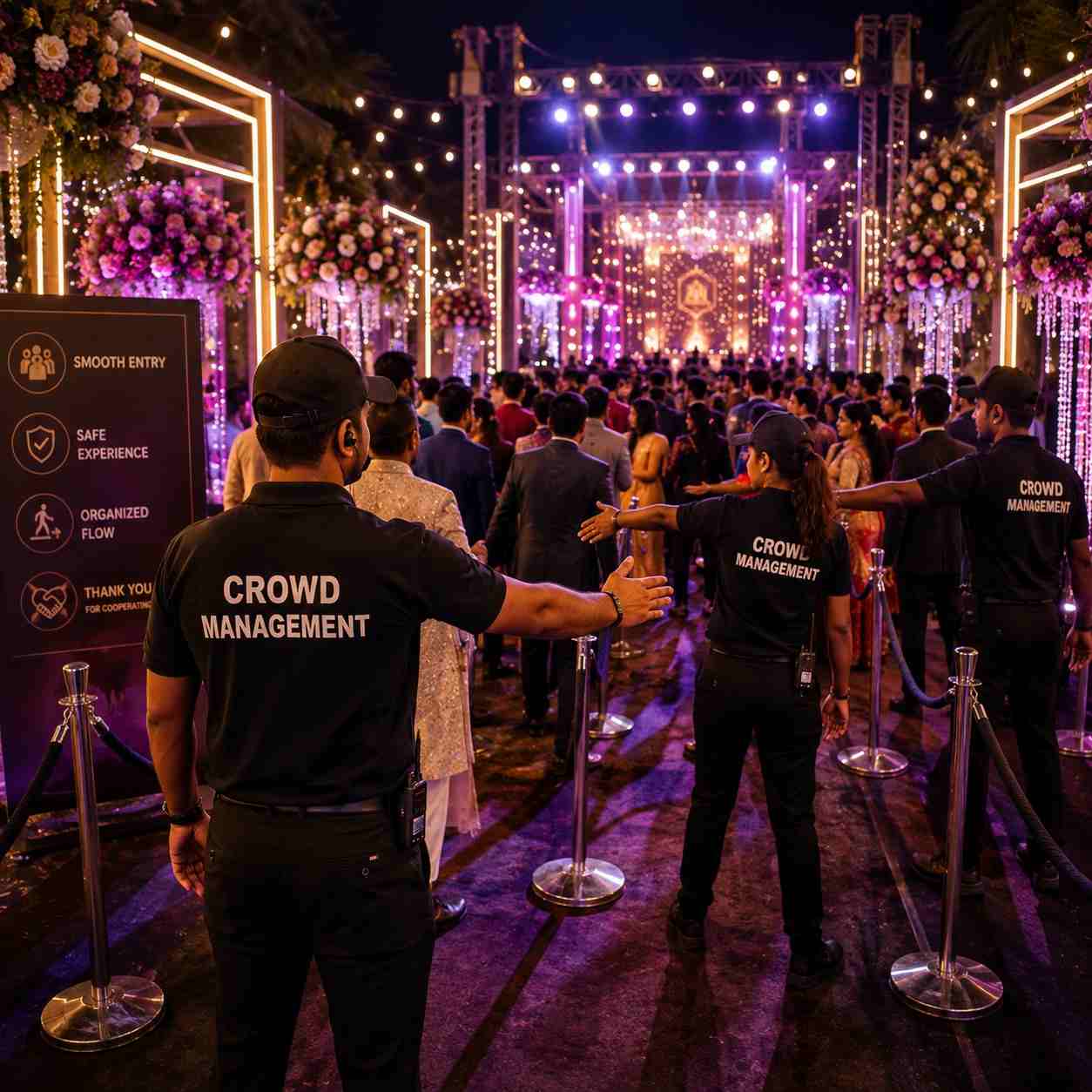
Gathering Crowd Management
Gathering crowd management supports orderly audience movement with trained control staff, queue handling and guest flow coordination for concerts and public events.
Explore Event Support Services






Explore Other Experiences
















Explore by Occasion






Gathering Crowd Management
◆Large gatherings and concerts can bring together substantial audiences within a limited venue and timeframe. Managing how people enter, queue, move between areas and leave the venue is an important part of event organisation. Gathering crowd management services provide staff and procedures designed to support orderly audience movement and efficient guest flow.
Audience control staff can assist with entry points, queues, designated access areas and movement between different sections of the venue. Effective crowd management should be coordinated with the event organiser, venue team, security personnel and relevant emergency procedures.
The Art of Crowd Management
Crowd management involves planning how attendees move through an event environment rather than simply reacting when congestion occurs. Entry points, exits, barriers, queues, seating areas and high-traffic locations can all be considered during preparation.
The objective is to maintain clear and organised movement while providing attendees with appropriate directions and assistance throughout the event.
Concert Crowd Management
Concerts can experience concentrated audience movement before the performance, during breaks and immediately after the show. Crowd management staff can be positioned at key areas to support orderly movement during these periods.
The venue layout, expected attendance, number of entry points and event programme should be considered when determining staffing and crowd-flow arrangements.
Audience Control Staff
Audience control staff provide a visible point of assistance for attendees. Their responsibilities may include directing guests, managing queues, monitoring designated access points and communicating event information.
Staff should understand their assigned responsibilities and escalation procedures and should work within the venue's established safety and security arrangements.
Queue Handling
Queues can develop at ticket checks, entrances, security screening points, merchandise counters, food areas and other busy locations. Organised queue handling can help prevent unnecessary congestion.
Queue areas can be clearly marked, with staff positioned where they can provide directions and identify developing bottlenecks. The arrangement should allow suitable access to exits and other essential areas.
Guest Flow Management
Guest flow refers to the movement of attendees through different parts of the event. This may include arrival, entry, movement toward seating or standing areas, access to facilities and departure.
A guest-flow plan can identify high-traffic locations and establish appropriate routes between key areas. Staff can then provide directions and help maintain orderly movement.
Concert Entry Management
Concert entry can involve large numbers of people arriving within a relatively short period. Entry management may include queue organisation, ticket-checking coordination, access control and directions to the appropriate venue areas.
Organisers can review expected arrival patterns and establish sufficient entry capacity and staffing before the event begins.
Audience Exit Management
The end of a concert can create a sudden increase in movement as large numbers of attendees leave at the same time. Exit planning can help organise this movement and reduce unnecessary congestion.
Staff can provide directions toward designated exits, transport areas and other relevant locations while coordinating with venue and security teams.
Crowd Flow at Public Events
Public gatherings may have several activity areas that attract different levels of attendance. Crowd management can help organisers understand how visitors move between these areas.
Signs, barriers, staff positions and clearly defined routes can support smoother movement without unnecessarily restricting attendees.
Entry Queue Coordination
Entry queues may involve different categories of guests, such as general admission, VIP attendees, staff, performers or accredited personnel. Separating access routes where appropriate can help reduce confusion.
Queue arrangements should be communicated clearly so attendees know where they are expected to enter and what process applies to them.
Barrier and Route Management
Temporary barriers and defined routes can help guide audience movement in busy environments. Their placement should be planned with the venue and event team to ensure that designated access and emergency routes remain appropriate.
Crowd management staff can monitor these areas and report problems or changes to the responsible event or venue personnel.
VIP and Special Access Management
Concerts and public events may have dedicated access arrangements for VIP guests, performers, media, staff or accredited personnel. Clearly identified routes can help separate these movements from general audience traffic where required.
Staff should be briefed on access permissions and escalation procedures before the event begins.
Guest Direction Services
Attendees may need directions to seating sections, standing areas, restrooms, food counters, exits, transport points or other facilities. Audience control staff can provide simple directions and help reduce confusion.
Clear signage can complement staff assistance and provide information before guests reach busy areas.
Crowd Management at Venue Entrances
Venue entrances are often among the busiest points during a concert. Staff can help organise queues, direct attendees toward appropriate access points and communicate any changes to the entry process.
Entrance arrangements should be reviewed in advance based on expected attendance and the physical characteristics of the venue.
Managing High-Traffic Areas
Certain locations can experience greater pedestrian movement than others. These may include entrances, exits, stairs, corridors, food areas, restrooms and transport pickup points.
Identifying these areas before the event allows organisers to consider appropriate staffing, signage and movement arrangements.
Coordination with Event Security
Crowd management and security are related but distinct functions. Audience control staff may focus on movement, information and queue organisation, while security personnel handle security-related responsibilities according to the event plan.
Both teams should understand their respective roles and communication channels before the concert begins.
Emergency Communication
Crowd management plans should include clear communication procedures for unexpected situations. Staff should know whom to contact when an issue exceeds their assigned responsibilities.
Emergency instructions should come from the designated event, venue or emergency-management team, and staff should follow established procedures rather than improvising instructions.
Staff Briefing and Deployment
Before the concert, crowd management staff should be briefed on the venue layout, assigned positions, entry and exit arrangements, guest categories and communication procedures.
Deployment can be adjusted according to expected audience numbers and anticipated periods of high traffic.
Managing Crowd Movement During Intervals
Concert intervals, supporting performances and programme changes can cause temporary increases in movement. Staff can monitor high-traffic areas and provide directions during these periods.
The layout should allow attendees to move between designated areas without unnecessarily obstructing other guest routes.
Transport and Departure Flow
After a concert, attendees may move toward parking areas, public transport stops, taxis or pickup zones. Crowd management can support orderly movement toward these designated areas.
Event organisers can coordinate with venue and transport teams to provide clear information about departure routes and collection points.
Accessibility and Guest Assistance
Some attendees may require accessible routes or additional assistance when moving through the venue. Crowd management staff should be familiar with the venue's designated accessible pathways and facilities.
Assistance should be provided appropriately while maintaining clear routes for all attendees.
Family and General Audience Assistance
Public concerts can include families, older attendees and guests unfamiliar with the venue. Visible audience-control staff can provide directions and general assistance when required.
Clear signage and straightforward instructions can reduce confusion, particularly during arrival and departure periods.
Crowd Monitoring
Monitoring crowd movement allows staff to identify developing congestion and communicate concerns to the appropriate event team. Regular observation of queues, entrances and high-traffic areas can support proactive event management.
Any significant concern should be escalated according to the event's established procedures.
Planning Your Concert Crowd Management
Begin by reviewing the venue layout, expected attendance, entry points, exits, seating or standing areas and other high-traffic locations. Identify where queues are likely to form and determine how attendees will move through the venue.
Next, establish staff positions, communication channels and escalation procedures. Brief all personnel before the event and coordinate the crowd-management plan with the venue and security teams.
Booking Gathering Crowd Management Services
When arranging crowd management for a concert, consider expected audience size, venue design, entry and exit arrangements, queue requirements, VIP access, transport flow and event timings.
A well-planned crowd management service can provide visible audience assistance, organised queue handling and coordinated guest flow while working alongside the venue's broader safety and security arrangements.
Frequently Asked Questions
1. What is gathering crowd management?
Gathering crowd management is the organised planning and coordination of audience movement, queues, entrances, exits and guest flow during concerts and other public events.
2. What do audience control staff do?
Audience control staff can provide directions, assist with queues, monitor designated access areas and support orderly guest movement according to the event plan.
3. Why is queue handling important at concerts?
Concerts can attract large numbers of people at entrances and other busy areas. Organised queues can help reduce congestion and provide clearer access for attendees.
4. What is guest flow management?
Guest flow management involves planning and coordinating how attendees move between entrances, seating or standing areas, facilities, activity areas and exits.
5. Can crowd management staff help with concert exits?
Yes. Staff can provide directions toward designated exits and departure areas while coordinating with the venue and event teams.
6. Is crowd management the same as security?
No. Crowd management generally focuses on organised movement, queues and guest assistance, while security personnel have separate security-related responsibilities.
7. Can crowd management support VIP access?
Yes. Staff can help direct VIP guests and other authorised attendees toward designated access routes according to the event's arrangements.
8. What areas require the most crowd-management attention?
Entrances, exits, ticketing or screening points, stairs, corridors, food areas, restrooms and transport pickup points can become high-traffic locations.
9. How should crowd management staff be prepared?
Staff should be briefed on the venue layout, assigned positions, guest routes, access arrangements, communication channels and escalation procedures before the event.
10. What should I consider when arranging concert crowd management?
Consider audience size, venue capacity and layout, entry and exit points, queue arrangements, high-traffic areas, staffing levels, accessibility, VIP access, transport flow and coordination with venue and security teams.