
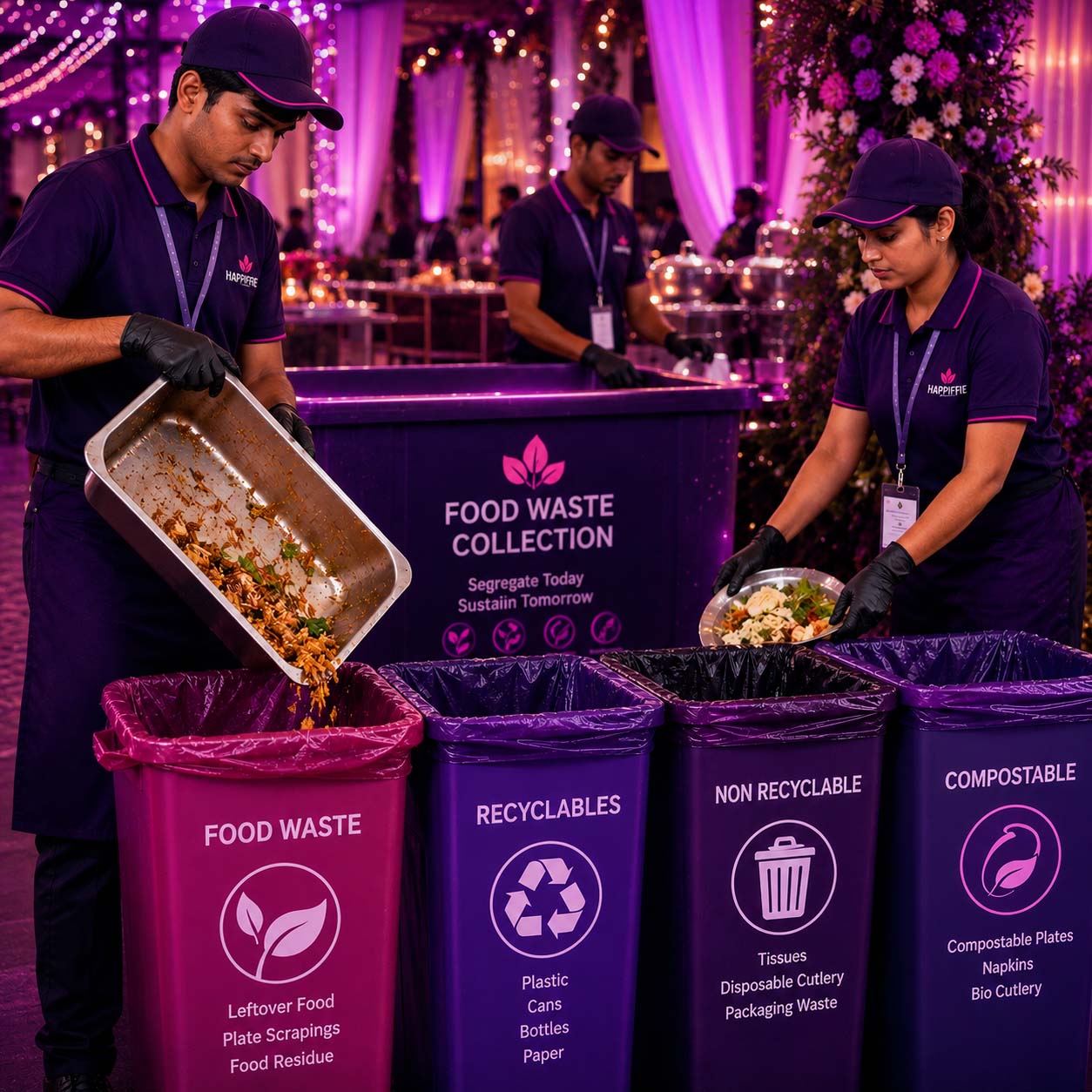
Function Food Waste Management
Keep event spaces clean and organized with function food waste management covering catering waste collection, responsible food disposal, composting, and coordinated waste handling for indoor and outdoor events, weddings, celebrations, and gatherings.
Explore Event Support Services


Explore Other Experiences









Explore by Occasion


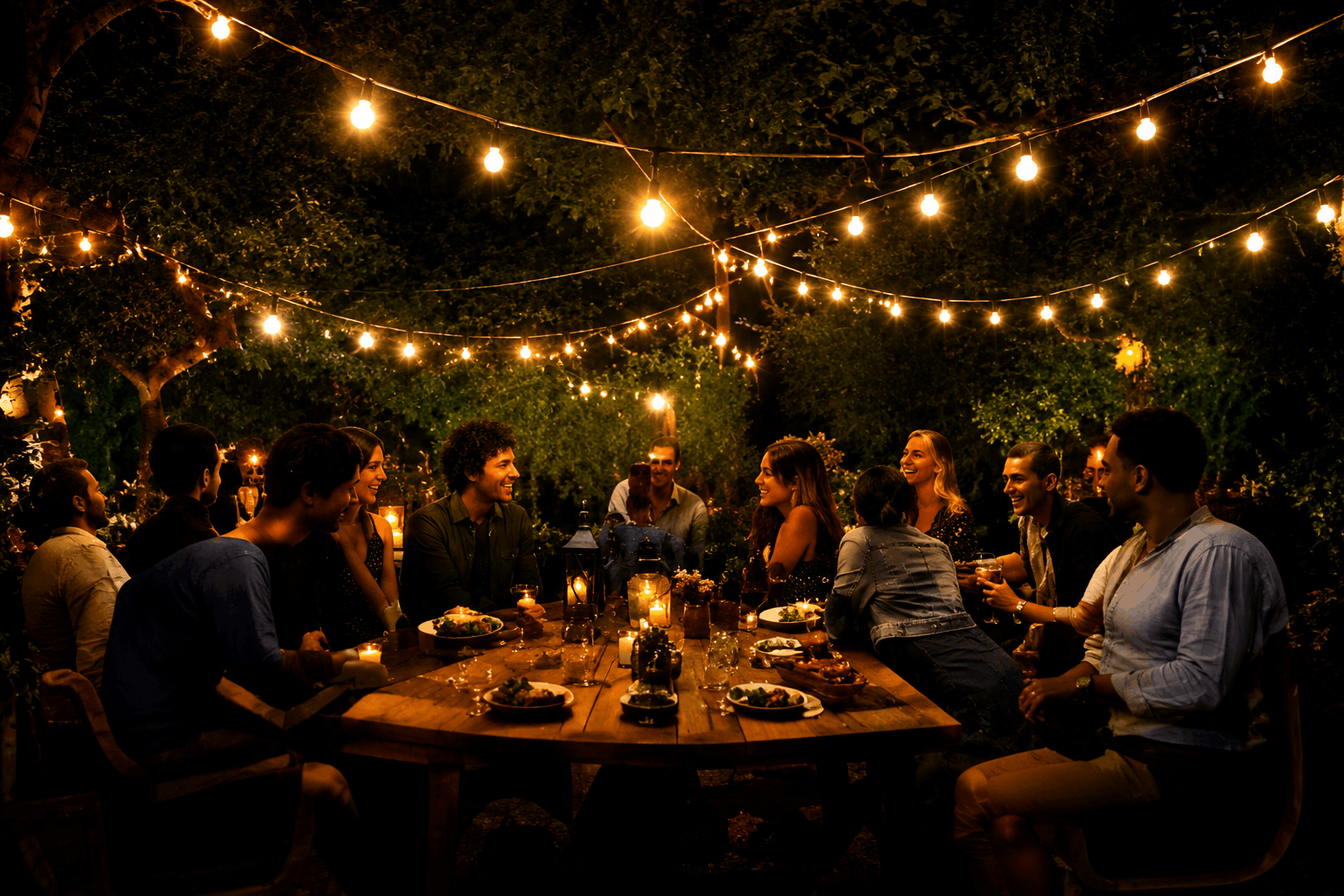

Function Food Waste Management for Events
◆Food service is an important part of weddings, parties, conferences, business gatherings, and other indoor and outdoor events. When large quantities of food are prepared and served, managing leftover food and catering waste becomes an important part of responsible event operations.
Function Food Waste Management provides an organised approach to catering waste collection, food disposal, composting, and event waste handling. A structured process can help organisers manage food-related waste efficiently while keeping event spaces cleaner and more organised.
Happiffie helps event organisers discover solutions for food waste collection, catering waste disposal, organic waste composting, and waste management for indoor and outdoor events.
Catering Waste Collection
Catering waste collection involves gathering food-related waste generated during preparation, service, and cleanup.
Waste may come from food preparation areas, buffet counters, dining spaces, serving stations, and other catering operations.
A planned collection process can help keep waste organised throughout the event.
Food Disposal
Food disposal involves handling leftover or discarded food according to the selected waste management process.
Organisers and catering teams can establish designated collection points so that food waste is separated from other event waste.
Proper organisation can help simplify the cleanup process after meals and functions.
Composting
Composting provides a method for managing suitable organic food waste.
Where appropriate facilities and processes are available, food waste can be collected separately for composting rather than being mixed with general waste.
This can be incorporated into an event's broader waste management plan.
Event Waste Management
Event waste management covers the collection, separation, handling, and disposal of waste generated throughout a function.
Food waste is one component of the overall process and may need to be managed alongside packaging, disposable items, decorations, and other materials.
A coordinated approach can help maintain cleaner event spaces.
Food Waste Collection
Food waste collection should be planned around the way food is prepared, served, and cleared.
Collection points can be positioned near catering areas, buffet stations, dining spaces, or designated cleanup zones.
This helps staff collect food waste systematically during and after the event.
Catering Waste Disposal
Catering operations can generate waste during preparation as well as after food service.
A catering waste disposal plan can establish how different types of food-related waste are collected and handled.
This helps catering teams understand where waste should be placed during event operations.
Organic Waste Composting
Organic waste composting can be considered for suitable food waste streams when appropriate composting facilities are available.
Separating eligible organic material from other waste can support a more organised waste handling process.
The actual composting method should follow the requirements of the selected waste management provider and applicable local practices.
Wedding Food Waste
Weddings can involve large-scale catering, buffet service, family meals, and multiple food stations.
As a result, food waste may be generated across preparation areas, serving counters, dining spaces, and cleanup operations.
A planned waste collection process can help wedding teams manage food-related waste more efficiently.
Event Waste Collection
Event waste collection should account for the size and format of the function.
Indoor celebrations may require collection points in kitchens, dining areas, and service zones, while outdoor events may require additional collection arrangements across larger spaces.
The collection plan can be adapted according to the venue layout.
Indoor Event Waste
Indoor events may include weddings, conferences, meetings, banquets, parties, and business gatherings.
Food waste collection points can be positioned where they are accessible to catering and cleanup teams while maintaining the appearance and cleanliness of the venue.
Waste can then be transferred to designated handling areas.
Outdoor Event Waste
Outdoor events can generate food waste across multiple dining and catering locations.
Because outdoor venues may cover larger areas, waste collection points may need to be distributed throughout the event space.
A planned collection route can help staff manage waste without disrupting guests or event activities.
Buffet Food Waste Management
Buffet-style service can generate food waste from preparation, serving, and leftover portions.
A structured collection process can help catering teams identify suitable waste streams and move discarded food to designated collection areas.
This can make cleanup more systematic after buffet service.
Food Preparation Waste
Food preparation can generate organic waste before food reaches guests.
Depending on the catering operation, this may include food scraps and other organic materials.
Separating appropriate waste during preparation can make subsequent collection and handling more organised.
Leftover Food Handling
Leftover food should be managed according to the event's planned food handling and waste procedures.
Organisers can establish designated processes for food that is intended for disposal and any food that may be handled through other approved arrangements.
Clear procedures help avoid confusion during post-service cleanup.
Waste Segregation
Waste segregation involves separating different waste streams rather than placing everything into a single collection container.
Food waste can be separated from packaging, recyclables, and general waste where suitable facilities are available.
This can make downstream handling more organised.
Catering Team Coordination
Catering staff play an important role in food waste management.
They may need clear instructions regarding collection points, waste separation, disposal procedures, and cleanup responsibilities.
Coordinating these activities before the event can help the catering operation run more smoothly.
Waste Collection Points
Designated waste collection points provide clear locations for placing food-related waste.
Their positioning should consider catering workflows, guest movement, venue access, and cleanup requirements.
For larger events, multiple collection points may be appropriate.
Post-Event Food Waste Cleanup
After the event, remaining food waste must be collected and moved from catering and dining areas.
A post-event cleanup plan can identify responsible staff, collection points, transport arrangements, and final handling procedures.
This helps complete the food waste management process systematically.
Food Waste Planning for Large Functions
Large functions may produce substantial quantities of food waste due to the number of guests and scale of catering.
Conferences, weddings, festivals, parties, and business gatherings can benefit from planning collection requirements before the event begins.
The expected guest count and catering format can help determine the scale of waste management arrangements.
Sustainable Event Waste Practices
Food waste management can form part of a broader approach to responsible event operations.
Separating suitable organic waste, organising collection points, and using appropriate disposal or composting arrangements can contribute to more structured waste handling.
The exact practices should depend on available facilities and applicable requirements.
Choosing a Food Waste Management Service
When selecting a Function Food Waste Management service, consider the event size, catering format, venue type, expected food waste, collection requirements, disposal arrangements, and composting options.
For indoor and outdoor functions, the service should be able to accommodate the venue layout and the operational needs of the catering team.
Why Choose Happiffie?
Happiffie helps organisers discover providers and solutions for Function Food Waste Management, catering waste collection, food disposal, composting, event waste management, and organic waste handling.
Whether you are planning a wedding, party, conference, business gathering, indoor function, or outdoor event, Happiffie helps you explore waste management solutions suited to the scale and format of the occasion.
Providers may support food waste collection, catering waste disposal, organic waste composting, waste segregation, and post-event cleanup coordination.
Conclusion
Effective food waste management helps event organisers maintain cleaner and more organised catering operations. Planning collection points, separating appropriate waste streams, coordinating catering teams, and arranging suitable disposal or composting can simplify food-related waste handling.
Function Food Waste Management can support weddings, parties, conferences, business gatherings, and both indoor and outdoor events through organised catering waste collection, food disposal, composting, and event waste management.
With Happiffie, organizers can discover solutions designed to manage food waste responsibly and coordinate waste handling as part of the overall event planning process.
Frequently Asked Questions
1. What is Function Food Waste Management?
It is an organised approach to collecting, separating, handling, disposing of, and, where suitable, composting food waste generated during events.
2. What is included in catering waste collection?
It can include collecting food-related waste from preparation areas, buffet counters, serving stations, dining spaces, and cleanup areas.
3. Can food waste be composted?
Suitable organic food waste can be directed toward composting when appropriate facilities and processes are available.
4. Is food waste management useful for weddings?
Yes. Weddings often involve large-scale catering and can benefit from organised food waste collection and disposal arrangements.
5. Can outdoor events use food waste collection services?
Yes. Outdoor events can use designated collection points and planned collection routes based on the size and layout of the venue.
6. How is indoor event waste managed?
Food waste can be collected from catering and dining areas and transferred to designated handling locations according to the event's waste management plan.
7. What is organic waste composting?
It is the process of managing suitable organic waste through composting facilities or systems rather than combining it with general waste.
8. Why is waste segregation useful?
Separating food waste from packaging, recyclable materials, and general waste can make collection and subsequent handling more organised.
9. Can catering teams participate in waste management?
Yes. Catering teams can follow designated collection, separation, and disposal procedures as part of the event waste management plan.
10. What are waste collection points?
They are designated locations where food and other event waste can be placed for organised collection and further handling.
11. Can large events require multiple collection points?
Yes. Larger venues or outdoor functions may require multiple collection locations based on guest movement, catering areas, and venue layout.
12. Why choose Happiffie for food waste management?
Happiffie helps organisers discover solutions for catering waste collection, food disposal, composting, event waste management, wedding food waste, indoor event waste, outdoor event waste, and organised food waste handling.