
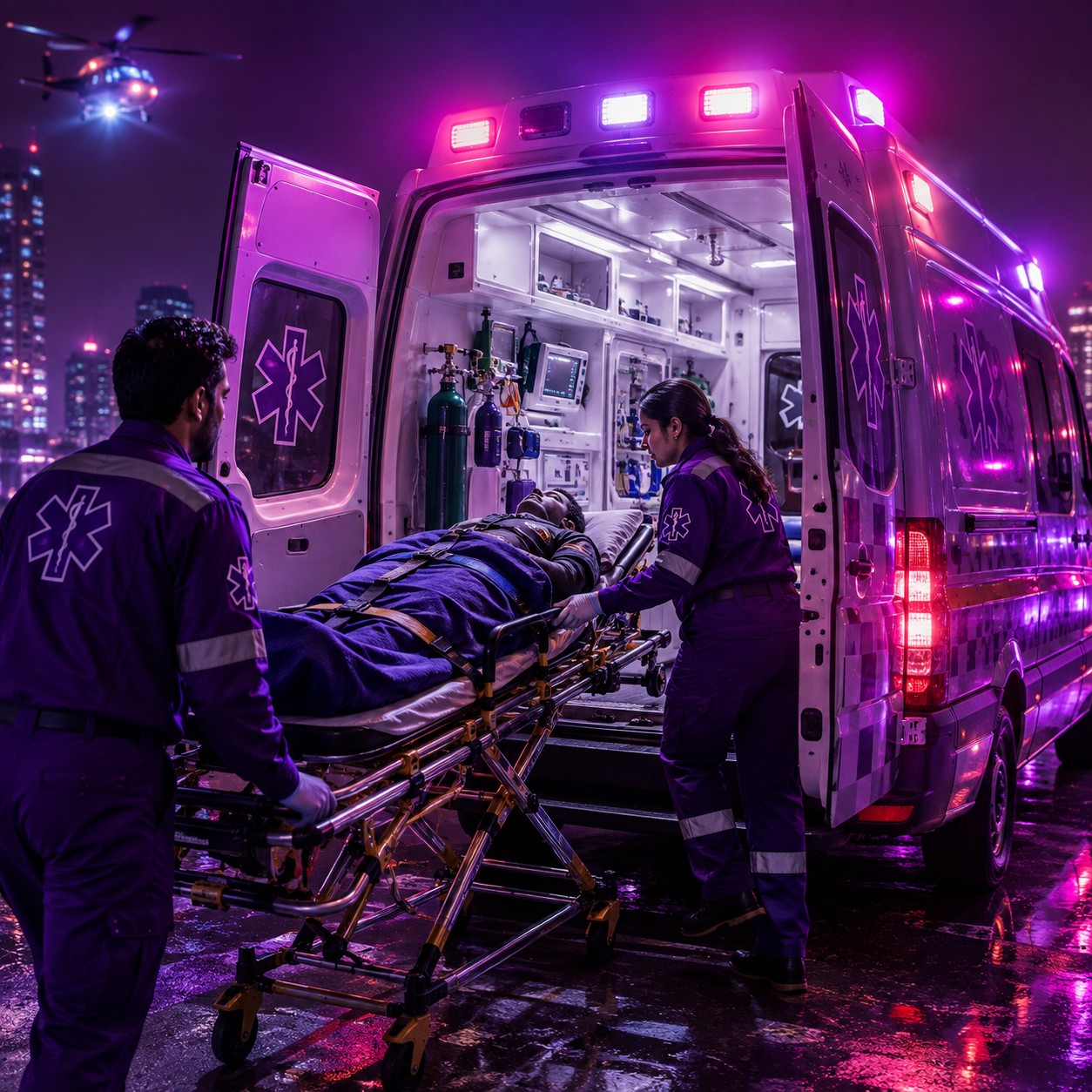
Function Ambulance Services
Function ambulance services provide emergency transport, paramedic support and medical assistance arrangements for large gatherings, concerts, weddings and public events.
Explore Event Support Services




Explore Other Experiences

















Explore by Occasion






Function Ambulance Services
◆Body Content
Large gatherings can bring together substantial numbers of people in venues where immediate access to appropriate medical assistance is an important consideration. Function ambulance services can provide dedicated emergency transport and trained medical personnel for events where organisers require onsite medical support.
Depending on the event and service arrangement, an ambulance team may support initial medical assessment, emergency response and transportation to an appropriate medical facility when required. The exact medical services available depend on the provider, personnel, vehicle capabilities, local requirements and event plan.
The Art of Event Medical Planning
Event medical planning starts with understanding the size, location and nature of the gathering. Organisers can consider expected attendance, venue layout, event duration, crowd profile and the activities taking place.
A medical response plan can then identify ambulance access points, suitable vehicle positioning, communication arrangements and procedures for contacting local emergency services when necessary.
Ambulance Services for Large Gatherings
Large public gatherings may require additional medical preparedness because a substantial number of attendees are present in one location. Dedicated ambulance services can provide an onsite medical resource according to the agreed event plan.
The level of support should be determined in consultation with the medical provider and relevant authorities, taking into account the characteristics and requirements of the event.
Emergency Transport
Emergency transport involves transferring a person requiring medical attention to an appropriate healthcare facility. Where an event ambulance is deployed, the medical team can assess the situation and determine whether transportation is required within their scope of practice.
Emergency transport arrangements should complement, rather than replace, the local emergency medical system.
Paramedic Team Support
Paramedics and other qualified medical personnel can provide trained emergency medical assistance at events. Their responsibilities depend on their professional qualifications, applicable regulations and the service arrangement.
A dedicated team can provide an identifiable medical presence so that event staff know where to direct medical concerns or requests for assistance.
Medical Evacuation Arrangements
Medical evacuation refers to moving an attendee from the event location to an appropriate healthcare facility when medical circumstances require further treatment.
The evacuation route should be considered during event planning. Ambulance access should remain practical, and event staff should know how to communicate with the medical team when an evacuation is required.
Concert Ambulance Services
Concerts can involve large audiences, extended standing periods, loud environments and significant movement around the venue. Event ambulance services can be arranged to provide medical support appropriate to the concert's size and circumstances.
Ambulance positioning should be coordinated with venue management so that medical personnel can reach relevant areas while maintaining suitable vehicle access.
Wedding Ambulance Services
Large weddings and receptions may also require event medical planning, particularly where substantial guest numbers, multiple venues or extended programmes are involved.
An ambulance service can provide a dedicated medical resource for the duration of the agreed coverage period. The appropriate level of support should be determined based on the event's specific requirements.
Public Function Medical Support
Public functions may include community celebrations, cultural programmes, festivals, exhibitions and other gatherings. Medical support can be incorporated into the overall event plan according to anticipated attendance and activities.
Organisers should coordinate medical arrangements with venue management and relevant emergency services.
Onsite Medical Assistance
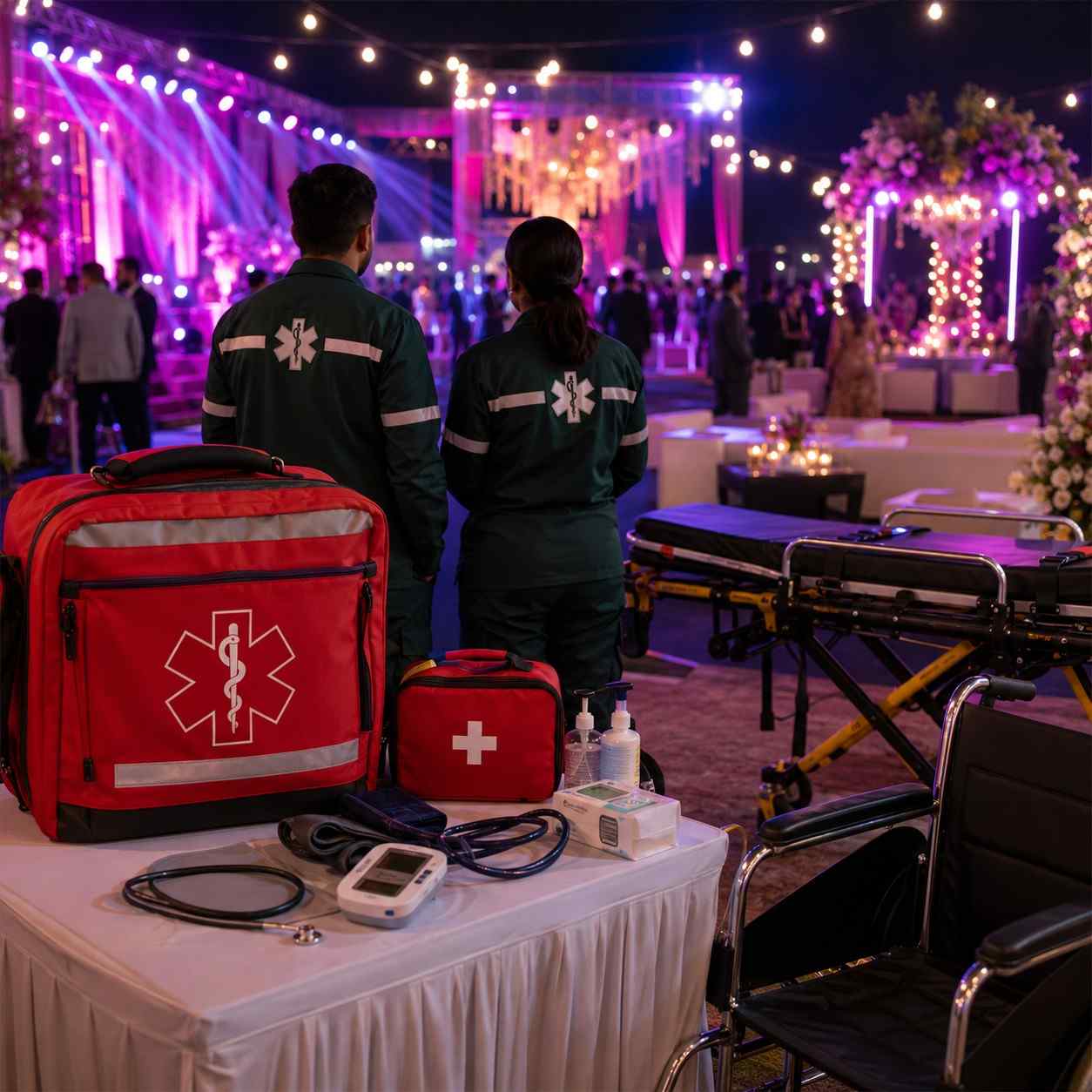
An onsite medical team can provide an accessible point of contact for attendees who experience a health concern during the function. The exact services available depend on the qualifications of the personnel and the provider's scope of service.
The medical team should have appropriate communication channels with the event organiser and venue management.
Ambulance Positioning at Events
Ambulance placement is an important practical consideration. The vehicle should be positioned where it can provide appropriate access while not unnecessarily interfering with normal guest movement.
Organisers can identify an access route and designated medical area before the event. The final position should take account of venue restrictions and emergency access requirements.
Emergency Access Routes
Emergency access routes should remain clear throughout the event. Tables, barriers, vehicles, temporary structures and other event equipment should not obstruct designated access points.
The ambulance provider and venue team can review the planned route before the function begins to identify any potential access issues.
Event First Aid Coordination
Ambulance services may operate alongside event first-aid teams or onsite medical stations. Clearly defined responsibilities can help staff understand which team should handle different types of medical enquiries.
Coordination between the ambulance provider, first-aid personnel, venue and event organiser should be established before guests arrive.
Medical Response for Large Crowds
Large crowds can make it more difficult for medical personnel to reach an attendee quickly. Event organisers can therefore consider how medical teams will access different sections of the venue.
Clear pathways, staff communication and appropriate medical access points can support a more coordinated response.
Paramedic Support for Outdoor Events
Outdoor functions can present additional planning considerations, including large open areas, weather conditions, uneven surfaces and distances between activity zones.
Medical teams can review the site layout and identify suitable locations for ambulance access and medical assistance before the event.
Medical Support for Corporate Functions
Corporate conferences, exhibitions, annual celebrations and company events may require medical support depending on their size and activities.
An event ambulance can form part of the organiser's wider emergency preparedness arrangements, particularly where large numbers of employees, clients or visitors are expected.
Medical Evacuation Route Planning
A medical evacuation route should connect the event's key areas with an appropriate vehicle access point. Staff should understand how to communicate the location of a person requiring assistance.
The route should be reviewed before the event and kept clear during the function so that medical personnel can respond without unnecessary obstruction.
Communication Between Event Staff and Medical Teams
Clear communication can help event personnel alert medical teams when assistance is needed. Radios, designated contact numbers or other agreed communication methods may be used depending on the event.
Staff should know how to describe the location of an incident and which team member or control point should be contacted.
Medical Support for Multi-Day Functions
Some festivals, conferences and celebrations take place over several days. Medical coverage can be planned for each day according to the expected attendance and programme.
The service schedule should clearly establish coverage periods, staffing arrangements and contact procedures for each stage of the event.
Guest Medical Assistance
Guests may experience a variety of health concerns during a function. Event medical teams can provide assistance within their professional scope and determine whether further medical attention is required.
Organisers should avoid attempting to diagnose or treat medical conditions themselves and should refer medical concerns to qualified healthcare personnel.
Coordination with Local Emergency Services
Dedicated event ambulance arrangements should be coordinated with the local emergency medical system where applicable. Event organisers should understand how emergency services will be contacted if an incident exceeds the capabilities of the onsite team.
Local requirements and emergency procedures can vary by location, so organisers should confirm the appropriate arrangements before the event.
Event Medical Risk Assessment
A medical risk assessment can consider the number of attendees, event duration, venue type, activities, environmental conditions and accessibility for emergency vehicles.
The assessment can help organisers and medical providers determine the appropriate level of medical support for the gathering.
Planning Your Function Ambulance Service
Start by identifying the event location, expected attendance, operating hours and programme activities. Review the venue layout and determine where an ambulance can be positioned without obstructing normal operations.
Next, establish communication arrangements, emergency access routes and coordination procedures with the venue and medical provider. Ensure event staff know how to request medical assistance and how to escalate emergencies.
Booking Function Ambulance Services
When arranging ambulance services for a function, consider the event size, venue, duration, expected audience, ambulance access, paramedic availability, medical facilities nearby and applicable local requirements.
A professional event medical provider can help determine the appropriate service arrangement based on the event's circumstances. Ambulance and paramedic services should be delivered by appropriately qualified personnel and in accordance with applicable medical and emergency regulations.
Frequently Asked Questions
1. What are function ambulance services?
Function ambulance services provide dedicated ambulance and medical support arrangements for organised events such as concerts, weddings, corporate functions and large public gatherings.
2. What does an event ambulance service provide?
Depending on the provider, it may provide emergency medical personnel, onsite medical assistance and emergency transport to an appropriate healthcare facility.
3. Can paramedics be arranged for large events?
Yes. Qualified paramedics or other medical professionals may be available for event coverage, depending on the provider, location and service requirements.
4. What is medical evacuation at an event?
Medical evacuation involves transferring a person who requires further medical care from the event location to an appropriate healthcare facility.
5. Do concerts need ambulance services?
The need depends on the event's size, venue, audience, activities and applicable requirements. Organisers can consult qualified event medical providers when assessing appropriate coverage.
6. Can weddings have dedicated ambulance support?
Yes. Ambulance and medical support can be arranged for weddings and receptions when the organiser determines that dedicated event medical coverage is appropriate.
7. Where should an ambulance be positioned at an event?
The position should provide suitable access for medical response while avoiding unnecessary obstruction of guest movement. It should be planned with the venue and medical provider.
8. Why are emergency access routes important?
Clear access routes allow medical personnel and emergency vehicles to reach relevant areas more effectively when assistance or evacuation is required.
9. Can event ambulance services work with first-aid teams?
Yes. Ambulance personnel can operate alongside event first-aid or medical teams when responsibilities and communication procedures are clearly established.
10. What should I consider when booking function ambulance services?
Consider the event size, venue, expected attendance, duration, activities, ambulance access, medical staffing, emergency communication, evacuation routes and applicable local requirements.