
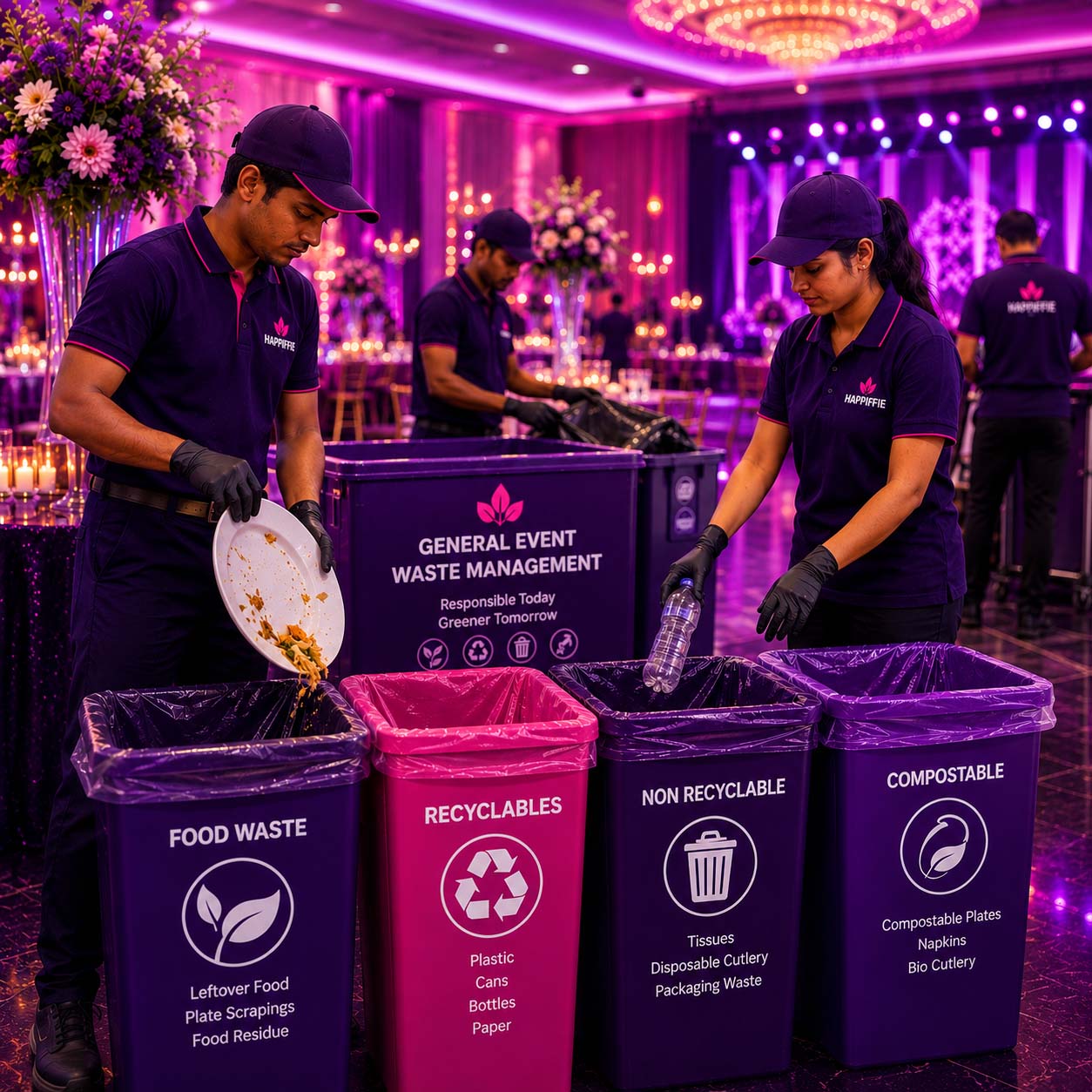
Celebration Waste Management
Maintain clean and organized public celebrations with celebration waste management covering garbage collection, waste segregation, responsible disposal, and coordinated cleanup for festivals, community gatherings, cultural events, and large public functions.
Explore Event Support Services


Explore Other Experiences













Explore by Occasion




Celebration Waste Management for Public Events
◆Public celebrations, festivals, and large gatherings can bring together thousands of people in shared spaces. With increased attendance comes greater volumes of packaging, food-related materials, disposable items, and general garbage. Organising waste collection and cleanup in advance can help maintain cleaner and more manageable event environments.
Celebration Waste Management provides a structured approach to garbage collection, waste segregation, responsible disposal, event cleanup, and public event waste handling.
Happiffie helps organisers discover solutions for festival waste collection, garbage disposal, waste sorting, celebration cleanup, and organised waste management for public festivals and large gatherings.
Garbage Collection
Garbage collection is a fundamental part of managing waste during public celebrations.
Collection arrangements can be planned according to the expected attendance, venue layout, event duration, and types of waste likely to be generated.
Clearly designated collection points can help event teams manage garbage throughout the celebration.
Waste Segregation
Waste segregation involves separating different types of waste into appropriate categories.
Public celebrations may generate recyclable materials, food-related waste, packaging, disposable items, and general garbage.
Organising these materials into suitable waste streams can make collection and subsequent handling more systematic.
Responsible Disposal
Responsible disposal focuses on ensuring collected waste is handled through appropriate disposal arrangements.
Once waste has been collected and sorted, it can be directed toward the relevant disposal or processing route according to the available facilities and event requirements.
This can help reduce unmanaged waste around public celebration areas.
Public Festivals
Public festivals can attract large crowds over several hours or multiple days.
Food stalls, temporary structures, vendors, visitors, and event activities can all contribute to waste generation.
A dedicated festival waste collection plan can help organisers maintain cleaner public spaces throughout the celebration.
Event Waste Management
Event waste management covers the planning and coordination of waste collection, sorting, disposal, and cleanup.
For large gatherings, these activities can be integrated into the wider event operations plan.
Organisers can identify waste-generating areas and establish suitable collection arrangements before the event begins.
Festival Waste Collection
Festival waste collection requires consideration of the scale and layout of the celebration.
Collection points can be positioned near food areas, visitor zones, entrances, activity spaces, and other locations where garbage is likely to accumulate.
Regular collection can help prevent containers from becoming overloaded during busy periods.
Garbage Disposal Services
Garbage disposal services can support the movement and handling of collected waste after it has been gathered from the event site.
The required arrangements may vary according to the size of the celebration and the type of waste generated.
Organisers can coordinate disposal requirements as part of the overall waste management plan.
Waste Sorting
Waste sorting helps separate materials according to their appropriate handling requirements.
For a public event, this may involve separating recyclable materials from general waste and other designated categories.
Clear sorting procedures can make subsequent collection and disposal more organised.
Celebration Cleanup
Celebration cleanup includes maintaining the event area during the function and restoring the venue after activities conclude.
Cleanup teams can monitor waste accumulation, collect garbage, maintain designated waste areas, and support post-event cleaning.
A planned cleanup process can help keep public celebration spaces presentable.
Public Event Waste
Public event waste can be generated across multiple areas of a celebration.
Food service locations, visitor areas, vendor stalls, entry points, seating zones, and activity spaces may all require waste collection.
Understanding these locations before the event can help organisers establish a more effective collection plan.
Festival Cleanup Services
Festival cleanup services can support both ongoing and post-event cleaning requirements.
During the celebration, teams can collect accumulated waste and maintain collection areas.
After the festival, cleanup activities can focus on removing remaining garbage and restoring the event space.
Waste Collection Points
Waste collection points provide designated locations where visitors, vendors, and staff can dispose of garbage.
Their placement should consider crowd movement and the areas where waste is most likely to be generated.
For large public festivals, multiple collection points may be required.
Managing Waste During Large Gatherings
Large gatherings can generate significant amounts of waste within a short period.
Regular collection schedules can help manage waste accumulation and keep public areas more orderly.
The frequency of collection can be planned according to expected attendance and the event's operating hours.
Waste Management Around Food Areas
Food stalls and refreshment areas can become major waste-generating locations during festivals.
Packaging, containers, disposable serving materials, and food-related waste may accumulate quickly.
Placing appropriate collection facilities near these areas can support more efficient garbage management.
Vendor Waste Management
Festival vendors may contribute to the overall waste generated at a public celebration.
Organisers can establish waste handling expectations for participating vendors and identify designated disposal or collection areas.
This can help integrate vendor activities into the wider event waste plan.
Waste Management for Crowded Events
Crowded celebrations require waste collection arrangements that can operate without unnecessarily disrupting visitor movement.
Collection points can be distributed across the venue, while cleanup teams can monitor areas with higher visitor activity.
This can help maintain better waste control throughout the event.
Pre-Event Waste Planning
Waste planning can begin before the celebration takes place.
Organisers can estimate expected attendance, identify waste-generating areas, determine collection points, and plan cleanup requirements.
Early planning allows waste management activities to be incorporated into the overall event schedule.
During-Event Waste Collection
Waste collection should continue throughout the celebration rather than being limited to the end of the event.
Regular monitoring can help identify overflowing collection points and areas where garbage is accumulating.
Timely collection can contribute to a cleaner environment for visitors and event teams.
Post-Event Cleanup
Post-event cleanup focuses on removing remaining waste after the celebration concludes.
Teams can inspect visitor areas, vendor spaces, food zones, activity areas, and other parts of the venue.
A systematic final cleanup can help return the public space to an appropriate condition.
Choosing a Celebration Waste Management Service
When selecting a Celebration Waste Management service, consider the expected crowd size, event duration, venue type, waste categories, collection frequency, sorting requirements, disposal arrangements, and cleanup scope.
For large public festivals, it is also useful to consider how collection points and cleanup teams will operate alongside visitor movement and vendor activity.
Why Choose Happiffie?
Happiffie helps organisers discover solutions for Celebration Waste Management, garbage collection, waste segregation, disposal, festival waste collection, waste sorting, and celebration cleanup.
Whether you are organising a public festival, cultural celebration, community gathering, or other large event, Happiffie helps you explore waste management services suited to the scale and requirements of the occasion.
Providers may support garbage collection, waste sorting, disposal coordination, festival cleanup, public event waste management, and post-event cleaning.
Conclusion
Effective waste management can help public celebrations remain cleaner and more organised. Garbage collection, waste segregation, responsible disposal, regular cleanup, and post-event waste removal all contribute to better management of large gatherings.
Celebration Waste Management can support public festivals and large events through organised garbage collection, festival waste collection, waste sorting, disposal, and celebration cleanup.
With Happiffie, organisers can discover solutions designed to coordinate waste management throughout the event and support efficient cleanup after the celebration.
Frequently Asked Questions
1. What is Celebration Waste Management?
It is an organised approach to collecting, sorting, handling, disposing of, and cleaning up waste generated during celebrations and public events.
2. Why is garbage collection important at public festivals?
Large festivals can generate substantial amounts of waste. Regular garbage collection helps prevent waste from accumulating across busy public areas.
3. What is waste segregation?
Waste segregation is the process of separating different types of waste into appropriate categories for further handling.
4. Can waste management services support large gatherings?
Yes. Waste collection and cleanup arrangements can be planned according to the size, duration, and layout of a large gathering.
5. What are waste collection points?
They are designated locations where visitors, vendors, and event staff can place garbage for organised collection.
6. How often should festival waste be collected?
Collection frequency depends on attendance, event duration, venue layout, and the amount of waste generated.
7. Can festival vendors be included in waste management?
Yes. Vendor waste handling can be incorporated into the wider festival waste collection and disposal plan.
8. What is celebration cleanup?
Celebration cleanup involves collecting accumulated waste during and after an event and restoring the event area following the celebration.
9. Can food areas require separate waste arrangements?
Yes. Food stalls and refreshment areas can generate significant waste and may require convenient collection points and regular servicing.
10. What is post-event cleanup?
Post-event cleanup involves removing remaining garbage and checking the event area after the celebration has ended.
11. How can organisers prepare for festival waste?
Organisers can estimate attendance, identify waste-generating areas, establish collection points, determine collection frequency, and plan sorting and disposal arrangements.
12. Why choose Happiffie for celebration waste management?
Happiffie helps organisers discover solutions for garbage collection, waste segregation, disposal, festival waste collection, waste sorting, celebration cleanup, and public event waste management.