
Celebration Decor Waste Management
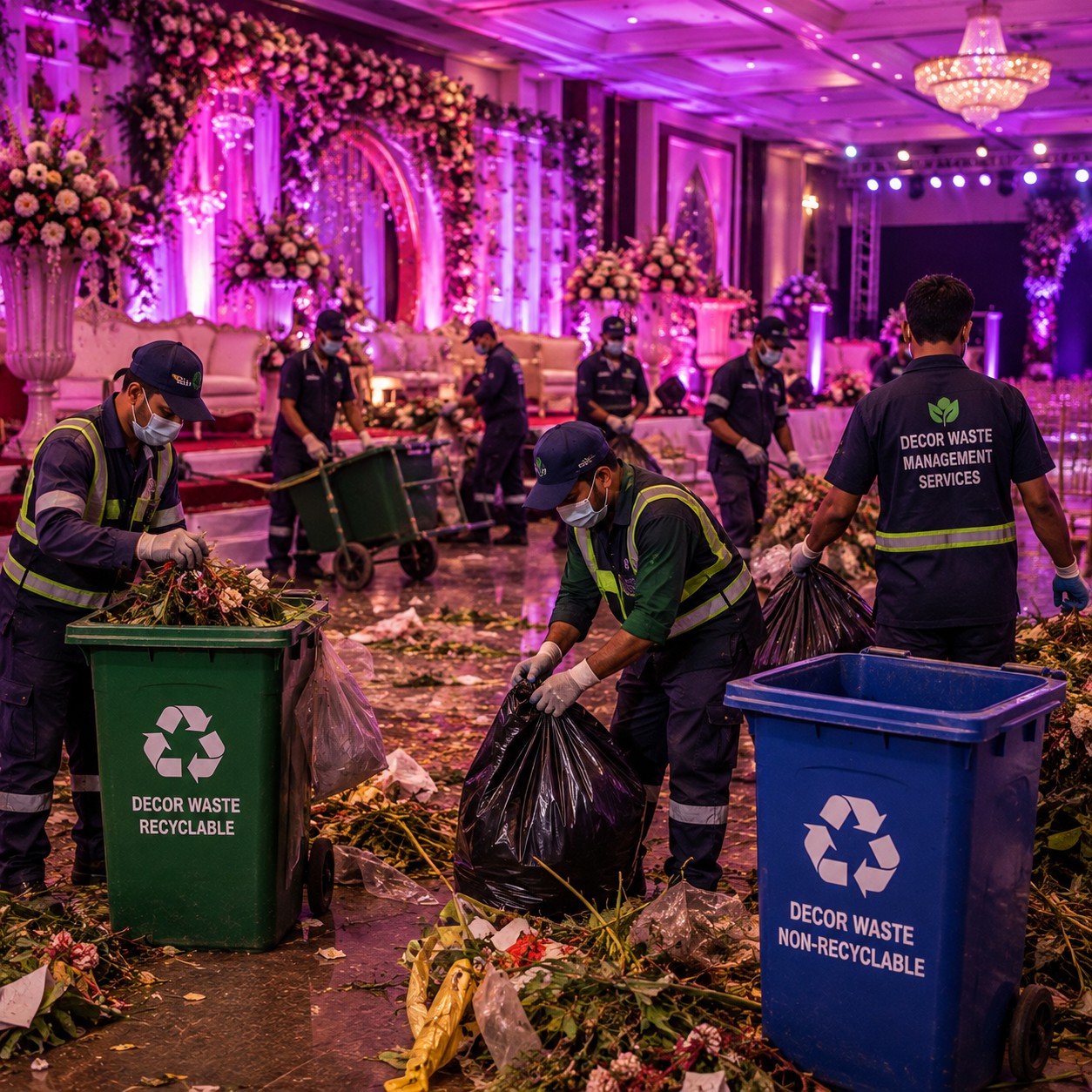
Celebration decor waste management supports decoration debris removal, recycling and venue clearance after weddings, receptions and other festive functions.
Explore Event Support Services




Explore Other Experiences














Explore by Occasion






Celebration Decor Waste Management
◆Wedding functions can generate substantial quantities of decorative waste during installation, throughout the celebration and after dismantling. Floral materials, packaging, fabrics, paper decorations, temporary structures and other event materials may need to be collected and removed from the venue.
Celebration decor waste management services can help organise decoration debris removal, material segregation, recycling and final venue clearance. The exact scope depends on the venue, decoration setup, waste types and disposal arrangements available in the area.
The Art of Decor Waste Management
Decor waste management begins with identifying the materials that will be generated during decoration installation and dismantling. Planning the removal process in advance can help prevent waste from accumulating in guest areas or obstructing venue operations.
A structured approach can separate reusable, recyclable and general waste where appropriate and coordinate collection with the venue's requirements.
Decoration Debris Removal
Decoration dismantling can leave behind flowers, paper, fabric, packaging, cable ties, boards and other materials. Debris removal involves collecting these materials from the event area and preparing them for appropriate disposal or recovery.
Removal should be coordinated with the venue's schedule so that the space can be cleared without unnecessarily disrupting other activities.
Wedding Venue Clearance
After a wedding or reception, the venue may need to be returned to its agreed condition. Venue clearance can include removing temporary decorations, discarded packaging and other event-related materials.
The final clearance process should follow the venue's instructions regarding waste storage, collection points and permitted disposal methods.
Decoration Recycling
Some decoration materials may be suitable for recycling depending on their composition and the facilities available locally. Paper, cardboard, certain plastics, metals and other recoverable materials can be separated where appropriate.
Recyclable materials should be handled according to the requirements of the relevant waste-management provider or local authority.
Floral Waste Management
Weddings often use fresh flowers, leaves, garlands and other natural decorative materials. After the event, these materials can form a significant part of the organic waste stream.
Where suitable facilities are available, floral waste may be directed toward composting or other approved organic-waste processing rather than mixed disposal.
Wedding Decoration Dismantling
Decoration dismantling may involve removing backdrops, floral arrangements, lighting accessories, fabric installations, signage and temporary displays.
Careful dismantling can help preserve reusable materials while reducing unnecessary damage and waste.
Reusable Decor Collection
Not all materials used for a wedding are waste. Reusable props, stands, frames, containers, fabrics and decorative accessories may need to be separated before disposal begins.
A collection process can identify items that belong to the decorator, organiser, venue or rental supplier and arrange their return accordingly.
Packaging Waste Removal
Decoration installations can generate cardboard boxes, plastic wrapping, protective materials, tape and other packaging waste. These materials may accumulate during setup and dismantling.
Removing packaging separately can make the final venue clearance more efficient and may allow suitable materials to enter recycling streams.
Fabric and Textile Decor
Wedding decorations may include drapes, table fabrics, ribbons, artificial flowers and other textile-based materials. Depending on ownership and condition, these items may be reused, returned to suppliers or managed through appropriate disposal channels.
Textile waste should be separated where a suitable recovery option exists.
Paper and Cardboard Decor
Wedding signage, printed displays, invitation-related materials and decorative paper products can contribute to event waste. Clean paper and cardboard may be separated for recycling where local facilities accept them.
Materials contaminated with food or other substances may require different handling.
Plastic Decoration Waste
Certain decorations and packaging may contain plastic components. These can include wrapping materials, disposable decorative items and some temporary installations.
Plastic waste should be sorted according to the capabilities and requirements of the local recycling or waste-management system.
Metal and Structural Materials
Metal frames, stands, supports, wires and other structural components may be reusable or recyclable. These materials should be separated from general waste when practical.
Rental or decorator-owned equipment should be returned rather than treated as waste.
Wedding Stage Clearance
Wedding stages and reception backdrops can involve multiple temporary components. After the function, these structures may need to be dismantled, packed and removed from the venue.
Clearance should be coordinated with the decorator, production team and venue so that equipment and waste are correctly identified.
Mandap and Ceremony Decor Clearance
Traditional wedding ceremony areas can contain floral arrangements, fabric, wood or other decorative elements. Once the ceremony is complete, these installations may need to be dismantled carefully.
Reusable ceremony equipment should be separated from disposable materials before the waste-removal process begins.
Reception Decor Cleanup
Reception areas may contain centrepieces, table decorations, floral arrangements, signage and temporary displays. Once guests have departed, these materials can be collected and sorted.
A planned cleanup sequence can help the venue transition from the decorated event space to its normal operating condition.
Confetti and Small Decorative Materials
Small decorative materials can be difficult to collect after an event, particularly when they are spread across floors and guest areas. The type of material used should be considered when planning cleanup.
Organisers can check venue restrictions before using confetti or similar decorative materials, particularly where specific cleanup or environmental requirements apply.
Balloon Decor Waste
Balloon installations may involve balloons, ribbons, strings and supporting structures. After the event, these materials should be collected and disposed of appropriately rather than left in the venue or surrounding areas.
Reusable structures and accessories should be separated for return or future use.
Outdoor Wedding Decor Clearance
Outdoor celebrations may leave decorative materials across lawns, pathways or other open areas. Weather conditions can also move lightweight materials beyond the immediate event space.
A post-event site inspection can help identify remaining decoration debris and ensure the wider event area is cleared.
Venue Waste Collection Points
Venues may have designated locations where event waste must be placed before collection. Understanding these requirements before the wedding can make the clearance process more efficient.
Waste should not be left in unauthorised areas or in ways that obstruct venue operations.
Coordination with Decorators
Decorators are often responsible for installing and dismantling their own equipment and materials. Waste-management teams can coordinate with them to distinguish reusable property from materials requiring disposal.
Clear responsibility for each waste stream can help avoid confusion during post-event clearance.
Coordination with Rental Suppliers
Wedding rentals can include furniture, props, lighting accessories, tableware and decorative structures. These items should be identified as rental property and separated from waste.
Coordination with suppliers can ensure that rented items are collected or returned within the agreed schedule.
Food and Decor Waste Separation
Wedding venues can generate both food waste and decoration waste. Keeping these streams separate can make disposal and recovery more efficient.
Decor waste should not automatically be mixed with catering waste, particularly when recyclable or reusable materials are present.
Post-Event Venue Cleanup
Once decorations have been dismantled, the venue may require sweeping, collection of small debris and removal of remaining event materials.
The exact cleaning responsibilities should be agreed between the organiser, decorator, waste-management provider and venue before the function.
Waste Segregation
Waste segregation involves separating different categories of materials before disposal or recycling. For wedding functions, categories may include floral waste, paper, cardboard, plastics, metals, textiles, reusable decor and general waste.
The practical categories should reflect the waste-management facilities available locally.
Sustainable Wedding Decor Disposal
Organisers seeking a more sustainable celebration can consider reusable decorations, recyclable materials and reduced packaging during the planning stage.
Waste management after the event can then focus on recovering suitable materials and reducing the amount sent for general disposal.
Large Wedding Waste Clearance
Large weddings can involve multiple halls, outdoor areas, stages and decoration zones. Clearance planning should account for each area rather than treating the venue as a single waste-collection point.
A site-wide clearance checklist can help teams confirm that all event spaces have been reviewed.
Multi-Day Celebration Waste Management
Some wedding celebrations take place over several days and may involve repeated decoration changes. Waste can therefore be generated at multiple stages of the programme.
Scheduled collection and interim clearance can prevent debris from accumulating between functions.
Emergency Decor Waste Clearance
Unexpected damage to decorations, weather-related debris or other event issues may require additional cleanup. A rapid clearance arrangement can help organisers restore affected areas when necessary.
Any hazardous or unsafe material should be handled by appropriately qualified personnel rather than general event-cleanup staff.
Planning Your Celebration Decor Waste Management
Begin by identifying the types and quantities of decorations expected at the wedding. Determine which materials will be reused, returned to suppliers, recycled, composted or disposed of after dismantling.
Next, coordinate collection times with the decorator, venue and waste-management provider. Confirm waste-storage locations, access arrangements and the venue's clearance deadline before the celebration begins.
Booking Celebration Decor Waste Management Services
When arranging decor waste management for a wedding, consider the venue size, decoration volume, number of event areas, floral waste, temporary structures, packaging, recyclable materials and required clearance time.
A professional waste-management service can help organise decoration debris removal, material segregation, recycling and final venue clearance within the agreed scope. Disposal should follow the venue's requirements and applicable local waste-management regulations.
Frequently Asked Questions
1. What is celebration decor waste management?
Celebration decor waste management involves collecting, sorting, recycling and disposing of materials generated from wedding and event decorations.
2. What types of decoration waste can be removed?
Depending on the service, this can include floral waste, paper, cardboard, packaging, fabrics, plastics, temporary decoration materials and general event debris.
3. Can wedding decorations be recycled?
Some materials may be recyclable depending on their composition and the recycling facilities available locally.
4. What happens to reusable decorations?
Reusable decorations, rental equipment and decorator-owned materials should be separated from waste and returned or collected by the responsible party.
5. Can floral wedding waste be composted?
Natural floral materials may be suitable for composting where appropriate facilities are available and the materials meet the requirements of the relevant waste facility.
6. Does decor waste management include venue clearance?
Yes. Where included in the service, venue clearance can involve removing decoration debris and event-related waste after the function.
7. Who should coordinate decoration dismantling?
Decoration dismantling is commonly coordinated with the decorator or relevant event supplier, while waste-management teams can handle agreed collection and disposal activities.
8. Can waste be collected after a large wedding?
Yes. Collection can be planned according to the venue size, waste volume and required clearance schedule.
9. Can outdoor wedding decoration waste be removed?
Yes. Outdoor clearance can include inspecting lawns, pathways and other event areas for remaining decoration debris.
10. What should I consider when arranging decor waste management?
Consider the venue, decoration volume, floral materials, temporary structures, recyclable items, reusable equipment, waste-storage locations, collection timing and the venue's clearance requirements.