
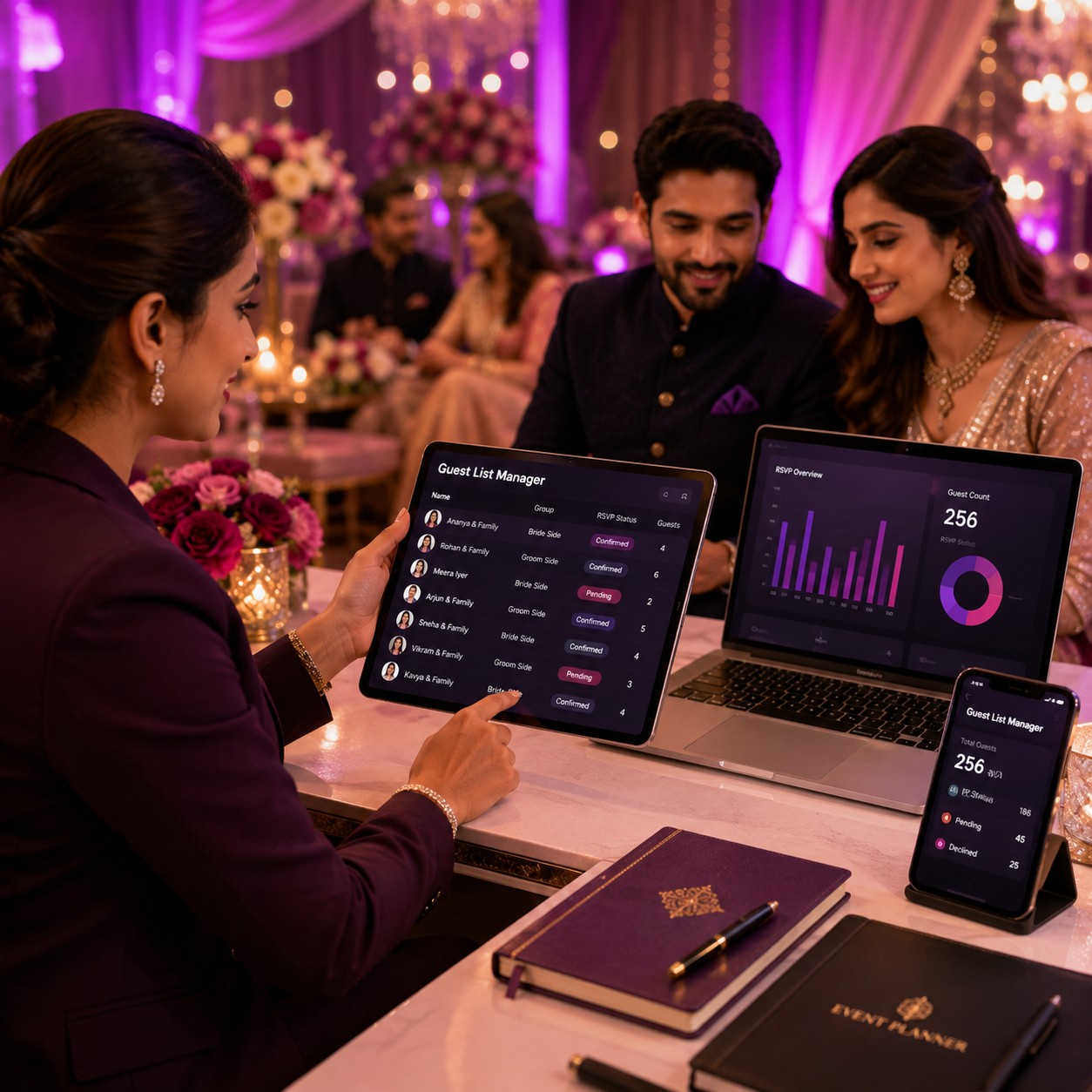
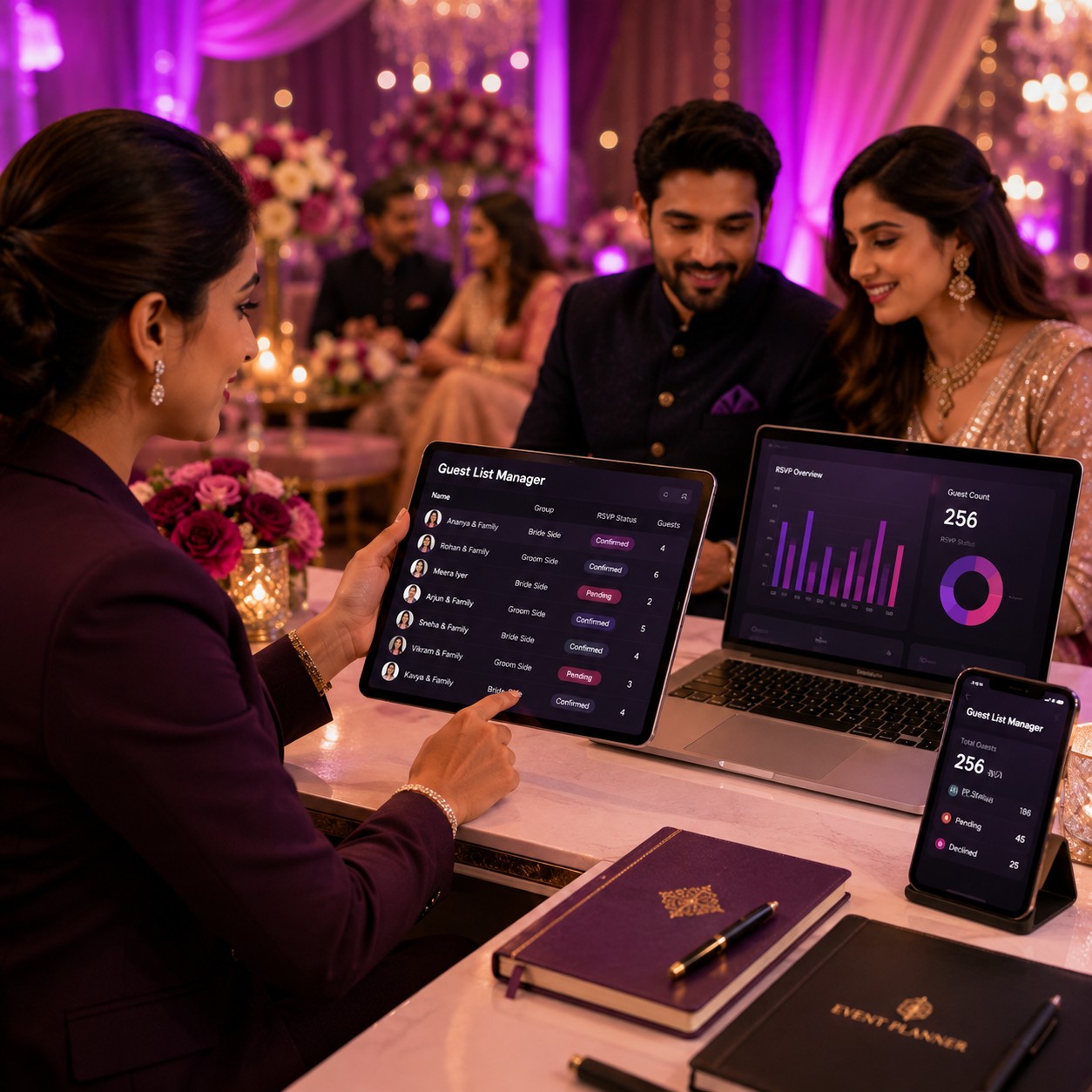
Guest List Management Tool
A guest list management tool helps organise invitees, attendance records and contact details for marriage ceremonies, receptions, birthday parties and social gatherings.
Explore Planning Tools Experiences



Explore Other Experiences
















Explore by Occasion






Guest List Management Tool
◆Managing guests is an important part of organising a marriage ceremony, reception or social gathering. As the number of invitees grows, keeping names, contact details, invitations and attendance information organised can become increasingly difficult. A guest list management tool provides a central way to maintain these details and monitor the status of invited guests.
An invitee database can bring guest information together in one organised record, while attendance records provide a clearer view of who has confirmed their participation. Contact tracking can also help organisers maintain relevant communication details throughout the event planning process.
The Art of Guest List Management
Guest list planning begins with identifying everyone who is expected to receive an invitation. For weddings, this may include family members, friends, colleagues and other invited groups. Social gatherings may involve a smaller or more informal guest list.
A structured guest database can record each invitee and help organisers distinguish between different stages of the invitation process. This provides a clearer overview than maintaining multiple disconnected lists.
Wedding Guest List Management
Marriage ceremonies and wedding receptions often involve large and complex guest lists. A guest list management tool can help organise invitees across the different functions associated with the celebration.
Guests can be grouped according to family, friends, colleagues or other categories. Where a wedding includes several ceremonies, the guest records can also be organised according to the events each invitee is expected to attend.
Invitee Database
An invitee database provides a central record for guest information. Depending on the requirements of the event, records may include guest names, contact details, invitation status and attendance information.
Keeping these details together can make it easier to review the guest list as arrangements progress. It can also reduce the possibility of losing track of individual invitees across separate documents or communication channels.
Attendance Records
Attendance records help organisers understand which invited guests have confirmed their participation. Responses can be recorded as confirmed, declined or pending where the chosen management system supports these statuses.
This information can be useful when planning venue capacity, catering, seating and other event arrangements. Keeping the attendance record updated provides a clearer estimate of the expected guest count.
Contact Tracking for Event Guests
Contact tracking helps organisers maintain relevant information for communicating with invitees. Phone numbers, email addresses or other contact information can be recorded according to the needs of the event.
A central contact record can make follow-up communication more organised, particularly when there are many guests or when event details change before the celebration.
Guest List for Marriage Ceremonies
Marriage ceremonies can have different guest requirements from receptions or other functions. A guest list tool can help organisers identify which invitees are associated with the ceremony and which may be attending other parts of the celebration.
For traditional or multi-day weddings, separate event categories can make the overall guest list easier to manage.
Guest List for Wedding Receptions
Reception guest management may involve table assignments, catering numbers and other arrangements. An organised guest list provides a foundation for preparing these details.
Confirmed attendees can be reviewed before the reception so that organisers have a better understanding of the expected number of guests. The list can also be used alongside a separate seating chart when required.
Guest Groups and Categories
Grouping guests can make a large invitee database easier to navigate. Common categories may include immediate family, extended family, friends, colleagues, VIP guests or other groups relevant to the event.
The categories can be adapted to suit the particular celebration. A structured classification makes it easier to review guest numbers by group.
Family Guest List Management
Family celebrations may involve several generations and extended family groups. Organisers can maintain these guests within the same database while using categories to distinguish different family groups.
This can help when reviewing invitations, attendance responses and contact details during the planning process.
Social Gathering Guest Management
Guest list tools are not limited to weddings. Birthday parties, anniversaries, housewarming events, reunions and other social gatherings can also benefit from organised invitee management.
The size and structure of the database can be adjusted according to the scale of the gathering. Smaller events may require only basic guest and attendance information.
Birthday Party Guest Lists
Birthday celebrations can use a guest management tool to organise invitees and attendance responses. This can be particularly useful for milestone birthdays or larger family parties.
The guest list can support planning for venue capacity, food, seating, entertainment and return gifts by providing an updated view of expected attendance.
Multi-Function Guest Lists
Some celebrations involve multiple events over several days. A central guest database can help organisers track participation across different functions.
For example, an invitee may attend a ceremony but not a reception, while another guest may be invited to several related events. Recording this information separately can provide a more detailed view of the overall guest requirements.
RSVP and Guest List Management
An RSVP system and guest list management tool can work together to maintain attendance information. RSVP responses can be recorded against individual invitees, allowing organisers to see the current status of each guest.
This can reduce the need to maintain a separate response list and make it easier to compare invitations with confirmed attendance.
Pending Guest Responses
Some invitees may not respond immediately. A guest management tool can identify pending responses so organisers can review which invitations still require attention.
This can be useful as the event date approaches, when an accurate estimate of attendance becomes increasingly important for final arrangements.
Guest Contact Information
Maintaining accurate contact information can support event communication. Organisers can use the guest database as a reference when sharing invitations, reminders, venue updates or schedule changes.
Contact information should be collected and maintained appropriately, with access limited to people responsible for event administration.
Guest Attendance Tracking
Attendance tracking can provide a running view of expected participation. As guests respond, their status can be updated so the organiser has a more current picture of the event.
This information can then support decisions related to catering, seating and venue arrangements.
VIP Guest Tracking
Some marriage ceremonies and social gatherings may include VIP guests, senior family members or special invitees who require specific arrangements. These guests can be identified within the guest database.
Separating VIP information can help organisers coordinate seating, reception arrangements and other event requirements while maintaining the main guest list.
Guest List and Seating Arrangements
The guest database can provide the information needed to prepare a seating plan. Once attendance has been confirmed, guests can be assigned to tables according to the event's seating requirements.
The guest list and seating chart serve different purposes but can work together during reception planning.
Guest List and Catering Planning
Expected attendance numbers are important when planning catering. A current guest list can provide organisers with a more reliable estimate than the original invitation count.
As responses change, the attendance record can be updated and the catering estimate reviewed accordingly.
Guest List for Large Events
Large celebrations can quickly become difficult to manage using informal lists. A structured invitee database provides a central record that can be searched, sorted or categorised according to the capabilities of the chosen tool.
This can make it easier to review guest information without repeatedly checking multiple documents.
Digital Guest List Management
Digital guest management can make updating information more convenient than maintaining a static paper list. Guest records can be revised when contact details change or attendance responses are received.
A digital approach can also make it easier to coordinate guest information with other event planning activities.
Guest List Privacy and Access
Guest databases may contain personal contact information, so organisers should consider appropriate privacy and access controls. Only authorised people involved in event management should have access to guest records.
Information should be collected for relevant event purposes and handled responsibly throughout the planning process.
Planning Your Event Guest Database
Start by preparing the initial invitee list and determining what information needs to be recorded. This may include names, contact details, invitation status, attendance response and event-specific notes.
Next, establish categories for different guest groups and functions. As invitations are sent and responses arrive, update the database so it remains a useful and current reference.
Booking a Guest List Management Tool
When choosing a guest list management tool, consider the number of invitees, number of functions, type of contact information required and level of attendance tracking needed. A small birthday party may require a simple list, while a multi-function wedding may need more detailed organisation.
A central invitee database can bring guest records, attendance information and contact tracking together, helping organisers manage marriage ceremonies, receptions and social gatherings more systematically.
Frequently Asked Questions
1. What is a guest list management tool?
A guest list management tool is a system for organising invitees, contact details, invitation status and attendance information for an event.
2. What is an invitee database?
An invitee database is a central collection of guest records that can contain names, contact information, invitation details and other event-related information.
3. Can a guest list tool be used for weddings?
Yes. It can help manage guests for marriage ceremonies, receptions, engagement functions and other wedding events.
4. What are attendance records?
Attendance records show the current response status of invited guests, such as confirmed, declined or pending, when those options are supported.
5. Can contact details be tracked?
Yes. Guest contact information such as phone numbers or email addresses can be maintained when required for event communication.
6. Can one guest list cover multiple wedding functions?
Yes. A central guest database can be organised by individual ceremonies or functions to identify which guests are expected at each event.
7. Can guest lists help with seating arrangements?
Yes. Confirmed guest information can be used as a basis for creating a separate seating chart or table arrangement.
8. Can guest lists support catering planning?
Yes. Current attendance numbers can provide organisers with a more useful estimate when planning catering quantities.
9. Can the tool be used for birthday parties and social gatherings?
Yes. Guest list management can be used for birthdays, anniversaries, reunions, housewarming events and other social functions.
10. What should I consider when choosing a guest list management tool?
Consider the number of guests, number of functions, contact information required, attendance tracking, guest categories, privacy requirements and how the guest information will be used during event planning.