
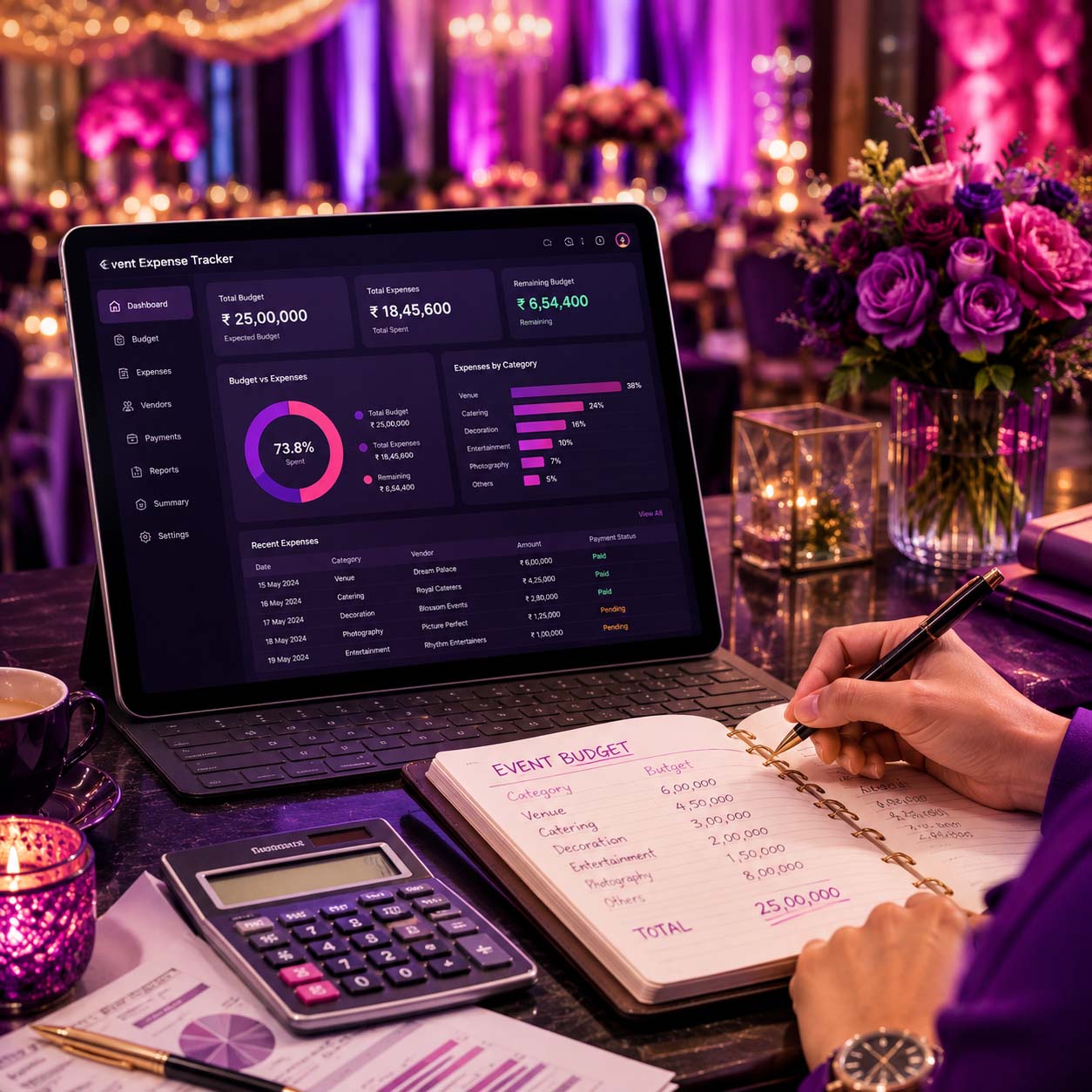
Function Expense Tracking Tool
Keep event finances organized with a function expense tracking tool designed to manage spending records, monitor costs, maintain payment logs, and track budgets across weddings, parties, business gatherings, and special functions.
Explore Planning Tools Experiences

Explore Other Experiences













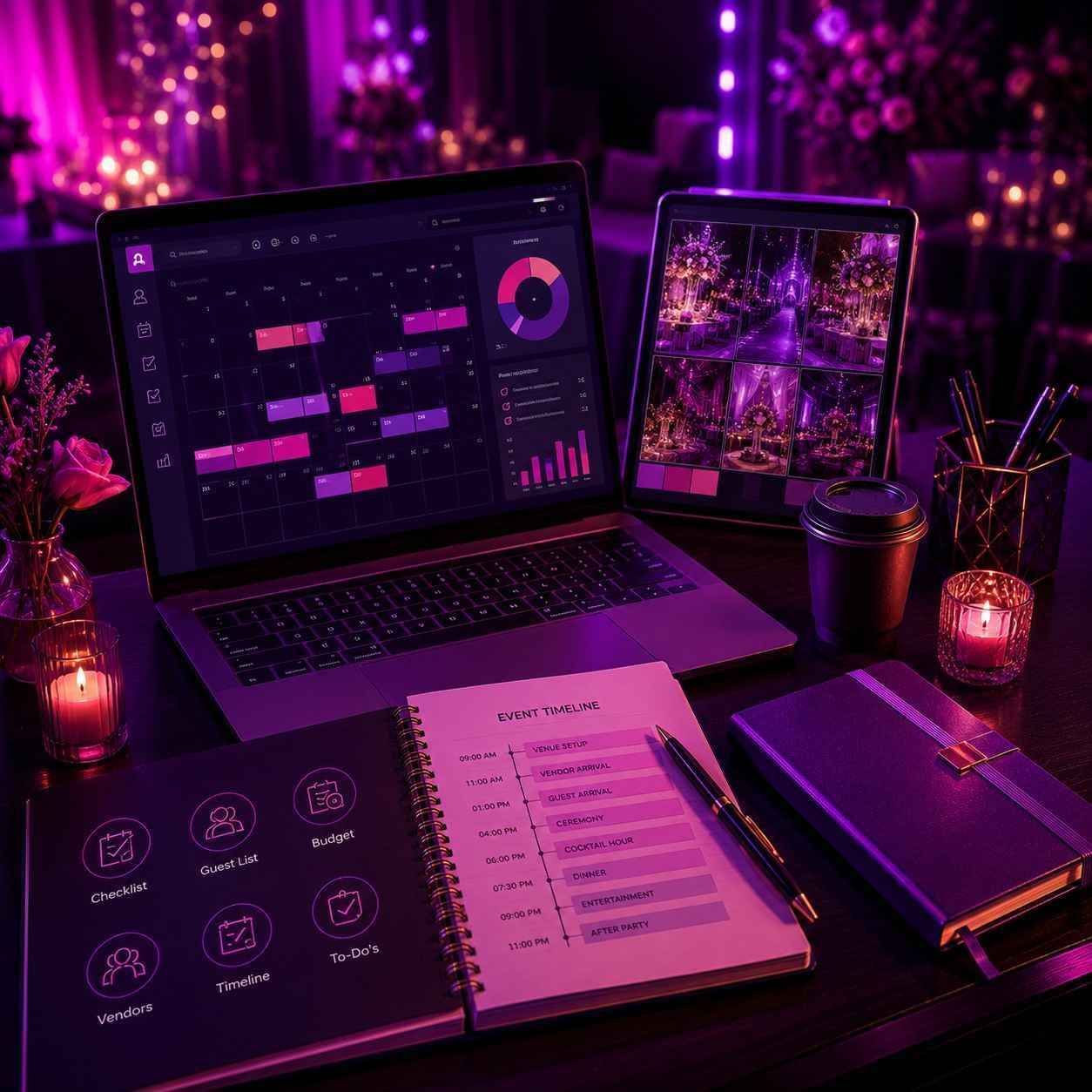

Explore by Occasion
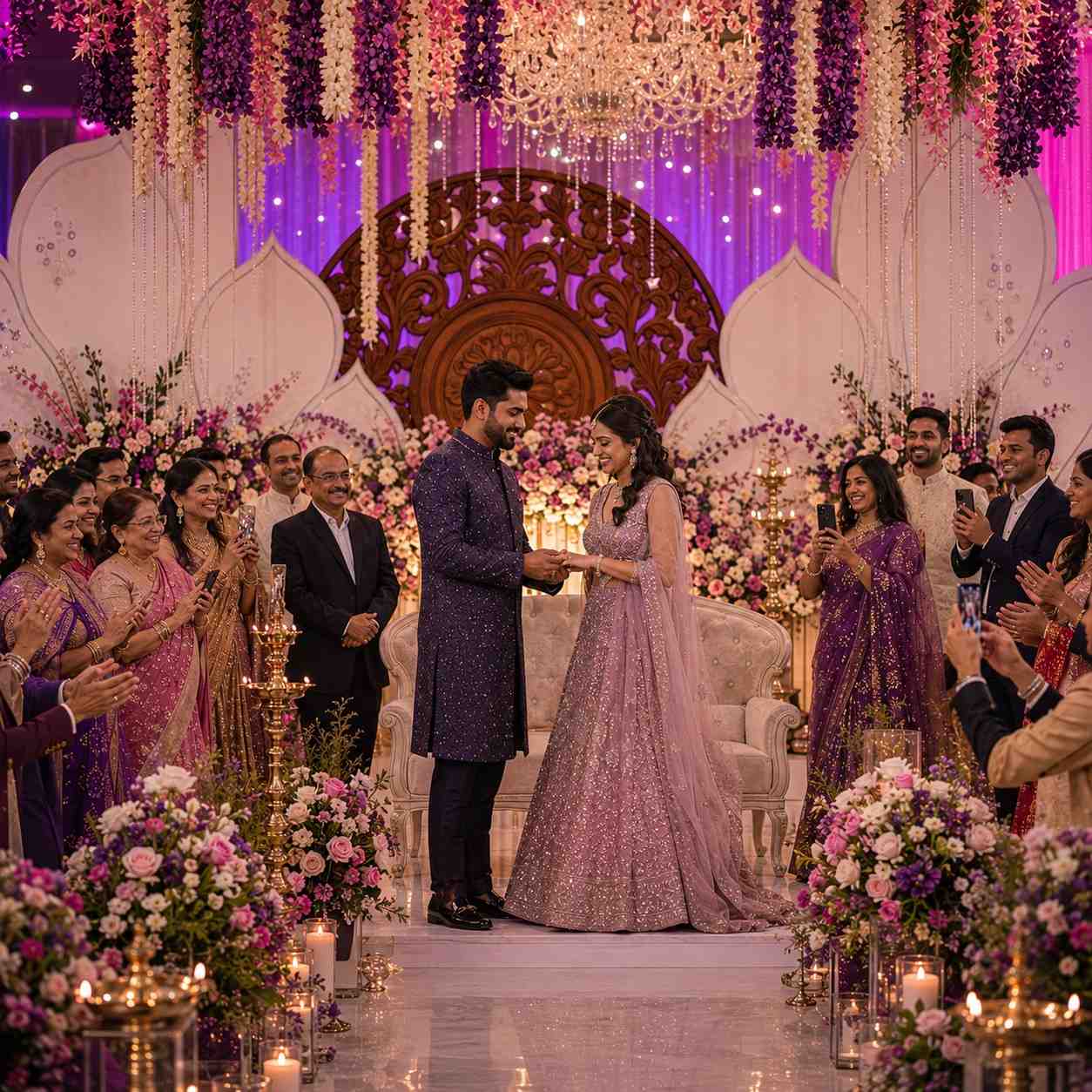





Function Expense Tracking Tool for Event Budgets
◆Managing expenses is an important part of organising weddings, parties, business gatherings, and other functions. Multiple purchases, vendor payments, service charges, and operational costs can make it difficult to maintain a clear view of total spending without an organised system.
A Function Expense Tracking Tool provides a structured way to maintain spending records, monitor costs, record payments, and manage event budgets throughout the planning process.
Happiffie helps organisers discover solutions for event expense tracking, function budget management, wedding expense management, party expense tracking, and business event cost monitoring.
Spending Records
Spending records provide an organised view of money spent during the event planning process.
Organisers can record expenses associated with vendors, services, purchases, rentals, food, décor, transportation, and other event requirements.
Maintaining these records can make it easier to review total spending and identify major expense categories.
Cost Monitoring
Cost monitoring helps organizers keep track of expenses as the event progresses.
Regularly reviewing costs can help identify whether spending is increasing faster than expected and where adjustments may be required.
A structured tracking process provides greater visibility into ongoing event expenditure.
Payment Log
A payment log records payments made during event planning.
It can help organisers maintain information about amounts paid, payment dates, vendors, and relevant expense categories.
Keeping a payment record can also make it easier to review completed transactions and outstanding financial commitments.
Event Expense Tracking
Event expense tracking involves recording and organising financial activity related to the event.
Different expense categories can be maintained according to the type of function and the services involved.
This creates a clearer picture of how the event budget is being utilised.
Function Budget Tracking
Function budget tracking helps organisers compare planned spending with actual expenses.
A budget can be divided into categories such as venue, catering, décor, entertainment, transportation, accommodation, and other event requirements.
Monitoring these categories throughout the planning process can support better financial control.
Wedding Expense Management
Weddings can involve a wide range of expenses across multiple suppliers and services.
Décor, catering, photography, entertainment, transportation, venue services, invitations, accommodation, and other arrangements may contribute to the overall budget.
A structured expense tracker can help organise these costs and maintain a consolidated record.
Party Expense Tracking
Parties may include expenses for venue arrangements, food, entertainment, décor, invitations, rentals, activities, and other services.
Tracking each expense can help organisers understand total spending and monitor the available budget.
This can be useful for both small private parties and larger celebrations.
Business Event Expenses
Business gatherings may involve venue costs, catering, audiovisual services, stage arrangements, transportation, guest accommodation, printing, and other operational requirements.
Maintaining organised expense records can help event teams monitor these costs throughout the planning cycle.
Event Payment Records
Event payment records provide a reference for financial transactions associated with the function.
Organisers can maintain information about completed payments and use the records to review event-related financial activity.
This can also support coordination with vendors and suppliers when payment information needs to be checked.
Function Cost Management
Function cost management involves monitoring the different expenses that contribute to the overall event budget.
Organisers can categorise spending and review costs throughout the planning process.
This can help identify areas where expenditure needs closer attention.
Event Budget Planner
An event budget planner provides a structured approach to organising expected and actual expenses.
Before the event, organisers can establish spending expectations for different categories.
As purchases and payments are made, the records can be updated to provide a current view of the budget.
Expense Categories
Different events require different expense categories.
Common categories may include venue, catering, décor, entertainment, transportation, accommodation, production, printing, rentals, and guest-related arrangements.
Organisers can structure categories according to the specific requirements of their function.
Tracking Vendor Expenses
Vendor expenses can represent a significant part of an event budget.
Organisers may work with decorators, caterers, photographers, entertainers, technical teams, rental companies, and other service providers.
Recording vendor-related costs separately can make it easier to review spending across suppliers.
Recording Event Purchases
Event planning often involves purchasing materials and products in addition to hiring services.
Stationery, décor materials, gifts, supplies, accessories, and other items can contribute to total expenditure.
Recording these purchases helps maintain a more complete event expense history.
Monitoring Planned and Actual Costs
Comparing planned costs with actual spending can provide useful budget visibility.
If a particular category exceeds the original estimate, organisers can review the difference and consider adjustments elsewhere in the budget.
This approach helps maintain awareness of financial changes during event preparation.
Managing Multiple Expenses
Large events may generate numerous transactions over several weeks or months.
A centralised expense tracking process can help organise these records rather than relying on scattered notes or separate documents.
This makes financial information easier to review during the planning period.
Expense Tracking for Large Functions
Large weddings, conferences, parties, and business gatherings may involve substantial numbers of transactions.
Organising expenses by category, supplier, or payment status can provide a clearer financial overview.
This is particularly useful when several members of the event team are involved in procurement and payment activities.
Payment Status
Payment records can be organised according to their current status.
For example, organisers may distinguish between amounts that are pending, partially paid, or fully settled.
Clear payment information can make it easier to identify financial commitments that still require attention.
Reviewing Event Spending
Regular expense reviews can help organisers understand how much has already been spent.
They can also identify categories that are consuming a larger portion of the budget than anticipated.
Frequent reviews provide an opportunity to update plans before the event takes place.
Expense Documentation
Maintaining supporting information for expenses can make financial records more organised.
Invoices, receipts, payment details, and other relevant documentation can be associated with the appropriate expense record where the selected system supports it.
This can simplify later reference and reconciliation.
Budget Coordination With Vendors
Expense tracking can work alongside vendor payment management.
Organisers can review supplier charges, payments already made, and remaining amounts as part of the wider event budget.
This provides a more complete picture of vendor-related financial commitments.
Why Choose Happiffie?
Happiffie helps organisers discover solutions for function expense tracking tools, spending records, cost monitoring, payment logs, event expense tracking, and function budget tracking.
Whether you are planning a wedding, party, business gathering, conference, or other function, Happiffie helps you explore solutions for organising expenses and maintaining clearer budget information.
The right solution can help manage wedding expenses, party costs, business event expenses, vendor payments, and other financial records within a structured planning workflow.
Conclusion
Effective expense management helps organisers maintain better visibility over event finances. Recording spending, monitoring costs, maintaining payment logs, and reviewing budget categories can make financial planning more structured.
A Function Expense Tracking Tool can support wedding expense management, party expense tracking, business event expenses, function cost management, and event payment records.
With Happiffie, organisers can discover solutions designed to organise spending records, monitor costs, manage payments, and maintain a clearer view of the overall event budget.
Frequently Asked Questions
1. What is a Function Expense Tracking Tool?
It is a planning solution used to record event spending, monitor costs, maintain payment logs, and organise budget information.
2. What are spending records?
Spending records document money used for event-related purchases, services, vendors, rentals, and other expenses.
3. What does cost monitoring mean?
Cost monitoring involves regularly reviewing event expenditure to understand how spending is progressing against the planned budget.
4. Can the tool track vendor expenses?
Yes. Vendor-related costs can be organised by supplier, service, or expense category depending on the tracking system.
5. Is expense tracking useful for weddings?
Yes. Weddings often involve many different suppliers and expense categories, making organised financial tracking valuable during planning.
6. Can party expenses be tracked?
Yes. Venue, catering, entertainment, décor, rentals, and other party-related expenses can be recorded and monitored.
7. Can business event expenses be managed?
Yes. Business gatherings can use expense tracking to organise costs related to venues, catering, audiovisual services, transportation, production, and other requirements.
8. What is a payment log?
A payment log is a record of financial transactions that documents payments made during the event planning process.
9. Can planned costs be compared with actual expenses?
Yes. Budget tracking can help organisers review planned amounts against actual spending where the selected tool provides this functionality.
10. Why should event expenses be categorised?
Categorising expenses helps organisers understand where money is being spent and makes budget reviews easier.
11. Can expense tracking help with large events?
Yes. Centralised expense records can be particularly useful when a large event involves many vendors, purchases, and financial transactions.
12. Why choose Happiffie for expense tracking?
Happiffie helps organisers discover solutions for spending records, cost monitoring, payment logs, event expense tracking, function budget tracking, wedding expense management, party expense tracking, and business event expenses.