
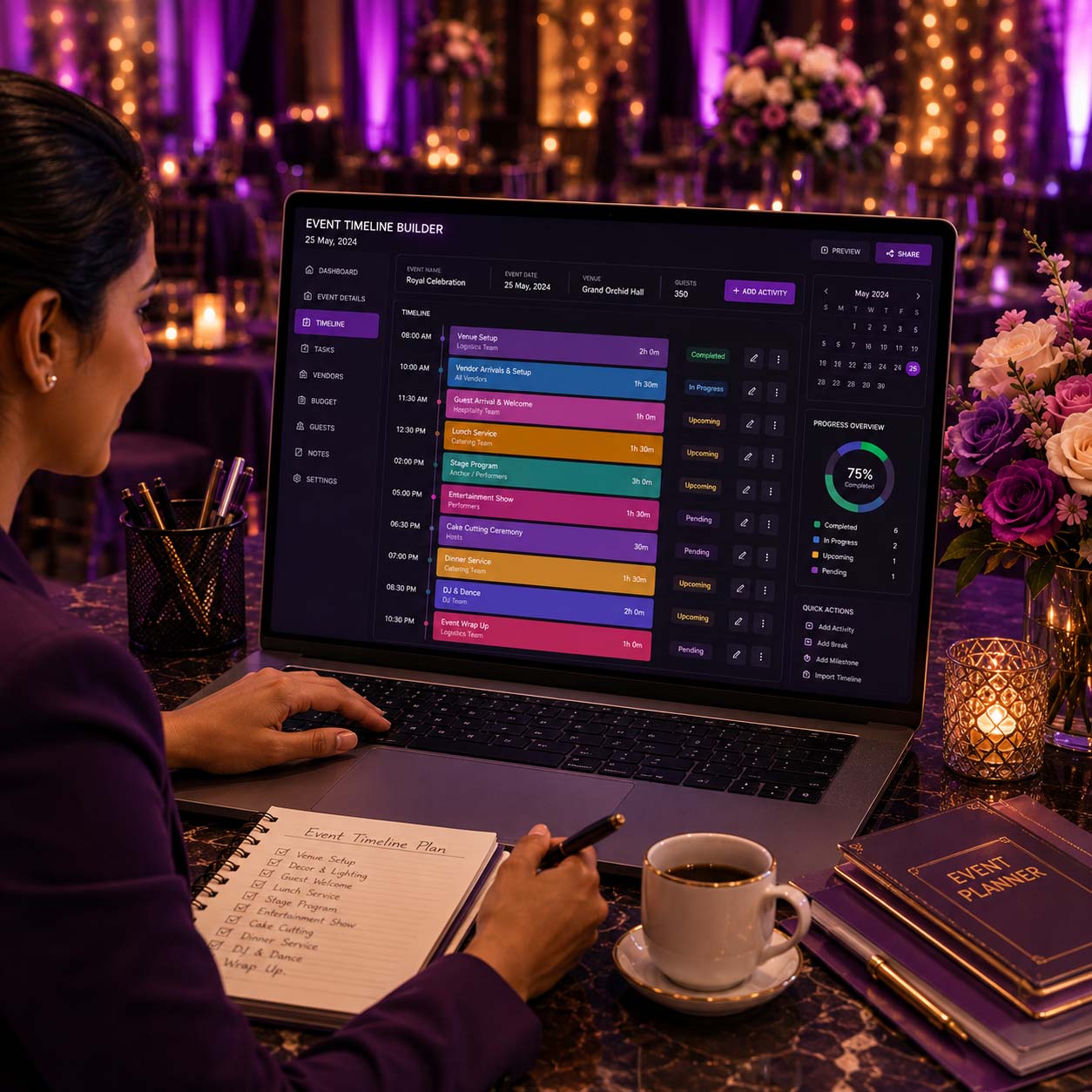
Function Activities Milestones Timeline Builder
Organize every stage of an event with a function activities milestones timeline builder covering schedule creation, program sequencing, task planning, activity coordination, and smooth execution for ceremonies, conferences, celebrations, and special functions.
Explore Planning Tools Experiences
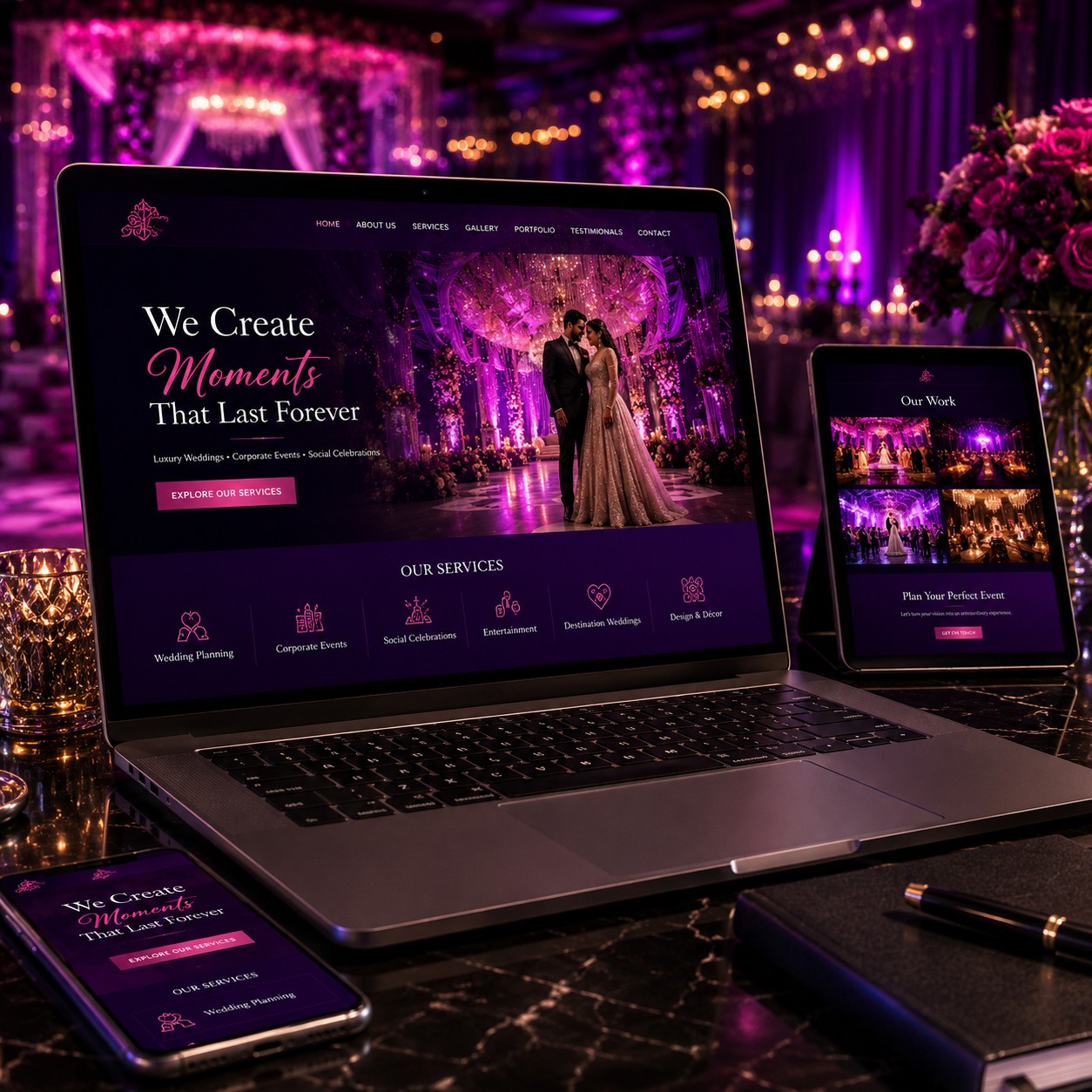
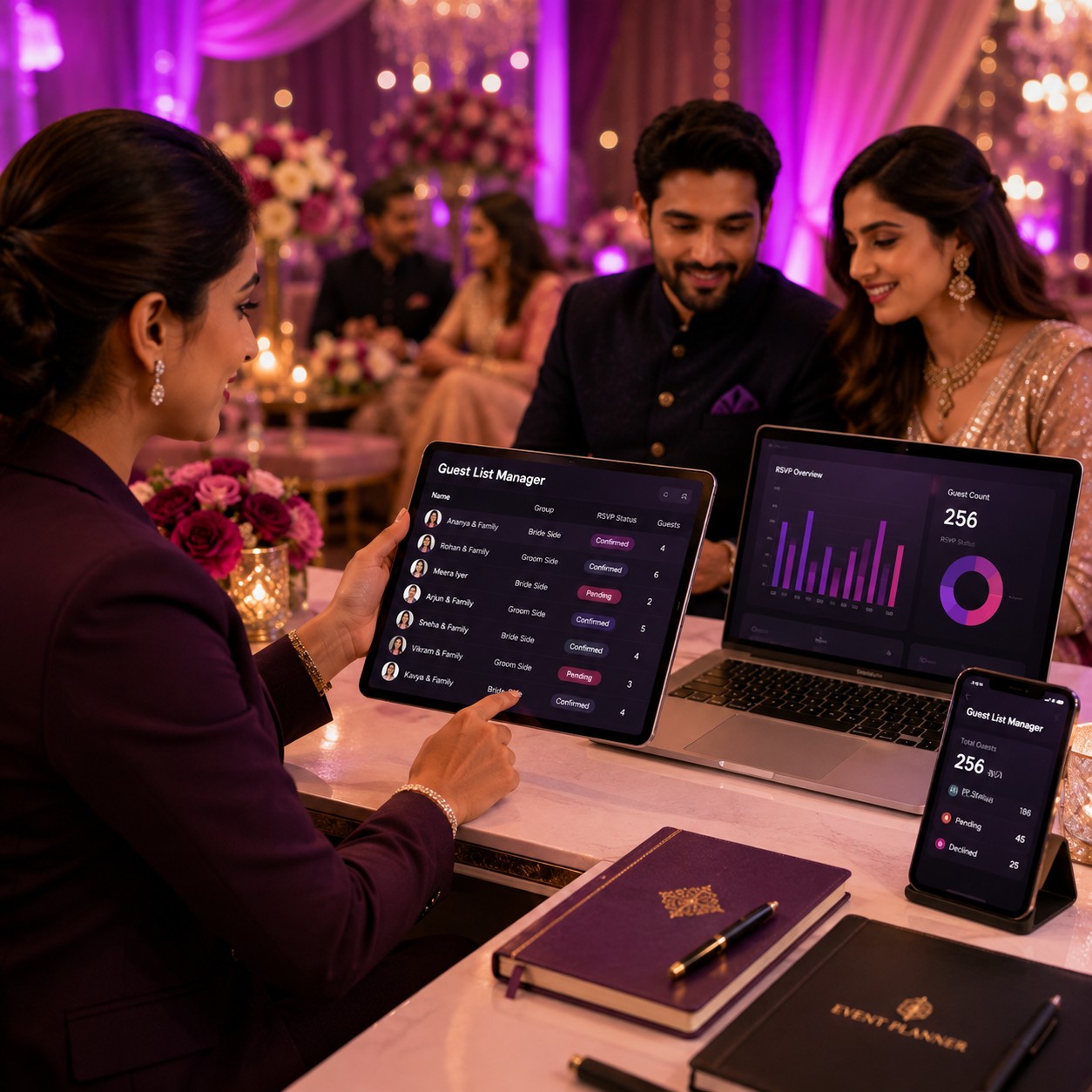
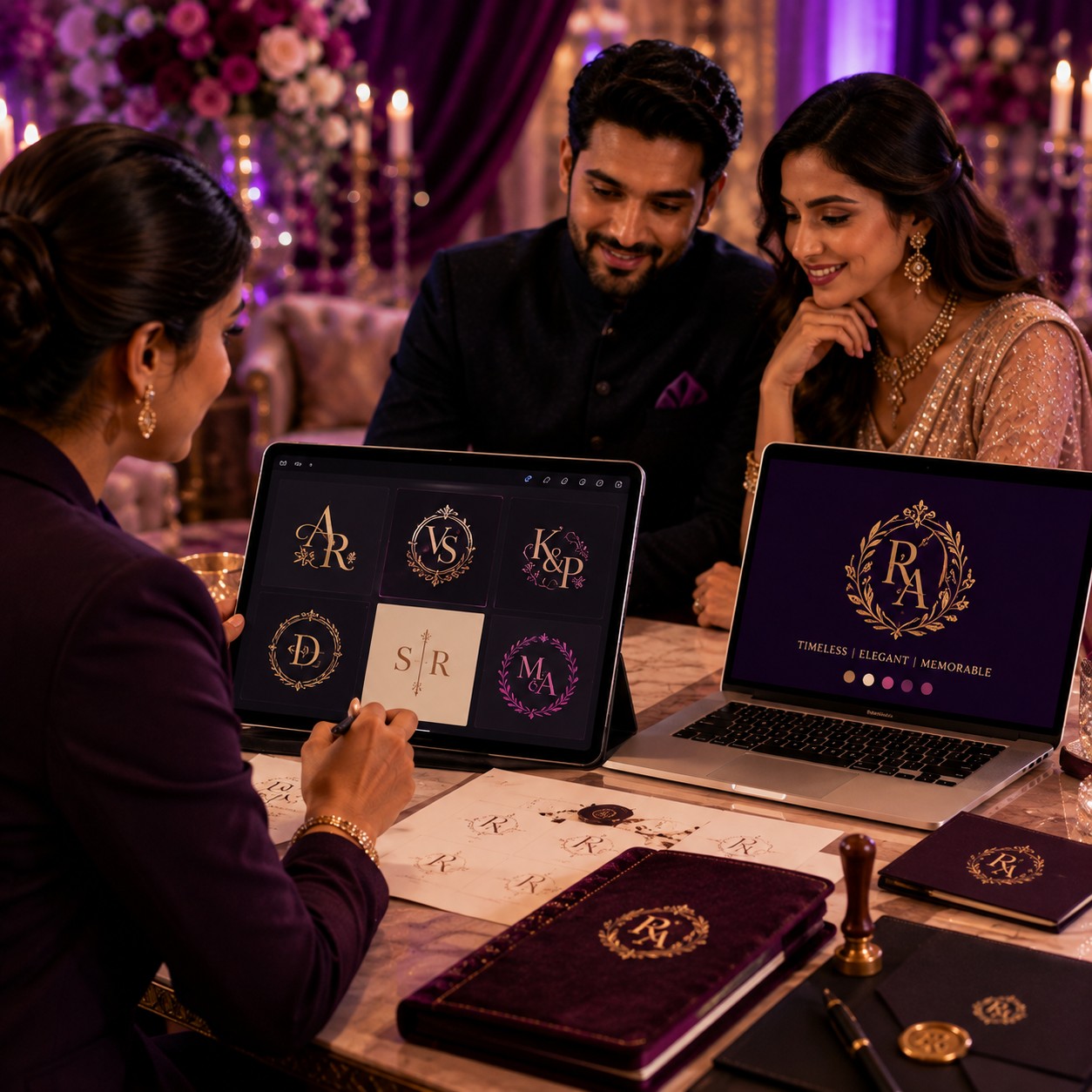
Explore Other Experiences

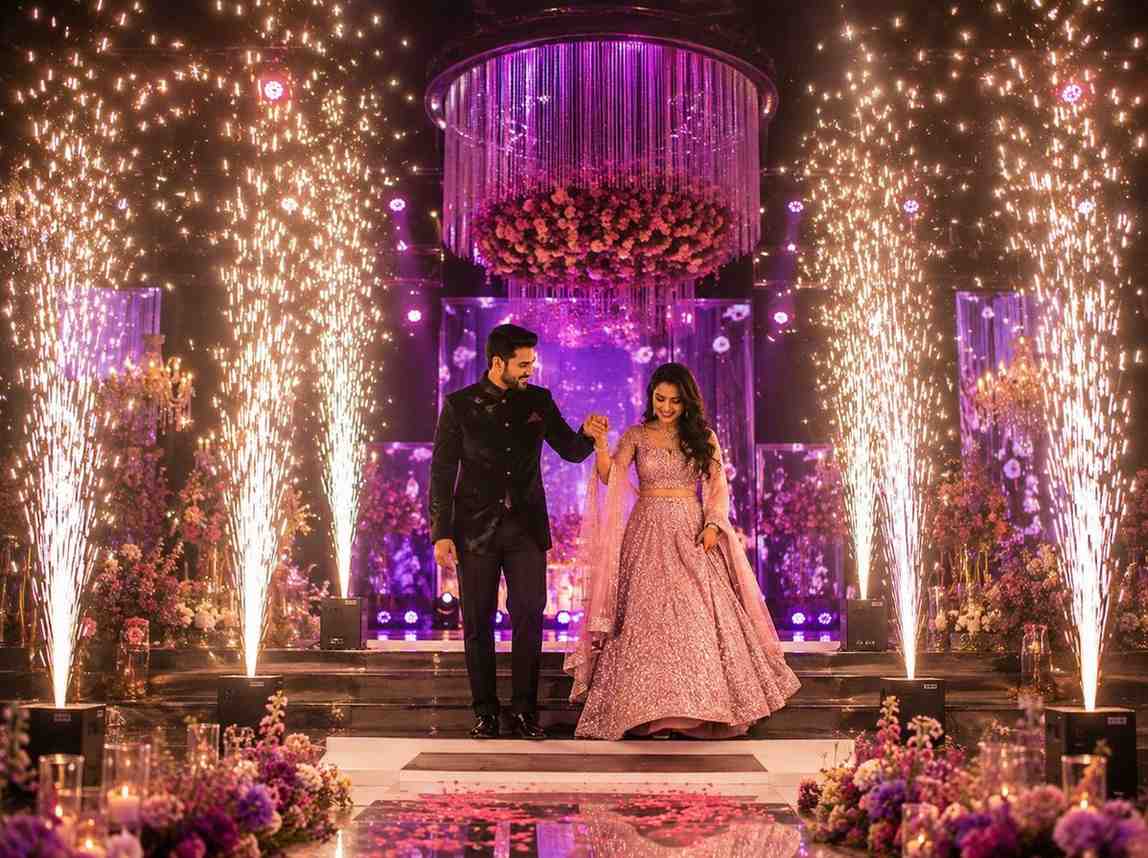

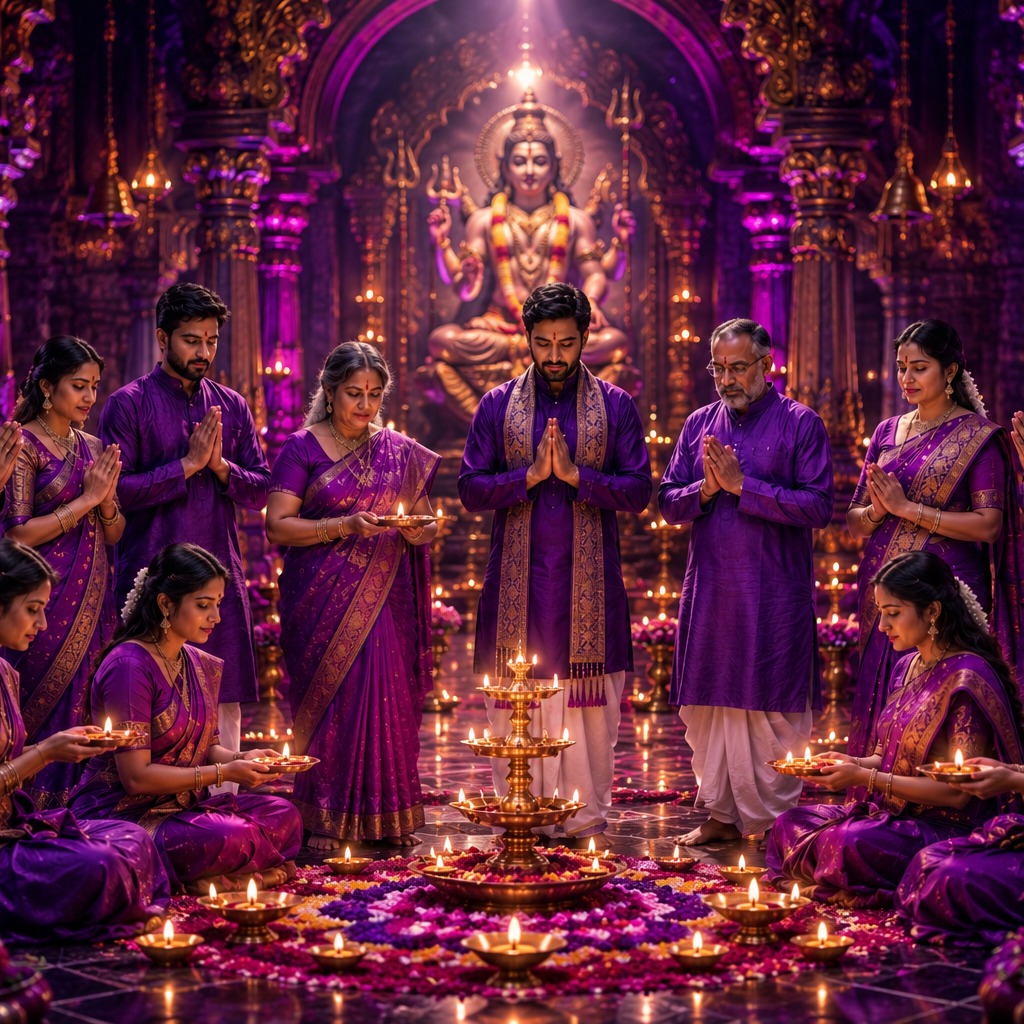
Explore by Occasion
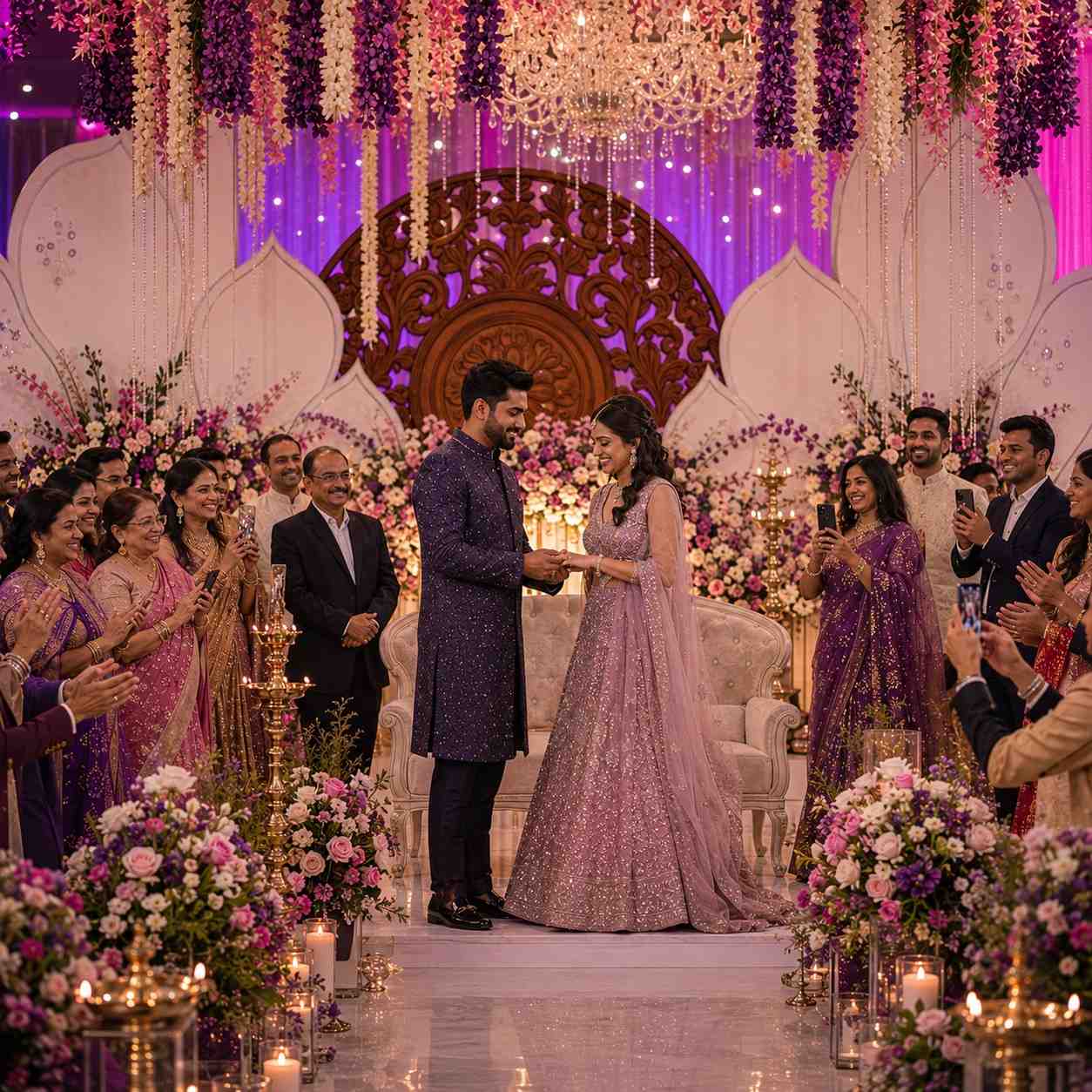
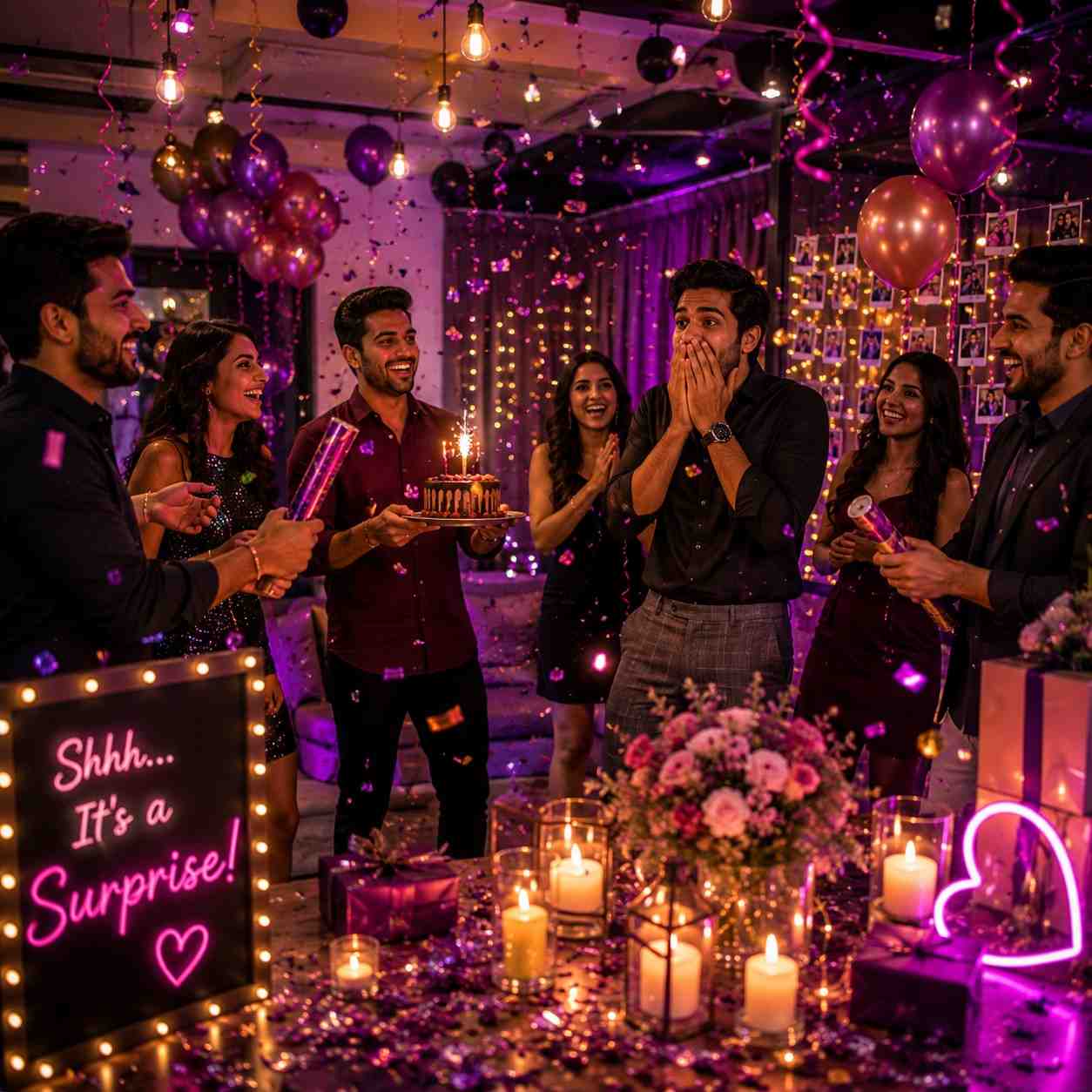
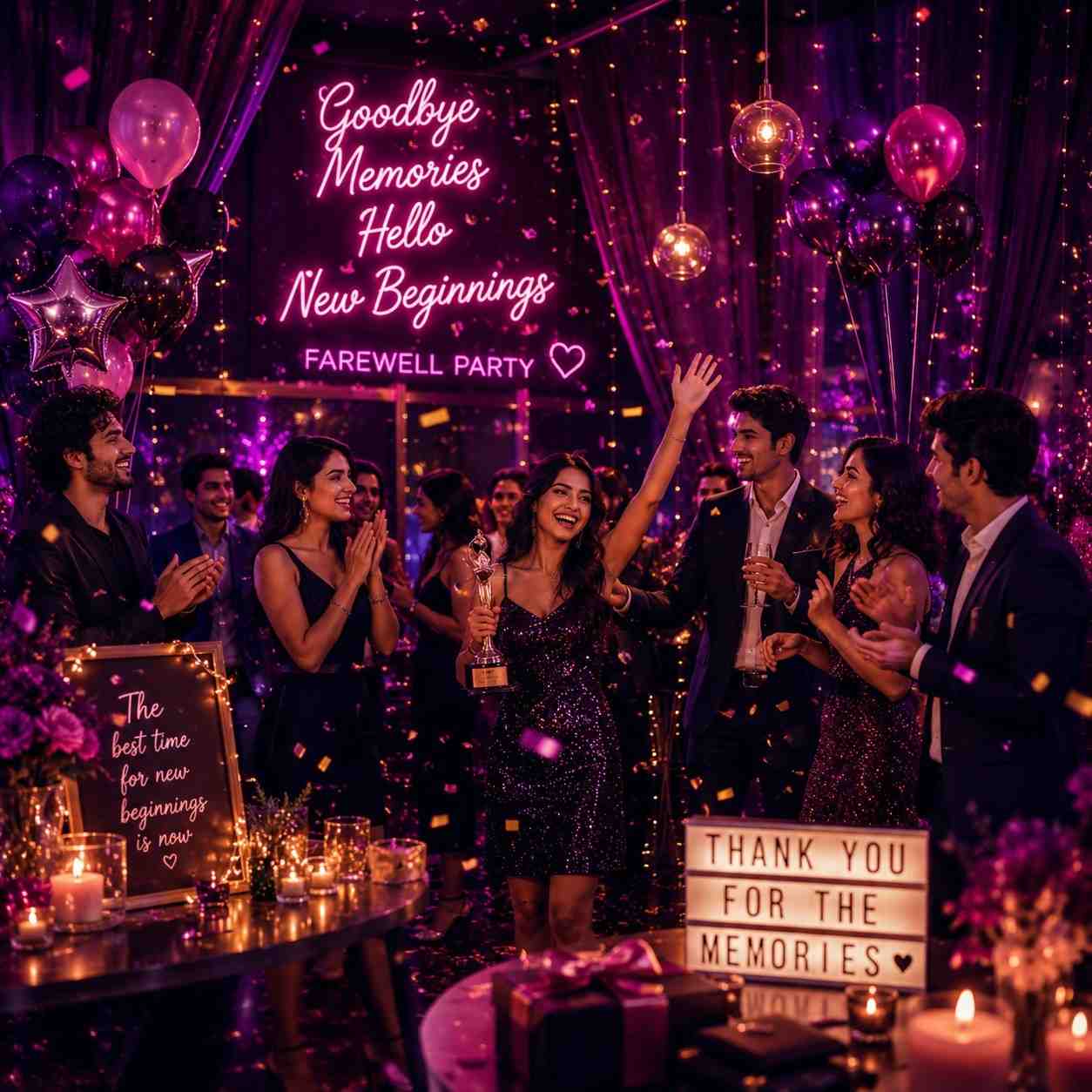

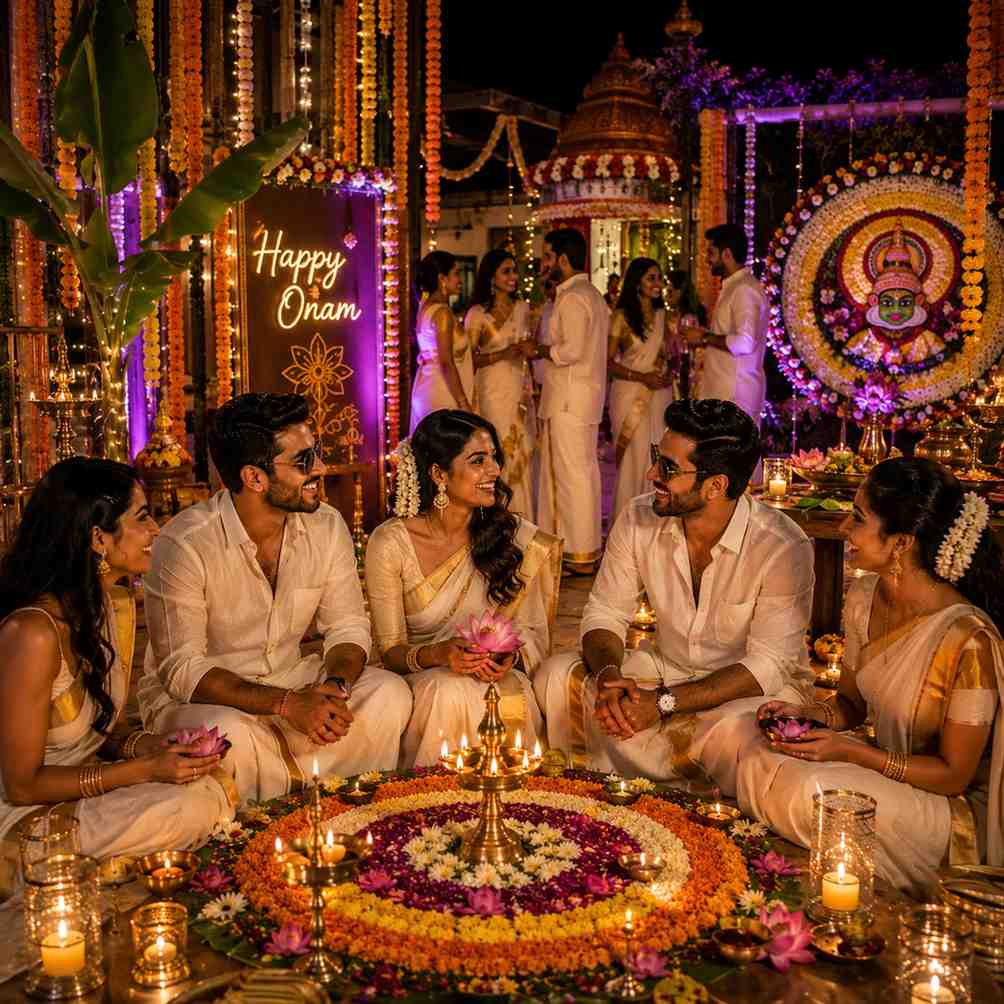
Function Activities Milestones Timeline Builder for Events
◆Well-organised event schedules help ensure that activities, milestones, responsibilities, and program segments take place in the right sequence. Whether planning a ceremony, conference, celebration, or coordinated function, having a clear timeline can make it easier to manage the flow of the program.
A Function Activities Milestones Timeline Builder provides a structured approach to schedule making, program sequencing, task planning, event activity management, and function coordination.
Happiffie helps organisers plan and organise activities, milestones, and program timelines for ceremonies, conferences, celebrations, and other functions.
Schedule Maker
A schedule maker helps convert an event plan into a clear sequence of activities.
Organisers can arrange program segments according to their planned start times, duration, dependencies, and overall event flow.
A structured schedule can make it easier for coordinators and participants to understand what needs to happen and when.
Program Sequencing
Program sequencing involves arranging activities in a logical order.
A ceremony may include guest arrival, opening rituals, main proceedings, presentations, and closing activities, while a conference may include registration, sessions, breaks, discussions, and concluding remarks.
A timeline builder helps organise these components into a coordinated sequence.
Task Planner
Event activities often depend on preparation tasks that need to be completed before the program begins.
A task planner can help organisers identify activities, assign expected timings, and monitor important preparation steps.
This can provide greater visibility into what needs to be completed before each milestone.
Event Timeline Planner
An event timeline planner provides a chronological view of the program.
It can help organisers understand how individual activities fit together and identify areas where timing may need adjustment.
The timeline can be adapted according to the type, scale, and duration of the function.
Function Schedule
A function schedule brings together the activities planned for a particular event.
It may include arrival times, program segments, breaks, performances, ceremonies, presentations, and closing activities.
Having these details in an organised format can help the event team coordinate the program more efficiently.
Ceremony Planning
Ceremonies often involve activities that must occur in a specific order.
A timeline can help organisers arrange rituals, guest movements, introductions, speeches, presentations, and other ceremonial milestones.
The schedule can be structured around the requirements of the particular ceremony.
Conference Schedule
Conferences may include registration, opening sessions, keynote presentations, panel discussions, networking periods, meals, workshops, and closing sessions.
A conference schedule helps place each activity within the overall program.
It can also make it easier for coordinators and participants to understand the planned sequence.
Event Activity Planner
An event activity planner can organise different categories of activities within one timeline.
These may include guest-related activities, stage programs, ceremonies, performances, presentations, meals, breaks, and logistical tasks.
The organiser can establish the order and timing according to the event plan.
Program Timeline
A program timeline provides a chronological overview of the event.
Each activity can be positioned according to its planned timing, creating a visual representation of the day's or function's sequence.
This can help identify overlaps, gaps, or activities that require additional preparation time.
Celebration Planning
Celebrations often involve multiple activities that need to work together.
Birthdays, anniversaries, weddings, family functions, and other celebrations may include guest arrival, entertainment, food service, ceremonies, photographs, speeches, and special moments.
A structured timeline can help coordinate these activities.
Function Coordination
Function coordination requires different teams and participants to work according to the same schedule.
A timeline can provide a common reference for event planners, venue teams, performers, technical staff, caterers, and other service providers.
This can help improve communication around activity timing.
Activity Milestones
Milestones represent important points within the event program.
These may include the start of a ceremony, arrival of a special guest, opening of a conference, product presentation, performance, cake cutting, award presentation, or closing activity.
Identifying milestones helps organizeorganisersrs focus attention on the most important moments.
Time-Based Planning
Time-based planning helps organizers understand how long each activity is expected to take.
Assigning approximate durations can make it easier to build a practical schedule and avoid unnecessary overlaps.
The timeline can also include buffer periods where appropriate.
Event Start and End Times
Establishing the overall start and end times provides the foundation for the event timeline.
Individual activities can then be placed within this larger timeframe.
This helps the organiser understand how the complete program fits into the available event duration.
Activity Dependencies
Some activities depend on earlier tasks being completed.
For example, a presentation may require equipment preparation before it begins, while a ceremony may depend on the arrival of specific participants.
A timeline can help identify these dependencies and position activities accordingly.
Managing Schedule Changes
Event schedules can change because of guest arrivals, technical requirements, venue conditions, or program adjustments.
A flexible timeline allows organisers to update activity times and revise the sequence when necessary.
Keeping the schedule current helps the wider event team work from the same information.
Coordinating Event Teams
Different teams may be responsible for different parts of an event.
A timeline can help communicate when décor teams, catering staff, technical crews, performers, hosts, photographers, and venue personnel need to be ready.
This supports better coordination throughout the function.
Stage Program Planning
Stage programs often involve several connected activities.
Presentations, performances, speeches, announcements, award segments, and transitions can be arranged within a single sequence.
A timeline helps stage management understand the expected progression of the program.
Guest Activity Scheduling
Guest-related activities can also be included in the timeline.
Registration, welcome sessions, seating, meals, networking, ceremonies, and departures can be placed according to the overall event schedule.
This can help organizers coordinate the guest experience from arrival to departure.
Rehearsal and Preparation Timeline
Preparation activities can be scheduled before the main event.
Technical checks, stage rehearsals, sound checks, décor completion, vendor setup, and team briefings may all require dedicated time.
Including these activities in the timeline can help the event team prepare systematically.
Why Choose Happiffie?
Happiffie helps organizers discover solutions for Function Activities Milestones Timeline Builder, schedule making, program sequencing, task planning, event activity planning, and function coordination.
Whether you are organising a ceremony, conference, celebration, wedding, family function, or other structured event, Happiffie helps you explore planning solutions for arranging activities and milestones in a logical sequence.
The right solution can help organisers maintain schedules, coordinate tasks, manage program timelines, and keep different event teams aligned.
Conclusion
A structured event timeline provides a practical way to organise activities, milestones, preparation tasks, and program segments. By arranging each element in the correct sequence, organisers can create a clearer reference for the teams responsible for delivering the event.
Function Activities Milestones Timeline Builder solutions can support schedule making, program sequencing, task planning, ceremony planning, conference schedules, celebration planning, and function coordination.
With Happiffie, organisers can discover solutions designed to bring activities, milestones, tasks, and program timings together in a coordinated event timeline.
Frequently Asked Questions
1. What is a Function Activities Milestones Timeline Builder?
It is a planning solution used to organise event activities, milestones, tasks, and program segments into a structured timeline.
2. What does a schedule maker do?
A schedule maker helps organise activities according to planned timings, durations, and the overall sequence of the event.
3. Can a timeline builder be used for ceremonies?
Yes. Ceremony activities can be arranged according to their required sequence and planned timing.
4. Can it help with conference schedules?
Yes. Registration, sessions, presentations, breaks, networking, workshops, and closing activities can be organized within a conference timeline.
5. What is program sequencing?
Program sequencing is the process of arranging event activities in a logical order so that each part of the program follows the planned sequence.
6. Can preparation tasks be included?
Yes. Preparation activities such as setup, technical checks, rehearsals, briefings, and other tasks can be included in the event timeline.
7. What are event milestones?
Event milestones are important moments or stages within a program, such as ceremony openings, presentations, performances, speeches, or closing activities.
8. Can schedules be changed after they are created?
A flexible planning system can allow organisers to update activity times and sequences when event requirements change.
9. Can different event teams use the timeline?
Yes. A shared timeline can provide a common reference for planners, technical teams, caterers, performers, venue staff, and other participants.
10. Can it support wedding and family functions?
Yes. Wedding ceremonies, birthdays, anniversaries, family gatherings, and other celebrations can be organised using structured activity timelines.
11. Why is program sequencing important?
It helps organisers understand how activities connect, identify timing conflicts, and maintain a logical flow throughout the event.
12. Why choose Happiffie for event timeline planning?
Happiffie helps organisers discover solutions for schedule making, program sequencing, task planning, event activity management, milestone tracking, ceremony planning, conference scheduling, and function coordination.