
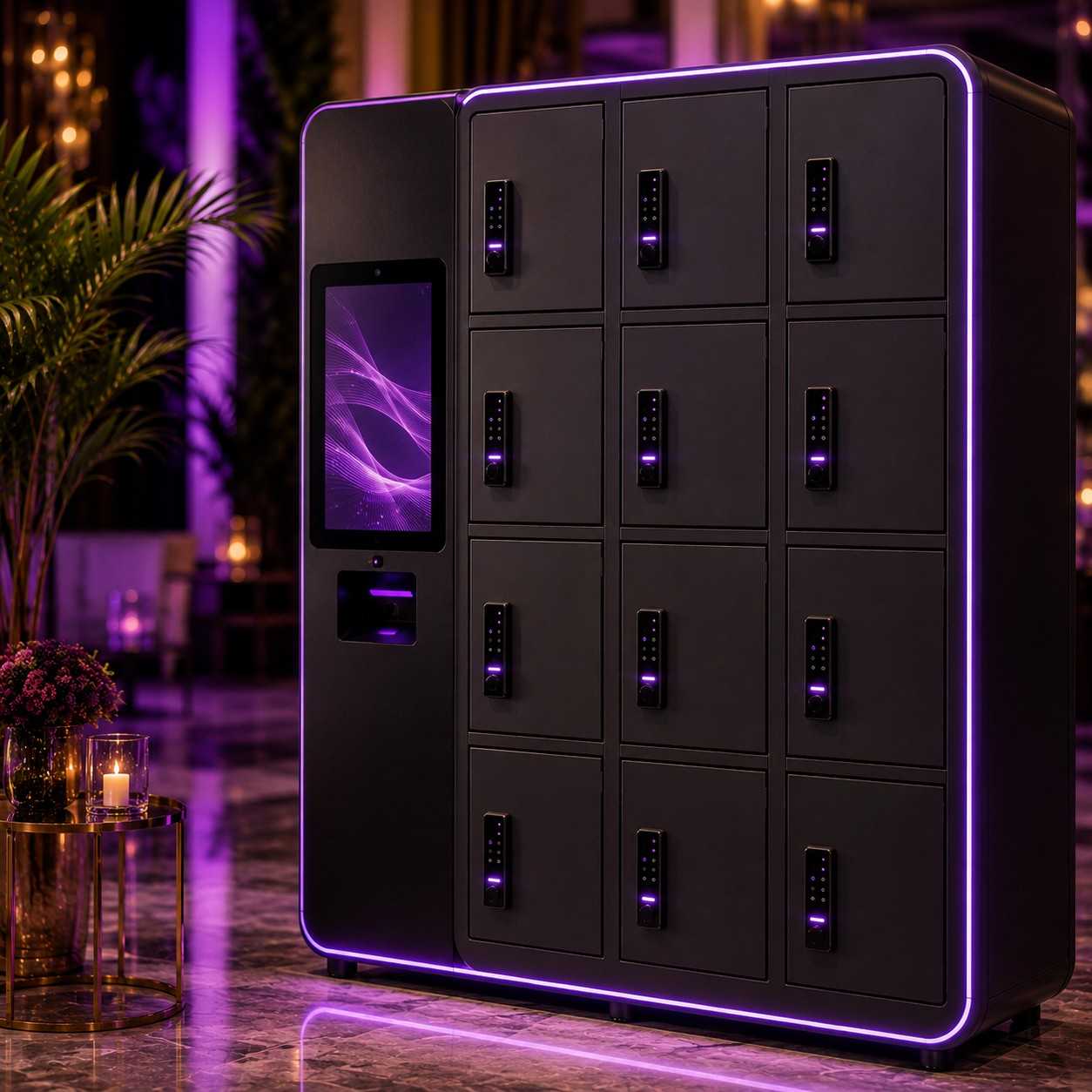
Smart Lockers
Give guests a secure and convenient place to store their belongings with Smart Lockers designed for festivals, concerts, weddings, exhibitions, conferences, and large events. Choose organized storage solutions with easy access and reliable event support.
Explore Event Rental & Infrastructure Services

Explore Other Experiences





Explore by Occasion



Smart Lockers for Events & Venues in India
◆Smart lockers are becoming an increasingly useful guest convenience and storage solution for festivals, exhibitions, conferences, weddings, concerts, corporate events, sports gatherings, campuses, and public venues. They provide attendees with a designated place to securely store personal belongings while they participate in activities without having to carry bags, phones, helmets, documents, or other items throughout the event. Digital access systems make smart lockers convenient, organised, and suitable for modern event environments.
In India's growing event landscape, smart lockers can be used at exhibition centres, convention halls, concert venues, wedding venues, festivals, stadiums, malls, universities, corporate campuses, hospitality properties, and temporary event sites. They can be configured as standalone locker banks, charging lockers, digital storage units, mobile locker systems, or customised branded installations depending on the venue and event requirements.
The importance of smart lockers becomes especially noticeable during large and long-duration events. Guests may arrive carrying handbags, backpacks, helmets, shopping bags, electronic devices, documents, or other personal belongings. Providing secure storage allows attendees to move freely around the venue while reducing congestion in seating, dining, exhibition, and entertainment areas.
Smart lockers are available in different sizes and configurations to accommodate a variety of belongings. Small compartments may be suitable for phones, wallets, and personal accessories, while larger compartments can accommodate backpacks, handbags, jackets, helmets, or shopping bags. Event organisers can select locker sizes according to the expected audience and storage requirements.
Digital access technology is one of the main advantages of smart lockers. Depending on the system, lockers may use PIN codes, QR codes, RFID cards, NFC access, mobile applications, electronic keypads, or other digital authentication methods. These systems eliminate the need for traditional physical keys and can make locker allocation and access management more efficient.
QR-code-enabled lockers can provide a convenient experience for event guests. A user may receive a digital access code or QR credential when a locker is assigned, allowing them to open the designated compartment when required. This approach can reduce queues and simplify access management during busy events.
PIN-based lockers offer another practical solution. Guests can receive or create a unique access code that allows them to access their assigned compartment. This system can be useful for exhibitions, conferences, festivals, and public venues where users need temporary storage for several hours.
Smart lockers can also be integrated with mobile charging functionality. Charging lockers allow guests to securely store and charge smartphones or compatible devices at the same time. These systems are particularly useful for festivals, exhibitions, conferences, airports, corporate events, and large public gatherings where attendees depend heavily on their phones.
Festivals are one of the strongest use cases for smart lockers. Music festivals, cultural festivals, food festivals, college festivals, and outdoor celebrations often attract large crowds carrying personal belongings. Locker facilities allow attendees to store bags and valuables while enjoying performances, food areas, activities, and entertainment.
Exhibition centres can use smart lockers to improve visitor convenience. Trade-show attendees may collect brochures, merchandise, samples, catalogues, and personal belongings throughout the day. Providing secure storage allows visitors to move between exhibition halls without carrying everything with them.
Corporate conferences and business events can also benefit from digital locker facilities. Attendees may carry laptops, documents, backpacks, conference materials, and personal items. Smart lockers can provide temporary storage near registration areas, networking lounges, meeting rooms, or breakout spaces.
Weddings and private celebrations can use smart lockers where guests require secure storage. Destination weddings, large receptions, resorts, and event venues may provide lockers for handbags, mobile devices, travel items, footwear, or other personal belongings. This can be especially useful when guests move between ceremony, dining, entertainment, and accommodation areas.
Sports events and stadiums can also use smart lockers to provide temporary storage for spectators and participants. Guests may need to store bags, jackets, helmets, or other belongings while attending matches, competitions, or fitness activities. Locker systems can help organise storage without creating large manual baggage counters.
Smart lockers are useful for hospitality venues and resorts as well. Guests attending events or spending time at shared facilities may need secure storage for personal items. Digital locker systems can provide a convenient self-service alternative to traditional storage arrangements.
Locker placement should be planned carefully. Stations should be located in accessible and visible areas while avoiding obstruction of emergency exits, walkways, fire equipment, or high-traffic operational zones. Popular locations include entrances, registration areas, cloakroom zones, lounges, exhibition foyers, festival entry points, and hospitality areas.
The number of lockers required depends on the expected attendance and percentage of guests likely to use the service. Large festivals and exhibitions may require multiple locker banks distributed across different zones, while smaller events may need a compact installation. Professional providers can help estimate the required capacity.
Locker size selection is equally important. Event organisers should consider the types of belongings guests are likely to store. Providing a combination of small, medium, and large compartments can help accommodate phones, handbags, backpacks, helmets, jackets, and other common items.
Security is a critical consideration when providing digital storage. Smart lockers may include electronic locks, access authentication, tamper detection, audit records, or other security features depending on the system. Event organisers should select equipment from reliable providers and clearly communicate usage terms to guests.
Operational monitoring can further improve the experience. Some smart locker systems allow operators to monitor locker availability, occupancy, access activity, and system status through digital dashboards. This can help event teams identify available compartments and respond to technical issues efficiently.
Branding opportunities make smart lockers useful for corporate and sponsored events. Locker panels can potentially feature event branding, sponsor logos, campaign graphics, event colours, QR codes, or promotional messages. This transforms a practical storage facility into an additional brand touchpoint.
Smart lockers can also integrate with event registration systems. Depending on the technology provider, locker allocation can be connected to attendee credentials, QR codes, event apps, digital tickets, or registration workflows. This can reduce manual locker assignment and improve operational efficiency.
Accessibility should be considered when designing locker installations. Different locker heights and accessible compartments can help accommodate a wider range of users. Event organisers should also ensure that locker areas have sufficient space for users to approach, open, and retrieve their belongings comfortably.
Power and connectivity requirements depend on the type of smart locker. Electronic locking systems, digital displays, charging functionality, and network-connected features may require electrical power and, in some cases, internet connectivity. These requirements should be confirmed with the provider before installation.
Temporary event locker systems are often designed for quick installation and removal. Modular locker banks can be transported to the venue, positioned, connected, tested, and removed after the event. This makes them suitable for festivals, exhibitions, conferences, and other temporary gatherings.
Rental services provide a practical solution for event organisers who need lockers only for a limited period. Providers may offer smart locker rental packages that include delivery, installation, digital access configuration, technical support, monitoring, maintenance, dismantling, and removal.
Cost efficiency is another advantage of renting smart lockers. Pricing depends on the number of compartments, locker size, technology, charging functionality, rental duration, branding, transportation, installation, connectivity, and technical support. Comparing providers helps organisers select a suitable storage solution.
Logistics are particularly important for large locker installations. Locker units must be delivered safely, positioned in the planned area, connected to power or networks where required, tested before guest arrival, and monitored throughout the event. Professional teams coordinate with venue management and event organisers to maintain smooth operations.
Hygiene and maintenance should also be considered, particularly at festivals and public events. Locker compartments and high-touch surfaces should be cleaned regularly, while digital locks and charging components should be checked for proper operation. Clear instructions can also help guests use the system correctly.
Sustainability is becoming increasingly relevant to event infrastructure. Reusable modular smart lockers can be deployed across multiple events, reducing the need for temporary single-use storage solutions. Durable systems and energy-efficient electronics can further support sustainable event operations.
Modern smart lockers continue to evolve with touchscreen interfaces, app-based access, QR authentication, biometric options, digital payments, charging capabilities, occupancy monitoring, remote management, notifications, and integrated event technology. These features can create a more seamless self-service storage experience.
Smart lockers can also complement other guest convenience services such as mobile charging stations, event Wi-Fi, cloakrooms, luggage storage, digital registration, information kiosks, and hospitality lounges. Combining these services can create a more connected and convenient event environment.
In conclusion, smart lockers are more than storage cabinets—they are modern guest convenience and venue-management solutions that combine secure storage, digital access, technology, and operational efficiency. From festivals and exhibitions to conferences, weddings, concerts, corporate events, and public venues across India, smart lockers can help guests move freely while keeping their belongings organised and accessible. By selecting the appropriate locker capacity, access technology, placement, branding, and professional support, event organisers can provide a secure and convenient experience for attendees.
FAQ Section
Q1: What are smart lockers used for at events?
Smart lockers provide secure temporary storage for guests, attendees, staff, and visitors. They can be used for handbags, backpacks, phones, helmets, jackets, documents, shopping bags, and other personal belongings.
Q2: Where can smart lockers be used?
Smart lockers can be installed at festivals, exhibitions, conferences, weddings, concerts, corporate events, stadiums, convention centres, resorts, campuses, malls, and other public or private venues.
Q3: How do digital smart lockers work?
Depending on the system, users may access lockers through PIN codes, QR codes, RFID cards, NFC, mobile applications, electronic keypads, or other digital authentication methods.
Q4: Can smart lockers also charge mobile phones?
Yes. Some smart lockers include integrated charging ports or charging compartments, allowing guests to store and charge compatible mobile devices securely.
Q5: Are smart lockers suitable for festivals?
Yes. Smart lockers are particularly useful at festivals because attendees can securely store bags, helmets, jackets, and other belongings while moving between performances, food areas, activities, and entertainment zones.
Q6: Can smart lockers be used at exhibitions?
Yes. Exhibition organisers can provide lockers for visitors who want to store bags, merchandise, documents, brochures, and personal belongings while exploring exhibition halls.
Q7: Can smart lockers be branded?
Yes. Depending on the provider, locker installations can be customised with event branding, sponsor logos, campaign graphics, colours, QR codes, and promotional messaging.
Q8: Can smart lockers be rented for temporary events?
Yes. Smart locker rental providers can offer temporary installations for festivals, exhibitions, conferences, concerts, weddings, and other events. Services may include delivery, installation, configuration, technical support, monitoring, and removal.
Q9: How much does smart locker rental cost?
Pricing depends on the number and size of lockers, access technology, charging features, rental duration, branding, transportation, installation, connectivity, and technical support. Comparing providers helps identify an appropriate solution.
Q10: How can Happiffie help find smart lockers?
Happiffie helps event organisers, festival teams, exhibition organisers, corporations, venues, and wedding planners compare and connect with trusted smart locker and event technology providers. You can find digital lockers, charging lockers, QR-access storage, secure guest storage, branded locker systems, and complete temporary storage solutions.