
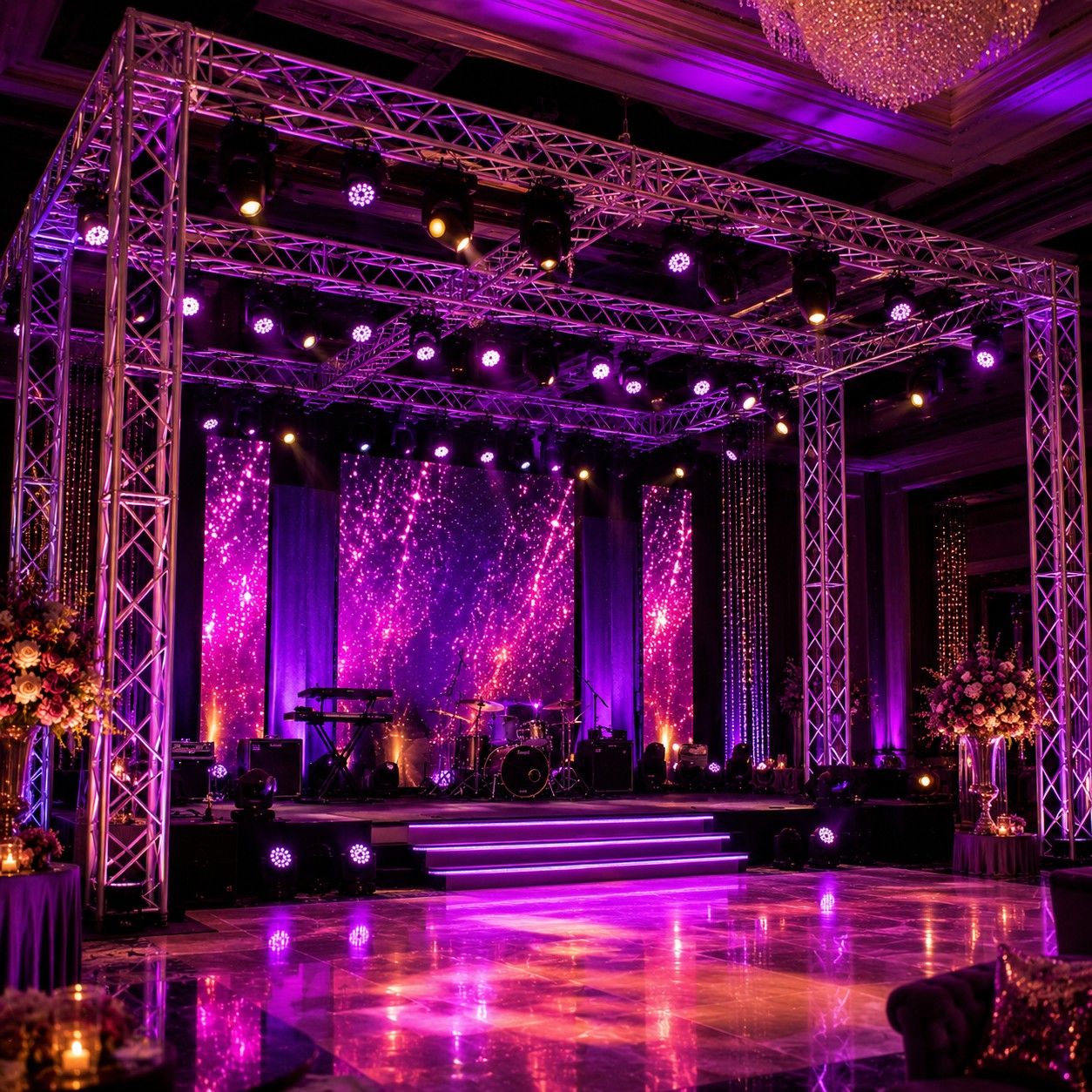
Truss Rentals
Build secure and professional event structures with Truss Rigging solutions for lighting roofs, stage trusses, hanging systems, exhibition booths, LED displays, audio equipment, and large-scale event production setups.
Explore Event Rental & Infrastructure Services
Explore Other Experiences


Explore by Occasion
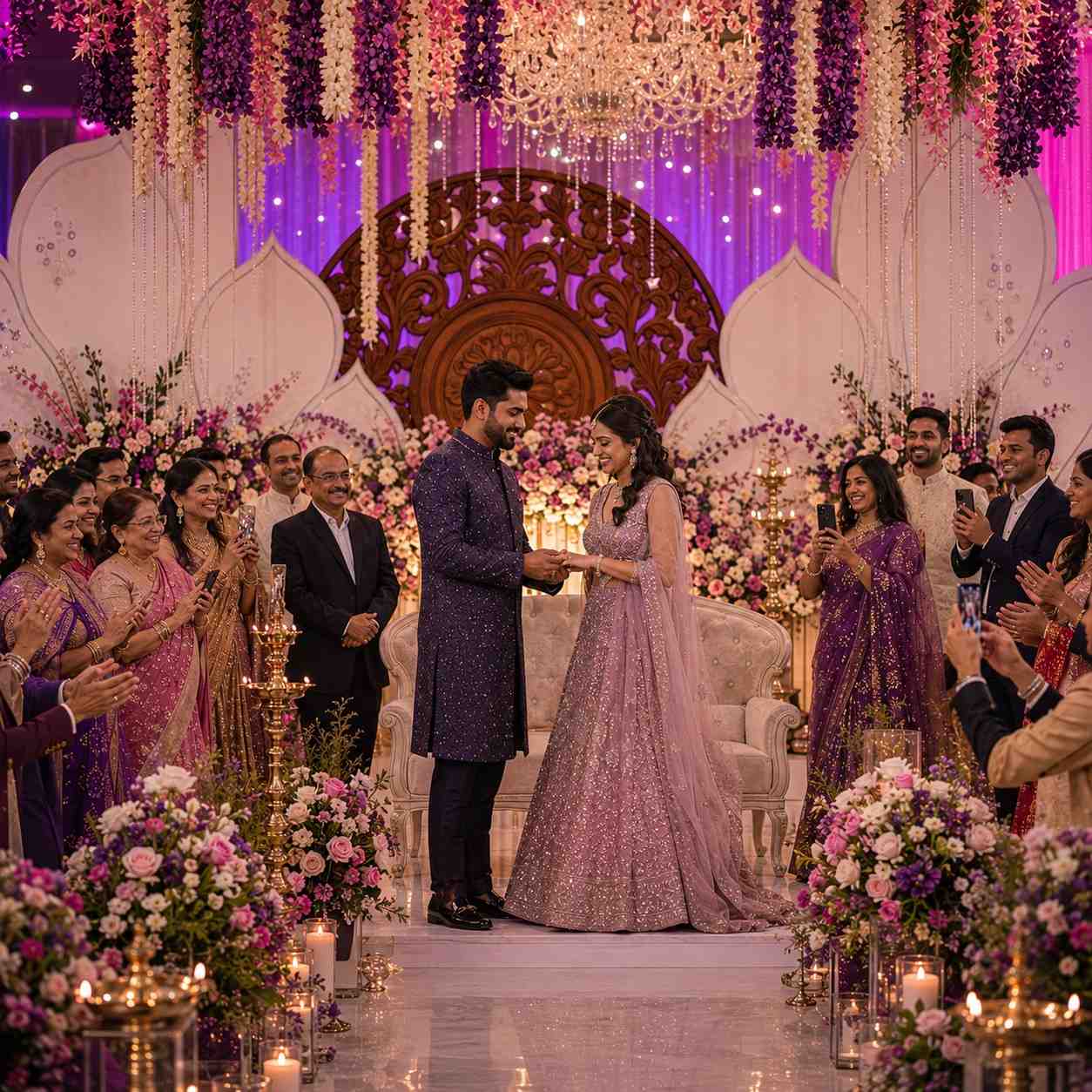
Truss Rigging for Weddings & Events in India
◆Truss rigging systems are an important part of professional event production, providing structural support for lighting, LED screens, speakers, signage, décor elements, and other suspended equipment. Whether used for weddings, concerts, exhibitions, conferences, corporate events, festivals, product launches, or large-scale celebrations, stage truss structures help create organised and visually impressive event environments. A properly planned truss system supports technical equipment while contributing to the overall design and functionality of the venue.
In India's diverse event landscape, truss structures are widely used across wedding venues, convention centres, exhibition grounds, auditoriums, concert stages, hotel ballrooms, outdoor venues, and temporary event spaces. Their modular construction allows production teams to create different configurations according to the venue layout, stage dimensions, equipment requirements, and event concept. From compact lighting trusses to large roof structures, truss systems provide flexible solutions for both indoor and outdoor productions.
The importance of truss rigging becomes especially evident during large weddings and celebrations. Indian weddings often feature elaborate lighting, LED screens, floral installations, stage backdrops, speakers, decorative elements, and entertainment equipment. Truss structures can provide a framework for these installations while keeping the stage visually organised. Lighting fixtures can be positioned at different heights and angles, while LED screens and other production equipment can be integrated into the overall stage design.
Stage truss systems are available in different configurations and sizes. Common options include goalpost trusses, box trusses, ground-support structures, lighting trusses, arch trusses, exhibition trusses, roof trusses, circular trusses, curved structures, and custom-built configurations. Event production teams select the appropriate system based on the equipment load, venue dimensions, structural requirements, and event design.
Material and construction quality play a critical role in truss safety and performance. Professional truss systems are generally manufactured using aluminium or other engineered materials designed for temporary event structures. Lightweight construction makes aluminium truss practical for transportation and installation while maintaining the required structural performance when properly engineered and used within manufacturer specifications.
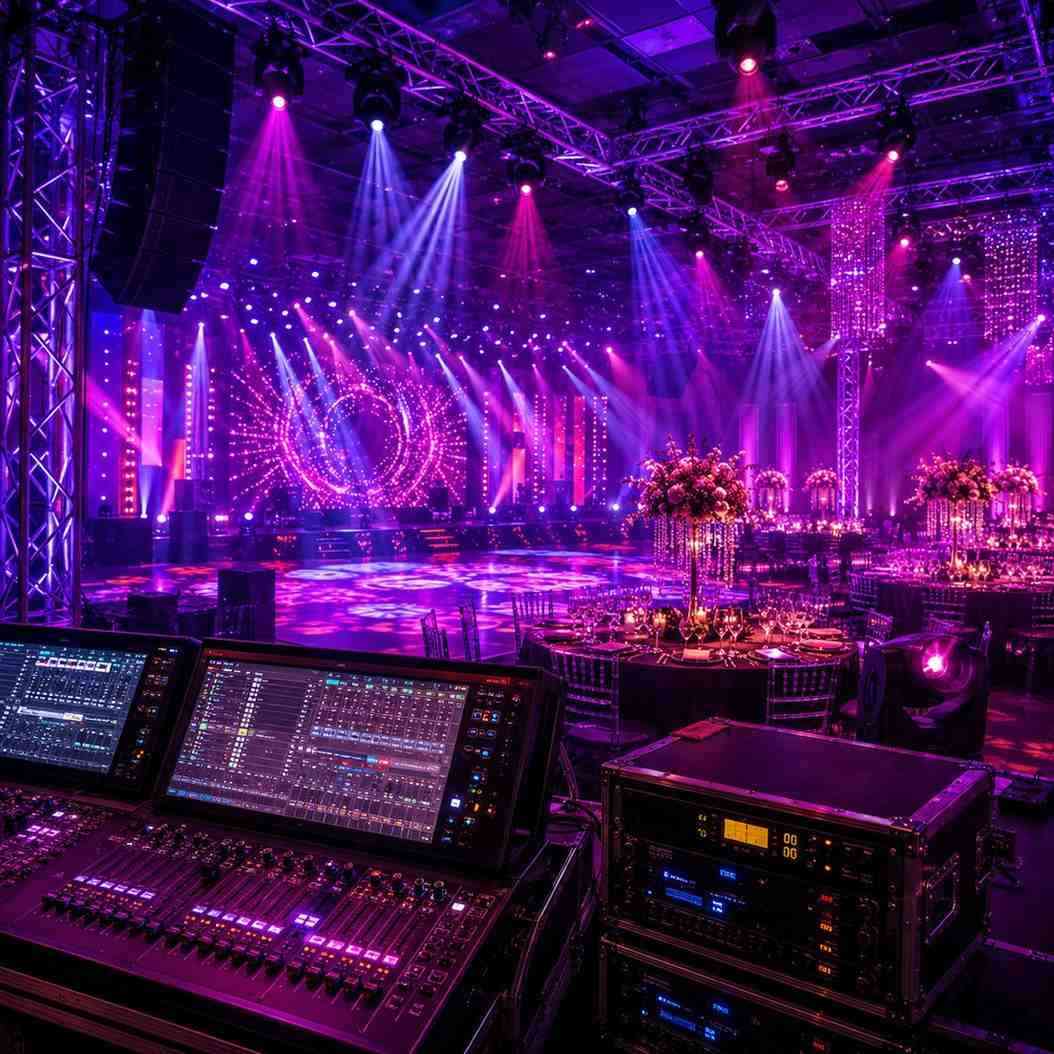
Lighting is one of the most common applications of stage truss systems. Moving heads, profile lights, wash lights, PAR fixtures, spotlights, strobes, lasers, and other lighting equipment can be positioned on truss structures to create dynamic stage effects. The arrangement of fixtures allows lighting designers to illuminate performers, stages, dance floors, presentations, and architectural features throughout the event.
Truss structures also provide support for audio equipment. Speakers, line-array systems, microphones, and other production equipment may require carefully planned suspension or ground-supported structures. Professional rigging teams evaluate equipment requirements and use appropriate hardware, support points, and safety systems to ensure that installations are properly managed.
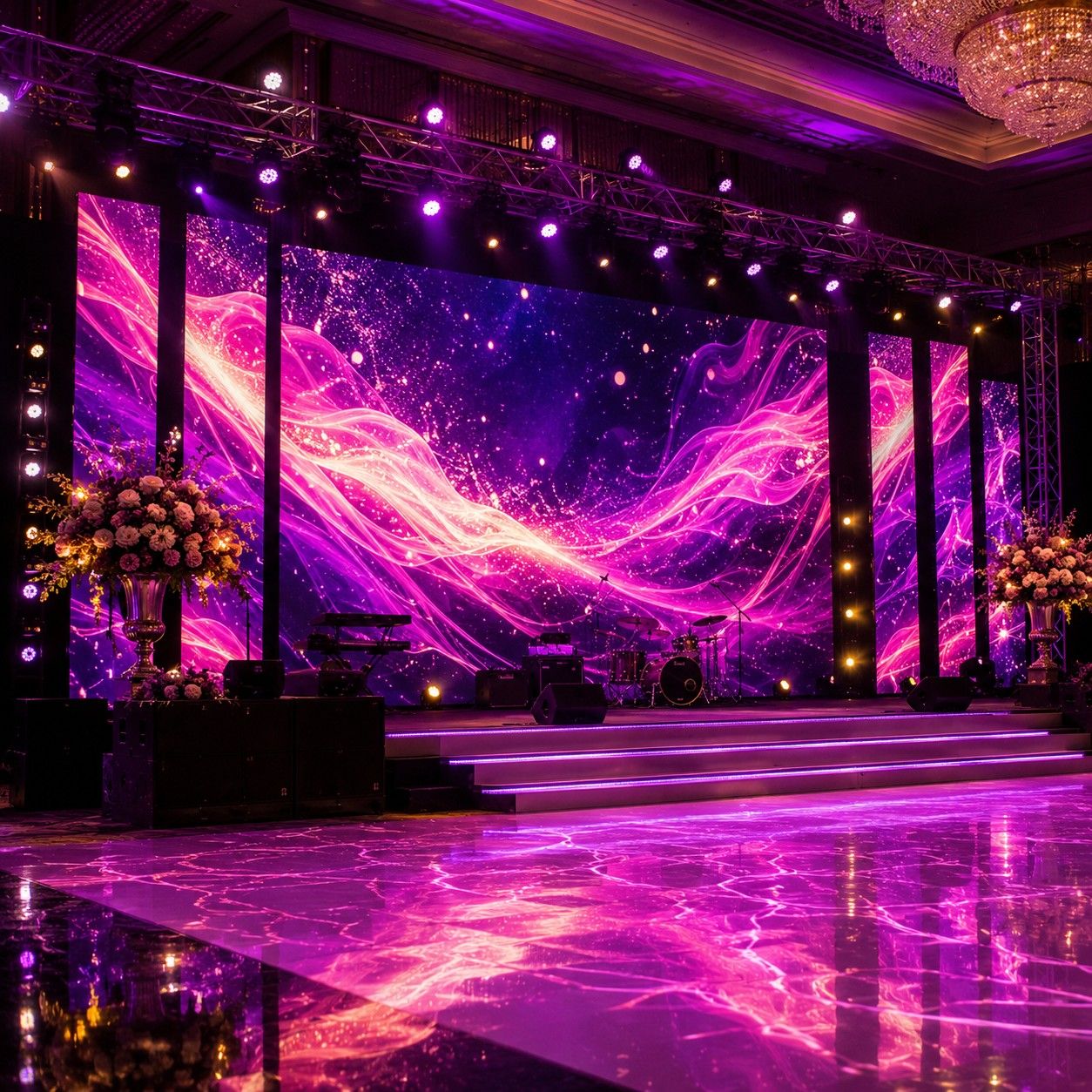
LED screens and video displays can also be integrated into truss systems. Large LED walls may be supported using ground structures or suspended frameworks depending on the design and engineering requirements. Truss structures can help create a clean stage framework while allowing screens, lighting fixtures, speakers, and branding elements to work together as one production setup.
For exhibitions and trade shows, truss systems provide versatile structures for booths, branding displays, lighting, signage, product presentations, and hanging promotional elements. Modular trusses can be configured to create exhibition arches, overhead branding frames, product display structures, and illuminated booth environments. Their reusable nature makes them practical for temporary exhibition installations.
Corporate events frequently use truss structures for conferences, award ceremonies, product launches, annual meetings, dealer meets, and brand activations. Trusses can support LED screens, projection surfaces, stage lighting, sponsor signage, company logos, and decorative installations. A well-designed structure creates a professional visual environment while accommodating the technical requirements of the event.
Outdoor events require additional planning because truss structures are exposed to environmental conditions. Wind, rain, uneven surfaces, ground stability, ballast requirements, structural loads, and weather conditions must be considered during installation. Professional structural and rigging teams determine appropriate support methods and operating limits based on the venue and system specifications.
Indoor truss installations have different considerations. Ceiling height, floor loading, venue restrictions, access routes, available rigging points, and equipment weight must be evaluated before installation. Where suspension from a building structure is proposed, the venue and qualified professionals should verify that the supporting structure and rigging points are suitable for the intended loads.
Rigging hardware is an essential part of any truss installation. Depending on the configuration, systems may use hoists, shackles, clamps, safety cables, slings, couplers, base plates, ballast systems, motors, and other approved components. Professional technicians select compatible equipment and follow applicable manufacturer requirements and venue safety procedures.
The safety of truss structures depends on proper engineering, equipment selection, installation, load management, inspection, and operation. Trusses should never be overloaded or improvised beyond their rated specifications. Qualified professionals should assess suspended loads, support points, environmental conditions, and structural requirements before an installation is used for an event.
Stage design and aesthetics are also important considerations. Truss structures can be integrated into the visual identity of an event using fabric drapes, decorative lighting, floral elements, branding panels, LED displays, hanging décor, and architectural treatments. Depending on the design, truss can either be concealed within the décor or intentionally exposed as part of an industrial or contemporary stage aesthetic.
For weddings, truss structures can support lighting roofs, floral installations, hanging chandeliers, decorative fabrics, LED screens, signage, and stage effects. Luxury wedding productions may use large roof structures combined with layered lighting and decorative elements to create immersive environments. The structure can be adapted to traditional, contemporary, luxury, rustic, or themed wedding concepts.
Concerts and festivals commonly require larger truss systems capable of supporting extensive lighting, audio, video, and production equipment. These events may use roof systems, ground supports, towers, stage wings, and overhead structures to create complete production environments. Professional production companies coordinate the structural and technical components to ensure that the event operates smoothly.
Truss systems are also useful for temporary event infrastructure. Unlike permanent structures, rental trusses can be installed for a specific event period and dismantled afterwards. This makes them suitable for weddings, exhibitions, concerts, conferences, festivals, promotional activations, and corporate events where permanent construction is unnecessary.
Transportation and logistics are important parts of truss rental. Aluminium sections, bases, roof components, hoists, lighting fixtures, and accessories need to be transported safely to the venue. Large installations may require specialised vehicles, multiple technicians, and sufficient setup time. Professional suppliers coordinate delivery, assembly, testing, operation support, dismantling, and removal.
Cost efficiency is another advantage of renting truss systems. Purchasing a complete rigging infrastructure can require significant investment, particularly for organisations that use it only occasionally. Rental services allow event organisers to access professional structures and technical equipment according to the specific requirements of each event.
Sustainability is also becoming increasingly relevant in temporary event infrastructure. Reusable aluminium truss systems can be deployed across multiple events rather than requiring new temporary structures for every production. Proper maintenance, repair, reuse, and responsible transportation can help reduce unnecessary material consumption.
Modern truss systems continue to evolve with lightweight construction, modular designs, improved connection systems, motorised lifting solutions, integrated lighting configurations, and custom structural layouts. These developments allow event designers and production teams to create increasingly sophisticated environments while maintaining flexibility for different venues.
In conclusion, truss rigging is more than a structural support system—it is an essential component of professional event production, combining technical functionality, stage design, lighting, audio, video, branding, and temporary infrastructure. From weddings and corporate events to exhibitions, concerts, and festivals across India, the right truss configuration can support critical equipment while creating a clean and visually impressive event environment. By selecting suitable structures, qualified professionals, appropriate rigging equipment, and proper safety procedures, event organisers can create reliable and memorable productions.
FAQ Section
Q1: What is truss rigging used for?
Truss rigging is used to support and position event equipment such as lighting fixtures, LED screens, speakers, signage, décor elements, fabrics, and other production equipment.
Q2: What types of truss structures are available?
Common options include box trusses, goalpost trusses, lighting trusses, ground-support structures, roof trusses, arch trusses, exhibition trusses, circular trusses, curved structures, and customised configurations.
Q3: Can truss structures be used for weddings?
Yes. Truss structures are widely used for wedding stages, lighting roofs, LED screens, hanging décor, floral installations, chandeliers, speakers, and other technical production requirements.
Q4: Can truss systems be used for outdoor events?
Yes, but outdoor installations require careful consideration of wind, weather, ground conditions, ballast, structural loads, and other site-specific requirements. Qualified professionals should determine the appropriate configuration and safety measures.
Q5: Can LED screens be mounted on truss structures?
Yes, depending on the screen size, weight, structure, and engineering requirements. LED displays may be integrated into suitable ground-support or suspended truss configurations.
Q6: What equipment can be hung from event trusses?
Depending on the truss system and approved load capacity, equipment may include stage lighting, speakers, LED displays, banners, signage, decorative elements, fabrics, and other production equipment.
Q7: Is professional rigging required for truss installation?
Yes. Truss and suspended equipment require appropriate structural planning, compatible rigging hardware, load assessment, installation procedures, and safety checks. Qualified professionals should manage installations according to applicable requirements.
Q8: Can truss systems be rented for events?
Yes. Event production companies commonly offer truss rental packages that may include structures, bases, hoists, rigging accessories, delivery, assembly, technical support, dismantling, and removal.
Q9: How much does truss rental cost?
Pricing varies according to the truss type, structure size, height, equipment load, rental duration, venue, transportation, installation requirements, rigging equipment, and technical support. Comparing suppliers helps organisers select a suitable setup for their event.
Q10: How can Happiffie help find truss rigging services?
Happiffie helps wedding planners, event organisers, corporations, exhibitors, production teams, and venues compare and connect with trusted truss rental and event production professionals. You can find stage trusses, lighting roofs, exhibition structures, hanging systems, ground supports, rigging equipment, installation services, and complete event infrastructure solutions.