
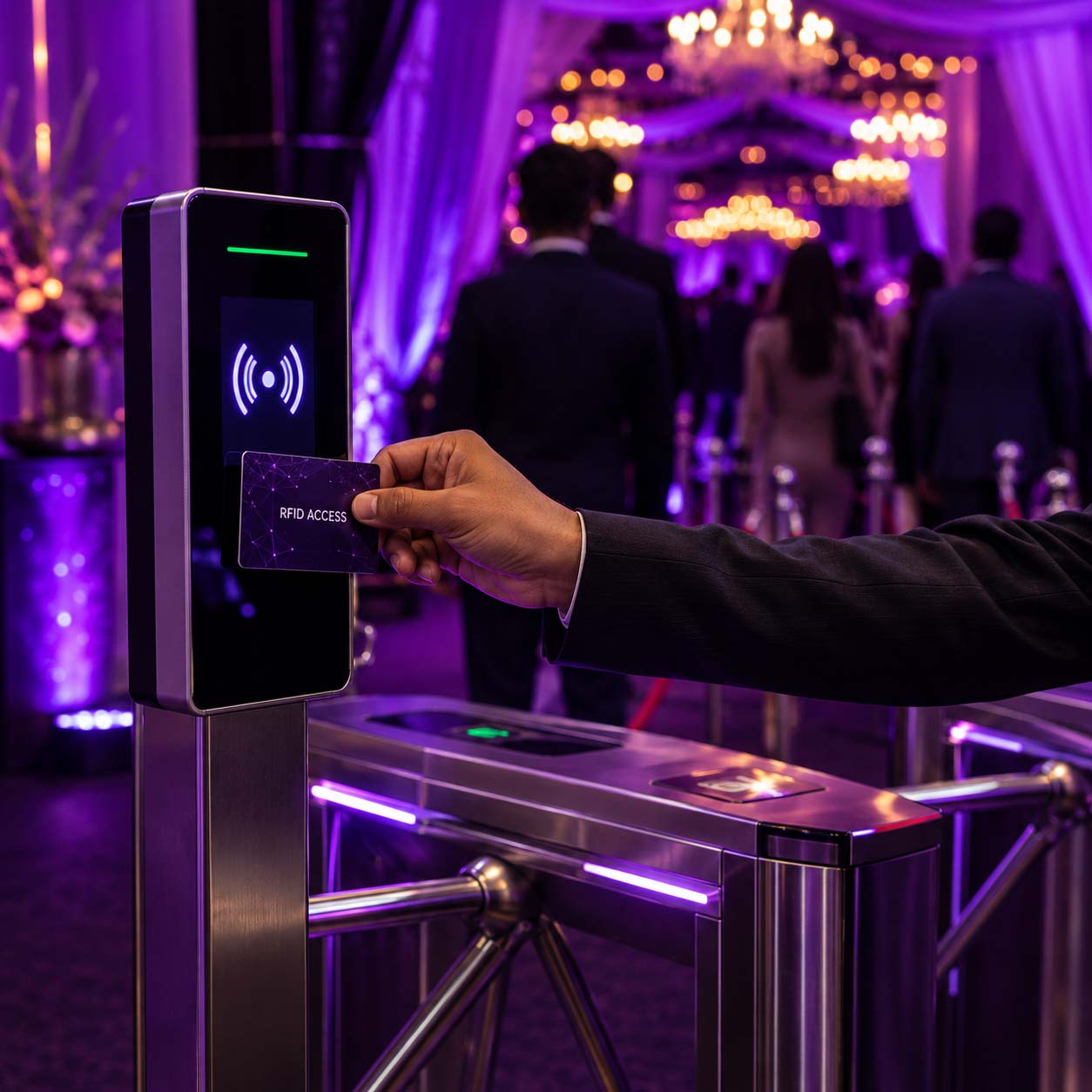
RFID Access Control
Streamline event entry with RFID access control solutions supporting smart check-in, visitor pass verification, badge scanning, entry tracking, attendance monitoring, and organized access management for secure and efficient events.
Explore Event Rental & Infrastructure Services





Explore Other Experiences

















Explore by Occasion






RFID Access Control for Secure Event Entry
◆Managing entry efficiently is an important part of conferences, exhibitions, trade shows, business gatherings, festivals, and large-scale events. When hundreds or thousands of guests arrive within a short period, manual verification can create queues, delays, and difficulties in monitoring attendance.
RFID Access Control provides a technology-based approach to event entry management by using RFID-enabled badges, cards, wristbands, or credentials to identify registered attendees and streamline access. It can support faster check-in, controlled entry points, visitor tracking, attendance monitoring, and organised movement throughout an event venue.
Professional event technology providers can help configure RFID systems according to attendee categories, access permissions, venue zones, registration requirements, and event schedules. Happiffie connects organisers with experienced event technology and access management specialists across India.
RFID Event Management
RFID technology can be integrated into different stages of event management, from registration and badge issuance to venue entry and attendance monitoring.
Each attendee can receive an RFID-enabled credential linked to their registration information. When the credential is scanned at an enabled access point, the system can verify the attendee and record the relevant entry activity.
This creates a more structured process compared with entirely manual check-in procedures.
Smart Check-In
Smart check-in can reduce the time required to verify registered visitors.
Instead of relying only on printed registration lists, staff can use RFID readers to identify attendees through their assigned credentials.
The system can help event teams manage arrival information while reducing repetitive manual data entry.
Entry Tracking
Entry tracking provides organisers with a record of access activity during an event.
Depending on the system configuration, organisers may be able to monitor when attendees enter designated areas and use the information for operational planning.
This can be especially useful for conferences, exhibitions, workshops, and multi-zone events.
Visitor Passes
RFID-enabled visitor passes can be issued according to attendee type.
Organisers may create different credentials for delegates, exhibitors, speakers, staff, VIP guests, vendors, media representatives, or other authorised participants.
Access permissions can then be configured according to the requirements of the event.
Badge Scanning
RFID badge scanning allows event staff to verify credentials at designated entry points.
The process can be integrated into registration counters, entrance gates, restricted areas, session rooms, or exhibition zones.
Proper placement of readers can help reduce congestion and make visitor movement easier to manage.
Event Security
Access control can form part of a broader event security strategy.
By restricting certain areas to authorised attendees, organisers can create more controlled movement within the venue.
RFID systems can complement security personnel, registration teams, surveillance systems, and other venue safety measures rather than replacing them.
Conference Access Management
Large conferences may have multiple sessions, meeting rooms, networking areas, speaker lounges, and restricted zones.
RFID credentials can help organisers differentiate access permissions between attendee groups.
For example, certain badges may allow access to general conference areas while others provide entry to specific sessions or VIP spaces.
Exhibition Entry
Exhibitions can involve large numbers of visitors arriving throughout the day.
RFID-enabled check-in can help streamline visitor entry and provide organisers with structured attendance information.
Exhibitor areas, networking lounges, conference sessions, and restricted operational spaces can also be managed through appropriate access permissions.
Attendance Monitoring
RFID systems can support attendance tracking for conferences, workshops, seminars, training sessions, and other scheduled activities.
Scanning an attendee's credential at a session entrance can create a record of participation.
This can be useful when organisers need information about session attendance or visitor engagement.
Multi-Zone Access
Large venues may contain several areas requiring different levels of access.
RFID credentials can be configured to support zone-based permissions where the technology infrastructure allows it.
This can help separate general visitor areas from staff rooms, exhibitor zones, backstage spaces, speaker areas, or VIP sections.
VIP Access
VIP guests may require dedicated access arrangements.
RFID-enabled credentials can help identify authorised VIP attendees and support access to designated lounges, hospitality areas, meeting rooms, or special-event zones.
The system can work alongside visual badge identification and trained event staff.
Staff and Crew Management
Event staff, technicians, vendors, security teams, caterers, and production crews may require different access permissions.
RFID badges can help distinguish these groups and provide controlled entry to operational areas.
This can improve coordination when large numbers of temporary personnel are working across a venue.
Event Registration Integration
RFID access systems can be connected with registration workflows depending on the technology platform being used.
Attendee information collected during registration can be associated with the RFID credential issued at check-in.
This can reduce duplication and help maintain consistency between registration and entry records.
Visitor Tracking
Visitor tracking can provide useful operational information about event participation.
Depending on system capabilities and configured permissions, organisers may be able to review entry records and movement through RFID-enabled checkpoints.
Any tracking system should be implemented transparently and in accordance with applicable privacy and data protection requirements.
Digital Badge Access
RFID-enabled badges can provide a reusable physical credential for attendees.
Badges may contain printed identification details, while the embedded RFID component supports electronic verification.
This combination can help staff visually identify visitors while also enabling automated access checks.
Contactless Event Entry
RFID scanning can minimise the need for physical handling during entry verification.
Attendees can present their credentials near a compatible reader, allowing the system to detect and process the RFID information.
This can help create a smoother check-in experience during busy arrival periods.
Event Entry Queues
A well-designed RFID entry system can help reduce bottlenecks by speeding up individual verification.
However, queue performance also depends on the number of entry points, reader placement, network infrastructure, staffing, badge preparation, and attendee flow.
Technology should therefore be combined with appropriate queue management planning.
Data and Reporting
Event organisers may require reports covering registration, attendance, access activity, and session participation.
Depending on the selected platform, RFID systems can provide data that supports post-event analysis.
Reports can help organisers understand attendance patterns and improve planning for future events.
Temporary Event Access Control
Temporary RFID systems can be useful when access management is required for a limited period.
Conferences, exhibitions, festivals, sporting events, product launches, and large gatherings can deploy temporary technology infrastructure without installing permanent access systems.
The equipment can be configured according to the venue and event duration.
RFID Wristbands and Cards
RFID credentials can take different forms depending on the event.
Badges, cards, wristbands, and other compatible credentials may be selected according to attendee comfort, event format, branding requirements, and access needs.
The appropriate credential should be chosen based on the reader technology being deployed.
Event Security Coordination
RFID access control works most effectively when integrated into the broader event security plan.
Security personnel should understand credential categories, restricted areas, escalation procedures, and access exceptions.
Manual verification or secondary identification may also be required in situations where a credential cannot be read or appears invalid.
Benefits of RFID Access Control
RFID technology can help organisers streamline entry, reduce manual verification, manage attendee categories, support attendance records, and create more structured access to event areas.
It can also provide useful operational data while improving the overall efficiency of registration and entry management.
The exact benefits depend on the event size, system configuration, infrastructure, and access requirements.
Choosing the Right RFID System
The appropriate system depends on attendee volume, number of entry points, venue size, access zones, credential type, network requirements, reporting needs, and event duration.
Before booking, organisers should confirm reader capacity, credential compatibility, software functionality, offline capabilities, data handling practices, technical support, installation requirements, and backup procedures.
A site assessment can help identify suitable reader locations and network requirements.
Why Choose Happiffie?
Happiffie connects event organisers with trusted RFID Access Control and event technology providers offering RFID check-in, badge scanning, visitor access management, attendance monitoring, entry tracking, and temporary event security solutions across India.
Whether you are organising a conference, exhibition, trade show, festival, business gathering, or large public event, Happiffie helps you discover experienced specialists who can design access workflows around your attendee categories and venue requirements.
From registration and credential issuance to entry verification and attendance reporting, Happiffie makes it easier to coordinate technology with the wider event management process.
Conclusion
Efficient entry management can significantly influence the first impression and operational flow of a large event. RFID Access Control provides a structured technology solution for attendee identification, smart check-in, visitor passes, badge scanning, access permissions, and attendance monitoring.
When combined with trained staff, appropriate security procedures, reliable infrastructure, and clear attendee communication, RFID technology can help create a smoother and more organised event entry experience.
With Happiffie, organisers can find reliable event technology providers who can assist with RFID equipment, credential management, access configuration, technical setup, and event-day support across India.
Frequently Asked Questions
1. What is RFID Access Control?
RFID Access Control uses radio-frequency identification technology to verify authorised credentials and manage entry to designated event areas.
2. How does RFID event check-in work?
Attendees receive compatible RFID credentials such as badges, cards, or wristbands. A reader detects the credential and verifies the associated registration or access information.
3. Can RFID be used for exhibitions?
Yes. RFID systems can support exhibition entry, visitor registration, exhibitor access, session attendance, and restricted-area management.
4. Can different visitor categories have different access?
Yes. RFID credentials can be configured with different access permissions depending on the capabilities of the selected system.
5. Can RFID track event attendance?
Yes. RFID-enabled checkpoints can record entry or session attendance when configured for that purpose.
6. Can RFID help reduce check-in queues?
It can help speed up individual credential verification, although overall queue performance also depends on staffing, entry-point capacity, infrastructure, and visitor flow.
7. Can RFID be used for VIP access?
Yes. Dedicated RFID credentials can be configured for VIP guests and other attendees requiring access to restricted areas.
8. Are RFID systems suitable for temporary events?
Yes. Temporary RFID access systems can be deployed for conferences, exhibitions, festivals, trade shows, and other short-term events.
9. Can RFID badges be used with event registration?
Yes. Compatible systems can associate RFID credentials with attendee registration information to support streamlined entry management.
10. Is RFID Access Control the same as event security?
No. RFID is an access management technology. It should be used in conjunction with trained security personnel, venue procedures, identification protocols, and other relevant security measures.
11. Can RFID systems provide event reports?
Depending on the platform, organisers may receive reports relating to registration, entry activity, attendance, and access events.
12. Why choose Happiffie for RFID Access Control?
Happiffie connects you with trusted RFID event technology specialists offering smart check-in, badge scanning, visitor passes, entry tracking, attendance monitoring, and event access management solutions across India.