
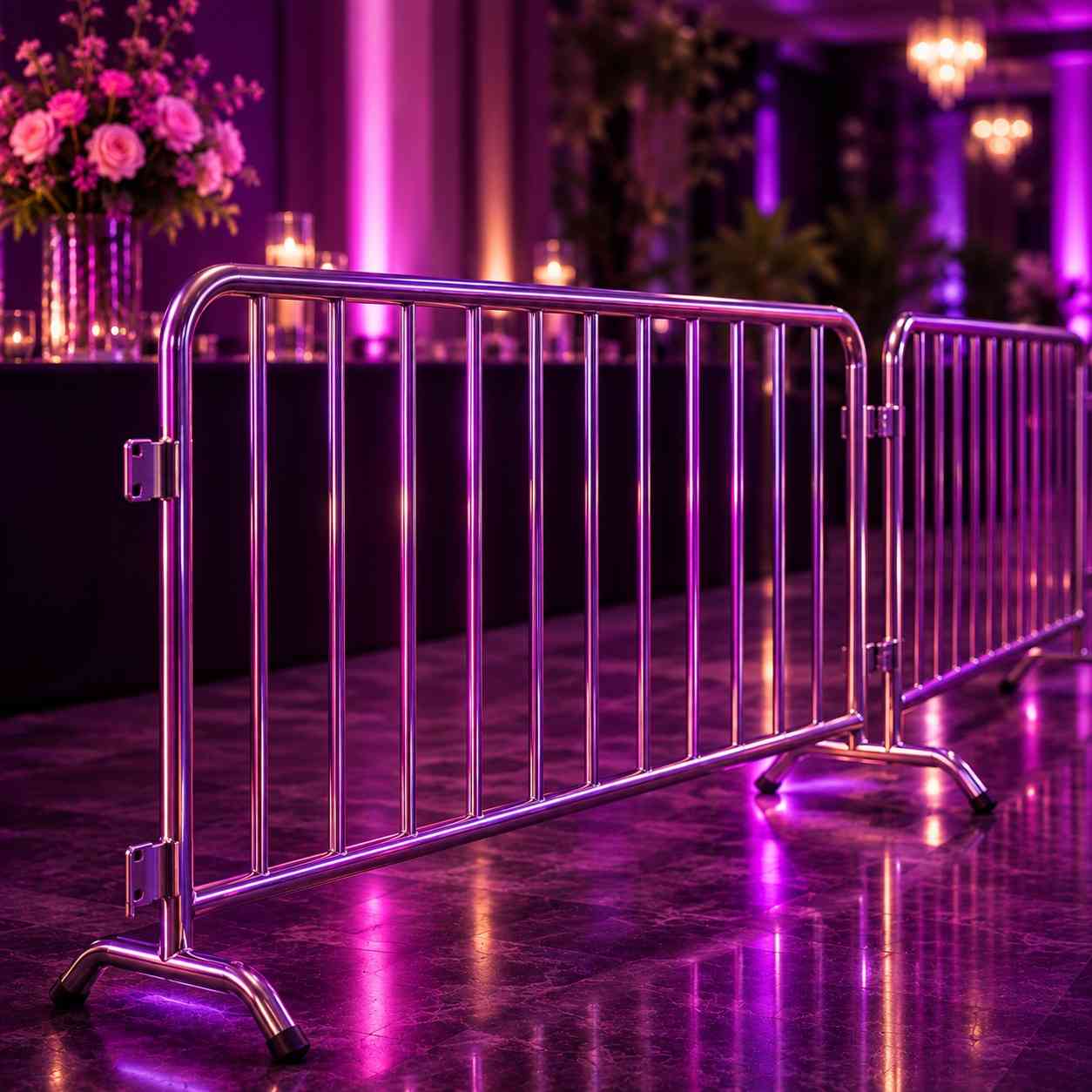
Metal Barricades
Create secure and organized event spaces with Metal Barricades designed for concerts, festivals, public gatherings, entrances, VIP areas, and high-traffic zones. Support safe crowd movement, controlled access, and efficient event management.
Explore Event Rental & Infrastructure Services


Explore Other Experiences

















Explore by Occasion






Metal Barricades for Concerts & Events in India
◆Metal barricades are an essential part of crowd management, public safety, venue security, and traffic control at concerts, festivals, exhibitions, political gatherings, sporting events, religious functions, weddings, corporate events, and large public celebrations. Designed to create physical boundaries and organised movement pathways, metal barricades help event teams separate crowds from restricted areas, control entry points, protect operational zones, and manage pedestrian movement throughout the venue.
In India's diverse event landscape, metal barricades are widely used at concert grounds, stadiums, exhibition centres, public spaces, wedding venues, roads, outdoor festivals, cultural programmes, and large-scale gatherings. Their durable construction makes them suitable for environments where crowd pressure, continuous movement, and changing event conditions require reliable temporary barriers.
The importance of metal barricades becomes especially evident during concerts and festivals. Large crowds often gather near stages, entry gates, food areas, merchandise counters, and high-interest attractions. Properly positioned barricades can create defined zones, maintain separation between attendees and production areas, and help trained security and event teams manage crowd movement more effectively.
Metal barricades are available in different designs and configurations depending on the intended application. Common options include pedestrian crowd-control barricades, interlocking metal barricades, concert barricades, stage barriers, heavy-duty event barricades, road barricades, temporary fencing panels, and specialised security barriers. The appropriate system depends on crowd size, venue layout, duration, access requirements, and site conditions.
Concert barricades are specifically designed for high-attendance entertainment environments. They may be positioned between audiences and stage areas to create a controlled buffer zone for performers, production teams, security personnel, and emergency access. Professional event teams determine suitable placement based on the venue design and crowd-management plan.
Stage barricades can also create protected zones around technical production areas. These may include backstage entrances, sound and lighting control positions, cable routes, equipment storage, camera platforms, and other restricted operational spaces. Barricades help distinguish guest areas from production areas while maintaining necessary access for authorised personnel.
Venue perimeter control is another important application. Temporary metal barriers can be arranged around restricted zones, temporary structures, equipment areas, vehicle access points, construction areas, and event boundaries. This helps prevent unauthorised access and supports the overall venue-management strategy.
Metal barricades are also useful for pedestrian traffic management. At outdoor events, roads, parking areas, entrances, and pedestrian routes may need to be separated to reduce conflicts between vehicles and attendees. Barricades can help create defined pedestrian pathways and controlled crossing points when incorporated into an appropriate traffic-management plan.
For exhibitions and trade shows, barricades can be used to control queues, separate construction areas, protect displays, manage loading zones, and guide visitors through designated pathways. They can also help keep visitors away from temporary installation areas during event setup and dismantling.
Corporate events and large conferences may require temporary barriers around registration zones, VIP areas, technical equipment, parking entrances, loading areas, or restricted-access spaces. Professional-looking metal barricades can be combined with signage and event branding to maintain an organised venue environment.
Weddings and large celebrations can also benefit from temporary barricades. High-attendance weddings may require controlled vehicle movement, pedestrian pathways, valet areas, service entrances, catering zones, or restricted production areas. Barricades can help separate guest movement from operational activity without affecting the overall event flow.
Religious gatherings and cultural events often involve significant pedestrian traffic. Metal barricades can be used to create organised routes, separate entry and exit pathways, protect service areas, and manage movement around stages, ceremonial zones, or other high-traffic locations. Event and venue authorities should determine the appropriate crowd-control arrangements.
Sports events and stadiums commonly use barricades around spectator areas, entry gates, field boundaries, media zones, player access routes, and service areas. Temporary barriers can help maintain separation between spectators and operational areas while supporting controlled access.
The design of metal barricades should be selected according to the crowd environment. Heavy-duty systems may be suitable for high-density events, while lighter temporary barriers may work for lower-risk areas. The barrier design, connection method, stability, height, and layout should be evaluated by qualified event and safety professionals.
Interlocking systems can provide greater flexibility for temporary event layouts. Individual barricade sections can be connected to create longer continuous barriers or specific shapes around stages, walkways, restricted zones, and entry areas. This allows event teams to adapt the layout according to changing operational requirements.
Barrier placement is one of the most important aspects of crowd management. Barricades should be positioned to support clear movement routes without creating unnecessary bottlenecks. Entry and exit points, emergency access, staff routes, accessibility pathways, and evacuation requirements should be considered when designing the layout.
Accessibility should always be incorporated into crowd-control planning. Barrier layouts should maintain suitable pathways for guests using wheelchairs, mobility aids, or other accessibility equipment. Event teams should ensure that controlled routes do not unintentionally restrict accessible entry or emergency movement.
Signage can improve the effectiveness of metal barricades. Directional signs, entry labels, VIP indicators, emergency information, restricted-area notices, and event branding can be attached or positioned near barrier systems where appropriate. Clear visual information helps guests understand where they should move or wait.
Security teams play an important role alongside physical barriers. Metal barricades should not be considered a replacement for trained security personnel, crowd-management teams, emergency services, or an appropriate event safety plan. Their purpose is to provide physical structure that supports professional crowd-management operations.
For large concerts and festivals, crowd density should be assessed throughout the event. Popular performances, entry periods, exits, food areas, and transportation zones can experience sudden increases in attendance. Event organisers and qualified safety teams should monitor these areas and adjust barriers or staffing where appropriate.
Weather and site conditions should also be considered for outdoor installations. Wind, rain, uneven ground, temporary surfaces, vehicle movement, and changing environmental conditions can affect barrier stability. Professional suppliers and event teams should assess site conditions before installation and during the event where necessary.
Metal barricades are also useful during event setup and dismantling. Production teams may need to restrict access around stage construction, electrical work, heavy equipment, loading operations, and temporary structures. Barricades can create temporary exclusion zones that help keep unauthorised people away from active work areas.
Rental services provide a practical option for temporary events. Event organisers can rent metal barricades according to the required quantity and duration. Providers may offer transportation, delivery, placement, setup, relocation, dismantling, and removal services depending on the rental package.
Cost efficiency is another advantage of renting barricades. Pricing varies depending on the number of barricade sections, design, length, rental duration, venue location, transportation, setup requirements, and additional services. Comparing suppliers allows organisers to plan crowd-control infrastructure according to their event requirements.
Logistics become particularly important for large-scale installations. Hundreds or thousands of barricade sections may need to be transported and positioned across a venue. Professional teams coordinate delivery schedules, layout plans, access routes, installation, repositioning, and removal with venue and event management teams.
Sustainability is also relevant to temporary crowd-control infrastructure. Reusable metal barricades can be used across multiple events, reducing dependence on disposable barriers and temporary materials. Rental systems also allow the same equipment to serve different events throughout its operational life.
Modern event barricade systems continue to evolve with modular designs, improved connection mechanisms, lighter materials, reinforced frames, integrated signage options, and specialised concert configurations. These developments provide event organisers with flexible solutions for different crowd and venue requirements.
Metal barricades can also work alongside other event infrastructure such as stanchions, retractable queue barriers, temporary fencing, access-control systems, security checkpoints, signage, CCTV, event communication systems, and trained crowd-management personnel. A coordinated approach provides a more organised venue environment.
In conclusion, metal barricades are more than physical barriers—they are an important component of crowd management, public safety, venue operations, and temporary traffic control. From concerts and festivals to exhibitions, sporting events, weddings, religious gatherings, and large public events across India, properly planned barricades can help establish controlled zones and organised movement. By selecting suitable equipment, assessing site conditions, designing appropriate layouts, and coordinating with qualified safety and security professionals, event organisers can create safer and more efficiently managed event environments.
FAQ Section
Q1: What are metal barricades used for at events?
Metal barricades are used for crowd control, venue perimeter management, pedestrian traffic separation, restricted-area protection, stage security, entry management, event setup zones, and temporary access control.
Q2: Are metal barricades suitable for concerts?
Yes. Concert barricades are commonly used to create controlled zones between audiences and stage areas, while also supporting security, production access, and crowd-management operations.
Q3: Can metal barricades be used for festivals?
Yes. They can be used around entry gates, stages, pedestrian routes, restricted areas, parking zones, food areas, and other high-traffic locations at festivals.
Q4: Can barricades be used for event traffic management?
Yes. Metal barricades can help separate pedestrian and vehicle movement, define temporary pathways, control access points, and organise traffic around event venues when incorporated into a suitable traffic-management plan.
Q5: Can metal barricades be used around stages?
Yes. Barricades can create controlled areas around stages, backstage zones, technical equipment, production areas, and restricted-access spaces. The appropriate barrier configuration should be determined according to the event's safety and production requirements.
Q6: Are metal barricades suitable for outdoor events?
Yes. They are commonly used outdoors, but ground conditions, weather, wind, stability, vehicle movement, and site-specific requirements should be assessed before and during installation.
Q7: Can metal barricades be rented?
Yes. Event infrastructure providers commonly offer metal barricade rental services. Packages may include delivery, installation, placement, relocation, dismantling, and removal.
Q8: Can barricades be used with security personnel?
Yes. Barricades work as part of a broader crowd-management system alongside trained security personnel, event staff, signage, access control, communication systems, and appropriate safety procedures.
Q9: How much does metal barricade rental cost?
Pricing depends on the number of barricades, type and size, rental duration, venue location, transportation, setup requirements, and additional support services. Comparing providers helps identify a suitable solution.
Q10: How can Happiffie help find metal barricades?
Happiffie helps event organisers, concert promoters, festival teams, exhibition organisers, corporations, venues, and wedding planners compare and connect with trusted event infrastructure and crowd-management providers. You can find concert barricades, crowd-control barriers, venue perimeter systems, pedestrian barriers, event traffic solutions, and complete temporary crowd-management setups.