
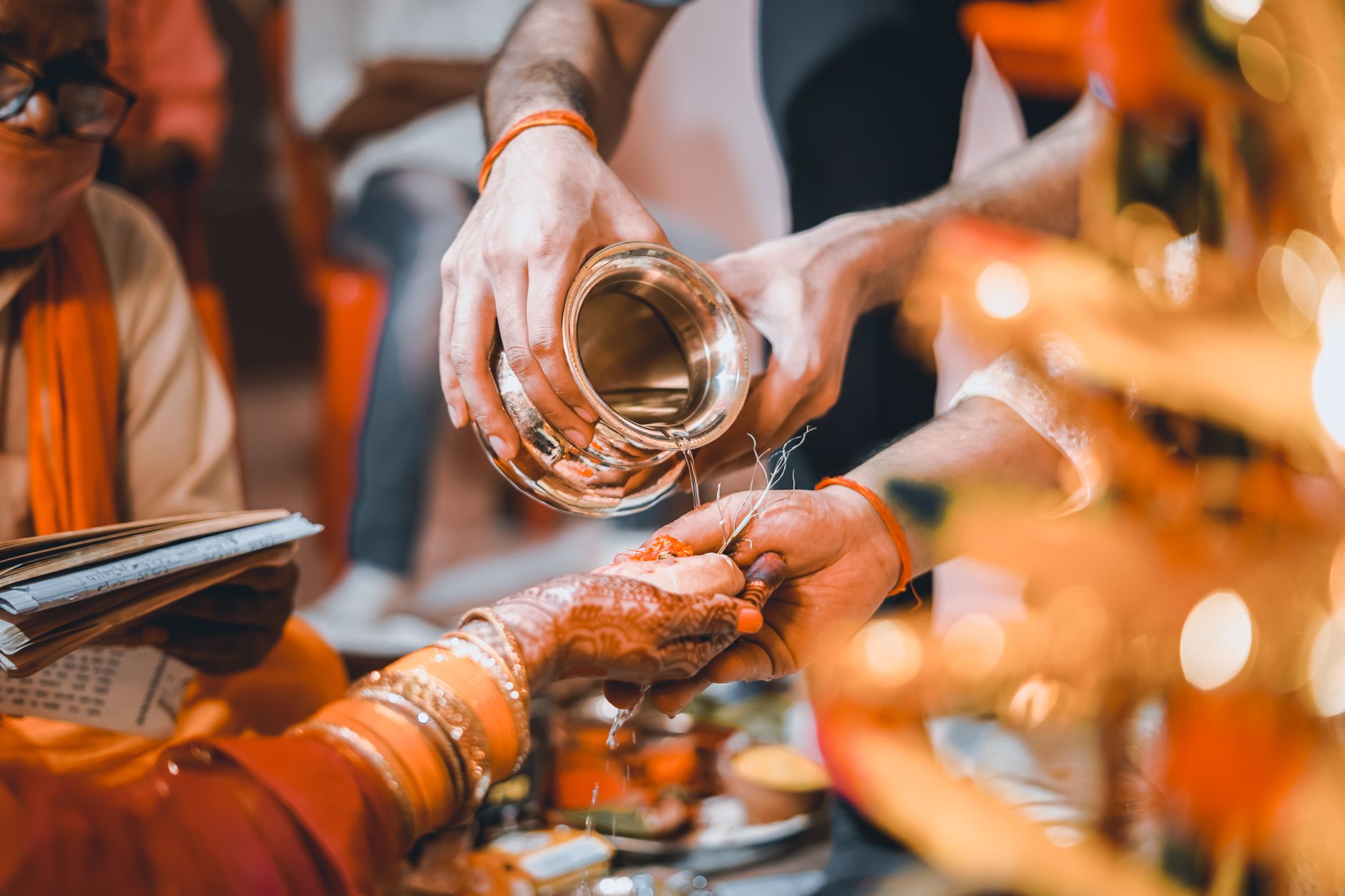
Sacred Rituals, Timeless Traditions
Religious cermony in Coimbatore
Hindu Wedding Ritual Guide for Coimbatore Couples
Planning a sacred union in Coimbatore starts with understanding every meaningful step in this Hindu Wedding Ritual Guide. From the first Ganesh Puja to the final Saptapadi vows, Hindu wedding ceremony steps are steeped in centuries of Vedic wisdom and local Tamil Brahmin tradition. Coimbatore's vibrant marriage culture blends classic Iyer and Iyengar customs with modern sensibilities, making it essential to work with a knowledgeable wedding pandit in Coimbatore who can anchor every rite to your chosen auspicious wedding muhurat. Whether you are hosting 50 guests in a heritage hall near R.S. Puram or 500 at a Grand Mahal banquet space, this guide helps you navigate every ritual with confidence, clarity, and genuine devotion.
Quick Answer
A Hindu Wedding Ritual Guide outlines every sacred rite from pre-wedding ceremonies like Seemantham and Naandi to the core wedding-day rituals — Kanyadaan, Mangalsutra Dharana, and Saptapadi — and post-wedding customs. In Coimbatore, South Indian wedding rites follow Tamil Agamic and Vedic traditions, typically conducted by a qualified pandit during a precise auspicious wedding muhurat. The entire ceremony usually spans four to eight hours across one or two days.
What Are the Core Hindu Wedding Ceremony Steps in Coimbatore?
The Hindu Wedding Ritual Guide for a Coimbatore ceremony typically unfolds across two main days. Day one covers pre-wedding rituals: Naandi (ancestral blessings), Seemantham or Sumangali Prarthanai for the bride, and the Nichayathartham engagement confirmation. Day two — the main wedding day — begins with Kashi Yatra, where the groom theatrically pretends to renounce worldly life before being persuaded by the bride's family. This is followed by Oonjal (swing ceremony), Kanyadaan (gifting of the bride), Mangalsutra Dharana (tying of the sacred thread), and finally the Saptapadi — seven steps around the sacred fire — which legally and spiritually solemnises the marriage. Each of these Hindu wedding ceremony steps is announced by the pandit in Sanskrit slokas, while the family responds with blessings in Tamil. Understanding this sequence in advance allows you to plan your wedding ceremony decoration, catering breaks, and photography slots without disrupting the sacred rhythm of the rituals.
Vedic Wedding Rituals — The Spiritual Foundation of Your Marriage
Vedic wedding rituals draw from the Grihyasutras, ancient Sanskrit texts that prescribe precise mantras, fire offerings (homas), and symbolic acts for each stage of the marriage ceremony. In Coimbatore, families following Tamil Brahmin traditions — both Smartha Iyer and Vaishnava Iyengar — observe Vedic rituals with minor regional variations. The Homam (sacred fire ritual) is central to every ceremony; the couple offers ghee, sesame, and rice into the fire as a witness to their vows. Akshatai (blessed rice grains) are showered on the couple during pivotal moments. Traditional Hindu marriage customs also include Gothram exchange, where the groom and bride declare their ancestral lineages, affirming the genetic and spiritual compatibility required by scripture. Engaging a pandit who specialises in the specific Shakha (Vedic branch) your family follows ensures every mantra is recited correctly, lending the ceremony authentic spiritual weight.
How Do South Indian Wedding Rites Differ from North Indian Customs?
South Indian wedding rites, particularly those practised in Coimbatore, place a strong emphasis on music, the Nadaswaram and Thavil ensemble being near-mandatory for auspicious moments like the tying of the Mangalsutra. Unlike North Indian ceremonies that centre on the Pheras (circular walk around the fire), South Indian ceremonies feature the Saptapadi as a side-by-side walk, often with the bride leading some of the steps. Mehendi (henna) is less elaborate compared to North Indian weddings; instead, Kolam patterns drawn by women of the household hold greater ritual significance. The bridal trousseau checklist in South Indian weddings prioritises silk Kanjivaram sarees, temple jewellery sets, and the sacred turmeric-smeared thread (Maangalyam) over the lehenga-dominated aesthetics of the North. Both traditions share Kanyadaan and Saptapadi but differ in music, attire, and the language of blessings. Recognising these distinctions is key when your Hindu Wedding Ritual Guide must accommodate a mixed-cultural family or guests from different states.
Choosing the Right Wedding Pandit in Coimbatore for an Authentic Ceremony
A skilled wedding pandit in Coimbatore does far more than recite Sanskrit mantras — they orchestrate the entire ceremony timeline, cue musicians, guide the couple through each symbolic act, and explain rituals to guests in Tamil and English. When selecting a pandit, verify their Vedic qualification (Veda Pathashala training), experience with your specific sub-tradition (Iyer, Iyengar, Mudaliar, Nadar, or other community customs), and their ability to provide a written ritual schedule for your auspicious wedding muhurat. Ask whether they bring all required puja samagri (ritual items) or if you need to source separately — items like Dharba grass, banana stems, raw turmeric, and specific flowers can be tricky to procure last minute in busy wedding seasons around Margazhi and Panguni Uthiram. A thorough Hindu Wedding Ritual Guide from your pandit, shared at least two weeks before the event, helps all vendors — decorators, caterers, and photographers — align without chaos.
What Is the Ideal Auspicious Wedding Muhurat and How Does It Shape Your Event Plan?
An auspicious wedding muhurat is a precisely calculated time window — determined by the couple's horoscopes, the Tamil Panchangam calendar, and Nakshatra positions — during which the most sacred rites must be performed. In Coimbatore, muhurats often fall in early morning hours (between 6 AM and 10 AM) or in a specific afternoon window, making timeline management critical. The Muhurat for tying the Mangalsutra is typically the shortest and most sacred window — sometimes only 5 to 15 minutes — meaning your wedding ceremony decoration, seating, and the entire guest assembly must be ready well before this moment. Traditional Hindu marriage customs require that the sacred fire homa be lit and the couple be in position at least 20 minutes before the Muhurat window opens. Work backwards from this fixed time to plan catering service breaks, bride's makeup start time, and baraat arrival so that no commercial activity disrupts the spiritual peak of the ceremony. This planning approach is the heart of any reliable Hindu Wedding Ritual Guide.
Hindu Wedding Ceremony Formats: A Practical Comparison for Coimbatore Couples
Expert Recommendation
Best for intimate family celebrations (under 75 guests)
Best for large community weddings (300+ guests)
Best for destination weddings with out-of-town guests
Best for budget-conscious couples
Best for modern couples blending tradition and personalisation
Best for multi-day elaborate ceremonies
How to Choose the Right Option
✅ Pre-booking Checklist
- Consult your wedding pandit in Coimbatore at least 3–4 months ahead to calculate the auspicious wedding muhurat
- Prepare a written Hindu wedding ceremony steps schedule and share it with all vendors 3 weeks before the event
- Source all puja samagri (Dharba grass, specific flowers, ghee, copper vessels) at least one week in advance
- Confirm your venue's homam policy — open fire, ventilation, and fire-safety clearance
- Prepare a bilingual ritual programme booklet for guests unfamiliar with South Indian wedding rites
- Brief your photographer and videographer on the exact Muhurat window so they are in position 30 minutes early
- Finalise the bridal trousseau checklist with both families at least six weeks before the wedding
- Arrange dedicated seating near the mandap for elderly guests so they can witness all Vedic wedding rituals comfortably
🎯 Selection Criteria
- Pandit's expertise in your specific community sub-tradition (Iyer, Iyengar, or other)
- Venue's infrastructure compatibility with traditional Hindu marriage customs (fire pit, ventilation, mandap space)
- Flexibility of the ritual schedule to accommodate your auspicious wedding muhurat without rushing
- Availability of live Nadaswaram and Thavil musicians for key ritual moments
- Vendor coordination experience — caterers, decorators, and photographers familiar with ritual timelines
💰 Cost / Quality Factors
- Pandit fees in Coimbatore typically range from ₹15,000 to ₹60,000 depending on ceremony length and number of priests
- Puja samagri costs average ₹8,000–₹20,000 for a full two-day South Indian ceremony
- Venue rental for a mid-range kalyana mandapam in Coimbatore: ₹50,000–₹1,50,000 per day
- Wedding ceremony decoration for a mandap setup ranges from ₹40,000 to ₹3,00,000+ based on floral choices
- Live Nadaswaram ensemble typically costs ₹12,000–₹30,000 for a four-to-six hour engagement
- Photography and videography packages covering full Hindu wedding ceremony steps: ₹60,000–₹2,50,000
⚠️ Common Mistakes to Avoid
- Booking a pandit without verifying their familiarity with your specific community's Vedic wedding rituals
- Underestimating the Muhurat window — failing to have the couple and fire altar ready at least 20 minutes early
- Ignoring the bridal trousseau checklist until the last week, causing rushed or incomplete gifting
- Scheduling catering service breaks that overlap with core South Indian wedding rites, creating noise and disruption
- Choosing a hotel venue without confirming open-fire permission for the homam in advance
- Not briefing photographers on sacred no-flash moments during mantra recitation and Saptapadi
People Also Ask
How long does a traditional Hindu wedding ceremony in Coimbatore typically last?
What items are needed for a Hindu wedding homam in Coimbatore?
What is the significance of Saptapadi in Vedic wedding rituals?
Can a Coimbatore Hindu wedding ceremony accommodate guests who speak only English?
What is Kashi Yatra and why is it part of South Indian wedding rites?
How far in advance should I consult a wedding pandit in Coimbatore?
What is a bridal trousseau checklist for a traditional Coimbatore Hindu wedding?
What is the difference between Iyer and Iyengar Hindu wedding ceremony steps?
Related Experiences on Happiffie
Sacred Ceremony Materials, Indore
Plan Your Perfect Nikah in Kolkata
Timeless Wedding Halls in Coimbatore
Sacred Sounds for Your South Indian Wedding
Dream Decor, Lucknow Weddings
Wrap Her New Beginning Beautifully
Frequently Asked Questions
Is a Hindu Wedding Ritual Guide relevant for non-Brahmin Tamil communities in Coimbatore?
What is the average cost of a complete Hindu wedding ceremony in Coimbatore?
How is the auspicious wedding muhurat calculated for a Coimbatore Hindu wedding?
Can Vedic wedding rituals be performed at outdoor venues near Coimbatore?
What languages are used during a South Indian Hindu wedding ceremony in Coimbatore?
What is the role of the Oonjal ceremony in a Coimbatore wedding, and when does it happen?
Does a Hindu Wedding Ritual Guide need to change for inter-caste or inter-state marriages?
Which Coimbatore neighbourhoods are best known for traditional kalyana mandapams?
Key Takeaways
- A complete Hindu Wedding Ritual Guide for Coimbatore covers pre-wedding rites (Naandi, Seemantham), core ceremony (Kanyadaan, Homam, Saptapadi), and post-wedding customs across one to two days.
- South Indian wedding rites in Coimbatore — particularly Tamil Brahmin traditions — differ meaningfully from North Indian customs in music, attire, fire ritual format, and language of blessings.
- The auspicious wedding muhurat is a non-negotiable fixed window; all vendors must be briefed to be fully ready at least 20–30 minutes before it opens.
- A qualified wedding pandit in Coimbatore should be booked three to four months in advance, especially during peak Tamil wedding months like Chithirai and Panguni.
- Venue selection must account for homam fire infrastructure, ventilation, mandap space, and sound management for Nadaswaram music.
- Budgets for a full traditional ceremony in Coimbatore range from ₹3 lakh (condensed single-day) to ₹20 lakh+ (elaborate two-day multi-ritual celebration).
- A bilingual ritual programme booklet and advance briefing for photographers are small investments that significantly improve the guest experience and preserve ritual sanctity.
- Vedic wedding rituals — especially Saptapadi — have legal standing under the Hindu Marriage Act 1955, making correct performance important beyond spiritual significance.
Find Trusted Wedding Pandits and Ceremony Vendors in Coimbatore
Happiffie connects you with experienced pandits, mandap decorators, and Nadaswaram artists who understand every step of your Hindu wedding ceremony — so your sacred day unfolds exactly as tradition intends.
Explore Coimbatore Vendors
Are you a Vendor? Grow Your Business with Happiffie!
- High intent verified leads
- Reverse auction opportunities
- AI business tools & insights
- Dedicated vendor dashboard
- Grow your business, your way
It's free & takes less than 2 minutes!