
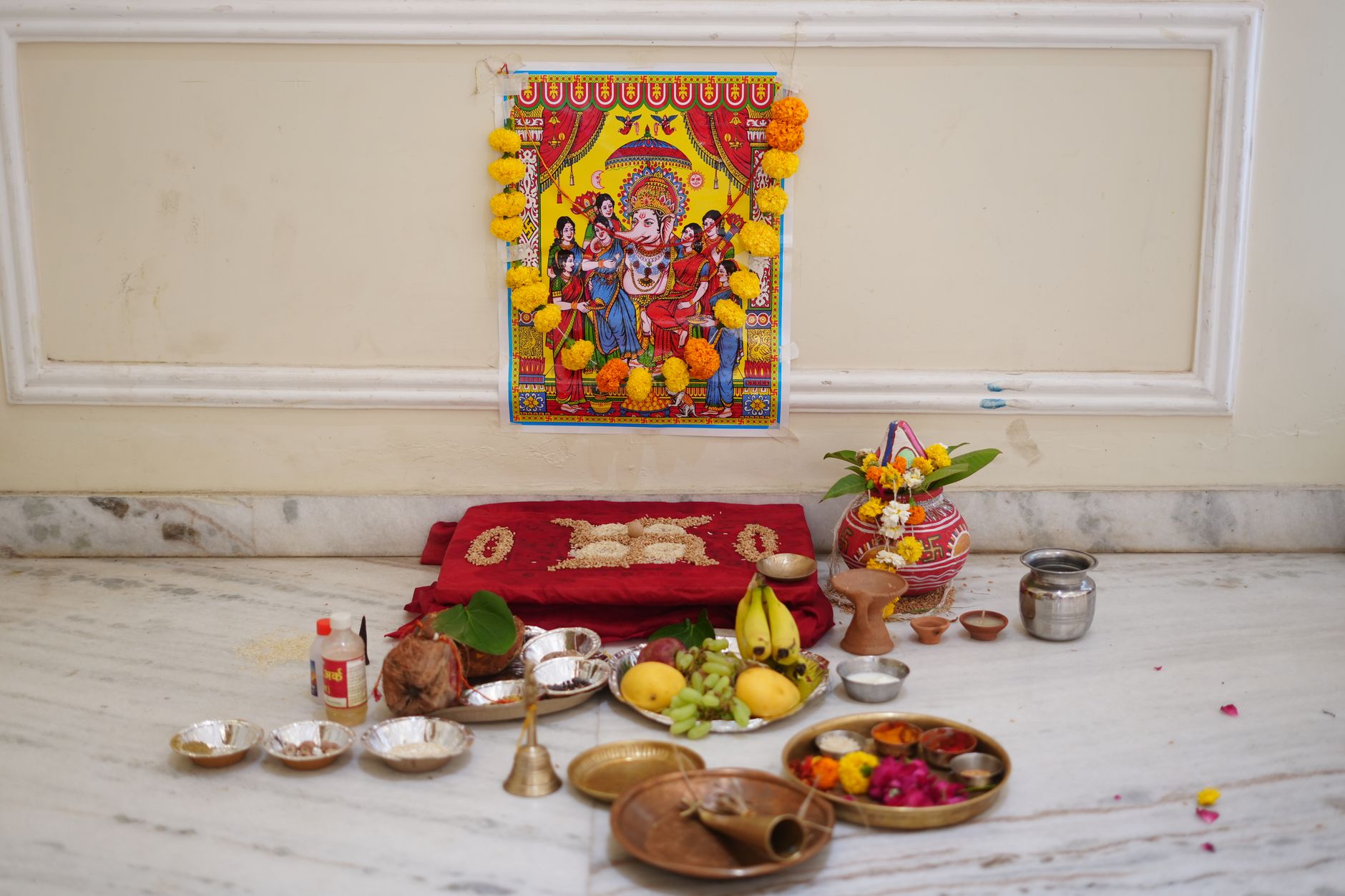
Sacred Ceremony Materials, Indore
Religious cermony in Indore
Hindu Sacred Ceremony Materials in Indore: Complete Guide
Every sacred occasion in Indore — from a pre-wedding Satyanarayan Katha to a grand griha pravesh — stands or falls on the completeness of its Hindu sacred ceremony materials. A missing ingredient during the agni sthapana or an incorrectly prepared pooja samagri kit can disrupt the entire ritual flow and disappoint your pandit. Indore's deep-rooted Malwa tradition demands authenticity: pure ghee, untreated samidhā sticks, copper kalash, and freshly sourced flowers sourced from the Rajwada bazaar belt. With thoughtful wedding muhurat planning and the right vedic ritual supplies in hand, families across neighbourhoods like Vijay Nagar, Palasia, and AB Road can host rituals that honour both scripture and celebration.
Quick Answer
Hindu sacred ceremony materials are the physical items required to perform Vedic or Puranic rituals — including copper or brass kalash, ghee, samidhā wood, camphor, kumkum, rice grains, sacred threads (mauli), flowers, incense, and havan kund. In Indore, these items are sourced from market clusters near Rajwada and Sarafa Bazaar, or ordered as curated pooja samagri kits from local religious suppliers. Completeness, purity of ingredients, and correct quantities per ceremony type are the three non-negotiable quality factors.
What Are Hindu Sacred Ceremony Materials and Why Does Completeness Matter?
Hindu sacred ceremony materials encompass every physical object that a ceremony's ritual protocol demands — from the havan kund itself to the last pinch of sapta-dhanya. Each item carries symbolic weight rooted in Vedic tradition: the copper kalash represents cosmic waters, the samidhā sticks fuel the sacred fire, and the mauli thread binds divine intention to the wrist of the devotee. In Indore's Malwa culture, ceremonies such as Navchandi Yagna, Rudrabhishek, and Satyanarayan Puja are performed with strict adherence to regional Brahmin conventions, meaning ingredient substitutions are rarely acceptable. Families who arrive at a ceremony with an incomplete pooja samagri kit risk interrupting the pandit mid-ritual — a situation that causes both spiritual discomfort and social embarrassment. Religious ceremony essentials should therefore be assembled in full at least two days before the event, cross-checked against the specific ritual's samagri list provided by your appointed pandit, and stored in a clean, dry space away from footwear or impure contact.
Core Categories of Vedic Ritual Supplies Used Across Indore Ceremonies
Vedic ritual supplies in Indore fall into six functional categories. First, fire-related items: havan kund (copper or earthen), samidhā sticks (mango, peepal, or palash wood), ghee, and camphor. Second, water-related items: copper or silver kalash, gangajal, and panch-pallav leaves. Third, offering ingredients: rice grains, sesame, jaggery, coconut, betel leaves, and supari. Fourth, worship accessories: agarbatti, dhoop, diyas, wicks, and clay lamps. Fifth, adornment materials: fresh marigold, rose petals, tulsi, and rangoli powder. Sixth, sacred thread items: mauli, janeu, and red cloth. Sourcing pure, food-grade ghee and untreated samidhā is critical — commercial substitutes affect both fragrance and ritual validity. Religious ceremony essentials from reputable Indore suppliers near Chhappan Dukan or Rajwada typically come with a printed samagri list, making cross-verification straightforward. For large gatherings of 200-plus guests, ordering curated havan kund setup packages simplifies logistics considerably.
How Much Does a Complete Pooja Samagri Kit Cost in Indore?
Pricing for Hindu sacred ceremony materials in Indore varies by ceremony scale and ingredient quality. A basic pooja samagri kit for a home puja (25-50 guests) costs between ₹800 and ₹2,500 and covers agarbatti, diyas, kalash, mauli, kumkum, and a standard samidhā bundle. A mid-range kit for Satyanarayan Katha or Navgraha Puja (50-150 guests) runs ₹3,000 to ₹8,000 and adds copper vessels, larger ghee quantities, and expanded havan samagri. A comprehensive havan kund setup for wedding rituals — including a brass havan kund, full samidhā collection, and all vedic ritual supplies — is typically priced between ₹10,000 and ₹28,000 for 150-300 guests. Premium ceremonial packages with silver-plated utensils, imported sandalwood, and curated flower arrangements can cross ₹50,000 for destination or palatial banquet events in areas like Super Corridor or Bombay Hospital Road. Pandit booking Indore services often bundle samagri procurement at negotiated rates, saving families 15-20% compared to buying items individually.
Neighbourhood-Wise Sourcing: Where to Find Religious Ceremony Essentials in Indore
Indore's religious supply ecosystem is concentrated in three commercial corridors. The Rajwada and Sarafa Bazaar belt is the oldest and most comprehensive source of Hindu sacred ceremony materials — vendors here stock rare items like palash samidhā, silver-coated supari, and traditional clay havan kunds that are difficult to find elsewhere. The Khajuri Bazaar and Sitlamata Bazaar area near Gandhi Nagar caters to wholesale buyers and is ideal for large-scale weddings needing bulk quantities of rice, sesame, and camphor. For residents in newer zones like Vijay Nagar, LIG Square, or AB Road, organised religious stores stock branded pooja samagri kits with printed ingredient guides — convenient for working families managing auspicious ceremony checklists under time pressure. Online delivery within Indore city limits is available through local aggregators, typically with same-day delivery for orders placed before noon — useful when a last-minute mandap decoration Indore addition also requires supplementary ritual items. Cross-reference your pandit's specific list against whatever kit you purchase, because regional variations in ritual protocol are common across Malwa Brahmin, Rajasthani, and Gujarati communities who all celebrate in Indore.
What Should You Verify Before Finalising Your Havan Kund Setup for a Wedding?
A havan kund setup for a wedding ceremony involves more than placing a copper vessel on the mandap floor. First, confirm the kund size with your pandit — a Saptapadi fire ritual for 300 guests requires a larger kund than a small Ganesh Sthapana. Second, verify that your venue allows open-flame rituals; many banquet halls on Rau Road and Bypass Road now require fire NOC documentation. Third, ensure your samidhā sticks are kiln-dried — damp wood creates excessive smoke that triggers venue alarms and discomforts guests. Fourth, calculate ghee quantity precisely: a two-hour havan typically consumes 1.5 to 2 kg of pure cow ghee. Fifth, arrange a fireproof base layer beneath the kund to protect the mandap decoration Indore surface. Sixth, coordinate your religious ceremony essentials delivery timeline with your pandit's arrival — ideally, all items should be arranged and consecrated at least 90 minutes before the muhurat. Proper wedding muhurat planning that accounts for samagri setup time prevents the rushed last-minute scrambles that are the single most common cause of ritual errors at Indore weddings.
Hindu Sacred Ceremony Materials: Sourcing Options Compared for Indore Events
Expert Recommendation
Best for Intimate Home Ceremonies (25-50 Guests)
Best for Traditional Malwa-Style Wedding Rituals (100-200 Guests)
Best for Large Banquet or Farmhouse Weddings (200-400 Guests)
Best for Budget-Conscious Families
Best for Destination Ceremonies at Indore Hotels or Resorts
Best for Multi-Day Wedding Ceremonies
How to Choose the Right Option
✅ Pre-booking Checklist
- Obtain the ceremony-specific samagri list from your pandit at least 10 days before the event
- Verify that your venue permits open-flame havan rituals and request fire NOC if required
- Confirm ghee is pure cow ghee — not vanaspati or blended — by checking source labelling
- Ensure samidhā sticks are fully kiln-dried to avoid excess smoke during the havan
- Order perishable items (flowers, tulsi, fresh fruits) for delivery on the morning of the ceremony
- Arrange a fireproof base layer beneath the havan kund to protect flooring and mandap décor
- Cross-check all delivered items against your samagri list at least 90 minutes before the muhurat
- Keep a small reserve kit of common items (camphor, mauli, agarbatti) for last-minute shortfalls
🎯 Selection Criteria
- Ingredient purity: prioritise certified-pure ghee and untreated wood samidhā over branded packaging
- Completeness: supplier should cover all six samagri categories — fire, water, offerings, accessories, adornment, and sacred threads
- Regional accuracy: items must align with Malwa Brahmin or your community's specific ritual conventions
- Delivery reliability: confirm same-day or next-day delivery availability for your Indore neighbourhood
- Supplier transparency: insist on itemised lists and visible pricing before confirming any order
- Scalability: ensure the supplier can handle bulk reorders quickly if guest count increases
💰 Cost / Quality Factors
- Ghee quality is the single biggest driver of both cost and ritual validity — do not compromise on this
- Samidhā wood type (mango vs. peepal vs. palash) affects fragrance, burn time, and ceremony symbolism
- Copper or brass vessels cost more than clay but are reusable across multiple family ceremonies
- Bulk procurement from Khajuri Bazaar reduces per-unit cost by 20-35% for orders above ₹10,000
- Premium silver-plated utensils add aesthetic value at destination venues but add ₹15,000-₹25,000 to budgets
- Organic or eco-friendly samagri commands a 10-20% premium but is preferred for outdoor event venues
⚠️ Common Mistakes to Avoid
- Relying on a single generic kit without cross-referencing against your pandit's ritual-specific list
- Sourcing damp or commercially treated samidhā that burns poorly and creates excessive smoke
- Forgetting to confirm venue open-flame permissions — a missing NOC can halt the entire ceremony
- Ordering flowers more than 24 hours in advance, causing wilting that affects both aesthetics and ritual purity
- Skipping a pre-ceremony material inspection, leaving no time to source missing items before the muhurat
- Mixing community-specific ritual items incorrectly — Gujarati and Malwa Brahmin samagri lists differ meaningfully
People Also Ask
What items are included in a standard pooja samagri kit for an Indore wedding?
How early should I order Hindu sacred ceremony materials before the event date?
Can I get a havan kund setup delivered to a banquet hall in Indore?
What is the difference between vedic ritual supplies and standard puja items?
Which Indore neighbourhoods have the best religious ceremony essentials shops?
Does a pandit booking in Indore typically include samagri procurement?
How do I plan a wedding muhurat around the availability of ceremony materials?
Are there eco-friendly Hindu sacred ceremony materials available in Indore?
Related Experiences on Happiffie
Complete Pooja Samagri Kits Delivered to Your Door
Nikah Supplies & Essentials in Indore
Authentic Pelli Kundalu Setup Mumbai
Kerala Ceremony Essentials, Chennai
Book Trusted Pandits in Mumbai
Seamless Guest Transit for Indore Weddings
Welcome Guests the Sacred Way
Frequently Asked Questions
Where is the best place to buy Hindu sacred ceremony materials in Indore?
What quantity of ghee is needed for a wedding havan in Indore?
Are havan kund setups allowed inside banquet halls on Rau Road or Bypass Road in Indore?
Can I order a complete pooja samagri kit online with same-day delivery in Indore?
What is the difference between a Malwa Brahmin samagri list and a standard Vedic list?
How do I include havan kund setup in my overall mandap decoration plan?
What eco-friendly Hindu sacred ceremony materials are available in Indore?
Should I hire separate vendors for vedic ritual supplies and mandap decoration in Indore?
Key Takeaways
- Hindu sacred ceremony materials cover six core categories: fire, water, offerings, accessories, adornment, and sacred threads — all must be complete before the muhurat.
- Indore's best sourcing hubs for religious ceremony essentials are Rajwada Bazaar, Sarafa, and Khajuri Bazaar, with modern packaged options available in Vijay Nagar and AB Road.
- A basic pooja samagri kit costs ₹800-₹2,500; a full wedding havan kund setup ranges from ₹10,000 to ₹28,000 depending on scale and material quality.
- Bundling pandit booking Indore with samagri procurement typically saves families 15-20% compared to purchasing items independently.
- Ghee purity and samidhā dryness are the two most critical quality factors — both directly affect ritual validity and guest experience.
- Venue fire NOC verification, fireproof base mats, and 90-minute pre-ceremony inspection are non-negotiable logistics for indoor havan rituals.
- Eco-friendly and organic samagri kits are available in Indore for outdoor ceremonies near gardens or water bodies, at a 10-20% cost premium.
- Careful wedding muhurat planning that accounts for delivery, setup, and inspection time is the most effective way to prevent last-minute ritual disruptions.
Plan Your Perfect Sacred Ceremony in Indore
Explore verified vendors for Hindu sacred ceremony materials, pandit booking, and complete ritual setup — all in one place on Happiffie.
Find Ceremony Vendors
Are you a Vendor? Grow Your Business with Happiffie!
- High intent verified leads
- Reverse auction opportunities
- AI business tools & insights
- Dedicated vendor dashboard
- Grow your business, your way
It's free & takes less than 2 minutes!