
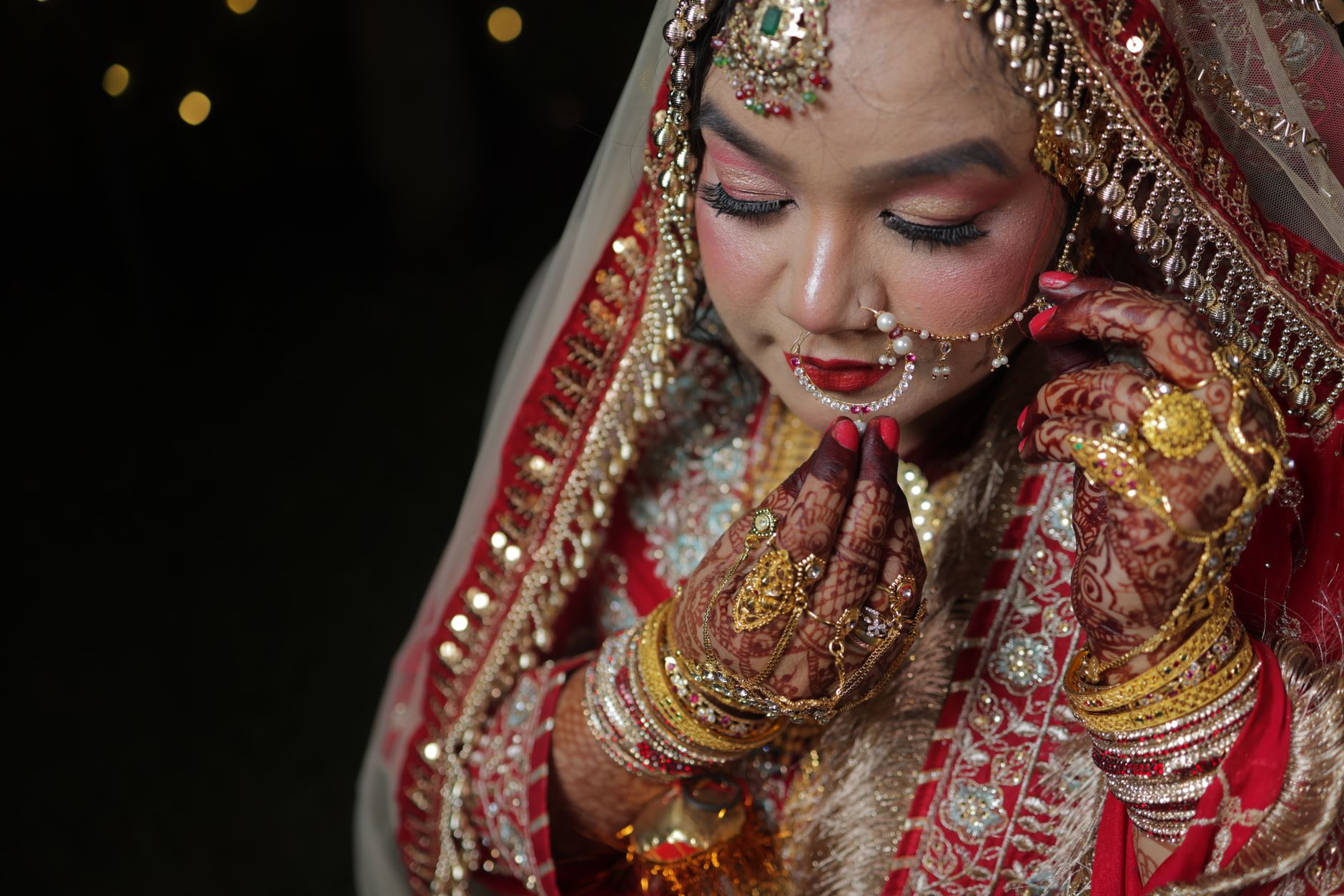
Plan Your Perfect Nikah in Kolkata
Religious cermony in Kolkata
Muslim Wedding Rituals and Elements: A Complete Kolkata Guide
Muslim wedding rituals and elements form a rich, spiritually grounded sequence of ceremonies that unite two families through faith, joy, and tradition. In Kolkata — a city with a vibrant Muslim community spread across neighbourhoods like Park Circus, Metiabruz, Rajabazar, and Tiljala — these celebrations blend Bengali warmth with Islamic customs to create unforgettable occasions. From the intimate Nikah ceremony details exchanged before a qazi, to the festive Walima reception, every step carries deep meaning. Understanding Islamic wedding traditions helps families plan timelines, budgets, and vendor requirements with confidence. Whether you are hosting 80 guests in a community hall or 500 at a banquet venue in Topsia, this guide covers everything you need to know about Muslim wedding customs in Kolkata.
Quick Answer
Muslim wedding rituals and elements include a sequence of ceremonies: Mangni (engagement), Mehndi night, Nikah (solemnisation before a qazi with Mehr and witnesses), Rukhsati (bride's send-off), and Walima (groom's reception feast). Each ritual has specific religious requirements — consent of both parties, a fixed Mehr amount, and two adult witnesses for the Nikah. Together, these elements make an Islamic marriage both spiritually valid and socially celebrated.
What Are the Core Muslim Wedding Rituals and Elements?
Muslim wedding rituals and elements follow a sequence rooted in Islamic law and enriched by regional culture. The Mangni or engagement ceremony formalises the intent to marry, often accompanied by exchange of gifts and sweets between families. The Mehndi night brings women together for bridal mehendi design, music, and celebration — a cherished pre-wedding ritual in Kolkata's Muslim households. The Nikah is the legal and religious heart of the wedding: a qazi recites prayers, the bride and groom give verbal consent (Qubool hai), the Mehr amount is declared, and two male or equivalent witnesses sign the Nikahnama. The Rukhsati is the emotional farewell of the bride from her parental home. Finally, the Walima — a feast hosted by the groom's family — fulfils a Sunnah obligation and celebrates the new union with community. Each of these Islamic wedding traditions has specific sequencing, and skipping or combining them incorrectly can cause both religious and logistical complications.
The Nikah Ceremony: Details Every Kolkata Couple Must Know
The Nikah ceremony details are the most critical aspect of any Muslim marriage. In Kolkata, a registered qazi from the West Bengal State Wakf Board typically officiates, ensuring the Nikahnama is legally valid. The ceremony requires: the bride's Wali (guardian) to give consent on her behalf, an agreed Mehr (mandatory gift from groom to bride — cash, gold, or property), and at least two adult Muslim male witnesses. The Ijab-o-Qubool (offer and acceptance) must be spoken clearly and without coercion. Many Kolkata families hold the Nikah in a mosque, a community hall near Park Circus or Rajabazar, or within a banquet wedding venue in Kolkata decorated for the occasion. Muslim wedding decoration at the Nikah setting typically features floral arches, Islamic calligraphy backdrops, and soft lighting to create a reverent yet celebratory atmosphere. Booking a qazi at least four to six weeks in advance is strongly advisable during peak wedding seasons like Eid months and winter.
How Do Pre-Wedding Rituals Differ Across Kolkata Muslim Communities?
Kolkata's Muslim community is diverse — Bengali Muslims, Bihari Muslims, UP-origin families in Metiabruz, and Urdu-speaking households each bring distinct flavours to Muslim wedding customs. Bengali Muslim families often incorporate a Gaye Holud-style turmeric ceremony alongside the Mehndi night, blending Islamic and local Bengali wedding culture. Bihari and Urdu-speaking families in areas like Tiljala and Rajabazar may observe a Mangni with formal exchange of rings and a separate Shadi dinner. The Salami ritual — where the groom receives blessings and gifts from elders — is common across communities. Bridal mehendi design in Kolkata tends to feature Arabic and Mughal patterns, with wedding mehendi artists booking out weeks in advance during peak seasons. Understanding these local variations helps couples communicate preferences clearly to their wedding planner and vendors, avoiding last-minute surprises on the day of the Nikah.
What Does a Walima Reception Involve, and Why Is It Important?
The Walima is a Sunnah-recommended feast hosted by the groom's family within three days of the Nikah, making it a religiously significant element of Islamic wedding traditions. In Kolkata, Walima receptions range from intimate family dinners to grand banquet events hosted at wedding venues in areas like Topsia, Ultadanga, or New Town. Halal wedding celebration standards apply strictly: all food must be halal-certified, alcohol is not served, and gender-mixing arrangements vary by family preference — some opt for a purdah screen or separate seating sections. Wedding catering Kolkata vendors specialising in halal menus offer biryani, kebabs, korma, sheer khurma, and firni as staple dishes that guests expect and cherish. The Walima is also when formal wedding photography and videography typically capture the couple together, making Muslim wedding decoration at the reception venue equally important. Guest lists for Kolkata Walimas commonly range from 150 to 600 people, so venue capacity planning is essential.
How Much Does a Muslim Wedding in Kolkata Typically Cost?
Budgeting for Muslim wedding rituals and elements in Kolkata varies widely based on guest count, venue type, and styling preferences. A modest, religiously complete Nikah and Walima for 100–150 guests can be organised for INR 3–6 lakhs, covering qazi fees, a community hall, halal catering at INR 600–900 per plate, and basic Muslim wedding decoration. A mid-range wedding for 250–400 guests at a banquet wedding venue in Kolkata — such as a fully air-conditioned hall in New Town or Salt Lake — typically costs INR 10–20 lakhs, including bridal mehendi design, photography, décor, and catering at INR 1,200–1,800 per plate. Premium Walima events with elaborate floral decoration, live grill stations, and professional videography can reach INR 30–50 lakhs for 500+ guests. Wedding catering Kolkata services for halal menus command a slight premium over standard catering due to certified sourcing, so factor this into early budgeting. Muslim wedding customs like Mehr and qazi registration carry minimal direct cost but require paperwork and planning time.
Muslim Wedding Setup Types in Kolkata: A Practical Comparison
Expert Recommendation
Best for intimate Nikah ceremonies
Best for large Walima receptions
Best for budget-conscious families
Best for traditional celebrations
Best for modern Muslim couples
Best for destination-style weddings within Kolkata
How to Choose the Right Option
✅ Pre-booking Checklist
- Confirm qazi availability and West Bengal Wakf Board registration at least 6 weeks before the Nikah date
- Finalise and document the Mehr amount in writing before the ceremony
- Book a halal-certified wedding catering Kolkata vendor and request a tasting session
- Verify that the chosen wedding venue in Kolkata permits external halal caterers and accommodates your preferred gender-seating arrangement
- Schedule bridal mehendi design artist 4–6 weeks in advance during peak season
- Prepare the Nikahnama documents — both families' IDs, passport photos, and witness details — well ahead of the wedding day
- Confirm Muslim wedding decoration setup timeline with the décor vendor to allow full completion before the Nikah begins
- Plan a separate logistics schedule for Rukhsati and the Walima if they fall on different days
🎯 Selection Criteria
- Religious compliance: does the vendor or venue support all Islamic wedding traditions without compromise?
- Halal certification: is the catering vendor's sourcing and preparation process verifiably halal?
- Capacity match: does the venue comfortably accommodate your confirmed guest count with room for gender-segregation if required?
- Qazi experience: has the qazi officiated many Kolkata Muslim weddings and handled Nikahnama registration before?
- Vendor familiarity with Muslim wedding customs: do decorators, photographers, and caterers have direct experience with Muslim ceremonies?
- Location accessibility: is the venue easily reachable for guests from core Muslim neighbourhoods like Metiabruz, Park Circus, and Tiljala?
💰 Cost / Quality Factors
- Guest count is the single largest driver of total cost — every 100 additional guests adds significantly to catering, seating, and venue size requirements
- Halal-certified wedding catering in Kolkata costs INR 100–300 more per plate than standard catering due to certified sourcing
- Peak season (Nov–Feb, post-Eid) commands 20–30% venue and vendor premium compared to off-peak months
- Elaborate Muslim wedding decoration with premium floral arches, calligraphy backdrops, and lighting can range from INR 1.5 lakhs to 8 lakhs depending on scale
- Multi-day ceremonies (Mehndi, Nikah, Walima on separate days) increase total cost by 40–60% versus a single-day combined event
- Registered qazi fees in Kolkata are modest (INR 5,000–15,000), but premium qazis with Arabic recitation expertise and documentation support charge more
⚠️ Common Mistakes to Avoid
- Booking a venue before confirming it allows a registered external qazi — some hotel venues restrict religious officials
- Overlooking the Nikahnama documentation process and arriving at the ceremony without complete witness or ID paperwork
- Assuming any caterer can provide halal food without verifying their certification and preparation protocols
- Scheduling the Walima more than three days after the Nikah, which contradicts the Sunnah recommendation
- Neglecting separate seating or purdah arrangements where religiously required by the family, causing day-of conflict
- Underestimating bridal mehendi design booking lead times during winter wedding season, resulting in unavailability of skilled artists
People Also Ask
What is the Mehr in a Muslim wedding and how is it decided?
How many witnesses are required for a valid Nikah in Kolkata?
Is a Mehndi night compulsory in Muslim weddings?
What is the difference between Nikah and Walima?
Can Muslim weddings in Kolkata be held in banquet halls instead of mosques?
What halal catering options are available for Muslim weddings in Kolkata?
How far in advance should families start planning a Muslim wedding in Kolkata?
What Muslim wedding decoration styles are popular in Kolkata?
Related Experiences on Happiffie
Plan Your Perfect Nikah in Chennai
Plan Your Perfect Nikah in Udaipur
Seamless Muslim Weddings in Vizag
Sacred Temple Weddings in Chennai
Chennai's Best Farmhouse Wedding Venues
Ahmedabad Wedding Banquet Catering
Dream Bridal Lehenga Designs Await
Frequently Asked Questions
What makes Muslim wedding rituals and elements different from other Indian wedding traditions?
Is a court marriage still required after a Nikah in Kolkata?
How do Kolkata Muslim families typically observe Islamic wedding traditions around Rukhsati?
Can non-Muslim guests attend a Nikah ceremony in Kolkata?
What is the typical duration of a Muslim wedding Nikah ceremony in Kolkata?
Which neighbourhoods in Kolkata have the best access to Muslim wedding vendors?
How is the Mehr amount typically decided in Kolkata Muslim families?
Do Muslim wedding customs in Kolkata allow music and photography at the Nikah?
Key Takeaways
- Muslim wedding rituals and elements follow a structured sequence — Mangni, Mehndi, Nikah, Rukhsati, and Walima — each with distinct religious and cultural significance.
- The Nikah ceremony details — qazi, Mehr, Ijab-o-Qubool, two witnesses, and Nikahnama — are non-negotiable for a legally and religiously valid Muslim marriage in Kolkata.
- Kolkata's Muslim communities across Park Circus, Metiabruz, Rajabazar, and Tiljala blend Bengali regional customs with core Islamic wedding traditions, creating uniquely local celebrations.
- All food served at a halal wedding celebration must be halal-certified; Kolkata has a strong network of dedicated halal wedding catering vendors.
- Wedding venue in Kolkata selection should factor in halal catering permission, qazi access, capacity for gender-segregation if needed, and proximity to the couple's community.
- Muslim wedding decoration trends in Kolkata range from Mughal-inspired florals with calligraphy backdrops to minimalist contemporary setups — both can honour Islamic aesthetics.
- Planning should begin 4–6 months in advance to secure preferred qazis, halal caterers, bridal mehendi design artists, and venues during peak winter season.
- Budgets for a complete Kolkata Muslim wedding range from INR 3 lakhs for intimate events to INR 50 lakhs and above for premium large-scale Walima receptions.
Plan Your Muslim Wedding in Kolkata with Happiffie
Find verified halal caterers, qazis, bridal mehendi artists, and wedding venues — all in one place. Start planning your Nikah and Walima today.
Explore Vendors Now
Are you a Vendor? Grow Your Business with Happiffie!
- High intent verified leads
- Reverse auction opportunities
- AI business tools & insights
- Dedicated vendor dashboard
- Grow your business, your way
It's free & takes less than 2 minutes!