
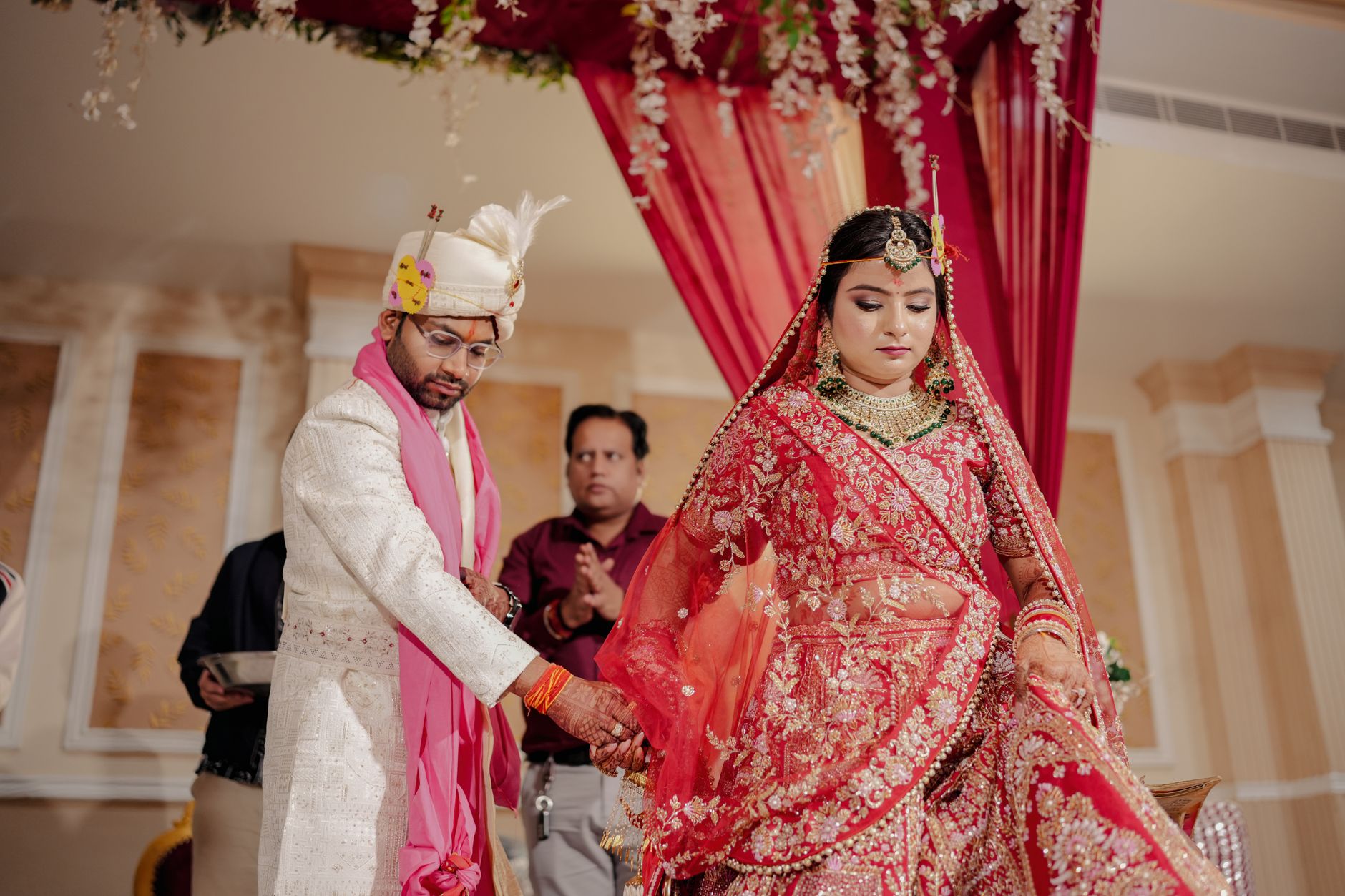
Unite Two Worlds, One Sacred Ceremony
Religious cermony in Bhubaneswar
Multicultural Marriage Officiant in Bhubaneswar
When two families from different faiths, regions, or cultural backgrounds come together in Bhubaneswar, the ceremony itself must honour every tradition with equal reverence. A skilled Multicultural Marriage Officiant does exactly that — weaving Hindu rituals, Christian blessings, Sikh prayers, or tribal Odia customs into one seamless, meaningful celebration. Whether you are planning a cross-cultural ceremony priest-led Saptapadi alongside a church blessing, or blending bilingual wedding vows in Odia and Hindi, Bhubaneswar's growing pool of trained celebrants and interfaith wedding celebrants can personalise every moment so no family feels like a guest at someone else's wedding.
Quick Answer
A Multicultural Marriage Officiant is a trained celebrant or pandit who conducts wedding ceremonies honouring two or more religious, cultural, or regional traditions simultaneously. In Bhubaneswar, these officiants blend Hindu, Christian, Muslim, Sikh, or tribal Odia rituals into a single cohesive ceremony, often delivering bilingual wedding vows and custom scripts. They are ideal for interfaith couples, NRI weddings, and families with mixed-heritage wedding traditions.
What Does a Multicultural Marriage Officiant Actually Do?
A Multicultural Marriage Officiant is far more than a priest who reads from two separate scriptures back-to-back. They study both families' traditions in depth, identify overlapping symbolic moments — the exchange of garlands, the lighting of a unity candle, the tying of the mangalsutra — and craft a flowing narrative that treats each ritual as part of one story rather than two separate events stitched together. In Bhubaneswar, where Odia Hindu customs such as the Barajaatri procession and the Sindoor Daan carry deep community significance, a skilled officiant knows how to contextualise these rites for a spouse whose family observes entirely different customs. Many officiants also provide a written ceremony script in advance so both families can review it, suggest amendments, and feel genuine ownership of the day. This collaborative approach is what separates a truly experienced interfaith wedding celebrant from a generalist pandit simply willing to include a cross-religion prayer.
Bhubaneswar's Religious and Cultural Landscape for Interfaith Weddings
Bhubaneswar, the Temple City of India, is home to over 700 temples alongside churches, mosques, gurudwaras, and spaces sacred to Adivasi communities of Odisha. This religious diversity makes the city one of eastern India's most welcoming destinations for a multi-religion marriage ceremony. Neighbourhoods such as Patia, Nayapalli, and Saheed Nagar have large communities of professionals who frequently marry across regional or religious lines — particularly IT sector couples, NRI families, and inter-caste couples from different parts of the country. Venues like five-star hotel lawns near Jaydev Vihar, heritage mandaps in the Old Town area, and open-air spaces near Ekamra Kanan botanical garden are all commonly used for fusion wedding ceremony planning. A local Multicultural Marriage Officiant brings the advantage of knowing exactly which venue permissions, priest coordination timelines, and municipal requirements apply in each part of the city, saving the couple weeks of coordination stress.
How Much Does a Multicultural Marriage Officiant Cost in Bhubaneswar?
Fees for a Multicultural Marriage Officiant in Bhubaneswar typically range from INR 15,000 to INR 75,000 depending on ceremony complexity, the number of traditions being blended, and the officiant's experience level. An interfaith wedding celebrant handling a straightforward Hindu-Christian ceremony with bilingual wedding vows in Odia and English might charge INR 18,000–30,000, while a multi-day ceremony blending intercultural wedding rituals across three religious traditions with full script writing, rehearsal attendance, and on-day coordination can reach INR 60,000–75,000. Some officiants charge separately for pre-ceremony consultations, travel beyond city limits, and printed ceremonial booklets for guests. Budget-conscious couples should clarify upfront whether the quoted fee includes the officiant's materials such as sacred fire arrangements, specific flowers, or ritual props, as these can add INR 5,000–15,000 to the total. Destination wedding officiant Bhubaneswar packages for out-of-city guests sometimes bundle accommodation-linked pricing through certain platforms.
Choosing Between a Pandit, a Civil Celebrant, and a Trained Multicultural Officiant
Couples in Bhubaneswar often begin their search by approaching a traditional pandit and hoping he will accommodate the other partner's customs. While some pandits are flexible, most are trained in a single Vedic or regional tradition and may not have the cultural fluency required for a genuinely balanced cross-cultural ceremony priest experience. A civil celebrant, registered under the Special Marriage Act, provides legal validity but typically offers no religious or ritualistic content unless specifically requested. A trained Multicultural Marriage Officiant sits in the middle — legally empowered or partnered with a licensed registrar, culturally fluent across multiple traditions, and skilled at facilitating mixed-heritage wedding traditions without reducing any faith to a token gesture. For couples where both families are deeply religious, this third option is almost always the most harmonious choice. It is worth verifying that the officiant has actually conducted ceremonies blending your specific traditions before, not just claiming general interfaith experience.
What Questions Should You Ask Before Booking an Officiant for a Fusion Ceremony?
Before committing to any Multicultural Marriage Officiant in Bhubaneswar, ask for a sample ceremony script from a comparable interfaith pairing they have conducted. Request references from both families who attended that wedding, not just the couple, because family comfort is often the hardest element to achieve in fusion wedding ceremony planning. Confirm whether the officiant can deliver the ceremony in multiple languages — Odia, Hindi, English, or any other language relevant to your families — as bilingual wedding vows are frequently a non-negotiable requirement for older relatives. Ask how they handle situations where one family's ritual directly conflicts in meaning with the other family's — this reveals their real depth of intercultural sensitivity. Clarify who holds legal registration authority if you also need a registered marriage certificate, and confirm that the Multicultural Marriage Officiant will personally attend a rehearsal rather than delegating it to an assistant. Finally, agree in writing on the ceremony run-time so neither family's rituals get shortened on the day.
Multicultural Officiant Options Compared: Which Setup Suits Your Bhubaneswar Wedding?
Expert Recommendation
Best for Intimate Gatherings (Under 50 Guests)
Best for Large Traditional Families (150+ Guests)
Best for NRI or Destination Couples
Best for Budget-Conscious Couples
Best for Deeply Religious Families on Both Sides
Best for Modern, Non-Religious Couples
How to Choose the Right Option
✅ Pre-booking Checklist
- Confirm the officiant has conducted ceremonies blending your exact two traditions before, not just similar pairings
- Request a sample ceremony script and review it with elders from both families at least six weeks before the wedding
- Verify legal registration arrangements — clarify whether a separate marriage registrar is needed for a valid certificate
- Agree on ceremony language and request transliterated bilingual wedding vows scripts for both partners
- Confirm the officiant will personally attend the rehearsal, not send a junior representative
- Get a written breakdown of all fees including materials, travel, and any rehearsal charges before signing
- Check venue compatibility — ensure the space can accommodate ritual fire, altar, or any faith-specific setup required
- Align on ceremony run-time with both families so neither tradition feels rushed or abbreviated
🎯 Selection Criteria
- Verified experience with your specific faith or culture combination, not just general interfaith exposure
- Ability to deliver the ceremony in all required languages including Odia, Hindi, or English
- Collaborative script-writing process that involves both families before the wedding day
- Transparent and itemised pricing with no hidden material or logistics costs
- Strong local knowledge of Bhubaneswar venues, municipal requirements, and auspicious timing conventions
💰 Cost / Quality Factors
- Ceremony complexity — the more traditions blended, the higher the research, scripting, and coordination cost
- Number of languages required for vows and explanatory commentary to guests
- Officiant seniority and years of interfaith ceremony experience directly impact fee range
- Distance from central Bhubaneswar — officiants may add travel charges for venues beyond city limits
- Inclusion of printed guest ceremony booklets, which add INR 3,000–8,000 but significantly improve guest experience
- Rehearsal attendance — officiants who personally lead rehearsals charge more but reduce day-of risk considerably
⚠️ Common Mistakes to Avoid
- Assuming any pandit or priest will adapt naturally to a fusion ceremony without specific intercultural training
- Leaving script approval too late — family objections raised on the wedding day cannot be gracefully resolved
- Failing to brief the officiant on specific family sensitivities such as dietary restrictions affecting ritual offerings
- Booking without clarifying legal registration — a spiritually meaningful ceremony does not automatically create a legal marriage
- Choosing solely on cost — the cheapest officiant rarely has the cultural fluency to balance two traditions with equal depth
- Underestimating ceremony duration — blending two full ritual sequences without skilled editing can extend proceedings by two hours
People Also Ask
Is a multicultural wedding ceremony legally valid in India?
Can a Hindu and Christian couple have a single blended ceremony in Bhubaneswar?
How far in advance should I book a multicultural officiant in Bhubaneswar?
What is the difference between an interfaith wedding celebrant and a pandit?
Can a multicultural ceremony include Odia tribal or Adivasi customs?
Do both families need to agree on the ceremony script?
Are bilingual wedding vows common in Bhubaneswar multicultural weddings?
What venues in Bhubaneswar are suitable for a multicultural wedding ceremony?
Related Experiences on Happiffie
Find Your Sacred Ceremony Priest in Nainital
Sacred Blooms for Your Big Day
Hindu Wedding Rituals Explained
Your Sacred Wedding Bible Starts Here
Timeless Weddings by the Shore
Find Your Church Wedding Officiant
Frequently Asked Questions
Can a Multicultural Marriage Officiant in Bhubaneswar legally marry us?
How do I find a qualified Multicultural Marriage Officiant in Bhubaneswar?
What languages can a Multicultural Marriage Officiant use during a Bhubaneswar ceremony?
How long does a multicultural wedding ceremony typically last in Bhubaneswar?
Will a Multicultural Marriage Officiant coordinate with our separate family priests?
Are there any restrictions on holding interfaith ceremonies near Bhubaneswar's temples?
What should the ceremony script for a multicultural wedding include?
Key Takeaways
- A Multicultural Marriage Officiant in Bhubaneswar crafts a single unified ceremony that honours two or more religious or cultural traditions with equal depth and respect.
- Costs range from INR 15,000 to INR 75,000 depending on tradition complexity, languages needed, and whether rehearsal and script-writing are included.
- Book at least four to six months in advance, particularly for auspicious Odia wedding season dates between October and February.
- Always verify the officiant's specific experience with your exact faith pairing — general interfaith willingness is not the same as proven cross-cultural ceremony expertise.
- Both families should review and approve the ceremony script at least six weeks before the wedding to avoid day-of conflicts.
- Neutral venues such as hotel lawns near Patia, Saheed Nagar, or Jaydev Vihar are ideal for multi-religion marriage ceremonies as they carry no single denominational association.
- Legal marriage registration is separate from the ceremonial officiant role — clarify this arrangement early to ensure your wedding is both meaningful and legally valid.
- Bilingual wedding vows and printed guest ceremony booklets significantly improve the experience for older relatives unfamiliar with one of the traditions being honoured.
Find Your Perfect Multicultural Marriage Officiant in Bhubaneswar
Browse verified interfaith wedding celebrants on Happiffie and create a ceremony that truly honours both your worlds.
Explore Officiants Now
Are you a Vendor? Grow Your Business with Happiffie!
- High intent verified leads
- Reverse auction opportunities
- AI business tools & insights
- Dedicated vendor dashboard
- Grow your business, your way
It's free & takes less than 2 minutes!