
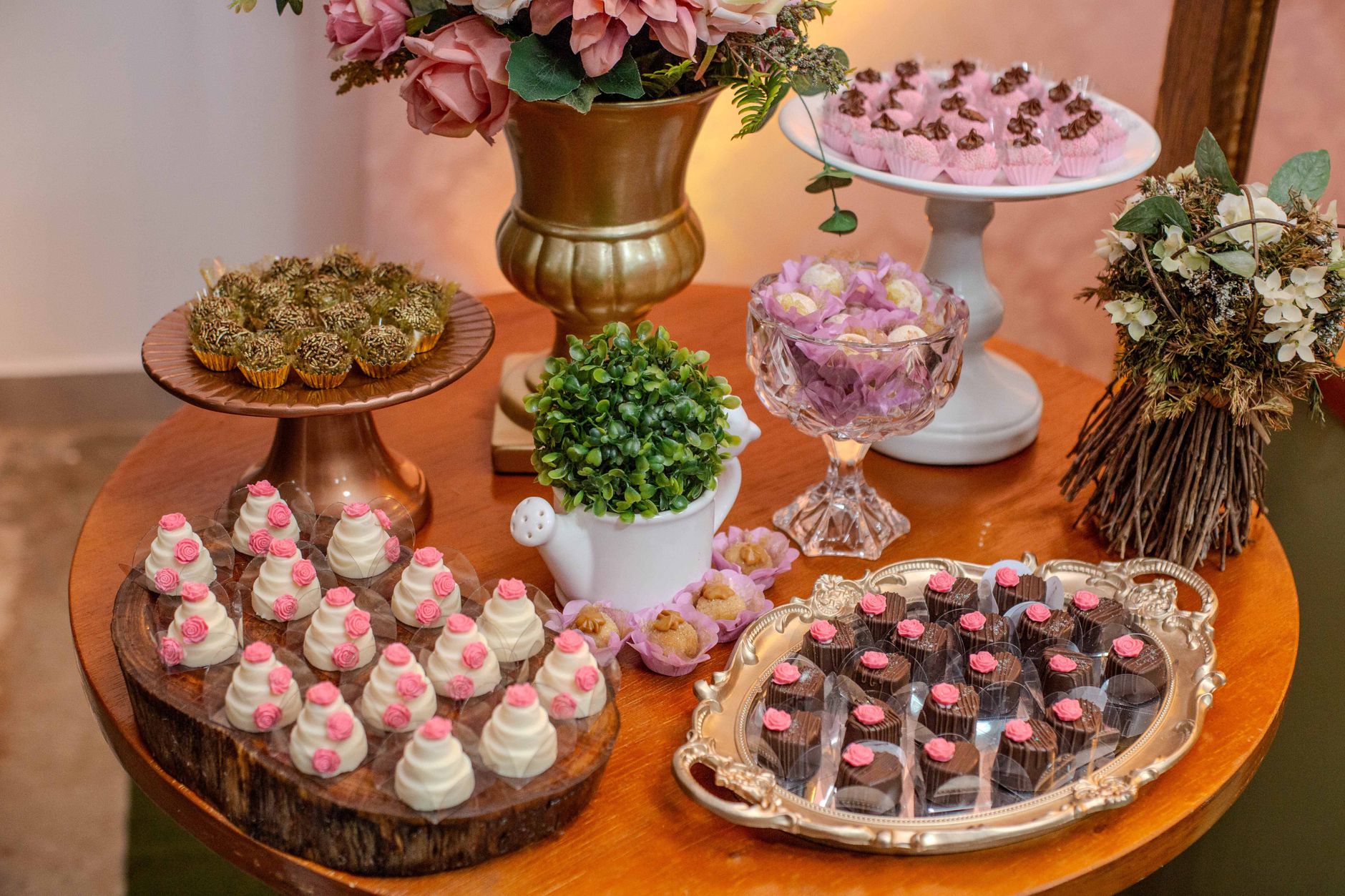
Authentic Wedding Sweets & Savouries
Religious cermony in Mumbai
Traditional Brahmin Marriage Sweets & Savouries in Mumbai
When families gather in Mumbai for a Brahmin shaadi — whether in a Matunga hall, a Dadar community sabha, or a Borivali banquet venue — Traditional Brahmin Marriage Sweets & Savouries are never an afterthought. These carefully chosen items carry religious significance rooted in Vedic customs: from the sweet pongal distributed at the muhurat to the crisp murukku passed around during the naandi ceremony. A thoughtfully curated Brahmin wedding mithai platter and a spread of authentic savouries communicate respect, cultural pride, and hospitality to every guest. Happiffie connects Mumbai families with trusted caterers and mithai specialists who understand these nuances deeply.
Quick Answer
Traditional Brahmin Marriage Sweets & Savouries are ritual-specific food items — including items like kesari, ladoo, murukku, and mixture — served across key ceremonies of a Brahmin wedding such as naandi, muhurat, and reception. In Mumbai, these are sourced from specialist South Indian mithai shops and wedding caterers who follow community-specific recipes, typically prepared without onion or garlic, and priced between ₹150 and ₹600 per person depending on the spread's elaborateness.
What Makes Traditional Brahmin Marriage Sweets & Savouries Unique?
Traditional Brahmin Marriage Sweets & Savouries differ fundamentally from mainstream wedding mithai in both ingredients and intent. These preparations are strictly satvik — free from onion, garlic, and sometimes even root vegetables — because they are offered first to the deity before being distributed to guests. Items like paal kesari, coconut burfi, ellu urundai (sesame balls), and dry fruit ladoo carry auspicious meaning tied to specific moments in the wedding. South Indian wedding sweets such as adhirasam and mysore pak are prepared using traditional stone-ground jaggery and pure ghee, giving them a flavour and texture that machine-made sweets cannot replicate. On the savoury side, ribbon pakoda, thattai, and nippattu are standard staples at ceremonies across Iyer, Iyengar, and Madhwa Brahmin households in Mumbai. Families from Matunga's Tamil Brahmin community often source these from shops that have been perfecting the same recipes for decades. The ceremonial weight of these foods makes authenticity non-negotiable — a poorly made mysore pak or an overly sweet kesari can genuinely upset guests who know what the real thing tastes like.
Ceremony-Wise Breakdown: Which Sweets Go Where?
Understanding which items appear at which ceremony is essential when planning Traditional Brahmin Marriage Sweets & Savouries for a multi-day wedding. At the naandi or pre-wedding pooja, small portions of sweet pongal and panakam (jaggery water) are offered to ancestors and guests. During the muhurat — the auspicious main wedding ritual — a Brahmin wedding mithai platter featuring ladoo, peda, and dry fruit rolls is typically distributed to the immediate family and priests. The reception or seemantham-style celebration that follows calls for a broader savoury spread: ribbon pakoda, omapodi, and the beloved cheedai are arranged in decorative cones or leaf cups. For smaller community gatherings in areas like Chembur or Ghatkopar, festive snack boxes for wedding guests have become popular — pre-packed boxes containing a mix of three sweets and two savouries that guests can carry home as a take-away blessing. Hindu ritual food offerings at each stage are not interchangeable; a caterer unfamiliar with these customs may serve the wrong item at the wrong time, which culturally aware families notice immediately.
How Much Does It Cost to Arrange These in Mumbai?
Pricing for Traditional Brahmin Marriage Sweets & Savouries in Mumbai varies based on guest count, item selection, and whether the caterer prepares fresh on-site or delivers pre-packed. For an intimate gathering of 50 to 100 guests — common for naandi ceremonies held in Dadar or Mulund community halls — a curated Iyengar wedding savouries and sweets package costs roughly ₹180 to ₹280 per head. A full multi-item platter for 200 to 400 guests at a Borivali or Andheri banquet venue, including five sweets and four savouries, typically ranges from ₹300 to ₹500 per person. Premium presentations — copper urli displays, banana-leaf servings, and imported dry fruit additions — push costs to ₹550 to ₹700 per person. Wedding ceremony catering Mumbai specialists often bundle sweets and savouries with the main meal, which can reduce per-head costs by 15 to 20 percent compared to ordering them separately. Always request a tasting session and confirm that the preparation is satvik before finalising any vendor.
What Should You Look for in a Mumbai Brahmin Wedding Sweets Caterer?
Choosing the right supplier for Traditional Brahmin Marriage Sweets & Savouries involves several non-negotiable checks. First, confirm the caterer specialises in south Indian wedding sweets and not simply generic Indian mithai — the techniques, ghee ratios, and sugar-to-jaggery balances are entirely different. Second, ask whether they prepare food in a dedicated satvik kitchen, as cross-contamination with non-vegetarian items is a concern at large facilities. Third, review their experience with the specific sub-community: Iyengar wedding savouries differ from Iyer or Telugu Brahmin recipes in ways that matter to discerning families. In Mumbai, neighbourhoods like Matunga West and Sion have long-established vendors with multigenerational expertise. Fourth, discuss packaging: auspicious food for pooja rituals should ideally be served on banana leaves, in terracotta bowls, or in eco-friendly leaf cups rather than plastic containers, both for sanctity and aesthetics. Fifth, confirm shelf life — freshly made thattai and murukku have a window of 48 to 72 hours, which affects delivery scheduling for outstation guests arriving at venues in Navi Mumbai or Thane.
Why Do Guests Remember the Sweets More Than the Décor?
At most Brahmin weddings, guests talk about the food long after they have forgotten the floral arrangements. Traditional Brahmin Marriage Sweets & Savouries are sensory anchors to cultural memory — the smell of fresh ghee in a mysore pak or the crunch of a perfectly fried thattai immediately transports guests back to childhood weddings and ancestral homes. This is why families investing in traditional mithai for muhurat ceremonies should treat this category with the same budget priority as photography or décor. A well-presented Brahmin wedding mithai platter, arranged on a silver tray lined with turmeric-dusted banana leaves, becomes a visual element that guests photograph and share. It signals that the family values tradition over convenience. In Mumbai's large, cosmopolitan wedding market — where catered weddings routinely blend cuisines — a deliberate, authentic South Indian sweets and savouries spread stands out powerfully. When families also offer festive snack boxes for wedding guests as parting gifts, it extends the wedding's warmth well beyond the venue.
Traditional Brahmin Marriage Sweets & Savouries: Setup Options Compared
Expert Recommendation
Best for intimate naandi ceremonies (under 75 guests)
Best for large banquet weddings (300+ guests)
Best for traditional Iyengar families
Best for budget-conscious families
Best for destination-style weddings at Navi Mumbai or Thane resorts
Best for families wanting premium presentation
How to Choose the Right Option
✅ Pre-booking Checklist
- Confirm the caterer operates a dedicated satvik kitchen with no onion, garlic, or non-vegetarian cross-contamination
- Request a tasting session for all key items — mysore pak, murukku, and any ceremony-specific sweets — at least four weeks before the wedding
- Match the menu to your specific Brahmin sub-community (Iyengar, Iyer, Telugu Brahmin, Madhwa) to ensure ritual accuracy
- Confirm preparation date and delivery logistics for outstation venues in Thane, Navi Mumbai, or Vasai
- Clarify packaging type — banana leaf, terracotta, or paper boxes — and align with your overall décor theme
- Ask about shelf life of each item to plan distribution timing across multi-day ceremonies
- Get a written breakdown of per-head cost covering sweets, savouries, serving, and packaging separately
- Book at least two to three months ahead for auspicious October-to-February wedding dates in Mumbai
🎯 Selection Criteria
- Verified satvik preparation without onion, garlic, or artificial colour
- Sub-community expertise — Iyengar, Iyer, or Madhwa recipe knowledge
- Fresh preparation within 24 to 48 hours of the ceremony
- Ability to scale from 50 to 500 guests without quality drop
- Transparent per-head pricing with no hidden packaging or service charges
- Positive track record with Brahmin weddings specifically in Mumbai
💰 Cost / Quality Factors
- Guest count directly drives per-head cost — larger orders often unlock 10-15% bulk discounts
- Premium ghee and jaggery sourcing raises quality but adds ₹30-₹80 per head versus standard ingredients
- On-site preparation is fresher but adds labour costs compared to pre-packed delivery
- Venue location — central Mumbai versus Navi Mumbai or Thane — affects delivery logistics and freshness
- Number of ceremony stages requiring distinct item sets increases total SKU count and planning complexity
- Eco-friendly or premium packaging adds ₹20-₹50 per unit but significantly enhances guest perception
⚠️ Common Mistakes to Avoid
- Booking a generic Indian mithai shop without confirming South Indian Brahmin specialisation
- Ordering all sweets and savouries from a single pick-up date for a multi-day wedding, risking stale items
- Ignoring sub-community differences and serving Iyer-style items at a strict Iyengar ceremony
- Underestimating quantities — always add a 10-15% buffer for unexpected guests and priest servings
- Skipping the tasting session and trusting only photos or online reviews for quality assessment
- Choosing plastic packaging for ritual food, which many traditional families consider inauspicious
People Also Ask
Which sweets are mandatory at a Brahmin wedding ceremony?
Can I order Traditional Brahmin Marriage Sweets & Savouries online in Mumbai?
What is the difference between Iyengar and Iyer wedding savouries?
How far in advance should I book a Brahmin wedding sweets caterer in Mumbai?
Are there eco-friendly packaging options for wedding mithai in Mumbai?
What is a typical per-head budget for sweets and savouries at a 300-guest Brahmin wedding in Mumbai?
Can non-South Indian caterers handle Brahmin wedding sweets authentically?
What savouries are served as take-home gifts at Brahmin weddings?
Related Experiences on Happiffie
Sacred Oonjal Ceremonies in Mumbai
Sacred Sounds for Your South Indian Wedding
Sacred Flavours for Your Wedding Rituals
Mumbai's Trusted Ritual Food Experts
Sacred Ritual Kits Delivered to Your Door
Sacred Ceremony Decor in Pune
Gift Your Guests Something Truly Special
Frequently Asked Questions
What are the most essential items in Traditional Brahmin Marriage Sweets & Savouries for a Mumbai wedding?
Are Traditional Brahmin Marriage Sweets & Savouries prepared without onion and garlic in Mumbai?
Which Mumbai neighbourhoods have the best Brahmin wedding sweets specialists?
How many varieties of sweets and savouries should I plan per guest?
Can I personalise the Brahmin wedding mithai platter for dietary restrictions like diabetes?
What is the shelf life of freshly prepared South Indian wedding savouries?
Do Mumbai Brahmin wedding caterers provide serving staff for the sweets and savouries?
Is it possible to serve Traditional Brahmin Marriage Sweets & Savouries at a poolside or outdoor resort venue in Mumbai?
Key Takeaways
- Traditional Brahmin Marriage Sweets & Savouries are ritual-specific, satvik foods — not generic wedding mithai — and their authenticity directly reflects family values and community respect.
- Mumbai families should book specialist South Indian caterers from neighbourhoods like Matunga or Sion at least two to three months in advance for peak-season wedding dates.
- Per-head costs range from ₹180 for basic three-item sets to ₹700 for premium banana-leaf plated spreads, with bundled catering packages offering 15-20% savings.
- Ceremony stage matters: sweet pongal and panakam belong at naandi, ladoo at muhurat, and savoury platters or festive snack boxes at the reception — mixing these up is a visible cultural error.
- Iyengar wedding savouries and Iyer or Madhwa recipes differ meaningfully; always confirm sub-community expertise before finalising any vendor.
- Eco-friendly packaging — banana leaves, terracotta bowls, paper boxes — is both culturally appropriate for auspicious food for pooja rituals and visually impressive for guests.
- A well-presented Brahmin wedding mithai platter is one of the most photographed and remembered elements of any South Indian Brahmin wedding in Mumbai.
Find Trusted Brahmin Wedding Sweet & Savoury Specialists in Mumbai
Happiffie connects you with verified caterers who understand every ritual, every recipe, and every community tradition — so your wedding sweets are as memorable as the ceremony itself.
Explore Caterers Now
Are you a Vendor? Grow Your Business with Happiffie!
- High intent verified leads
- Reverse auction opportunities
- AI business tools & insights
- Dedicated vendor dashboard
- Grow your business, your way
It's free & takes less than 2 minutes!