
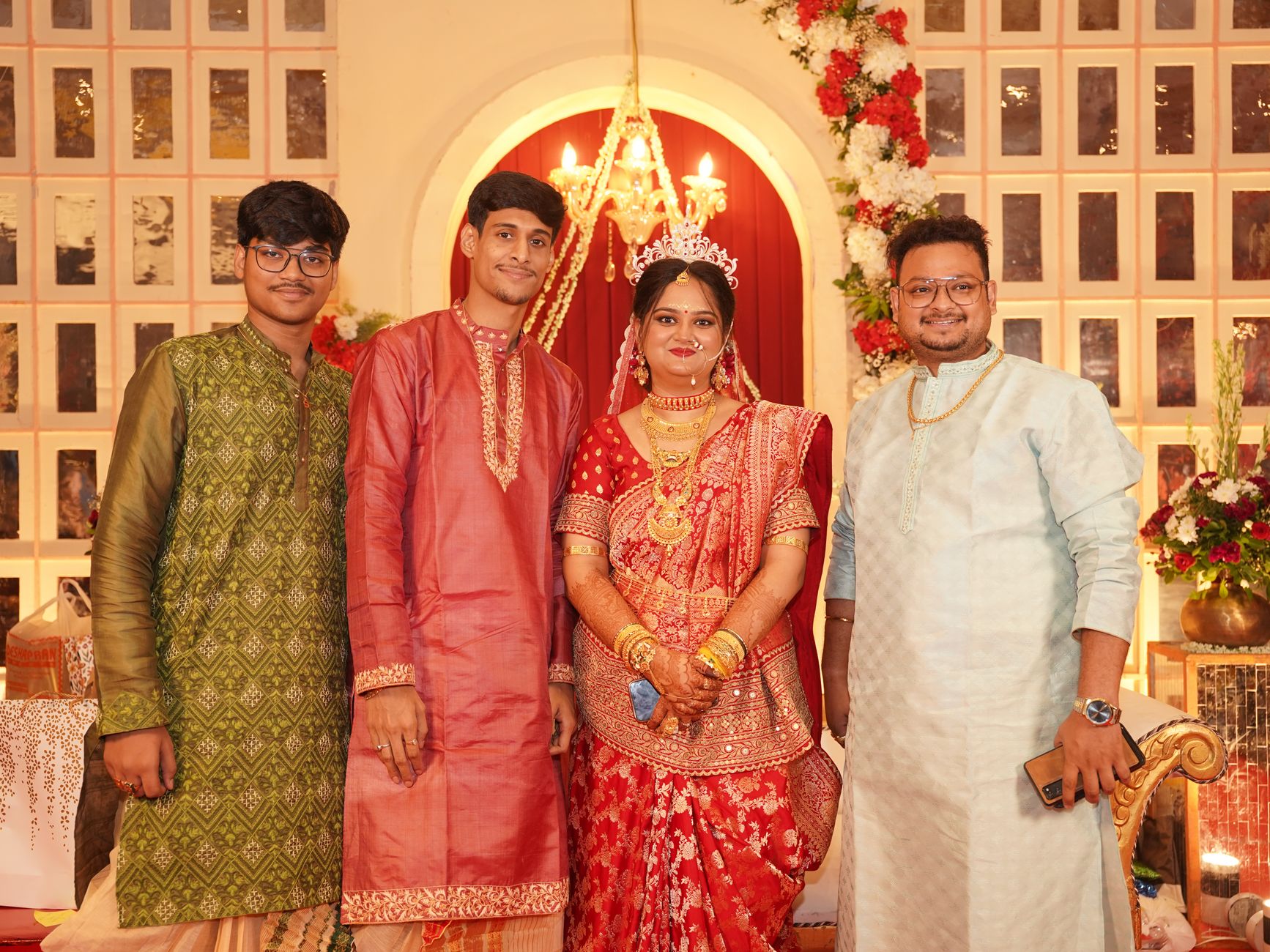
Expert Ceremonial Dhoti Setting in Kolkata
Beauty & Grooming in Kolkata
Ceremonial Dhoti Setting in Kolkata: Complete Guide
In Kolkata's rich wedding culture, ceremonial dhoti setting is far more than dressing — it is a sacred ritual that signals the beginning of one of life's most auspicious moments. Whether for a Shubho Drishti, an Upanayana, or a Durga Puja celebration, traditional dhoti draping demands precision, cultural knowledge, and steady hands. From the crisp accordion pleats of a Dhakeshwari muslin to the silken folds of Kanjivaram, getting groom dhoti arrangement right is non-negotiable. Expert grooming artists in Kolkata understand these nuances intimately, ensuring every Bengali wedding grooming ritual begins with perfectly set fabric that holds through hours of rituals and photography.
Quick Answer
Ceremonial Dhoti Setting is the professional art of folding, pleating, and securing a dhoti for sacred events like weddings, pujas, and thread ceremonies. In Kolkata, trained grooming experts drape the dhoti in regionally authentic styles — Bengali, Oriya, or South Indian — using precise pleating and tucking techniques that keep the garment dignified and secure for several hours of rituals and celebrations.
What Is Ceremonial Dhoti Setting and Why Does It Matter in Kolkata?
Ceremonial dhoti setting is the skilled process of folding, pleating, and securing a dhoti around a man's lower body in a manner that is culturally appropriate for a specific ritual or ceremony. In Kolkata, this service carries deep significance because the city's wedding traditions — rooted in Bengali Brahmin customs — prescribe distinct draping styles for different moments, from the Aiburo Bhaat pre-wedding feast to the Sampradaan exchange ceremony. An incorrectly draped dhoti can loosen mid-ritual, causing embarrassment and considered inauspicious in traditional families. A professional grooming artist trained in traditional dhoti draping ensures the pleats are uniform, the length is precise, and the tuck is secure enough to last four to six hours without readjustment. For families hosting weddings in venues across Ballygunge, Lake Town, or Behala, this service is booked as an essential part of the groom's morning preparation, often alongside face cleansing and tilak application. The expertise required differs from casual wear — ceremonial fabric is often heavier, more slippery, and more expensive, making professional handling essential.
Regional Draping Styles Found Across Kolkata Weddings
Kolkata's cosmopolitan character means wedding ceremonies frequently blend Bengali, Marwari, South Indian, and Bihari traditions within a single celebration. Each community has its own authentic method of ceremonial dhoti setting. The Bengali Pancha style features five distinct folds at the front and is the most common form of pandit dhoti pleating seen at traditional Kolkata weddings. Marwari families often prefer a longer Rajasthani drape with a decorative end thrown over the shoulder. Tamil Brahmin ceremonies, popular in Salt Lake's South Indian community clusters, require a different tucking method entirely. Skilled grooming artists in Kolkata are expected to be fluent in at least two or three of these methods. Bridal party dhoti styling for brothers, fathers, and male relatives is often handled by the same artist to ensure uniformity in photographs. Understanding which style suits the specific ritual — whether Vivah, Satyanarayan Puja, or Upanayana — is what separates an amateur dresser from a trained ceremonial expert.
How Much Does Ceremonial Dhoti Setting Cost in Kolkata?
In Kolkata, pricing for ceremonial dhoti setting varies based on the number of people being dressed, the venue location, and the complexity of the draping style. For a single groom, a professional at-home session typically ranges from INR 500 to INR 1,500. When the service is bundled with broader Bengali wedding grooming packages — including face prep, pagdi tying, and tilak — costs range from INR 2,000 to INR 5,000 for the groom alone. Bridal party dhoti styling for four to eight male members adds approximately INR 400 to INR 800 per person. Destination or travel fees apply if the venue is in areas like Rajarhat New Town or beyond the city core. Premium artists who specialise in Banarasi or Kanjivaram silk handling charge a higher rate, as these fabrics are more technical to drape without damaging the weave. Always confirm whether the pricing includes a practice drape the day before, which is advisable for elaborate styles. Wedding day ethnic menswear handling fees should be discussed and locked in writing during booking.
Choosing the Right Artist for Groom Dhoti Arrangement in Kolkata
Selecting the right professional for groom dhoti arrangement requires checking more than just availability. Ask the artist how many years they have worked specifically with ceremonial draping versus casual menswear styling — these are very different skill sets. A good artist will ask you questions about the ritual context, the fabric type, and the approximate duration of the ceremony before confirming they can deliver. For ashtamangala styling service requirements, where the groom or priest must maintain the drape through extended rituals, securing a specialist with direct experience in that format is critical. Check if the artist brings their own safety pins, fabric clips, and pressing tools, or if you need to arrange these. If the ceremony is in a South Kolkata heritage venue like a Thakurbari or a North Kolkata rajbari, confirm that the artist is comfortable working in limited spaces. Most reputable Kolkata grooming professionals will offer a portfolio of past ceremonial work to review. Book at least three weeks in advance during peak wedding season, which runs from November through February and again in April and May.
What Happens During a Professional Ceremonial Dhoti Setting Session?
A professional ceremonial dhoti setting session typically begins thirty to forty-five minutes before the ritual is scheduled to start. The artist first inspects the fabric — checking for proper starching, ironing, and length — since an unstarched dhoti cannot hold pleats effectively. The groom or subject stands in position while the artist measures the correct floor clearance, usually one to two inches above the ground, to prevent tripping during circumambulation or stage movements. The pleats are then formed by hand, counted for symmetry, and tucked firmly at the waist using a combination of folds and, where appropriate, small discreet pins. For traditional dhoti draping in the full Bengali Pancha style, the rear portion is passed through the legs and tucked at the back, giving freedom of movement while maintaining modesty. The session ends with a mirror check, a movement test — asking the subject to sit, stand, and walk — and final adjustments. Groom's pre-wedding ritual prep packages from Kolkata grooming studios often include this session as a timed, structured part of the morning schedule, coordinated with the makeup artist and photographer.
Ceremonial Dhoti Setting Options Compared for Kolkata Weddings
Expert Recommendation
Best for Intimate Home Ceremonies
Best for Large Banquet Hall Weddings
Best for Budget-Conscious Families
Best for Traditional Bengali Rituals
Best for Destination Weddings Near Kolkata
Best for Groom's Pre-Wedding Ritual Prep
How to Choose the Right Option
✅ Pre-booking Checklist
- Confirm the artist's experience with your specific regional draping style — Bengali, Marwari, or South Indian
- Share the fabric type (cotton, silk, blended) with the artist at least one week before the event
- Ensure the dhoti is washed, starched, and fully ironed before the artist arrives
- Book the session at least 45 minutes before the first ritual is scheduled to begin
- Clarify whether pinless draping is required based on your family's ritual traditions
- Confirm travel fees if the venue is outside central Kolkata areas like Behala or Rajarhat
- Ask for a movement test — sitting, walking, stair climbing — before releasing the artist
- Secure written confirmation of the booking time, price, and number of persons to be dressed
🎯 Selection Criteria
- Demonstrated experience in the specific ceremonial draping style required for your ritual
- Familiarity with the fabric type being used — silk handling is a distinct skill
- Availability to arrive at least one hour before the ceremony start time
- Portfolio or references from past ceremonial work in Kolkata
- Ability to handle multiple family members if bridal party dhoti styling is needed
- Transparent pricing with no hidden travel or material surcharges
💰 Cost / Quality Factors
- Fabric quality directly affects how well pleats hold — invest in good-quality starched cotton or silk
- Venue location impacts artist travel time and availability during peak wedding season
- Draping style complexity determines session duration and artist skill level required
- Number of persons being dressed affects total cost — negotiate a per-head rate for groups
- Seasonal demand in Kolkata (November to February) drives up artist availability constraints and pricing
- Bundled packages offer better value but require earlier confirmation of all services needed
⚠️ Common Mistakes to Avoid
- Booking an artist with only casual menswear experience for a formal ceremonial role
- Presenting an unstarched or wrinkled dhoti and expecting professional-grade pleats
- Scheduling the dhoti setting session with insufficient buffer time before the ritual
- Assuming all artists know every regional style — always confirm expertise upfront
- Ignoring the movement test after draping, leading to wardrobe issues mid-ceremony
- Waiting until the last week of wedding season to book, when experienced artists are fully committed
People Also Ask
How long does a ceremonial dhoti setting session take in Kolkata?
Can the dhoti be pre-set the night before the wedding?
What fabric types are easiest to drape for a Kolkata wedding ceremony?
Do grooming artists in Kolkata also set dhotis for pandits and priests?
Is ceremonial dhoti setting available for events beyond weddings in Kolkata?
Should the dhoti be washed and starched before the artist arrives?
What is the difference between everyday dhoti wearing and ceremonial dhoti setting?
How do I find a reliable ceremonial dhoti setting artist in Kolkata?
Related Experiences on Happiffie
Elegant Dhoti Draping in Bengaluru
Bridal Waves Hairstyling, Bhopal
Jaipur's Finest Groom Dhoti Styling
Your Goa Bridal Beauty Guide
Look Your Best on Your Big Day
Holiday Wedding Retreats in Hyderabad
Scent-Driven Wedding Décor in Manali
Frequently Asked Questions
How early should I book ceremonial dhoti setting for a Kolkata winter wedding?
Is ceremonial dhoti setting different for a Sampradaan versus a Saat Paak ceremony?
Can I request ceremonial dhoti setting for my father and brothers as well as the groom?
Do Kolkata grooming artists also handle the pagdi or turban along with the dhoti?
What should I do if the dhoti comes loose during the wedding rituals?
Is ceremonial dhoti setting available in South Kolkata neighbourhoods like Behala or Tollygunge?
How do I know if an artist is qualified for pandit dhoti pleating versus standard groom styling?
Key Takeaways
- Ceremonial dhoti setting is a skilled, culturally specific service essential for authentic Bengali and other regional wedding rituals in Kolkata.
- Professional traditional dhoti draping differs significantly from everyday wearing and requires training in regional styles such as the Bengali Pancha or Marwari method.
- Costs in Kolkata range from INR 500 to INR 1,500 for a single groom, with bundled packages covering bridal party dhoti styling offering better overall value.
- Always present a freshly starched dhoti — fabric quality is the single biggest factor in achieving crisp, long-lasting pleats.
- Book experienced artists at least three weeks ahead during Kolkata's peak wedding season, which runs November through February.
- A movement test after draping — sitting, walking, climbing stairs — is non-negotiable before the ceremony begins.
- Happiffie connects Kolkata families with verified grooming professionals who list ceremonial draping as a verified, specific skill.
Book Your Ceremonial Dhoti Setting in Kolkata
Find verified grooming experts on Happiffie and ensure every pleat is perfect for your most auspicious day.
Find Artists Now
Are you a Vendor? Grow Your Business with Happiffie!
- High intent verified leads
- Reverse auction opportunities
- AI business tools & insights
- Dedicated vendor dashboard
- Grow your business, your way
It's free & takes less than 2 minutes!