
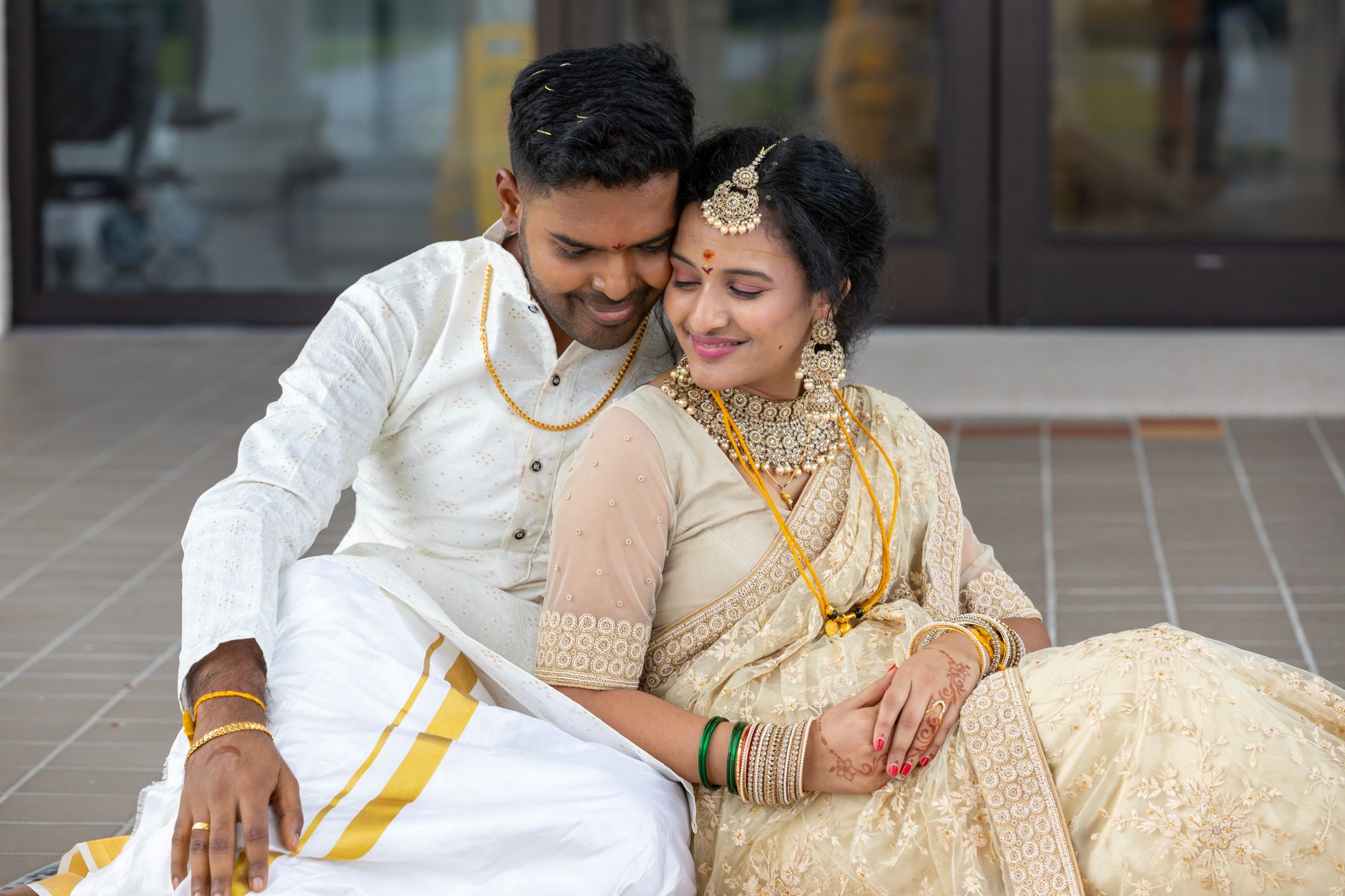
Elegant Dhoti Draping in Bengaluru
B&G in Bengaluru
Traditional Dhoti Draping for Weddings in Bengaluru
Traditional Dhoti Draping is one of the most defining rituals of a South Indian wedding look, transforming a silk veshti into a structured, ceremonially correct garment that holds through hours of rituals and celebrations. In Bengaluru, where Kannada, Tamil, Telugu, and Malayali weddings happen every weekend across venues from Rajajinagar to Koramangala, finding a specialist who understands regional draping styles is essential. Whether you need Groom Dhoti Setting for a Tambrahm ceremony or South Indian Bridal Draping paired with a Kanjeevaram saree, Happiffie connects you with vetted artists who offer in-home and in-venue service. A polished Bridal Getting Ready Timeline built around your draping slot ensures the entire morning runs without stress.
Quick Answer
Traditional Dhoti Draping is the art of pleating, folding, and securing an unstitched dhoti or veshti on a groom — or a saree on a bride — in a regionally specific ceremonial style. In Bengaluru, professional drapists charge approximately ₹800–₹3,500 per person depending on fabric, style complexity, and venue travel. The service typically takes 20–45 minutes and is booked alongside bridal makeup for coordinated morning scheduling.
What Does Traditional Dhoti Draping Actually Involve?
Traditional Dhoti Draping goes far beyond wrapping fabric around the waist. A professional drapist reads the fabric — its weight, weave, and border width — and then executes region-specific pleating techniques. For a Tamil groom, the Panchakacham style involves five distinct tucks at the back and a fan-shaped pleat at the front, a method completely different from the Karnataka-style Panche draping preferred at Lingayat or Vokkaliga weddings in Bengaluru. Wedding Veshti Styling also demands practical durability: the fabric must withstand sitting cross-legged during fire rituals, standing for extended photo sessions, and walking through outdoor mandap areas. Drapists use tuck pins discreetly placed at structural points and occasionally a thin cotton undergarment to anchor the fabric. When you book through Happiffie, artists confirm the regional style required during pre-booking consultation so there are no last-minute surprises on the wedding morning.
Regional Draping Styles Popular at Bengaluru Weddings
Bengaluru's diverse population means a single weekend can feature a Kodava wedding in Indiranagar, a Mudaliar ceremony in Vijayanagar, and an Iyengar function in Malleshwaram — each requiring a distinct approach to Traditional Dhoti Draping. The Panchakacham, Madisar, Mysore-style Panche, and Kerala mundu drape are the four most requested styles on Happiffie. South Indian Bridal Draping for the bride — particularly the nine-yard Madisar or the six-yard Kanjeevaram pinned in Tamilian style — requires a separate specialist and considerably more time than groom draping. Many couples planning a Traditional South Indian Wedding in Bengaluru book a combined package: one artist for Groom Dhoti Setting and another for the bride's saree, both arriving at the venue or home simultaneously to keep the Bridal Getting Ready Timeline tight. Artists listed on Happiffie specify their regional expertise upfront, so you match the right skill to your ceremony.
How Much Does Traditional Dhoti Draping Cost in Bengaluru?
Pricing for Traditional Dhoti Draping in Bengaluru ranges from ₹800 to ₹3,500 per session, depending on three main variables: style complexity, fabric type, and travel zone. Entry-level Groom Dhoti Setting for a straightforward Panche drape in areas like JP Nagar or HSR Layout starts around ₹800–₹1,200. A Panchakacham drape — which involves more steps and a longer session — typically costs ₹1,500–₹2,500. Bridal Saree Draping, especially the nine-yard Madisar, ranges from ₹1,800 to ₹3,500 because it requires additional pinning skill and 35–50 minutes of work. Artists travelling to outer Bengaluru zones such as Whitefield, Electronic City, or Devanahalli may charge a ₹300–₹500 travel surcharge. Bundling dhoti and saree draping with your Wedding Day Makeup Artist package through Happiffie often unlocks a combined discount of 10–15 percent. Always confirm whether the quoted price includes a touch-up visit before the baraat or muhurat.
Booking Timeline and Pre-Wedding Preparation
Securing Traditional Dhoti Draping early is more important than most couples realise. Peak wedding season in Bengaluru — November through February and again in April–May — sees experienced drapists booked out three to six weeks in advance for auspicious dates. Begin your Bridal Getting Ready Timeline by anchoring the draping slot first, then scheduling the Wedding Day Makeup Artist and photographer around it. Most artists recommend a Wedding Outfit Trial two to four weeks before the wedding to test the actual fabric, identify any pleating challenges, and estimate the exact time needed on the day. This trial also reveals whether the dhoti fabric has been pre-washed to remove starch, which dramatically affects draping ease. On the morning of the wedding, ensure the groom has bathed and is wearing a cotton waistband or thin innerwear before the artist arrives — this simple preparation step cuts draping time by up to ten minutes.
Why Should You Choose a Specialist Over a Family Elder for Dhoti Draping?
Many families assume a senior relative can manage Traditional Dhoti Draping, and while this works for casual occasions, a wedding demands professional precision. A trained specialist brings structured pleating tools, tuck pins rated for silk, and the muscle memory to drape the same style flawlessly under time pressure. Family elders may know one regional variant, whereas a professional who handles Bengaluru's multi-community calendar understands subtle differences between Iyengar and Iyer Panchakacham, or between Kerala and Karnataka mundu styles — distinctions that matter deeply to observant families. South Indian Bridal Draping is particularly unforgiving: a Kanjeevaram saree weighing two kilograms or more must be balanced precisely to prevent shoulder strain during a three-hour ceremony. Professionals also carry backup safety pins and stitch-tape for emergencies. When a Traditional South Indian Wedding is being photographed and videographed, an impeccably draped outfit is visible in every frame — making specialist investment one of the highest-return decisions in your wedding budget.
Traditional Dhoti Draping Options Compared for Bengaluru Weddings
Expert Recommendation
Best for Intimate Home Ceremonies
Best for Large Banquet Hall Weddings
Best for Destination Weddings Outside Bengaluru
Best for Budget-Conscious Couples
Best for Multi-Day Wedding Celebrations
Best for Modern Fusion Weddings
How to Choose the Right Option
✅ Pre-booking Checklist
- Confirm the regional draping style — Panchakacham, Panche, Madisar, mundu — with the artist before booking
- Book at least four to six weeks in advance for peak season dates between November and February
- Schedule a Wedding Outfit Trial two to three weeks before the wedding to assess fabric and timing
- Pre-wash or steam-press the silk dhoti to remove factory starch before the draping session
- Arrange cotton innerwear or a waistband for the groom to anchor the outer fabric
- Confirm whether the artist's quote includes travel, touch-up visits, and backup pins
- Coordinate the draping slot with your Wedding Day Makeup Artist to avoid scheduling conflicts
- Share the venue address with a live pin location the evening before so the artist arrives without delays
🎯 Selection Criteria
- Regional style expertise matching your community's specific draping tradition
- Verifiable experience with the fabric weight you are using — pure silk versus blended veshti
- Availability for a pre-wedding trial session, not just the wedding morning
- Clear travel policy covering your venue's location within or beyond Bengaluru
- Positive verified reviews from couples of a similar cultural background
- Willingness to coordinate timing with other wedding morning vendors
💰 Cost / Quality Factors
- Style complexity — Panchakacham costs more than a basic Panche drape due to additional steps
- Fabric type — heavier silk requires more skill and time, increasing session cost
- Venue distance — outstation or peripheral Bengaluru venues attract travel surcharges
- Number of people — group bookings for siblings or cousins reduce per-head cost
- Season demand — peak wedding months command premium pricing; off-season offers better rates
- Bundle discounts — combining draping with makeup or photography packages reduces total spend
⚠️ Common Mistakes to Avoid
- Booking a drapist without confirming they know your specific regional style
- Skipping the Wedding Outfit Trial and discovering fabric issues on the wedding morning
- Using a brand-new, unprocessed silk dhoti that slips and cannot hold pleats
- Scheduling draping too close to the muhurat time without buffer for corrections
- Assuming a bridal makeup artist is equally skilled at South Indian Bridal Draping
- Forgetting to confirm the travel surcharge for venues in Electronic City or Whitefield
People Also Ask
How long does traditional dhoti draping take on the wedding morning?
What is the difference between Panchakacham and regular dhoti draping?
Can the same artist drape both the groom's dhoti and bride's saree?
Do draping artists travel to marriage halls in Whitefield or Electronic City?
Should I wash the silk dhoti before the draping session?
Is traditional dhoti draping available for children at weddings?
What should the groom wear underneath a draped dhoti?
How do I find a draping artist in Bengaluru who knows my community's style?
Related Experiences on Happiffie
Draping Perfection for Your Big Day
Trousseau Styling & Packing in Ahmedabad
Groom Makeup Experts in Jaipur
Rent Your Dream Wedding Look in Vizag
Authentic South Indian Wedding Decor
All Wedding & Event Services
Frequently Asked Questions
How much does traditional dhoti draping cost in Bengaluru?
Which neighbourhoods in Bengaluru have the most wedding draping artists available?
Can traditional dhoti draping be done at the wedding venue rather than at home?
Is Bridal Saree Draping a separate service from groom dhoti draping on Happiffie?
How many times can a professionally draped dhoti be re-draped during a multi-day wedding?
What types of fabric work best for traditional dhoti draping at Bengaluru weddings?
Do draping artists on Happiffie offer a style consultation before the wedding day?
Is traditional dhoti draping suitable for Telugu or Malayali grooms marrying in Bengaluru?
Key Takeaways
- Traditional Dhoti Draping in Bengaluru costs ₹800–₹3,500 depending on style, fabric, and travel zone.
- Regional styles — Panchakacham, Panche, Madisar, and Kerala mundu — require distinct expertise; always verify the artist's specialisation.
- Book four to six weeks ahead during peak wedding season (November–February) to secure an experienced drapist.
- A pre-wedding Wedding Outfit Trial is essential to assess fabric behaviour and accurate timing.
- Pre-washing the silk dhoti removes starch and significantly improves pleat quality and durability.
- Bundling Groom Dhoti Setting and Bridal Saree Draping with makeup packages on Happiffie can save 10–15 percent.
- Professional drapists outperform family elders for high-visibility ceremonies due to tools, backup materials, and multi-style training.
- Coordinate all wedding morning vendors — drapist, makeup artist, and photographer — around the draping slot for a stress-free schedule.
Book Your Traditional Dhoti Draping Expert on Happiffie
Connect with Bengaluru's top-rated draping artists — verified styles, transparent pricing, and flexible scheduling for your wedding morning.
Find Draping Artists
Are you a Vendor? Grow Your Business with Happiffie!
- High intent verified leads
- Reverse auction opportunities
- AI business tools & insights
- Dedicated vendor dashboard
- Grow your business, your way
It's free & takes less than 2 minutes!