
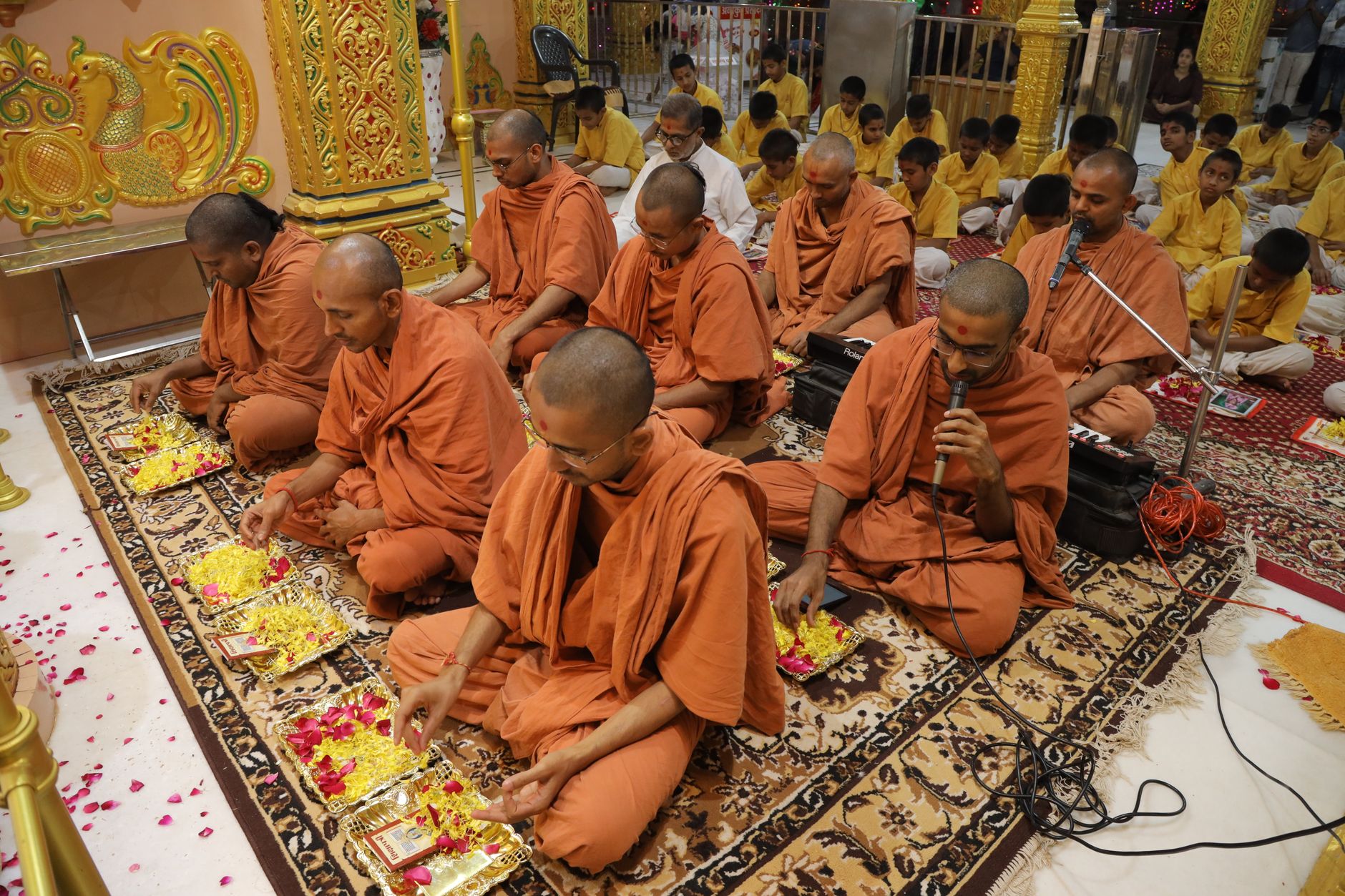
Sacred Bhajans for Every Ceremony
Religious cermony in Jodhpur
Ram Bhajan Group in Jodhpur for Religious Ceremonies
A Ram Bhajan Group transforms any religious occasion in Jodhpur into a deeply moving spiritual experience. Whether you are planning a grand Vivah puja in a Mehrangarh-facing haveli, a satyanarayan katha at your Ratanada home, or a sunrise aarti at a resort in Mandore, a devotional singing group sets the divine tone that no playlist ever can. Jodhpur's rich Marwari traditions demand authentic, live religious music ensemble performances — and the right bhajan mandali for events ensures every mantra, bhajan, and doha lands with feeling, keeping guests engaged and the ceremony sanctified from start to finish.
Quick Answer
A Ram Bhajan Group is a live ensemble of trained singers and accompanying musicians who perform devotional bhajans, kirtans, and aartis at Hindu religious ceremonies. In Jodhpur, these groups typically include 4 to 12 performers with instruments like harmonium, tabla, mridangam, and manjira. They are hired for weddings, pujas, Navratri events, and spiritual gatherings, with packages ranging from roughly ₹8,000 to ₹60,000 depending on group size, duration, and repertoire.
What Does a Ram Bhajan Group Actually Perform at a Jodhpur Ceremony?
A Ram Bhajan Group in a Jodhpur setting performs a carefully sequenced set of devotional content tailored to the specific ritual. For a wedding, this typically begins with Ganesh Vandana and Mangalashtakam, moves into Vivah-related bhajans, and closes with a collective aarti. For a satyanarayan katha or griha pravesh, the group shifts to Vishnu stotras, Ram naam kirtans, and the Hanuman Chalisa. A skilled religious music ensemble reads the ritual flow in real time — they know when the pandit needs silence for mantras and when the gathering needs a full-throated kirtan to lift the spiritual energy. Many Jodhpur groups also carry printed lyric sheets or LED displays so guests can participate, making the ceremony more inclusive. The best groups are familiar with Marwari folk devotional styles — including the Meera Bhajan tradition strong in this region — alongside classical Hindustani devotional compositions. This blend of regional authenticity and religious precision is what sets a professional Ram Bhajan Group apart from a casual arrangement.
How Much Does a Ram Bhajan Group Cost in Jodhpur?
Pricing for a Ram Bhajan Group in Jodhpur follows a clear structure once you understand the variables. A small group of 4 to 5 singers with harmonium and tabla typically charges ₹8,000 to ₹15,000 for a two-hour slot. A mid-sized bhajan mandali for events with 6 to 8 performers, including mridangam, manjira, and a lead vocalist trained in classical devotional music, ranges from ₹18,000 to ₹35,000. Large ensembles of 10 or more — suitable for Navratri events, Ram Katha programmes, or prominent family religious ceremonies in venues like circuit house lawns or Umaid Heritage wedding halls — can charge ₹40,000 to ₹60,000 or more. Travel surcharges apply for venues in Osian, Nagaur, or other locations outside Jodhpur city limits. Peak season (October to March, coinciding with wedding season and major Hindu festivals) sees 20 to 30 percent premium pricing. Always clarify whether the quote includes setup time, breaks, and PA system rental, as these can add ₹3,000 to ₹8,000 to the final bill.
Why Is Live Devotional Music Essential for a Hindu Religious Ceremony?
The Vedic tradition holds that sound — Nada Brahma — is itself a form of the divine. A live kirtan group for ceremony does something a recorded track fundamentally cannot: it responds to the energy of the space. If the gathering is emotionally charged during a wedding vidaai, a sensitive Ram Bhajan Group will slow their tempo and choose bhajans of surrender and blessing. If energy is celebratory at a mundan or thread ceremony, they will lift the pace with upbeat Ram naam compositions. This live responsiveness creates a spiritual ambiance at wedding or puja events that guests remember for years. Research in event design consistently shows that live music increases emotional engagement and memory retention among attendees. In Jodhpur's context, where families often have guests travelling from Barmer, Pali, Bikaner, and even Rajasthan's diaspora abroad, creating an authentic Hindu religious ceremony atmosphere reassures elders and moves younger generations. A devotional singing group is not entertainment — it is a ritual requirement that carries real ceremonial weight.
Choosing Between Group Sizes and Formats
Not every ceremony needs a 12-person Ram Bhajan Group with a PA system. Matching the group to your event is a core booking decision. For intimate home pujas in localities like Shastri Nagar, Sojati Gate, or Pal Road, a 4-person group with minimal amplification is ideal — it fills the room without overwhelming a small drawing room. For mid-scale functions in banquet halls around Chopasni Housing Board or Residency Road, a 6 to 8 member religious music ensemble with a moderate PA rig balances presence and reverb control well. Large religious gatherings at venues near Kailana Lake, Mandore Gardens, or open lawns in the Boranada hotel belt need a full ensemble with professional sound support. Some families also combine a Ram Bhajan Group with a separate pandit and music coordination arrangement where the group takes cues directly from the officiating priest via a designated event coordinator. This three-way coordination — family, priest, group — is the most seamless format for complex multi-ritual ceremonies like Vivah Panchami or Satyanarayan Purnima events.
What Should You Check Before Booking a Ram Bhajan Group in Jodhpur?
Before finalising any Ram Bhajan Group, run through a focused verification process. First, listen to a live or recorded performance — not just a phone demo — to assess vocal quality and instrument harmony. Second, confirm that the group's repertoire includes the specific deity tradition your ceremony honours; a Shiva bhajan specialist may not be the ideal fit for a Ram Katha. Third, verify their experience with Jodhpur wedding traditions — groups familiar with Marwari wedding rituals will know when to play and when to pause. Confirm the lead singer's experience performing in outdoor Jodhpur venues, where desert wind and ambient noise require stronger vocal projection. Ask whether they bring their own harmonium and tabla or if you need to arrange instruments. Clarify the number of breaks they require during a four- to six-hour booking, and whether they accommodate last-minute repertoire additions — elders often arrive with a favourite bhajan request. Finally, get the agreement in writing, including cancellation terms, since peak-season cancellations for a bhajan mandali for events attract 25 to 50 percent retention of the advance. A good kirtan group for ceremony will have no hesitation providing references from recent Jodhpur families.
Ram Bhajan Group Formats Compared for Jodhpur Religious Ceremonies
Expert Recommendation
Best for intimate home pujas
Best for large wedding ceremonies
Best for traditional Marwari families
Best for budget-conscious bookings
Best for multi-day ceremonies
Best for interfaith or modern families
How to Choose the Right Option
✅ Pre-booking Checklist
- Confirm the group's familiarity with your specific deity tradition and key bhajans before booking
- Request a live or recorded sample performance, not just a phone introduction
- Clarify whether the group brings their own instruments and PA system
- Discuss the ceremony timeline with the group lead and your pandit to align music cues with ritual moments
- Confirm the number of performers, lead vocalist, and any substitution policy in writing
- Agree on break schedules for bookings longer than 3 hours
- Check cancellation and advance payment terms, especially for peak-season bookings
- Confirm travel and accommodation arrangements if the venue is outside Jodhpur city limits
🎯 Selection Criteria
- Repertoire depth — does the group cover your required deity traditions and ritual phases?
- Live performance quality — vocal training, instrument harmony, and stage presence
- Experience with Jodhpur wedding traditions and Marwari ceremony formats
- Group size matched to venue capacity and acoustic environment
- Ability to coordinate seamlessly with the officiating pandit
💰 Cost / Quality Factors
- Group size and number of trained vocalists directly impacts cost
- Peak wedding season (Oct-Mar) commands a 20-30 percent premium
- PA system inclusion or exclusion is a significant cost variable
- Travel distance — venues beyond Jodhpur city attract additional charges
- Duration of performance and number of distinct ceremony phases covered
- Reputation and references from recent Jodhpur ceremony bookings
⚠️ Common Mistakes to Avoid
- Booking based on price alone without verifying repertoire match to your ceremony
- Forgetting to coordinate music cues with the pandit, causing awkward overlaps during mantras
- Assuming the group brings a PA system — always confirm in advance
- Not booking early enough during peak season, limiting your choice of quality groups
- Ignoring acoustic differences between indoor and outdoor Jodhpur venues when selecting group size
- Skipping a written agreement on cancellation terms and advance payment conditions
People Also Ask
How many singers are typically in a Ram Bhajan Group in Jodhpur?
What is the difference between a bhajan mandali and a kirtan group?
Can a Ram Bhajan Group perform for non-Hindu ceremonies or interfaith events?
Do Ram Bhajan Groups in Jodhpur provide their own sound system?
How far in advance should I book a devotional singing group for a Jodhpur wedding?
What repertoire should I request from a Ram Bhajan Group for a wedding?
Is it common to have a Ram Bhajan Group alongside a DJ at a Jodhpur wedding?
Are there female-led Ram Bhajan Groups available in Jodhpur?
Related Experiences on Happiffie
Sacred Bhajans for Every Ceremony
Sacred Voices for Every Ceremony
Sacred Sounds for Kodaikanal Celebrations
Your Sacred Wedding Bible Starts Here
Bless Every Guest in Mussoorie
All Wedding & Event Services
Frequently Asked Questions
What is the typical duration of a Ram Bhajan Group performance at a Jodhpur wedding?
Can I request specific bhajans or aartis from a Ram Bhajan Group in Jodhpur?
Do Ram Bhajan Groups in Jodhpur perform at outdoor desert venues or destination ceremony locations?
Is it appropriate to have a Ram Bhajan Group at a mundan or naming ceremony?
How do I know if a devotional singing group is experienced enough for my Jodhpur ceremony?
What happens if a key member of the Ram Bhajan Group falls ill on the event day?
Can a Ram Bhajan Group perform alongside a live band or DJ at a Jodhpur wedding?
How does Happiffie help me book a Ram Bhajan Group in Jodhpur?
Key Takeaways
- A Ram Bhajan Group in Jodhpur delivers live devotional music that responds to ritual flow — something no recorded track can replicate.
- Pricing ranges from ₹8,000 for a small acoustic group to ₹60,000+ for a large professional ensemble, depending on size, duration, and PA requirements.
- Group size should match venue scale — 4 to 5 members for home ceremonies, 10 to 12 for large outdoor wedding venues.
- Peak season bookings (October to March) require 2 to 3 months advance notice to secure quality groups.
- Always align the Ram Bhajan Group's performance schedule with your pandit to protect ritual timing and prevent music-mantra conflicts.
- Jodhpur's Marwari devotional tradition is distinct — prioritise groups experienced with Meera bhajans, Tulsidas compositions, and regional ritual formats.
- Written agreements covering repertoire, group size, PA system, breaks, and cancellation terms are non-negotiable for a smooth experience.
- Happiffie lets you compare, shortlist, and enquire about verified Ram Bhajan Groups across Jodhpur from one platform.
Find the Perfect Ram Bhajan Group for Your Jodhpur Ceremony
Browse verified devotional singing groups on Happiffie — compare, shortlist, and enquire for free.
Explore Bhajan Groups
Are you a Vendor? Grow Your Business with Happiffie!
- High intent verified leads
- Reverse auction opportunities
- AI business tools & insights
- Dedicated vendor dashboard
- Grow your business, your way
It's free & takes less than 2 minutes!