
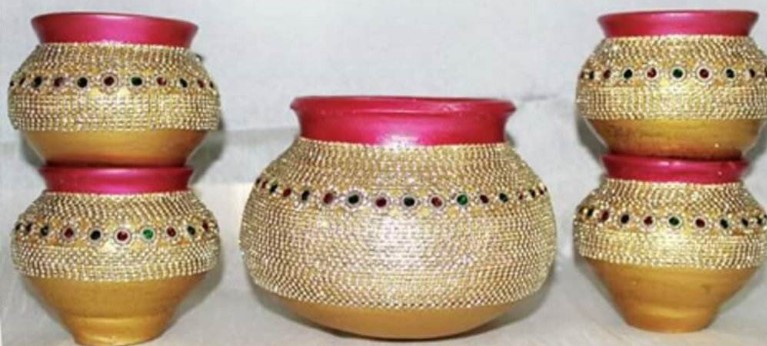
Sacred Telugu Ritual Pots in Jaipur
Religious cermony in Jaipur
Heritage Telugu Ritual Pots for Jaipur Ceremonies
When a Telugu family plans a religious ceremony in Jaipur — whether a Satyanarayana Vratam, Griha Pravesam, or a multi-day wedding — the sanctity of every ritual depends on the authenticity of the sacred vessels used. Heritage Telugu Ritual Pots, including the traditional brass kalasam, copper lota, and the decorated Mangala Kalasham, anchor every Vedic prayer with cultural weight and visual reverence. Happiffie connects Jaipur-based Telugu families with trusted vendors who supply and style these vessels with the correct turmeric application, mango leaf crowning, and coconut placement that Andhra Ceremonial Copper Pots demand. For families navigating South Indian religious ceremony in Jaipur far from their home state, having access to ritual-correct, priest-approved vessels makes all the difference.
Quick Answer
Heritage Telugu Ritual Pots are traditional brass, copper, and clay vessels — kalasam, mangala kalasham, and pancha patra — used in Telugu Hindu ceremonies such as Satyanarayana Puja, Griha Pravesam, and weddings. Filled with water, turmeric, and topped with coconut and mango leaves, they represent divine presence. In Jaipur, these pots are available through specialist Telugu community vendors and religious ceremony coordinators who ensure correct ritual usage.
What Are Heritage Telugu Ritual Pots and Why Do They Matter?
Heritage Telugu Ritual Pots are consecrated vessels that physically represent the deity invoked during a Vedic ceremony. The most prominent is the Mangala Kalasham — a brass or copper pot filled with sacred water, layered with turmeric, and crowned with five or seven mango leaves topped by a whole coconut. This kalasha is considered the body of the divine presence throughout the ritual. Alongside it, Telugu ceremonies use the Pancha Patra (a small cup for achamanam), the Uddarini ladle, and sometimes large decorative copper urns for Abhishekam rituals. Telugu Pooja Kalasam sets typically include all these pieces in matching metal finishes — brass, copper, or panchaloha (a five-metal alloy). For Telugu families settled in Jaipur, sourcing these vessels locally with the correct ritual specifications is essential. A mismatch in vessel type or size can disrupt the priest's sequence, delaying the muhurtam. Happiffie's curated vendor network ensures that every Heritage Telugu Ritual Pot supplied in Jaipur meets the ceremonial standards familiar to families from Andhra Pradesh and Telangana.
Types of Telugu Ritual Vessels Available in Jaipur
Jaipur's Telugu community — concentrated in areas like Malviya Nagar, Vaishali Nagar, and C-Scheme — has grown significantly, creating steady demand for authentic ritual supplies. Vendors now stock a full range of Traditional Brass Ritual Vessels including the Kalasham (available in sizes from 6 inches to 18 inches in height), copper abhishekam vessels, silver-plated pancha patra sets, and clay pots for specific vratas. Andhra Ceremonial Copper Pots used in Seemantham (baby shower puja) and Namakaranam (naming ceremony) are smaller and often engraved with lotus motifs. Telugu Wedding Kalasha Decoration sets are the most elaborate — featuring gold-painted brass pots wrapped in red and gold silk fabric, adorned with turmeric dots and fresh flowers, typically arranged in groups of nine (navakalasham) for wedding mandaps. These decorative-ritual combinations serve both a sacred and an aesthetic purpose, complementing the Jaipur wedding mandap floral and vessel styling that modern Telugu families prefer. Prices for individual kalasam range from INR 350 for basic brass to INR 4,500 for polished panchaloha. Full navakalasham sets for weddings are typically available on rental or purchase between INR 3,000 and INR 18,000 depending on metal quality and decoration.
How Do You Choose the Right Heritage Telugu Ritual Pots for Your Ceremony?
Selecting the correct Heritage Telugu Ritual Pots begins with understanding the specific ceremony being performed. A Satyanarayana Puja requires a single central Mangala Kalasham plus a Pancha Patra set. A Griha Pravesam may call for five kalasams placed at cardinal points of the home's threshold. A full Telugu wedding mandap can require nine to sixteen pots of varying sizes, all matching in metal finish. Consulting your purohit (priest) before ordering is non-negotiable — priests from Andhra and Telangana traditions have specific preferences for vessel diameter, metal type, and engraving. Traditional Brass Ritual Vessels are preferred by most priests for their conductivity in Abhishekam rituals; copper is favoured for Shiva-centric ceremonies. If your priest follows the Vaikhanasa or Smartha tradition, the ritual specification may differ. Pandit and priest coordination for Telugu ceremonies in Jaipur is a service Happiffie vendors often bundle with vessel rental, removing guesswork for families. Always confirm whether the vendor includes the accessory kit — turmeric powder, red kumkum, raw rice, and mango leaves — which are essential but easy to overlook.
Cost and Rental Guide for Telugu Ritual Vessels in Jaipur
Understanding pricing prevents last-minute budget surprises. For a South Indian religious ceremony in Jaipur, Heritage Telugu Ritual Pots can be sourced in three ways: outright purchase, single-event rental, or as part of a full puja setup package. Purchase prices for a standard brass kalasam start at INR 450 and go up to INR 6,000 for a large engraved copper abhishekam vessel. Rental for a full Telugu Wedding Kalasha Decoration set — covering eight to twelve decorated pots, fabric wrapping, fresh flowers, and mango leaves — typically costs between INR 1,800 and INR 7,500 per day in Jaipur, depending on vendor. Full puja coordination packages, where a vendor supplies all vessels, accessories, and sometimes assists with mandap setup, range from INR 5,000 to INR 22,000. Families organising ceremonies in Jaipur's hotel banquet halls — such as those in Bani Park or Tonk Road — may find that venue caterers do not include ritual vessels, making a dedicated supplier mandatory. Booking at least 2-3 weeks in advance is strongly recommended during peak wedding season (October to February) when Jaipur Telugu community wedding rituals spike significantly.
What Common Mistakes Should You Avoid When Ordering Ritual Pots in Jaipur?
The most frequent mistake Telugu families make when organising ceremonies outside their home state is ordering generic decorative pots instead of ritual-specific Heritage Telugu Ritual Pots. A decorative brass pot sold in Jaipur's Johari Bazaar or Tripolia Bazaar may look similar but lack the correct neck width for mango leaf placement or the flat base required for stability during Abhishekam. Another common error is ordering Andhra Ceremonial Copper Pots without confirming the gauge of the metal — thin-gauge copper dents under the pressure of sustained water pouring during prolonged Abhishekam sessions. Families sometimes also neglect to coordinate pot size with the priest's ritual sequence; a kalasam that is too large becomes impossible to lift during the Kalasha Sthapana moment. Finally, skipping the accessory kit is a practical mistake that can stall a ceremony mid-ritual. Working with vendors on the Happiffie platform who specialise in Telugu Pooja Kalasam sets avoids all of these pitfalls, as these vendors understand the ritual function behind each vessel — not just its appearance. Ensuring Jaipur wedding mandap floral and vessel styling is coordinated with your ritual pot supplier also prevents aesthetic mismatches on the ceremony day.
Heritage Telugu Ritual Pots: Comparing Vessel Types for Jaipur Ceremonies
Expert Recommendation
Best for intimate home pujas
Best for large Telugu wedding mandaps
Best for budget-conscious families
Best for traditional Vaidika ceremonies
Best for destination Telugu ceremonies in Jaipur
Best for modern Telugu families blending aesthetics
How to Choose the Right Option
✅ Pre-booking Checklist
- Confirm the specific ceremony type and get your purohit's vessel list before contacting any vendor
- Verify whether the vendor stocks ritual-grade Heritage Telugu Ritual Pots or decorative-only pieces
- Check metal type (brass, copper, or panchaloha) matches your priest's tradition
- Confirm the accessory kit — turmeric, kumkum, mango leaves, coconut, and raw rice — is included
- Ask whether the vendor can coordinate with your priest for vessel sizing and placement
- Book at least 2-3 weeks ahead if your ceremony falls between October and February
- Confirm delivery, setup, and pickup logistics — especially for venue ceremonies in Jaipur's Bani Park or Tonk Road hotel strips
- Request photos of actual stock before finalising to verify finish quality and decoration style
🎯 Selection Criteria
- Ritual accuracy — does the vendor understand Telugu ceremonial requirements, not just general puja supplies?
- Metal quality — verify gauge thickness, especially for Andhra Ceremonial Copper Pots used in Abhishekam
- Vendor experience with South Indian religious ceremony in Jaipur and knowledge of regional variations
- Flexibility — can the vendor customise decoration to match your mandap's colour palette?
- Bundled services — does the package include accessories and priest coordination support?
- Reputation — look for vendors with verifiable experience in Telugu Pooja Kalasam supply
💰 Cost / Quality Factors
- Metal type and gauge directly affect both ritual suitability and price — copper and panchaloha cost significantly more than brass
- Decoration complexity for Telugu Wedding Kalasha Decoration sets raises rental cost by 40-60% over plain vessels
- Peak season surcharges (October–February) can add 15-25% to rental and purchase prices in Jaipur
- Delivery distance within Jaipur affects logistics costs — venues in Amer or Sanganer may attract extra delivery fees
- Vendor bundling (pots plus accessories plus priest coordination) typically saves 10-20% versus sourcing separately
- Vessel size relative to ceremony space — oversized kalasams in a small apartment puja room create instability risks
⚠️ Common Mistakes to Avoid
- Ordering generic decorative brass pots from Johari Bazaar without confirming ritual suitability with your purohit
- Ignoring metal gauge when sourcing copper pots — thin-gauge vessels dent during Abhishekam water pouring
- Failing to account for the number of kalasams required — under-ordering disrupts the priest's Kalasha Sthapana sequence
- Skipping the accessory kit, which forces last-minute shopping and risks delaying the ceremony's muhurtam
- Not booking in advance during Jaipur's peak Telugu community wedding season, leaving families with poor-quality substitutes
- Confusing decorative Telugu Wedding Kalasha Decoration sets with ritual-grade vessels — both are needed, but they serve different functions
People Also Ask
Where can I find authentic Heritage Telugu Ritual Pots in Jaipur?
What is the difference between a kalasam and a mangala kalasham?
Can I rent Telugu ritual pots for a single ceremony in Jaipur?
How many kalasams are needed for a Telugu wedding mandap?
Is copper or brass better for Telugu ritual vessels?
Do Jaipur vendors provide the full accessory kit with ritual pots?
How far in advance should I book Heritage Telugu Ritual Pots in Jaipur?
What ceremonies require Andhra Ceremonial Copper Pots specifically?
Related Experiences on Happiffie
Sacred Supplies for Your Mumbai Wedding
Pelli Butta Decoration for Your Telugu Wedding
Sacred Sounds for Your South Indian Wedding
Telugu Mangalasnanam: Every Item You Need
Book Trusted Pandits in Mumbai
Arrive in Bloom on Your Big Day
Frequently Asked Questions
Can I source Heritage Telugu Ritual Pots in Jaipur without bringing them from Andhra Pradesh?
What is included in a standard Telugu Pooja Kalasam set?
Are Heritage Telugu Ritual Pots available for rent in Jaipur for one-day ceremonies?
How should Andhra Ceremonial Copper Pots be cleaned before a puja?
Do Jaipur venues like hotel banquet halls provide Telugu ritual pots as part of their event package?
Is there a difference between the kalasam used in a Telugu wedding versus a home puja?
How does pandit and priest coordination for Telugu ceremonies in Jaipur help with ritual pot selection?
What is the price range for a full Heritage Telugu Ritual Pots package for a Jaipur wedding?
Key Takeaways
- Heritage Telugu Ritual Pots — including the Mangala Kalasham, Pancha Patra, and Abhishekam vessels — are non-negotiable for ritually correct Telugu ceremonies in Jaipur.
- Brass is the most accessible and affordable metal for most ceremonies; copper and panchaloha are preferred for orthodox or high-significance pujas.
- Jaipur vendors serving the Telugu community in Malviya Nagar and C-Scheme offer rental packages from INR 1,800 and purchase options from INR 350, making authentic sourcing accessible.
- Always consult your purohit before ordering — vessel type, size, and metal are determined by the specific ritual tradition being followed.
- Booking 2-3 weeks ahead is essential during Jaipur's October-to-February wedding season when demand for Telugu Pooja Kalasam sets peaks.
- A complete accessory kit — turmeric, kumkum, mango leaves, coconut, raw rice — must accompany every Heritage Telugu Ritual Pot order to avoid mid-ceremony disruptions.
- Happiffie's vendor network in Jaipur combines vessel supply, decoration, and pandit coordination into single packages, simplifying planning for Telugu families far from home.
Book Authentic Telugu Ritual Vessels for Your Jaipur Ceremony
Happiffie connects Telugu families in Jaipur with trusted vendors for ritual-correct Heritage Telugu Ritual Pots — from intimate home pujas to grand wedding mandaps. Get matched with the right supplier in minutes.
Find Vendors Now
Are you a Vendor? Grow Your Business with Happiffie!
- High intent verified leads
- Reverse auction opportunities
- AI business tools & insights
- Dedicated vendor dashboard
- Grow your business, your way
It's free & takes less than 2 minutes!