
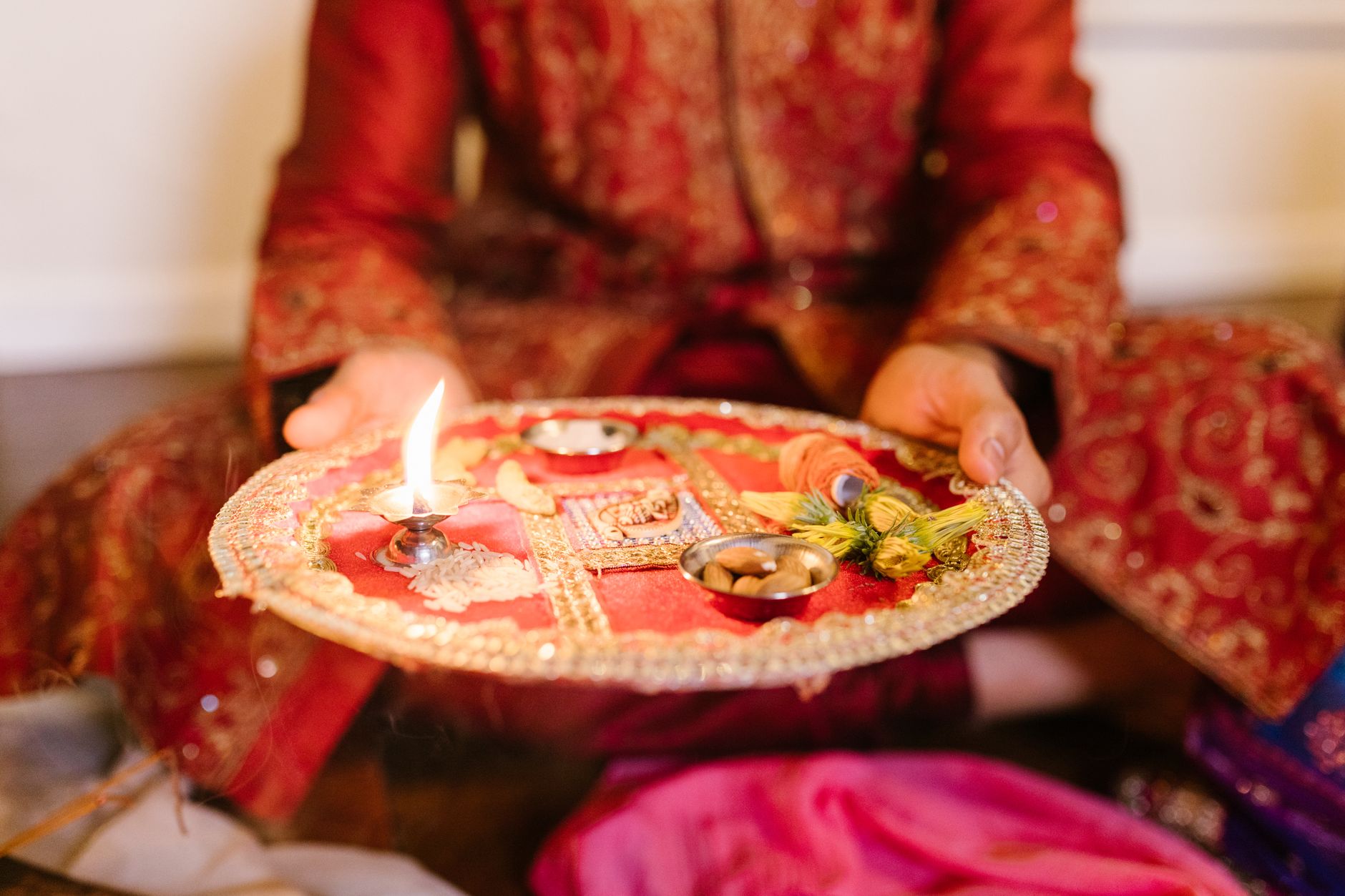
Authentic Gujarati Ritual Articles
Religious cermony in Hyderabad
Traditional Gujarati Ritual Articles in Hyderabad
Planning a Gujarati wedding or religious ceremony in Hyderabad means sourcing the right Traditional Gujarati Ritual Articles — from the sacred kankavati and supari sets to hand-painted kalash, vermillion boxes, and woven toran door hangings. Every rite, whether a Ganesh Sthapana, Mameru, Griha Shanti, or the full sat-fera wedding ceremony, demands specific Gujarati puja samagri that cannot be substituted with generic puja items. For Gujarati families settled in Hyderabad's Punjagutta, Banjara Hills, and Kondapur neighbourhoods, sourcing these articles locally can be challenging, and this guide helps you navigate suppliers, budgets, and auspicious ceremony planning so nothing is missed on your most important day.
Quick Answer
Traditional Gujarati Ritual Articles are the complete set of sacred objects — including kalash, kankavati, supari, toran, sindoor dabbi, and copper diyas — used in Gujarati Hindu ceremonies such as Ganesh Sthapana, Griha Shanti, Mameru, and sat-fera weddings. In Hyderabad, these items can be sourced from specialist Gujarati community stores, online puja suppliers, or through a wedding vendor who offers end-to-end religious ceremony kits starting from roughly ₹2,500.
What Are Traditional Gujarati Ritual Articles and Why Do They Matter?
Traditional Gujarati Ritual Articles are a curated collection of sacred objects that form the material backbone of every Gujarati Hindu ceremony. Unlike generic puja kits sold in south Indian stores, Gujarati ceremonies require items with specific regional symbolism — a silver or brass kankavati (betel-nut tray), a decorated nariyal (coconut) wrapped in red cloth, hand-painted kalash pots filled with water and mango leaves, and the iconic toran made from mango leaves and marigolds hung at the entrance. The Gujarati pooja thali essentials also include kumkum, haldi, akshat, camphor, ghee, panchamrit ingredients, and small silver or brass idols of Ganesha and Lakshmi. Each article is tied to a specific ritual moment — for example, the supari and paan are offered at the start of every rite to invoke the ancestors, while the kalash represents the divine womb of abundance. When families in Hyderabad try to substitute these with Telugu-tradition puja items, the ceremony can feel incomplete to elders, and certain vidhi steps may not be performable without the correct samagri. Sourcing authentic Gujarati religious ritual supplies in a city like Hyderabad requires planning but is entirely achievable with the right guidance.
Key Articles Needed for Every Major Gujarati Ceremony
Gujarati wedding ceremony items vary by the specific event on the schedule. For a Ganesh Sthapana, you need a clay or brass Ganesha murti, a decorated chowki, modak prasad, durva grass, and a red silk vstra. For the Mameru ceremony, the maternal uncle's side brings a full set of gifts including a traditional Gujarati saree, sweets, and a symbolic Gujarati pooja thali essentials pack — kumkum, turmeric, dried dates, and coconut. For the sat-fera wedding itself, the most critical Traditional Gujarati Ritual Articles include the agnikund (fire pit), havan samagri, laja (puffed rice for offerings), sacred thread, and the couple's individual garlands. The Griha Shanti requires kalash, copper vessels, specific grains, and Navgraha items. For a Hyderabad family hosting 200-plus guests at a Banjara Hills banquet hall, having all these articles pre-packaged into labelled ceremony kits prevents last-minute scrambles. Many Gujarati community associations in Hyderabad's Ameerpet and SR Nagar areas maintain lists of trusted suppliers who stock these items year-round, especially ahead of Navratri and wedding season.
Where Can You Source Gujarati Religious Ritual Supplies in Hyderabad?
Sourcing Gujarati religious ritual supplies in a predominantly Telugu city like Hyderabad requires a multi-channel approach. The Gujarati Samaj in Hyderabad, located near Himayatnagar, is the first port of call — members often share contacts for specialist stores in Abids and Charminar that stock traditional north and west Indian puja items including hand-painted kalash, pure-cotton dhotis, and ritual threads. Online platforms have grown significantly: several verified vendors on Happiffie ship Gujarati puja samagri kits within Hyderabad within 48 hours, covering essentials like toran sets, kumkum boxes, and havan materials. For premium items like silver kankavati trays or custom-engraved copper kalash, allow 7-10 days and budget ₹3,000-₹12,000 per piece. Pre-wedding ritual checklist planning should start at least 4-6 weeks before the ceremony date to avoid availability gaps during peak season (November to February). Partnering with a wedding vendor who understands Gujarati traditions can also save hours of coordination, as they often bundle Indian religious ceremony décor with ritual article procurement under one package.
How Much Do Traditional Gujarati Ritual Articles Cost in Hyderabad?
Costs for Traditional Gujarati Ritual Articles in Hyderabad vary considerably based on material quality, customisation, and vendor type. A basic Gujarati puja samagri kit for a single ceremony event (like a Ganesh Sthapana) starts at around ₹1,500-₹2,500 and covers dry goods such as grains, incense, camphor, and small brass items. A complete Gujarati wedding ceremony items package covering all pre-wedding and wedding day rites — Griha Shanti, Mameru, Mandap ceremony, and sat-fera — is typically priced between ₹15,000 and ₹45,000 depending on whether items are brass, silver-plated, or pure silver. Handcrafted items like embroidered toran, hand-painted kalash, and custom sindoor dabbi add ₹2,000-₹8,000 to the total. Families planning intimate 50-guest ceremonies in a private home in Kondapur will spend significantly less than those hosting 500 guests at a formal venue in Jubilee Hills, where multiple sets of every article are required. Auspicious ceremony planning that accounts for contingency stock — about 10-15% extra samagri — prevents shortfalls during extended ceremonies.
What Are the Most Common Mistakes When Procuring Gujarati Ritual Articles?
The most frequent mistake Hyderabad families make when sourcing Traditional Gujarati Ritual Articles is treating them as interchangeable with generic puja items available at local Telugu stores. The regional specificity matters deeply — for example, a Gujarati ceremony requires the particular variety of supari (areca nut) used in western Indian tradition, not the variant common in Andhra ceremonies. Another widespread error is leaving procurement to the last week before the wedding, by which point specialist Gujarati suppliers may be sold out, particularly during peak wedding season from November to February. Families also underestimate the quantity needed — a four-day Gujarati wedding with multiple vidhi sessions can consume three to four times the samagri of a single-day ceremony. Skipping a formal pre-wedding ritual checklist means items like durva grass, specific havan woods (such as palash and mango), and laja are forgotten until the pandit asks for them mid-ceremony. Finally, mixing décor and ritual roles — using Indian religious ceremony décor items as functional puja objects — is a mistake; decorative copper vessels are not always food-safe or ritually pure. Careful vendor selection and a detailed briefing call with your pandit 3-4 weeks in advance avoids almost all of these pitfalls.
Types of Traditional Gujarati Ritual Article Sourcing Options in Hyderabad
Expert Recommendation
Best for Intimate Home Ceremonies (under 50 guests)
Best for Large Banquet Hall Weddings (200-500 guests)
Best for Budget-Conscious Families
Best for Traditional and Orthodox Ceremonies
Best for Destination Weddings in Hyderabad (outstation families)
Best for Modern Couples Blending Traditions
How to Choose the Right Option
✅ Pre-booking Checklist
- Obtain a complete item-by-item list from your pandit at least 4 weeks before the ceremony
- Confirm which items must be new versus which can be rented or reused
- Verify that all Traditional Gujarati Ritual Articles meet the purity standards required for your specific tradition (Vaishnav, Shaiva, Swaminarayan)
- Order a 10-15% quantity buffer for extended multi-day ceremonies
- Cross-check vendor stock availability during peak season (November to February and Navratri)
- Confirm delivery timelines for custom or silver-plated items at least 10 days in advance
- Arrange dedicated storage space at your venue or home for all samagri before the ceremony begins
- Brief your venue coordinator at your Hyderabad banquet hall about ritual material storage requirements
🎯 Selection Criteria
- Regional authenticity: vendor should stock specifically Gujarati items, not generic north Indian puja articles
- Material quality: brass, copper, and silver-plated items should be food-safe and ritually pure
- Vendor experience with Gujarati ceremonies: ask for references from other Gujarati families in Hyderabad
- Flexibility: ability to customise kit contents based on your pandit's specific requirements
- Delivery reliability: confirmed track record of on-time delivery in Hyderabad, including to suburban areas
💰 Cost / Quality Factors
- Material choice (brass vs. silver-plated vs. pure silver) is the single biggest cost driver
- Ceremony complexity — a four-day wedding requires three to four times the samagri of a single-event ceremony
- Customisation such as engraving, hand-painting, or embroidery adds 20-40% to base item cost
- Peak-season demand in November-February and Navratri can raise prices by 15-25%
- Renting premium items like agnikund or silver kalash can reduce total expenditure by up to 30%
- Bundled vendor packages save coordination time but typically carry a 10-20% premium over direct sourcing
⚠️ Common Mistakes to Avoid
- Using generic Telugu-tradition puja items as substitutes for Gujarati-specific articles
- Leaving procurement to the final week, risking out-of-stock situations during peak season
- Underestimating quantity for multi-day, multi-ceremony weddings
- Using decorative Indian religious ceremony décor items as functional ritual objects without confirming purity suitability
- Not consulting the pandit before purchasing — different pandits have different requirements for the same ceremony
- Failing to account for travel and storage logistics when hosting a destination wedding in Hyderabad
People Also Ask
What are the essential items in a Gujarati pooja thali?
Can I get Gujarati ritual articles delivered in Hyderabad?
How early should I start collecting Traditional Gujarati Ritual Articles for a wedding?
What is the difference between Gujarati puja samagri and generic north Indian puja kits?
Are Traditional Gujarati Ritual Articles available in Hyderabad during Navratri season?
How much does a complete Gujarati wedding ceremony items kit cost?
Can a Hyderabad-based wedding vendor handle both décor and Gujarati ritual articles?
What items are used specifically in the Gujarati Mameru ceremony?
Related Experiences on Happiffie
Sacred Supplies for Your Mumbai Wedding
Kannada Wedding Ritual Supplies
Gujarati Ceremony Essentials, Bengaluru
Sacred Ring Holders for Every Ceremony
Welcome Guests the Sacred Way
Make Every Ritual Meaningful
Frequently Asked Questions
Where can I buy Traditional Gujarati Ritual Articles in Hyderabad?
What is included in a standard Gujarati puja samagri kit for a wedding?
How much does it cost to procure all Traditional Gujarati Ritual Articles for a Hyderabad wedding?
Can I rent Gujarati wedding ceremony items instead of buying them?
What Gujarati ritual articles are specific to the sat-fera ceremony?
Are Traditional Gujarati Ritual Articles available during Navratri in Hyderabad?
Do I need different articles for a Swaminarayan wedding versus a general Gujarati wedding?
How do I verify that a Hyderabad vendor's Gujarati ritual articles are ritually pure?
Key Takeaways
- Traditional Gujarati Ritual Articles are region-specific sacred objects essential for authentic Gujarati ceremonies — they cannot be substituted with generic puja kits.
- Key items include kankavati, kalash, toran, sindoor dabbi, supari sets, laja, and havan samagri, each tied to a specific ritual moment.
- In Hyderabad, articles can be sourced via Gujarati Samaj contacts, online vendors, specialist stores in Abids, or bundled wedding packages on Happiffie.
- Costs range from ₹2,500 for a single-event kit to ₹45,000+ for a complete multi-day wedding package, depending on material and customisation.
- Start sourcing at least 4-6 weeks before the ceremony; 8 weeks for large or custom orders during peak November-February season.
- Always obtain a pandit-approved item list before purchasing to avoid buying unnecessary or incorrect articles.
- Renting premium silver or brass pieces like agnikund and kalash can reduce costs by up to 30% without compromising ceremony quality.
- A detailed pre-wedding ritual checklist, confirmed with your pandit and vendor, is the single most effective way to prevent ceremony-day shortfalls.
Find Verified Gujarati Ritual Article Suppliers in Hyderabad
Browse Happiffie's curated network of authentic Gujarati puja samagri vendors — compare kits, confirm availability, and book with confidence for your upcoming ceremony.
Explore Vendors Now
Are you a Vendor? Grow Your Business with Happiffie!
- High intent verified leads
- Reverse auction opportunities
- AI business tools & insights
- Dedicated vendor dashboard
- Grow your business, your way
It's free & takes less than 2 minutes!