
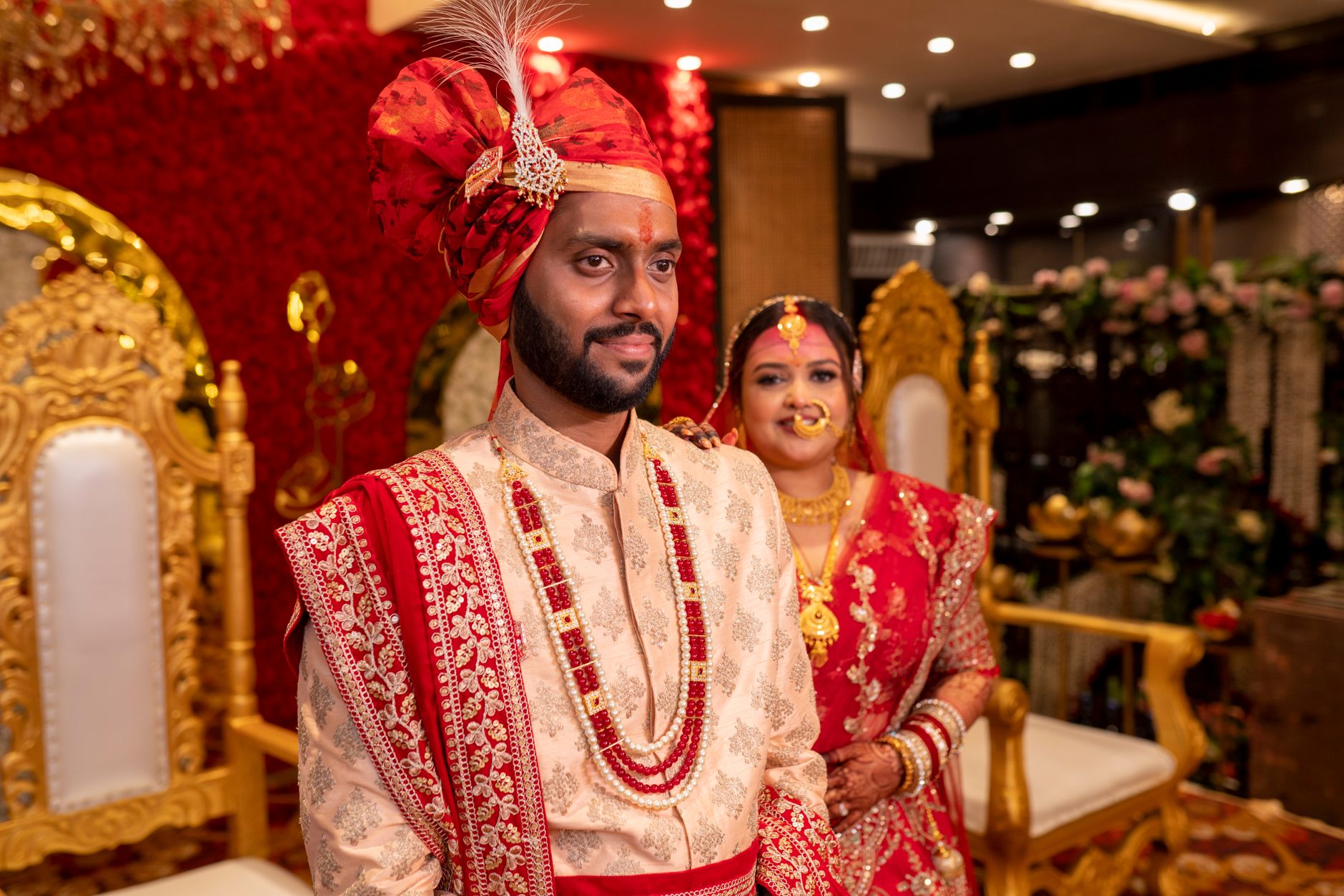
Royal Marwari Varmala in Sun-Kissed Goa
Religious cermony in Goa
Heritage Marwari Varmala Exchange Ceremony in Goa
Goa may be famed for its golden beaches and vibrant sunsets, but it has quietly become one of India's most sought-after destinations for a Heritage Marwari Varmala Exchange Ceremony. Marwari families travelling from Rajasthan, Delhi, Mumbai and beyond are choosing Goa's grand resorts and heritage mansions to host this deeply emotional ritual where the bride and groom exchange floral garlands as a public declaration of acceptance. The Rajasthani varmala ritual in Goa blends the desert state's royal traditions with Goa's lush, tropical grandeur — an irresistible combination. From marigold-and-rose garlands crafted by specialist florists to dhol players setting the tempo, every detail of a traditional Marwari garland exchange wedding can be authentically recreated here. Happiffie connects you with experienced local vendors who understand Marwari customs, ensuring your destination wedding floral arrangements in Goa honour every family tradition with contemporary flair.
Quick Answer
A Heritage Marwari Varmala Exchange Ceremony is the traditional Rajasthani wedding ritual in which the bride and groom exchange long floral garlands — typically made of marigolds, roses and mogra — as a formal acceptance of each other before the sacred fire. In Goa, this ceremony is staged at resort lawns, beach venues or heritage properties with dhol-shehnai music, playful lifting competitions between families, and elaborate mandap décor that fuses Marwari opulence with Goa's tropical setting.
What Makes a Heritage Marwari Varmala Exchange Ceremony in Goa So Special?
The Heritage Marwari Varmala Exchange Ceremony carries centuries of Rajput and Marwari tradition within it. Unlike a simple garland exchange, this ritual is a theatrical, joyful event where the groom's family physically lifts him to prevent the bride from easily garlanding him, while her brothers hoist her in retaliation. The resultant laughter, music and mock-competition create memories that photographs simply cannot fully capture. When you relocate this ritual to Goa, the contrast becomes magical: ancient Marwari customs unfold against a backdrop of swaying palms, colonial-era ballrooms or open-air resort lawns lit by the warm Arabian Sea breeze. Venues across North Goa localities like Candolim, Calangute and Anjuna, as well as South Goa's quieter luxury resorts in Cavelossim and Benaulim, offer sprawling lawns ideal for this high-energy ceremony. The Goa wedding ceremony mandap decoration becomes a canvas where local florists weave marigolds, tuberoses and orchids — flowers easily sourced fresh from Goa's Mapusa market — into traditional Rajasthani motifs. Beyond the visual grandeur, the spiritual significance remains intact: the exchange signals the bride's voluntary acceptance of the groom and vice versa, witnessed by family, community and the divine. For Marwari families rooted in ritual, ensuring this ceremony is executed with authenticity is non-negotiable, and Goa's maturing wedding-services ecosystem now fully supports that aspiration.
Understanding the Rituals, Timing and Flow of the Ceremony
The Marwari jaymala ceremony setup follows a precise sequence that experienced Goa-based wedding coordinators now know well. It typically begins with the groom's baarat procession entering the venue to the sound of dhol, trumpet and shehnai. The groom is escorted to the mandap, where he awaits the bride. As the bride approaches in her lehenga — often in deep red, magenta or royal blue for Marwari weddings — the families take their playful positions. The groom's male relatives prepare to lift him while the bride's brothers stand ready to raise her. This playful tug-of-war can last anywhere from five to twenty minutes depending on family enthusiasm, and it is the most-photographed segment of the entire wedding. Once the exchange is successfully completed and both garlands are draped, the couple is showered with rose petals and flower confetti. Traditional Marwari wedding phoolon ki varmala garlands are usually between four and six feet long to accommodate the height difference created by the lifting game. In Goa's outdoor venues, wedding planners often factor in sea breezes and humidity when selecting flowers — heavier blooms like marigolds and chrysanthemums hold up better than lighter petals in coastal conditions. Post-exchange, the couple is typically led back to the mandap for the Ganesh puja and subsequent Saat Phere, making the varmala a distinct and memorable pre-fire ceremony chapter.
How Much Does a Heritage Marwari Varmala Exchange Ceremony Cost in Goa?
Budgeting for a Heritage Marwari Varmala Exchange Ceremony in Goa depends on several interlinked elements: floral garland craftsmanship, mandap décor, music arrangements, photography, and venue facilitation fees. Here is a realistic INR breakdown for 2024-25. Basic varmala garlands crafted from fresh marigolds and roses typically cost between Rs 3,000 and Rs 8,000 per pair. Premium garlands using orchids, imported roses, and mogra blossoms range from Rs 12,000 to Rs 35,000 per pair. Destination wedding floral arrangements in Goa for the full varmala zone — including the mandap backdrop, petal pathway and floral arch — can range from Rs 50,000 for a simple setup to Rs 3,00,000 or more for a lavish Rajasthani-themed floral wall. Dhol players in Goa typically charge Rs 5,000 to Rs 15,000 for the ceremony hour, while a full brass band costs Rs 25,000 to Rs 60,000. Traditional wedding photography in Goa, covering just the varmala segment as a standalone package, starts at Rs 20,000 for a two-hour slot. Venue surcharges for extended outdoor use in popular Goa resorts range from Rs 15,000 to Rs 50,000. A well-planned Rajasthani varmala ritual in Goa for 100-300 guests with mid-range décor and authentic music typically falls between Rs 1,50,000 and Rs 4,00,000 when bundled. Always request itemised quotations from vendors listed on Happiffie to compare like-for-like and avoid hidden charges.
Choosing the Right Venue for Your Marwari Varmala in Goa
Venue selection is the single most impactful decision for a traditional Marwari garland exchange wedding in Goa. The ceremony demands open space for the lifting game, strong sound engineering for dhol and shehnai, and visual depth for photography and videography. Goa's venue landscape broadly falls into four categories suited to this ceremony. Beachside resort lawns in North Goa, particularly around Baga, Candolim and Sinquerim, offer natural dramatic backdrops with the sea as a canvas — ideal if your family wants a beachside Hindu wedding décor in Goa that merges coastal glamour with Rajasthani tradition. Heritage Portuguese mansions in Panjim's Fontainhas neighbourhood and in South Goa's Loutolim area provide century-old architecture that paradoxically complements Marwari ornate aesthetics beautifully. Hill-facing resort lawns in the Dudhsagar and Ponda interiors offer lush greenery and privacy. Luxury boutique resorts across Assagao and Siolim in North Goa have increasingly become Marwari wedding hotspots given their blend of privacy and grandeur. For larger guest counts above 500, purpose-built banquet-cum-lawn venues near the Goa International Airport corridor in Dabolim and Vasco are practical choices. When evaluating venues, always check sunset timing — most families prefer the varmala to coincide with the golden hour — and confirm that the venue permits open-fire elements, loudspeakers above a certain decibel, and overnight celebrations if a combined varmala and phere event is planned.
Why Should You Book Your Heritage Marwari Varmala Exchange Ceremony Through Happiffie?
Planning a Heritage Marwari Varmala Exchange Ceremony from another city — or even from abroad — comes with genuine coordination challenges. Florists need to know Marwari garland specifications. Dhol players must understand the baarat tempo and the lifting-game cues. Mandap decorators must source the right marigold-heavy colour palette. Happiffie's curated Goa vendor network includes specialists who have previously executed authentic Marwari jaymala ceremony setups in Goa, meaning they bring lived knowledge, not just generic wedding skills, to your event. Every vendor listed on Happiffie has been reviewed by real couples, so you see genuine feedback without inflated numbers. The platform's transparent pricing module lets you compare vendor packages side by side in INR, shortlist vendors, and initiate conversations — all without making a single cold call. You can filter by guest count, budget bracket and specific service type, whether that is Marwari wedding phoolon ki varmala specialists, traditional wedding photography in Goa packages, or full-ceremony management teams. Happiffie also provides a dedicated relationship manager for destination weddings, who can coordinate logistics between your home-city pandit, Goa's local florists and the venue's catering team. Booking through a managed marketplace reduces the risk of last-minute vendor cancellations, pricing disputes and miscommunications that are especially costly when your guests have flown in from across India.
Heritage Marwari Varmala Ceremony Setup Options in Goa: A Comparison
Expert Recommendation
Best for Intimate Celebrations (Under 100 Guests)
Best for Grand Destination Weddings (300+ Guests)
Best for Budget-Conscious Families
Best for Photography-First Couples
Best for Traditionalist Families
Best for Modern Marwari Couples
How to Choose the Right Option
✅ Pre-booking Checklist
- Confirm venue has sufficient open space for the lifting game — minimum 20 x 20 feet of clear floor area
- Verify that the venue permits live dhol and brass band music at the ceremony hour
- Book your florist at least 3 months in advance and specify Marwari-length garlands (4 to 6 feet)
- Arrange a pandit familiar with Marwari customs and confirm kuldevi and gotra requirements
- Schedule the ceremony to coincide with golden hour if shooting outdoors in Goa
- Confirm whether the venue has a bridal holding area close to the mandap for the bride's entry
- Plan a rain contingency for outdoor venues, especially for weddings between June and September
- Share a detailed run-of-show with your dhol player, photographer and event coordinator at least one week before
🎯 Selection Criteria
- Vendor's prior experience with Marwari or Rajasthani wedding ceremonies in Goa
- Florist ability to source fresh marigold, mogra and rose garlands to Marwari length specifications
- Venue's capacity to accommodate both families' active participation in the lifting ritual safely
- Photographer's portfolio evidence of dynamic, fast-moving ceremony photography in low-light or golden-hour conditions
- Event coordinator's multilingual capability — Hindi and Marwari familiarity is a strong advantage
- Transparent and itemised vendor pricing to avoid budget surprises for multi-day destination weddings
💰 Cost / Quality Factors
- Flower type and seasonality in Goa directly impact garland quality and cost — marigolds are available year-round while orchids may be imported
- Guest count determines mandap size, sound system power requirements and overall ceremony budget
- Venue location — North vs South Goa — affects travel logistics and accommodation cost for outstation guests
- Peak wedding season (October to February) inflates vendor rates by 20 to 40 percent compared to off-season
- The number of additional ceremonies bundled with the varmala (mehendi, haldi, sangeet) affects overall coordinator pricing
- Customisation depth — from standard garlands to fully themed Rajasthani varmala zones — is the biggest cost variable
⚠️ Common Mistakes to Avoid
- Booking vendors without confirming their specific experience with Marwari rituals — generic wedding decorators may not know the correct garland proportions or ceremony sequence
- Ignoring Goa's coastal humidity when selecting flowers — delicate imported blooms can wilt visibly within an hour outdoors
- Scheduling the varmala at midday in summer, resulting in harsh lighting, sweaty guests and wilting garlands instead of golden-hour magic
- Failing to communicate the lifting-game tradition to the venue in advance, leading to space or safety issues during the ceremony
- Underestimating the sound requirements for dhol and shehnai in an outdoor venue — underpowered equipment makes the ceremony feel flat
- Not having a rain backup plan for an outdoor ceremony in Goa — even in dry season, unexpected showers can disrupt a meticulously planned event
People Also Ask
What exactly happens during a Heritage Marwari Varmala Exchange Ceremony?
Which Goa venues are best for a Marwari varmala ceremony?
How long does the varmala ceremony typically last at a Marwari wedding in Goa?
What flowers are traditionally used in a Marwari varmala in Goa?
Is Goa a good destination for a traditional Marwari wedding?
What is the approximate cost of a Marwari varmala ceremony setup in Goa?
Do I need a special pandit for a Marwari varmala ceremony in Goa?
How do I ensure the varmala photography looks great at a Goa beach venue?
What music is played during a Heritage Marwari Varmala Exchange Ceremony?
What is the difference between varmala and jaymala in a Marwari wedding?
How far in advance should I book vendors for a Marwari varmala in Goa?
Can the varmala ceremony be held indoors at a Goa hotel ballroom?
Related Experiences on Happiffie
Varmala Garlands for Marwari Weddings
Telugu Addutera Ceremonies, Beautifully Done
Dream Coastal Weddings in Goa
Dream Weddings, Perfectly Planned in Goa
Sacred Mangalasnanam Rituals, Goa Style
Sacred Flavours for Your Wedding Rituals
Frequently Asked Questions
Can a Heritage Marwari Varmala Exchange Ceremony be held at a Goa beach directly?
How do Marwari varmala traditions differ from other Hindu varmala ceremonies in Goa?
Does Happiffie have vendors in Goa who specialise in the Rajasthani varmala ritual?
What is the best time of year for a Marwari varmala ceremony at a Goa beach venue?
How many dhol players are needed for a Heritage Marwari Varmala Exchange Ceremony in Goa?
Can the varmala garlands be preserved as a keepsake after a Goa wedding?
Is it possible to blend Goa's coastal elements with a traditional Marwari varmala décor theme?
What traditional Marwari songs are commonly played during the varmala at Goa destination weddings?
How do I find a Marwari-experienced pandit for my varmala ceremony in Goa?
What attire do Marwari brides typically wear during the varmala in Goa?
What destination wedding floral arrangements work best for the varmala zone décor in Goa?
How do I handle the varmala ceremony if it rains unexpectedly at my Goa outdoor venue?
Key Takeaways
- A Heritage Marwari Varmala Exchange Ceremony is a joyful, playful and spiritually significant ritual where the bride and groom exchange long floral garlands as an act of public mutual acceptance, accompanied by dhol music and a mock family lifting competition.
- Goa offers exceptional venue diversity for this ceremony — from beachside resort lawns in Candolim and Sinquerim to heritage mansions in Fontainhas and boutique villas in Assagao.
- Fresh marigold and mogra garlands are the traditional and practical choice for Goa's coastal climate, as they withstand humidity better than delicate imported blooms.
- A mid-range Heritage Marwari Varmala Exchange Ceremony setup in Goa for 100 to 300 guests typically costs between Rs 1,50,000 and Rs 4,00,000 covering décor, music, garlands and photography.
- Scheduling the varmala at golden hour significantly enhances traditional wedding photography in Goa, making the ceremony visually memorable.
- Booking vendors 6 to 12 months in advance is essential for peak season (October to February) dates, as experienced Marwari ceremony specialists in Goa fill up quickly.
- Happiffie's curated vendor marketplace allows couples to compare authentic, reviewed Goa-based vendors for every element of the ceremony — from florists to pandits — with transparent INR pricing.
- Always confirm venue permissions for live music, open flames and extended hours before finalising any Goa property for your Marwari varmala event.
Plan Your Heritage Marwari Varmala in Goa with Happiffie
Connect with Goa's best florists, dhol players, pandits and decorators who truly understand Marwari wedding traditions. Get transparent quotes, real reviews and dedicated support — all in one place.
Explore Goa Vendors
Are you a Vendor? Grow Your Business with Happiffie!
- High intent verified leads
- Reverse auction opportunities
- AI business tools & insights
- Dedicated vendor dashboard
- Grow your business, your way
It's free & takes less than 2 minutes!