
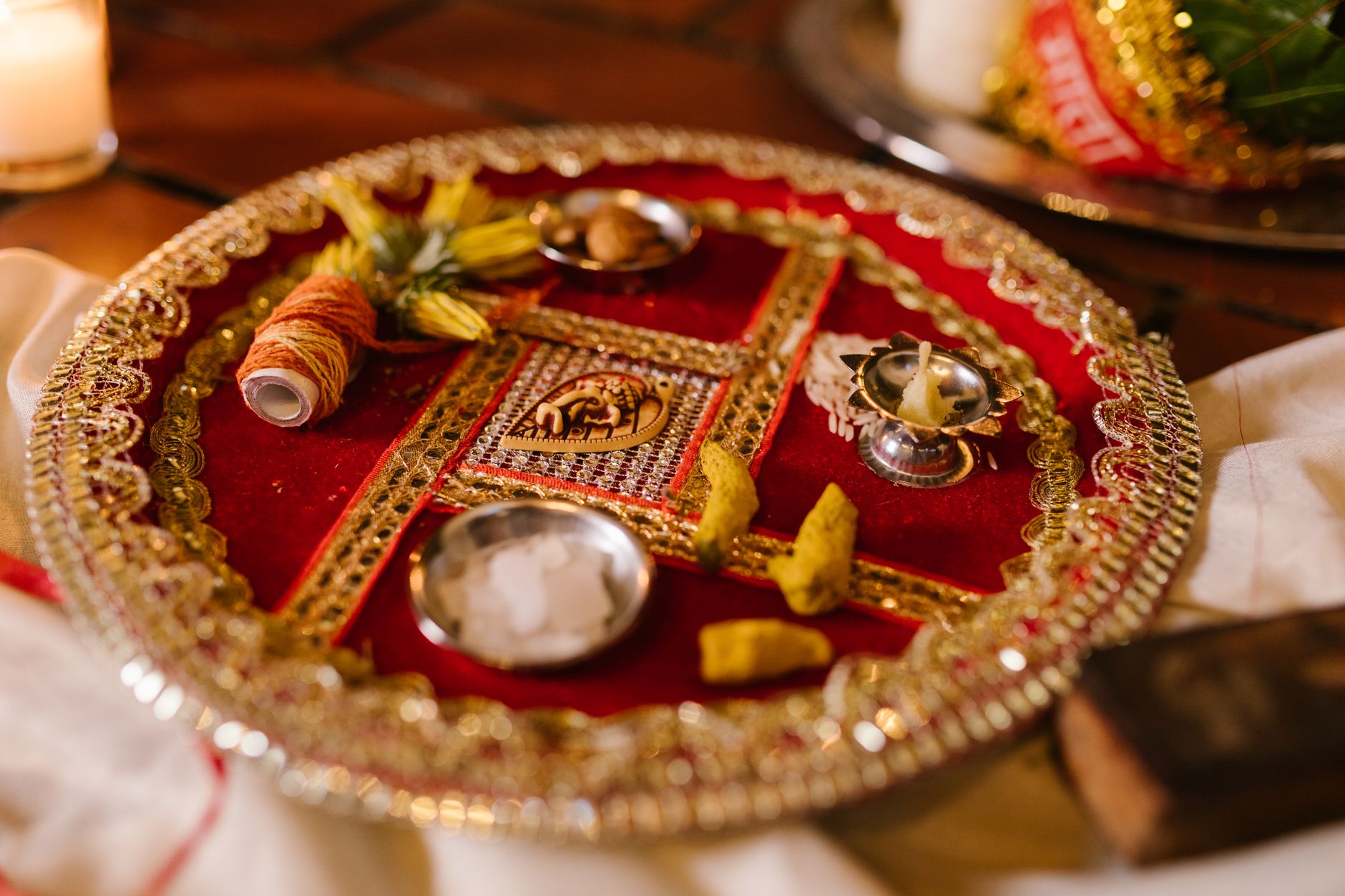
Sacred Seer Plate Rituals, Goa
Religious cermony in Goa
Heritage Brahmin Seer Plate Presentation in Goa
A Heritage Brahmin Seer Plate Presentation is one of the most cherished milestones in a Goan Brahmin wedding calendar, symbolising the formal exchange of gifts, blessings, and goodwill between two families. Whether you are planning a full Konkani wedding seer ritual in a heritage haveli in Panaji's Latin Quarter or a more intimate affair in a riverside village home in Divar Island, getting every element of the seer thali right — from the silver platters and fresh flowers to the precise stacking of silk sarees and coconuts — carries deep religious significance. Families also look for thoughtful pre-wedding pooja setup Goa specialists who understand both the Smartha and Madhva Brahmin traditions that coexist across North and South Goa. Happiffie connects you with verified ritual stylists and ceremony coordinators who bring together authentic ingredients, regional expertise, and festive warmth to make your auspicious seer plate offering truly memorable.
Quick Answer
A Heritage Brahmin Seer Plate Presentation is a pre-wedding or engagement ritual in Goan and Konkani Brahmin traditions where the groom's family formally presents decorated platters — called seer or seer thali — filled with sarees, jewellery, fruits, sweets, and religious items to the bride's family. It marks mutual acceptance between families and is performed under the guidance of a family priest, typically a day before the main wedding rituals.
What Is a Heritage Brahmin Seer Plate Presentation and Why Does It Matter?
A Heritage Brahmin Seer Plate Presentation is far more than an exchange of gifts — it is a sacred covenant between two families, conducted under Vedic sanction and guided by centuries of Konkani custom. The word 'seer' refers to the decorated platters that carry an assortment of auspicious items: silk sarees folded in precise layers, gold or silver jewellery, fresh coconuts, beetle leaves and areca nuts, turmeric, kumkum, seasonal fruits, and traditional Goan sweets like patoleo and khaje. Each item on the platter carries symbolic weight — the coconut represents prosperity, the turmeric denotes purity, and the silk sarees signal the groom's family's respect for the bride. In Goa, this ceremony sits at the heart of both Saraswat and GSB (Goud Saraswat Brahmin) wedding traditions. Families in Margao, Mapusa, and Vasco da Gama each have slightly different local customs regarding the number of platters, the colour of the cloth lining, and the order in which items are arranged. A Brahmin seer ceremony arrangement that honours these micro-regional differences is what separates a generic setup from a truly personalised one. Professional ritual stylists who specialise in this Goa wedding religious ceremony understand which priest community to engage, how many platters are considered auspicious (often odd numbers like 5, 7, or 11), and how to source authentic silver or brass thalis from local artisans in Panaji's 18th June Road market. Getting these details right ensures the ceremony proceeds without interruption and earns the blessings of both families' elders.
How Is the Seer Plate Arranged and Decorated in Goan Brahmin Tradition?
The arrangement of a traditional seer thali decoration follows a strict hierarchy of items and colours. The base platter is typically a polished silver or heavy brass thali, lined with a fresh banana leaf or a red silk cloth. Ritual specialists first place the anchor items — coconut, mango leaves, and an oil lamp — at the centre, and then layer outward with folded sarees, blouse pieces, and ornamental items. Fresh marigold and jasmine garlands are draped along the rim, and small oil diyas are lit at each corner to signify the four directions. In the Goan context, the Konkani wedding seer ritual often incorporates local flowers like mogra and crossandra, which are sourced fresh from the Mapusa Friday Market or Panaji's municipal flower stalls. Ritual coordinators working through platforms like Happiffie maintain vendor relationships with these markets to ensure same-morning freshness. The colour palette typically leans into auspicious combinations — red and gold for the bride's platters, and saffron and white for the ones carrying religious items like sandal paste, kumkum, and sacred thread. For families following South Indian ritual styling rooted in the Tulu or Havyaka Brahmin lineage who have settled along Goa's coastal belt, the arrangement may include additional items like dry fruits, silver anklets, and a small idol of Ganesha. Experienced coordinators adapt the layout without compromising on the religious accuracy that elder family members will scrutinise. Attention to detail at this stage prevents mid-ceremony corrections and preserves the flow of the entire auspicious seer plate offering.
Venue and Setting: Choosing the Right Space for Your Ceremony in Goa
Goa's architectural diversity offers extraordinary settings for a Heritage Brahmin Seer Plate Presentation. Portuguese-era ancestral homes in Loutolim and Chandor, with their ornate balcaos and inner courtyards, provide a natural backdrop that requires minimal additional decoration. The high ceilings, terracotta tile floors, and carved wooden furniture already align aesthetically with the traditional ceremony's visual language. Families who host in such ancestral properties often find that a skilled ritual stylist needs only to add fresh flowers, ritual lamps, and properly arranged seer thalis to create a deeply evocative atmosphere. For families who have relocated to modern apartment complexes in areas like Porvorim, Dona Paula, or Vasco, a dedicated ceremony hall or a well-decorated pooja room can be transformed into a suitable venue. Some families also choose the lawns of heritage boutique resorts in Assagao or Saligao, which offer the open-air freshness of a traditional village courtyard while providing modern amenities for elderly guests. A reliable pre-wedding pooja setup Goa specialist will visit the chosen venue in advance, assess the available natural light (morning ceremonies benefit enormously from east-facing verandahs), and map out the ritual furniture layout — including the low wooden chowki for the priest, the seating arrangement for the bride and groom's family elders, and a clear pathway for the procession of seer platters. This site visit is a non-negotiable step that prevents last-minute logistical surprises during the Brahmin seer ceremony arrangement.
What Does a Heritage Brahmin Seer Plate Presentation Cost in Goa?
Costs for a Heritage Brahmin Seer Plate Presentation in Goa vary considerably based on the number of seer platters, the quality of items placed in them, the extent of floral decoration, and whether a dedicated ceremony coordinator is engaged. At the entry level, a self-arranged ceremony using family-owned thalis, market-bought flowers, and a local priest can cost between INR 15,000 and INR 30,000, covering priest dakshina, fresh flowers, fruits, and basic ritual consumables. A mid-range professionally coordinated Brahmin seer ceremony arrangement — with rented or hired silver thalis, premium floral décor, a matching pooja backdrop, and a coordinator on-site for 4-6 hours — typically ranges from INR 45,000 to INR 90,000. Luxury setups that include custom-crafted silver platters, live mogra and rose petal trails, a traditional Konkani nadaswaram duo, and full-day ritual management can cost upward of INR 1.5 lakh. The traditional Konkan bridal trousseau items placed inside the seer platters — silk Paithani or Kanchipuram sarees, gold jewellery sets, and premium dry fruits — are separate from the ceremony coordination fee and can range from INR 50,000 to several lakhs depending on family custom. Key cost drivers include the number of platters (each additional platter adds INR 3,000 to INR 8,000 for décor and contents), the sourcing of authentic ritual items versus commercial substitutes, and peak-season demand during Diwali, Navratri, and winter wedding months from November to February in Goa. Booking through Happiffie allows families to compare verified coordinators and get transparent, itemised quotes.
Why Should You Hire a Specialist Coordinator for This Religious Ceremony in Goa?
Planning a Heritage Brahmin Seer Plate Presentation without expert guidance is one of the most common and avoidable sources of stress for Goan families. The ceremony involves coordinating across multiple stakeholders simultaneously — the family priest, the florist, the thali supplier, the caterer for the post-ceremony meal, and the families themselves — all within a tight, auspicious muhurat window that cannot be delayed. A specialist coordinator who understands the Goa wedding religious ceremony ecosystem brings three critical advantages. First, they have established relationships with local priests trained in Apastamba or Ashwalayan sutras who are comfortable with both Saraswat and other Brahmin sub-traditions. Second, they source ritual materials — specific types of rice, betel leaves, coconuts, and turmeric root — from suppliers who provide fresh, ritually acceptable items rather than supermarket equivalents that elders may object to. Third, they manage the emotional dynamics of two families meeting formally, often for the first time in a ceremonial setting, smoothing over small protocol differences with cultural sensitivity. For the auspicious seer plate offering specifically, a coordinator ensures that the correct number and sequence of platters is observed, that the traditional seer thali decoration is photo-ready for family documentation, and that the exchange moment — when the groom's family passes the platters to the bride's family — is choreographed with dignity. Families who have used Happiffie-listed specialists for their South Indian ritual styling components consistently report that the ceremony finishes within the muhurat window and that elder family members feel their traditions have been fully honoured. This peace of mind is, ultimately, the most valuable service any coordinator can provide.
Seer Plate Presentation Setup Options: A Side-by-Side Comparison
Expert Recommendation
Best for intimate family ceremonies
Best for destination wedding guests from outside Goa
Best for large gatherings of 100 or more
Best for budget-conscious families
Best for heritage venue weddings
Best for modern couples wanting traditional authenticity
How to Choose the Right Option
✅ Pre-booking Checklist
- Confirm the auspicious muhurat with both families' priests at least 6 to 8 weeks before the ceremony date
- Decide the exact number of seer platters based on family tradition and priest recommendation
- Source authentic silver or brass thalis from verified local artisans or rental services in Goa
- Book a fresh flower supplier from Mapusa or Panaji markets for same-morning delivery on the ceremony day
- Conduct a site visit to the venue to map out the priest's seating, ritual fire placement, and platter procession route
- Confirm that all ritual consumables — turmeric, kumkum, betel leaves, coconuts, rice — are sourced from specialised puja suppliers rather than supermarkets
- Prepare a printed ceremony order-of-events to share with both families so elder members can follow along
- Arrange traditional attire and jewellery for all immediate family members participating in the formal exchange
🎯 Selection Criteria
- Sub-community ritual knowledge: Coordinator must be familiar with your specific Brahmin tradition, whether GSB, Saraswat, Havyaka, or Chitpavan
- Local sourcing network: Ability to access fresh flowers, authentic ritual items, and quality thalis from within Goa
- Priest relationships: Verified working relationship with trained Vedic priests available in your ceremony's geography in Goa
- Portfolio and references: Evidence of previously executed Brahmin seer ceremony arrangements in Goa, ideally with photographs
- Transparent pricing: Itemised quotes separating décor, coordination, priest fees, and consumables
- Flexibility: Willingness to adapt the setup to ancestral home constraints, outdoor venues, or resort spaces
💰 Cost / Quality Factors
- Number of seer platters: Each additional platter increases décor, contents, and coordination costs proportionally
- Thali quality: Owned heirloom thalis cost nothing extra; rented silver thalis add INR 1,500 to INR 4,000 per piece
- Floral complexity: Simple marigold-and-mogra arrangements cost significantly less than elaborate multi-flower installations
- Priest's experience level: Senior priests with decade-long experience in auspicious seer plate offering rituals command higher dakshina
- Peak season premium: Ceremonies between November and February in Goa attract 20 to 40 percent higher rates for all vendors
- Venue type: Ancestral homes require minimal investment; resort or hall venues add setup and breakdown logistics costs
⚠️ Common Mistakes to Avoid
- Skipping the site visit and discovering on ceremony day that there is no suitable east-facing space for the priest or proper ventilation for ritual lamps
- Booking a generic decorator without verifying knowledge of traditional seer thali decoration specific to Brahmin sub-community customs
- Sourcing ritual items from convenience stores — commercially packaged turmeric and synthetic flowers are considered inauspicious by elder family members
- Ignoring the muhurat window and allowing extended family greetings or photography to delay the actual platter exchange beyond the auspicious time
- Underestimating the number of helpers needed — a 7 or 11 platter ceremony requires enough people to carry, present, and receive each platter in sequence
- Failing to communicate the ceremony sequence to the groom's and bride's families in advance, leading to confusion during the formal exchange moment
People Also Ask
What items are traditionally placed in a Brahmin seer plate in Goa?
How many seer plates are considered auspicious in a Konkani wedding?
What is the difference between a seer plate and a regular wedding gift exchange?
Can the seer plate ceremony be held at a resort in Goa?
How far in advance should I book a seer plate coordinator in Goa?
What should I wear as a family member during the seer plate ceremony?
How long does the seer plate presentation ceremony typically last?
Is it necessary to hire a priest from the same Brahmin sub-community?
What flowers are traditionally used to decorate seer plates in Goa?
Can the seer plate ceremony be combined with the engagement function?
How much does a traditional seer thali decoration setup cost separately from the contents?
What are the most common mistakes families make when planning this ceremony?
Related Experiences on Happiffie
Seer Varisai Arrangements for Pune Weddings
Kerala Wedding Rituals, Beautifully Recreated
Telugu Seer Plate Presentation in Goa
Sacred Mangalasnanam Rituals, Goa Style
Sacred Addutera Setups for Telugu Weddings
Kundan Bridal Jewellery Specialists
Frequently Asked Questions
What exactly is a Heritage Brahmin Seer Plate Presentation in the Goan context?
Which Brahmin communities in Goa observe the seer plate tradition?
Can a Heritage Brahmin Seer Plate Presentation be held at an outdoor venue in Goa?
How do I find a priest who knows the Konkani wedding seer ritual in Goa?
What is the best season to hold the seer plate ceremony in Goa?
Are there restrictions on photography during the Heritage Brahmin Seer Plate Presentation?
How do I ensure the traditional seer thali decoration is ritually correct and not just decorative?
What is the significance of the auspicious seer plate offering in terms of family relationships?
Can I incorporate South Indian ritual styling elements into a Goan Brahmin seer ceremony?
Is the Heritage Brahmin Seer Plate Presentation mandatory for a Goan Brahmin wedding?
What food or prasad is distributed after the seer plate ceremony in Goa?
How does Happiffie help families plan a Heritage Brahmin Seer Plate Presentation in Goa?
Key Takeaways
- A Heritage Brahmin Seer Plate Presentation is a ritualised pre-wedding ceremony central to Goan and Konkani Brahmin traditions, involving the formal exchange of decorated platters filled with silk sarees, jewellery, sweets, and auspicious items.
- The number of seer platters should always be odd — typically 5, 7, or 11 — and must be confirmed with the family priest based on sub-community custom.
- Goa's diverse Brahmin communities, including GSB, Saraswat, Havyaka, and Chitpavan, each have distinct regional variations in ritual sequence and platter contents.
- Professional ritual coordinators add the most value by securing auspicious muhurats, sourcing authentic ritual items, managing multiple family stakeholders, and ensuring the ceremony finishes on time.
- Ceremony costs in Goa range from INR 15,000 for a self-arranged setup to over INR 1.5 lakh for a full-service luxury coordination, excluding the value of gifts placed inside the platters.
- Peak wedding season in Goa runs from October to February — book specialist coordinators, priests, and thali suppliers at least 3 to 4 months in advance during this window.
- Fresh flowers from Mapusa or Panaji markets, authentic ritual consumables from puja suppliers, and proper site assessment are the three most impactful investments for a successful ceremony.
- Happiffie connects Goan families with verified ceremony specialists who understand sub-community ritual nuances, ensuring every Heritage Brahmin Seer Plate Presentation is both religiously accurate and visually memorable.
Plan Your Heritage Brahmin Seer Plate Presentation in Goa
Connect with verified ritual specialists, traditional thali decorators, and experienced Vedic priests — all in one place. Let Happiffie make your sacred ceremony as beautiful as your family's traditions deserve.
Find Specialists Now
Are you a Vendor? Grow Your Business with Happiffie!
- High intent verified leads
- Reverse auction opportunities
- AI business tools & insights
- Dedicated vendor dashboard
- Grow your business, your way
It's free & takes less than 2 minutes!