
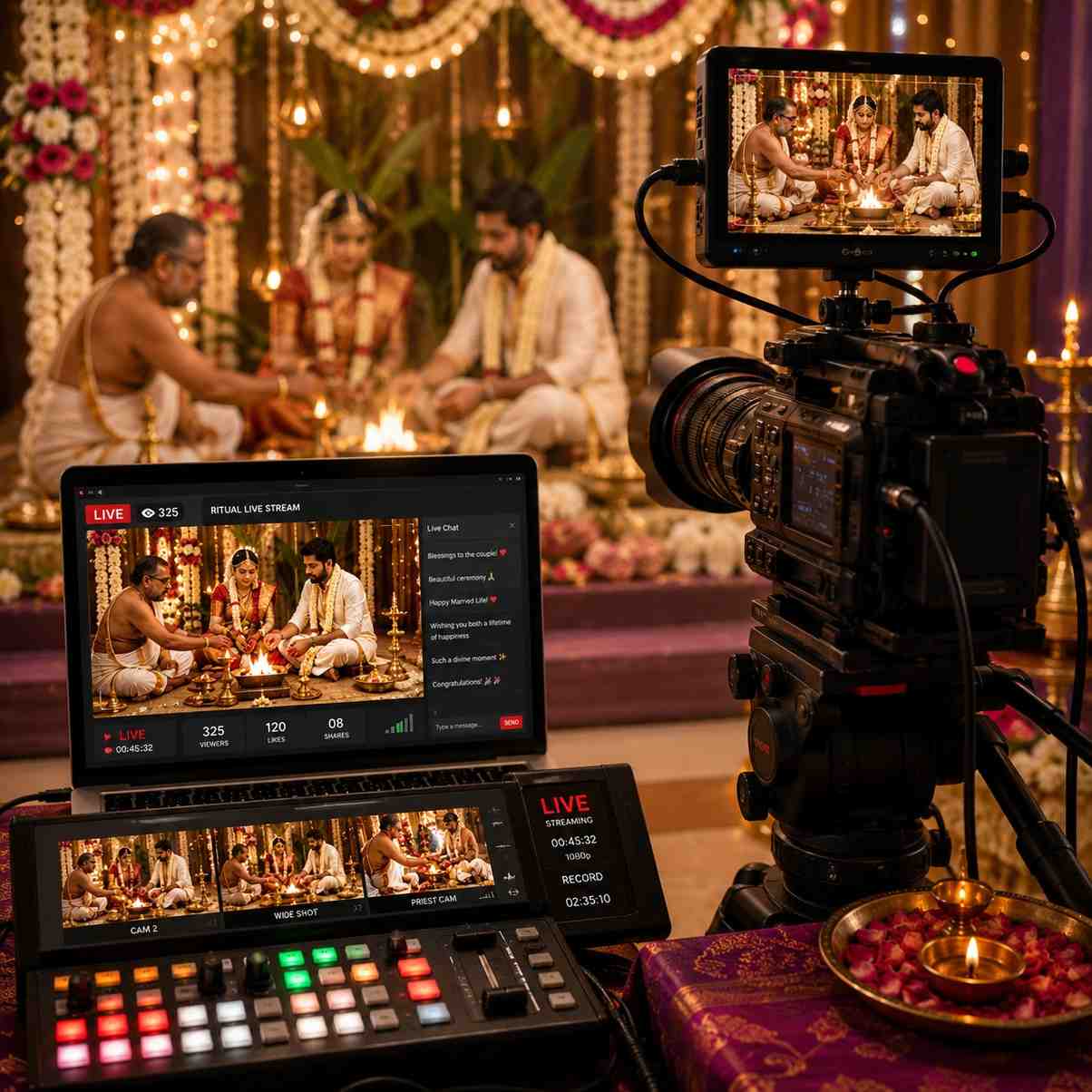
Ritual Live Streaming
Stay connected to sacred moments with Puja Live Streaming services that bring religious ceremonies directly to family and loved ones anywhere. Enable remote participation, virtual darshan, and real-time viewing of pujas, havans, temple rituals, and traditional ceremonies.
Explore Religious Ceremony Experiences




Explore Other Experiences











Explore by Occasion



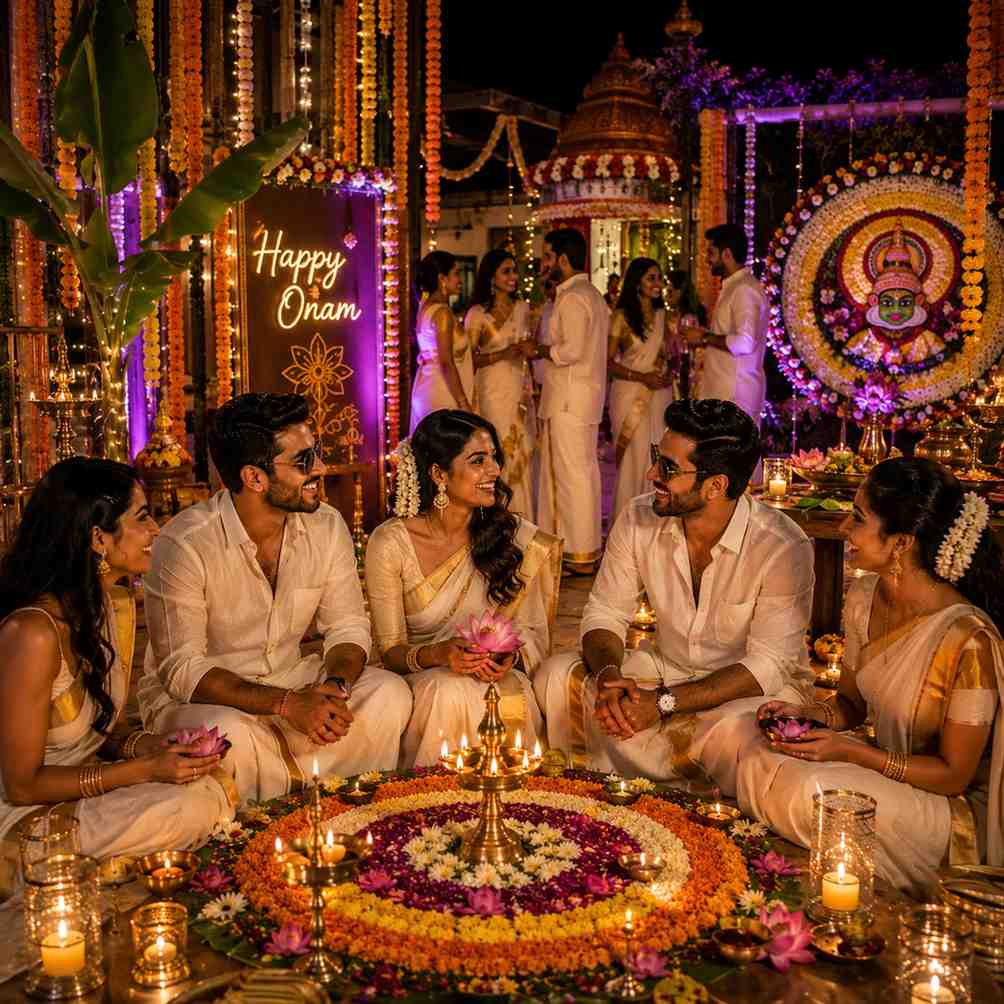
Puja Live Streaming for Online Darshan, Virtual Worship & Remote Religious Participation in India
◆Puja Live Streaming is a digital service that allows devotees, families, and religious communities to participate in poojas, temple rituals, religious ceremonies, and spiritual events remotely through live video broadcasts. Online Darshan and Virtual Worship services help people stay connected with important religious occasions when they cannot physically attend a temple, home ceremony, or event venue.
With the growth of digital technology, temples, priests, spiritual organisations, families, and event organisers can broadcast religious ceremonies to participants across different cities and countries. Live streaming makes it possible for devotees to watch rituals in real time, receive Darshan, listen to prayers and mantras, and participate remotely according to the practices permitted by the temple or religious tradition.
Puja Live Streaming can be arranged for temple festivals, special poojas, weddings, housewarming ceremonies, religious functions, community celebrations, spiritual discourses, homams, havans, and other devotional events.
The service generally combines professional cameras, audio equipment, internet connectivity, streaming platforms, lighting, technical operators, and online broadcast management to deliver a clear and reliable viewing experience.
Temple Live Streaming allows devotees who are unable to travel to watch important rituals from their homes. This can be especially useful for elderly devotees, people living in different cities, international families, and those unable to attend due to travel or scheduling limitations.
Online Darshan services may provide live views of the deity, sanctum area, ceremonial proceedings, or other permitted temple activities. The exact access available depends on the temple's policies and religious practices.
Virtual Worship can allow families to participate in certain ceremonies remotely. Depending on the priest and ritual tradition, participants may be guided to prepare basic pooja materials at home and join the ceremony through the live broadcast.
Remote participation can be particularly useful for family ceremonies where relatives live in different locations. Grandparents, siblings, relatives, and friends can watch and participate in important moments without travelling to the venue.
Puja broadcasts can be streamed from temples, homes, mandapams, community halls, religious institutions, ashrams, and other permitted locations.
Professional camera placement is important for religious live streaming. Multiple camera angles can provide views of the priest, deity, ceremonial fire, pooja setup, participants, and wider venue while respecting the sanctity and restrictions of the ritual space.
A multi-camera setup can be particularly useful for larger religious events. One camera may focus on the main ritual, another on the priest, and another on the wider ceremonial area, depending on the venue's requirements.
Audio quality is equally important. Clear microphones can capture mantras, prayers, devotional music, announcements, and explanations without excessive background noise.
Wireless microphones, boundary microphones, directional microphones, and audio feeds from the venue's sound system can be used according to the requirements of the ceremony.
Internet connectivity is one of the most important technical considerations. A stable high-speed connection helps reduce buffering, interruptions, and loss of broadcast quality.
For temples and venues with unreliable internet, professional streaming teams may arrange backup connectivity through additional network connections or suitable mobile data solutions.
Live streaming platforms can include private event links, social media platforms, video conferencing services, dedicated streaming pages, or other suitable digital channels depending on the audience and privacy requirements.
Private streaming links are useful for family ceremonies where the organisers want access limited to invited relatives and participants.
Public temple broadcasts can reach a larger audience when the temple or religious organisation chooses to make the ceremony publicly accessible.
Some religious organisations may also use recorded highlights or on-demand videos after the live ceremony. This allows devotees who missed the live broadcast to watch permitted portions later.
For weddings, Puja Live Streaming can help relatives living overseas or in other cities participate in important rituals. The broadcast can include the wedding pooja, sacred fire ceremony, Pheras, Saptapadi, Mangalya Dharana, and other moments according to the family's traditions and filming permissions.
Housewarming ceremonies can also be streamed for family members who cannot attend the Griha Pravesh. Relatives can watch the pooja, Havan, Kalash rituals, and other permitted ceremonies remotely.
Temple festivals often benefit from live streaming because large numbers of devotees may be unable to enter the temple premises at the same time. Broadcasts can provide remote access while supporting crowd management.
Religious festivals such as Navratri, Ganesh Chaturthi, Janmashtami, Diwali, Durga Puja, Pongal, Onam, Vishu, and other regional celebrations can be broadcast where the temple or organisers permit live coverage.
Homam and Havan ceremonies can also be streamed. Multiple camera views can show the Havan Kund, priest, offerings, and participants while maintaining appropriate distance and respecting ritual restrictions.
Spiritual discourses, Bhajans, devotional music programmes, religious lectures, and community prayer events can be broadcast to larger audiences.
For international devotees, time-zone considerations can be important. Organisers can share the local ceremony time along with the relevant time for overseas participants.
Event registration pages or private access links can be used when organisers need to manage a specific list of remote participants.
Some live-streaming services also offer digital event branding. Organisers may add event titles, temple names, ceremony names, logos, date information, or other appropriate graphics without interfering with the religious content.
On-screen captions or translations can help international and younger audiences understand the ceremony. However, the use of captions should be discussed with the temple or organisers to ensure that the presentation remains appropriate.
Recording and data privacy should be considered before broadcasting a religious ceremony. Participants should understand whether the event is being recorded, stored, shared, or made publicly available.
Permission is especially important when streaming from temples and religious institutions. Organisers should obtain approval from the relevant temple management or religious authority before installing cameras or broadcasting rituals.
Camera placement should respect restricted areas. Certain temples or rituals may prohibit photography, video recording, or live broadcasting in particular locations.
Lighting should also be handled carefully. Professional teams can work with available ambient lighting and use minimal additional equipment where required to avoid disturbing worshippers or the ceremony.
A backup recording can be useful when the live stream experiences technical problems. Subject to permissions, the recording can provide an alternative way to share the ceremony later.
Professional streaming teams can manage the entire technical workflow, including pre-event testing, camera setup, audio checks, internet testing, streaming configuration, live monitoring, recording, troubleshooting, and post-event delivery.
For large religious events, dedicated technical operators can monitor the stream throughout the ceremony. This helps identify connectivity, audio, camera, or platform issues quickly.
Rehearsals and technical checks should ideally be completed before the ceremony. Testing the cameras, microphones, internet connection, power supply, streaming platform, and backup systems reduces the risk of interruptions.
Power backup can be important for long religious events. UPS systems, backup batteries, or other suitable power solutions can help maintain equipment during temporary power interruptions.
For outdoor religious ceremonies, weather protection should be considered for cameras, cables, streaming equipment, and operators.
For destination religious events, the streaming team may coordinate transportation, accommodation, equipment logistics, local internet access, and venue permissions.
Puja Live Streaming can also support charitable and community religious initiatives. Temples and organisations may broadcast special ceremonies to supporters and devotees while providing appropriate information about the event.
In conclusion, Puja Live Streaming combines traditional religious participation with modern digital technology, allowing devotees and families to experience permitted ceremonies remotely. From Online Darshan and Temple Broadcasts to Virtual Worship, wedding poojas, Havan ceremonies, festivals, and spiritual events, professional streaming can connect participants across cities and countries. By obtaining the necessary permissions, choosing reliable technical equipment, ensuring stable connectivity, respecting religious restrictions, and protecting participant privacy, organisers can create a respectful and accessible remote worship experience.
FAQ Section
Q1: What is Puja Live Streaming?
Puja Live Streaming is the live digital broadcasting of a pooja, temple ritual, religious ceremony, festival, or spiritual event so devotees and invited participants can watch and participate remotely.
Q2: What is Online Darshan?
Online Darshan allows devotees to view a permitted live or recorded temple ceremony or deity Darshan remotely through an online broadcast.
Q3: Can family members participate in a pooja remotely?
Yes. Depending on the ceremony and priest's guidance, family members can watch the live ritual and participate in appropriate prayers or activities from their location.
Q4: Can temple festivals be live streamed?
Yes, where permitted by the temple or religious organisation. Professional streaming can broadcast selected rituals, celebrations, devotional programmes, and other approved activities.
Q5: What equipment is required for Puja Live Streaming?
A typical setup may include cameras, microphones, audio equipment, streaming hardware or software, stable internet, lighting where appropriate, power backup, and professional technical operators.
Q6: Can a private family pooja be streamed only to invited guests?
Yes. Private streaming links, password-protected platforms, or controlled access options can be used depending on the selected streaming service.
Q7: Can weddings and Havan ceremonies be streamed?
Yes. Wedding poojas, Havan, Homam, Pheras, Saptapadi, Mangalya Dharana, and other permitted ceremonies can be streamed for remote family members and guests.
Q8: Is permission required for temple live streaming?
Yes. Organisers should obtain permission from the relevant temple management or religious authority and follow all rules regarding photography, recording, camera placement, and broadcasting.
Q9: Can the Puja Live Stream be recorded?
Yes, where recording is permitted. A backup recording can also be useful if technical problems interrupt the live broadcast.
Q10: How can Happiffie help with Puja Live Streaming?
Happiffie helps temples, families, religious organisations, couples, and event organisers discover professional live-streaming teams offering camera setup, audio production, internet solutions, Online Darshan broadcasts, private event streams, recording, technical monitoring, and complete religious event streaming services.