
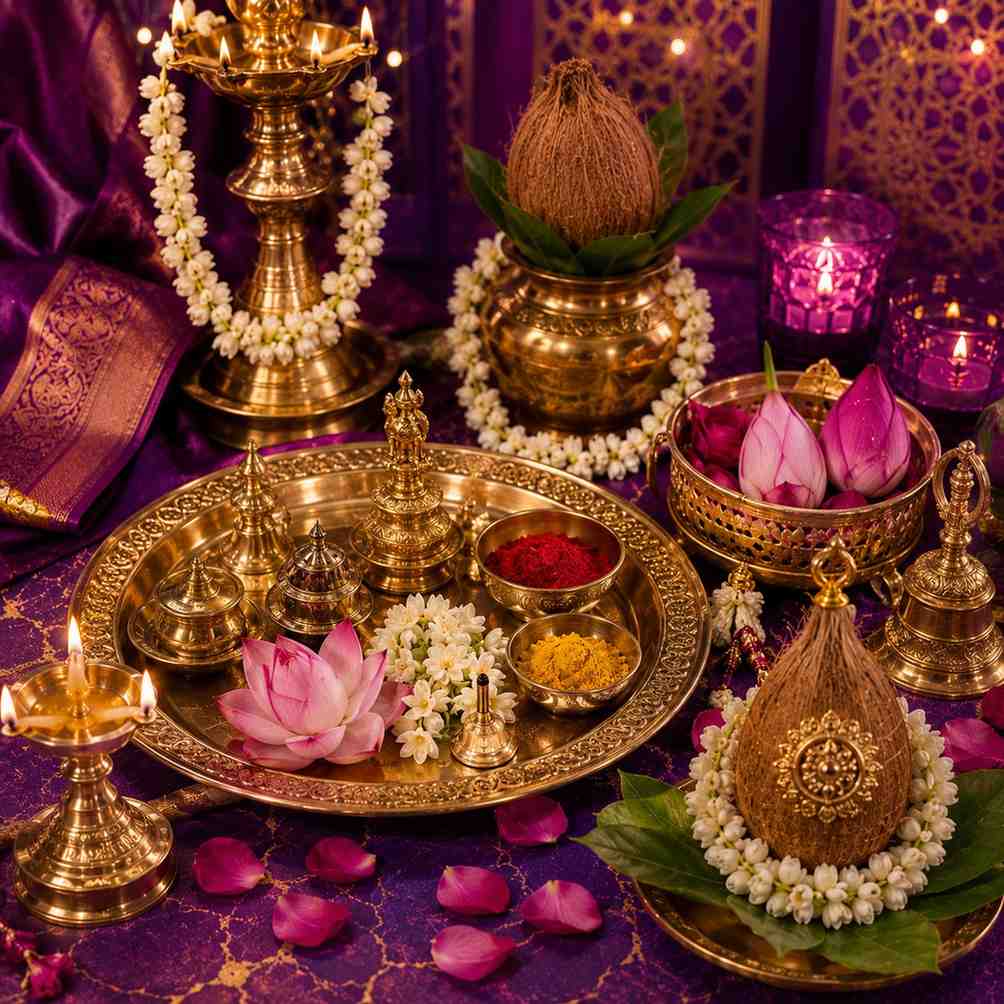
Ritual items Decor
Create a beautiful and auspicious setting with Puja Items & Flower Decoration featuring traditional ritual essentials, fresh flowers, garlands, floral arrangements, lamps, and decorative elements for pujas, weddings, festivals, and sacred ceremonies.
Explore Religious Ceremony Experiences
Explore Other Experiences




Explore by Occasion



Puja Items Flower Decoration for Temple Rituals, Mandapams & Home Ceremonies in India
◆Puja items flower decoration is an important part of traditional Indian worship, religious ceremonies, temple rituals, festive celebrations, wedding mandapams, and home pooja arrangements. Fresh flowers, floral garlands, petals, leaves, and decorative floral elements help create an auspicious, welcoming, and visually beautiful atmosphere while complementing the sacred setting of the ceremony.
Across India's diverse cultural traditions, flowers are closely associated with devotion, purity, celebration, and auspicious occasions. From temple rituals and festival worship to housewarming ceremonies, wedding poojas, Satyanarayan Pooja, Ganesh Pooja, Navratri celebrations, and family functions, floral decoration can be adapted to suit the specific ritual and regional customs.
The choice of flowers and their arrangement may vary according to the deity, festival, regional tradition, family preferences, season, and ceremony format. Families should follow the customs recommended by their priest or religious guide when selecting flowers for specific rituals.
Fresh flower garlands are one of the most common elements of pooja decoration. Jasmine, marigold, rose, chrysanthemum, lotus, kanakambara, tuberose, and other flowers can be used to create garlands for deities, idols, mandapams, entrances, pooja platforms, and ceremonial spaces.
Marigold flowers are particularly popular for religious and festive decoration. Their bright colours create a cheerful and traditional appearance, making them suitable for temple entrances, pooja backdrops, mandapam borders, doorway decorations, and festive arrangements.
Jasmine is valued for its delicate appearance and fragrance. Jasmine garlands can be used for deity decoration, pooja trays, wedding ceremonies, bridal arrangements, and traditional home worship.
Lotus flowers may be selected for specific religious and devotional arrangements where appropriate. Their traditional symbolism and distinctive appearance make them a popular choice for certain pooja settings.
Rose flowers can add colour and elegance to floral worship arrangements. Red, pink, yellow, and white roses can be used for garlands, petals, decorative bowls, pooja trays, and mandapam accents.
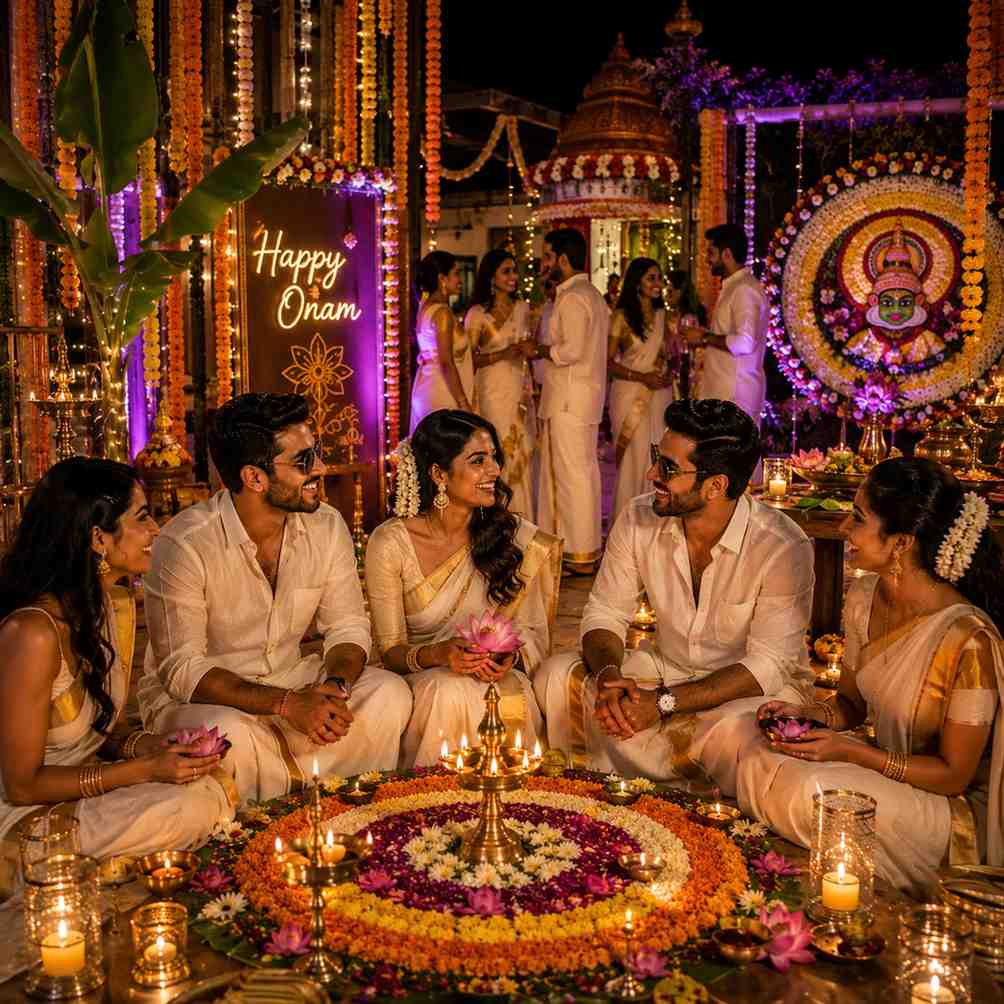
Flower petals can be used to create decorative patterns, rangoli-style designs, pathways, pooja trays, altar borders, and offering arrangements. Petals can also be scattered around ceremonial areas to create a festive visual effect.
Floral pooja trays can combine flowers with traditional worship items. A decorated thali may include flowers, petals, lamps, rice, turmeric, kumkum, fruits, coconuts, and other ceremonial materials according to the requirements of the ritual.
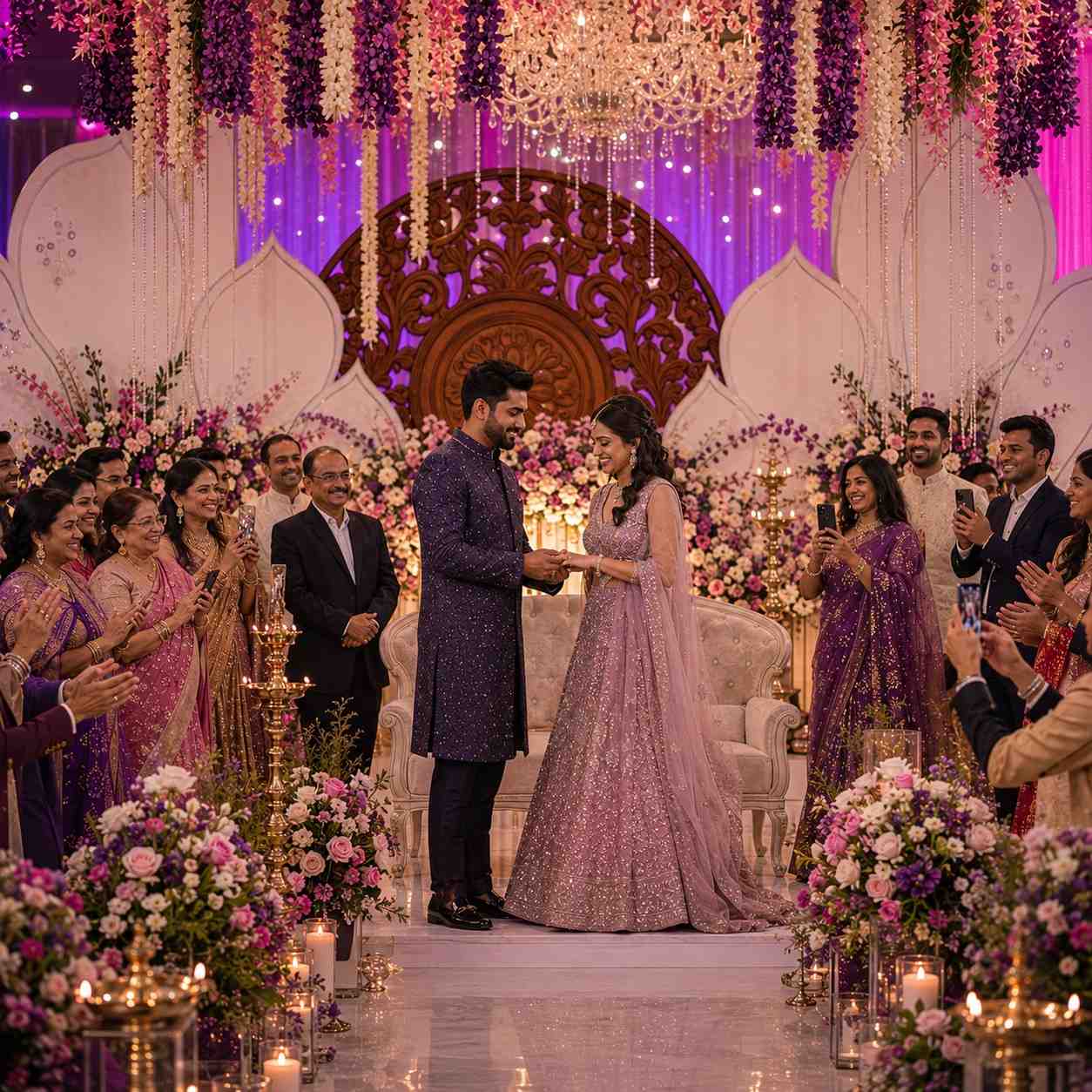
Mandap flower decoration is particularly important for wedding ceremonies. Floral arrangements can frame the mandapam pillars, create overhead installations, decorate the backdrop, enhance the entrance, and complement the overall wedding theme.
Traditional wedding mandapams may use marigold strings, jasmine garlands, banana leaves, mango leaves, roses, orchids, and other flowers to create a culturally rich setting.
Modern mandap designs can combine traditional flowers with contemporary floral styling. Pastel arrangements, floral arches, hanging installations, floral walls, mixed textures, and coordinated colour palettes can create a more modern appearance while maintaining the ceremonial character.
Temple flower decoration can be customised according to the architecture and ritual requirements of the temple. Garlands, floral borders, deity decorations, entrance arrangements, and traditional hanging flower strings can enhance the sacred environment.
Home pooja decoration is suitable for festivals, family rituals, housewarming ceremonies, birthdays, anniversaries, naming ceremonies, and other auspicious occasions. Small floral arrangements can transform a home prayer area without requiring extensive decoration.
Festive worship often includes colourful floral decoration. Diwali, Ganesh Chaturthi, Navratri, Janmashtami, Pongal, Onam, Ugadi, Vishu, Durga Puja, and other regional festivals may feature flowers as part of home, temple, and community celebrations.
Flower torans are another popular decorative element. Fresh or dried flowers can be combined with mango leaves, banana leaves, coconut leaves, or other traditional elements to decorate doorways, pooja areas, mandapams, and entrances.
Floral arches can create a striking entrance for weddings, temple functions, and religious celebrations. Arches can be decorated with fresh flowers, foliage, hanging garlands, and coordinated fabrics.
Floral backdrops are useful for pooja stages and ceremonial photography. They can be designed with flowers arranged in patterns, panels, circular installations, traditional motifs, or contemporary compositions.
Pooja platform decoration can include a floral border around the altar or raised platform. Flowers can be arranged around lamps, deity idols, kalash arrangements, and other ceremonial objects while maintaining sufficient space for the ritual.
Floral arrangements can also be combined with traditional brass décor. Brass lamps, urulis, bells, thalams, kalash vessels, and other metal elements pair naturally with fresh flowers and can create an elegant traditional appearance.
Banana leaves and coconut leaves can complement floral decoration in South Indian ceremonies. Their natural green colour provides contrast against bright flowers and reinforces the traditional visual character of the setting.
Mango leaves are commonly incorporated into auspicious Indian decorations. They may be used in torans, kalash arrangements, entrance décor, and other ceremonial displays according to regional customs.
Floral decoration can be adapted to different regional traditions. Kerala, Tamil Nadu, Karnataka, Andhra Pradesh, Telangana, Maharashtra, Gujarat, Rajasthan, Bengal, and other regions have distinct floral preferences and ceremonial styles.
South Indian pooja décor often features jasmine, marigold, banana leaves, coconut leaves, traditional brass lamps, and floral garlands. These elements can be arranged around wedding mandapams, temple spaces, home pooja areas, and ceremonial entrances.
Floral decoration can also support cultural authenticity at destination events. Families hosting traditional ceremonies outside their home region can use regional flowers, garland styles, and decorative elements to recreate familiar ceremonial aesthetics.
Colour selection is important when designing floral pooja décor. Yellow and orange flowers create a traditional festive appearance, while white flowers offer a calm and elegant look. Red, pink, purple, and mixed floral palettes can be selected according to the occasion and overall décor.
Fragrance can also influence the atmosphere of a pooja setting. Jasmine, tuberose, rose, and other fragrant flowers can create a pleasant environment, although ventilation and guest sensitivities should be considered.
Freshness is critical for floral decoration. Flowers should ideally be sourced close to the ceremony and stored appropriately to prevent wilting. Professional florists can manage sourcing, conditioning, transportation, and installation.
Floral arrangements should also be designed around the duration of the event. Longer ceremonies may require flowers that remain fresh for extended periods, while delicate varieties can be reserved for shorter rituals or placed in cooler environments.
For outdoor ceremonies, weather conditions should be considered. Heat, humidity, wind, and direct sunlight can affect flowers, making appropriate flower selection, hydration, shade, and installation methods important.
For indoor home ceremonies, floral decoration can be scaled according to the available space. Simple garlands, flower bowls, torans, and altar borders can create an elegant arrangement without overwhelming the room.
Eco-friendly floral practices are becoming increasingly popular. Locally sourced seasonal flowers, reusable floral containers, natural materials, composting, and reduced plastic packaging can help minimise waste after the ceremony.
Flowers used for worship should be handled respectfully and according to the family's religious customs. Some ceremonies may have specific guidelines about which flowers are appropriate for particular deities or rituals.
Quantity planning is important for larger ceremonies. The number of garlands, flower strings, petals, torans, arches, and backdrop arrangements should be estimated according to the size of the venue and the scale of decoration.
Professional florists and decorators can create complete floral pooja setups. Services may include flower sourcing, garland preparation, floral trays, mandap decoration, altar decoration, backdrop design, entrance décor, installation, maintenance, and post-event removal.
Rental décor can also be combined with fresh flowers. Brass lamps, urulis, stands, trays, arches, backdrops, and decorative structures can be rented and enhanced with fresh floral arrangements.
For weddings, floral pooja décor can be coordinated with bridal jewellery, wedding stationery, mandap fabrics, seating, lighting, stage décor, and reception styling to create a consistent visual theme.
For corporate or community religious events, floral decoration can be branded or adapted to suit the venue while maintaining an appropriate devotional atmosphere.
In conclusion, puja items flower decoration is more than visual ornamentation—it creates an auspicious and welcoming environment for worship, rituals, weddings, festivals, and family ceremonies. From floral pooja trays and temple garlands to mandap decoration, home altar arrangements, festive torans, arches, and traditional flower backdrops, carefully selected floral elements can enhance both the spiritual atmosphere and visual beauty of an occasion. By choosing suitable flowers, respecting ritual customs, planning for freshness, and working with experienced floral professionals, organisers can create meaningful and beautiful pooja settings.
FAQ Section
Q1: What is puja items flower decoration?
Puja items flower decoration involves using fresh flowers, garlands, petals, leaves, floral trays, torans, and other natural decorative elements to enhance pooja areas, temples, mandapams, and ceremonial spaces.
Q2: Which flowers are commonly used for pooja decoration?
Common options include jasmine, marigold, rose, chrysanthemum, lotus, tuberose, kanakambara, and other seasonal flowers, depending on the ceremony and regional customs.
Q3: Can flowers be used to decorate a wedding mandapam?
Yes. Flowers can be used for mandap pillars, backdrops, arches, hanging garlands, floral borders, pooja platforms, and other wedding ceremony decorations.
Q4: Can floral decoration be arranged for a home pooja?
Yes. Home pooja arrangements can include flower garlands, petals, floral bowls, torans, altar borders, and small decorative installations according to the available space.
Q5: Can temple rituals include floral decoration?
Yes. Garlands, deity decorations, floral borders, entrance arrangements, and traditional flower strings can be prepared according to the temple's customs and requirements.
Q6: Can floral pooja decoration be customised?
Yes. Flower types, colours, garland styles, floral patterns, trays, backdrops, torans, and installations can be customised according to the ceremony, region, theme, and budget.
Q7: How can flowers be kept fresh during long ceremonies?
Professional florists may use appropriate hydration, storage, flower conditioning, suitable varieties, shade, and timely installation to help maintain freshness throughout the event.
Q8: Can traditional brass décor be combined with flowers?
Yes. Brass lamps, urulis, thalams, kalash vessels, bells, and other traditional elements pair well with fresh flowers and can create an elegant ceremonial setting.
Q9: Is eco-friendly flower decoration available?
Yes. Seasonal local flowers, reusable containers, natural materials, reduced plastic packaging, and responsible disposal or composting can support more sustainable floral decoration.
Q10: How can Happiffie help with Puja Items Flower Decoration?
Happiffie helps families, couples, temples, event organisers, and religious communities discover trusted florists and decorators offering pooja flower arrangements, floral trays, temple decoration, mandap flowers, garlands, torans, floral backdrops, home pooja décor, and complete ceremonial floral setup services.