
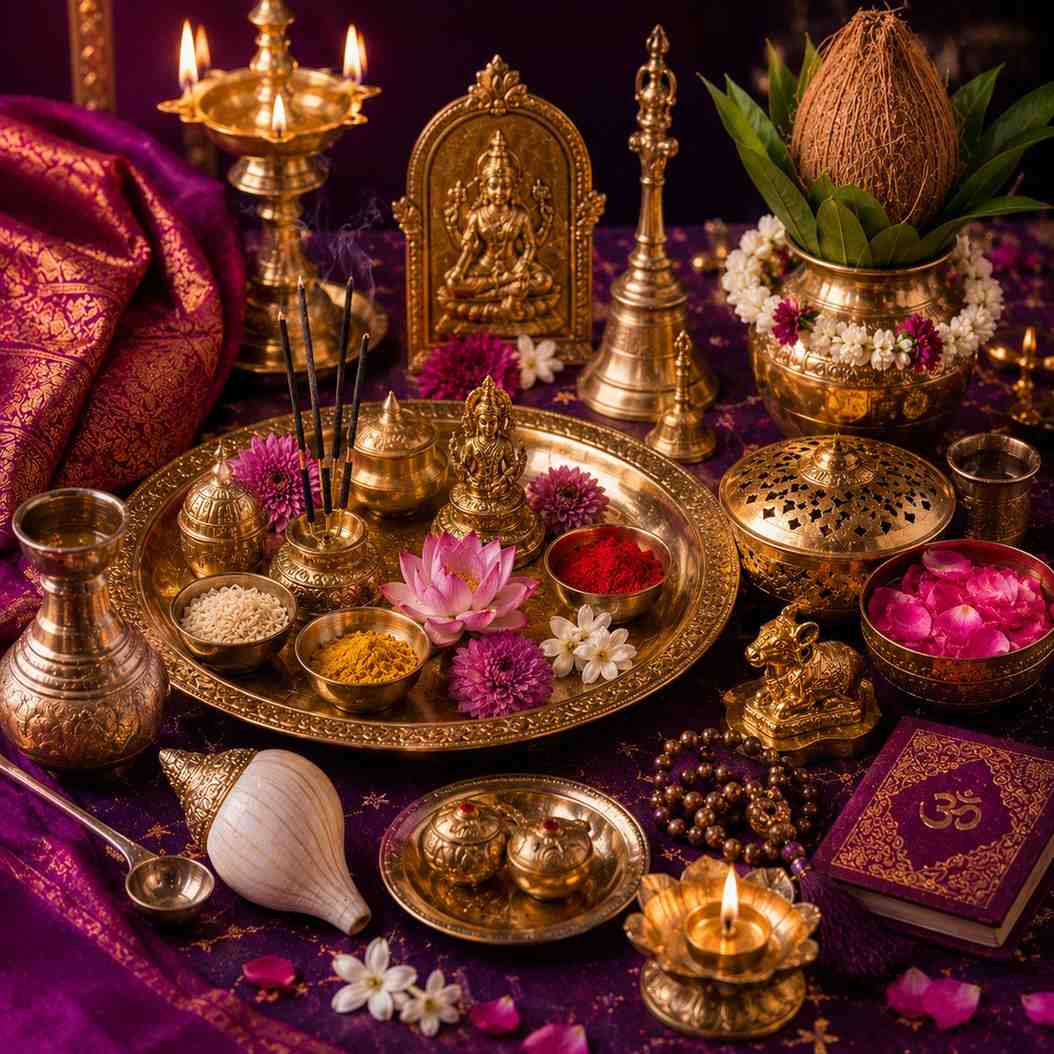
Religious & Ritual Items
Prepare for sacred Hindu ceremonies with Puja & Havan Items featuring traditional ritual essentials, havan samagri, pooja accessories, sacred offerings, lamps, and devotional supplies for weddings, festivals, housewarmings, and religious occasions.
Explore Religious Ceremony Experiences



Explore Other Experiences












Explore by Occasion





Puja Havan Hindu Items for Havan Samagri, Homam Supplies & Sacred Fire Ceremonies in India
◆Puja Havan Hindu items are traditional ritual materials used for Havan, Homam, Yagna, Agni ceremonies, religious functions, weddings, housewarming ceremonies, temple rituals, and other auspicious Hindu occasions. Havan Samagri and related supplies are arranged to support the sacred fire ceremony according to the practices followed by the family, priest, temple, or religious tradition.
Havan is an important ritual in many Hindu ceremonies in which offerings are made into a sacred fire while mantras and prayers are recited. The materials used during the ceremony can vary according to the purpose of the Havan, regional traditions, deity worship, family customs, and the procedure prescribed by the priest.
A typical Havan arrangement may include a Havan Kund, Samidha or sacred wood, Havan Samagri, ghee, camphor, herbs, grains, dried ingredients, flowers, fruits, coconuts, and other ritual offerings. The exact list should always be confirmed with the priest conducting the ceremony.
The Havan Kund is the central vessel or structure used to contain the sacred fire. It may be made from copper, brass, clay, metal, or other suitable materials depending on the ceremony and setup.
Copper Havan Kunds are popular for traditional religious ceremonies because they are durable and suitable for repeated use. Different sizes can be selected according to the number of participants and the scale of the ritual.
Brass Havan Kunds can complement traditional pooja décor. Their warm metallic appearance works well with brass lamps, kalash vessels, bells, pooja plates, and other ceremonial accessories.
Samidha refers to sacred wood or wooden sticks used as fuel for the Havan fire. The type, quantity, and preparation of the wood should follow the instructions provided by the priest.
Havan Samagri is a mixture of traditional herbs, seeds, grains, dried botanical materials, fragrant ingredients, and other substances used as offerings into the sacred fire. Different preparations may be available for different rituals.
Ghee or clarified butter is commonly used as an offering during many Havan ceremonies. It may be poured into the fire using a traditional spoon or vessel according to the priest's instructions.
Camphor can be used for lighting or supporting the fire during certain rituals. It should be handled carefully and kept away from flammable materials when used in an open-fire ceremony.
Grains and seeds may form part of the Havan offerings. Rice, barley, sesame, wheat, and other ingredients may be used depending on the ritual and regional practice.
Herbs and dried botanical ingredients are commonly included in Havan Samagri mixtures. The exact ingredients can vary according to the purpose of the ceremony and the traditional method followed by the priest.
Sandalwood may be included in certain Havan and pooja arrangements. Its fragrance can complement the ceremonial environment while following the prescribed ritual procedure.
Flowers can be used around the Havan Kund and as offerings during the ceremony. Marigold, jasmine, rose, lotus, and other suitable flowers may be selected according to the occasion and regional customs.
Flower petals can also be arranged around the Havan area to create an auspicious and visually organised ceremonial setting.
Coconuts are commonly associated with Hindu pooja and may be included in Havan arrangements depending on the specific ritual. The priest can confirm how and when they should be used.
Betel leaves and areca nuts may be required as traditional offerings. Their use varies according to the ceremony and family customs.
Turmeric and kumkum may be placed near the Havan Kund or included in the wider pooja setup. They can be arranged in small bowls or ceremonial containers for convenient access during the ritual.
Akshata or consecrated rice may be used during prayers and blessings. Families can prepare or purchase suitable rice according to the instructions of the priest.
Kalash arrangements may accompany Havan ceremonies. A traditional kalash can be decorated with water, mango leaves, coconut, flowers, and other auspicious elements according to the prescribed ritual.
Puja plates and ceremonial trays help organise Havan materials. Separate trays can be prepared for flowers, grains, turmeric, kumkum, offerings, lamps, and other ritual essentials.
Traditional pooja accessories such as bells, lamps, incense holders, spoons, vessels, plates, and containers can be included in the Havan setup according to the requirements of the ceremony.
Havan ceremonies can be conducted for many occasions. Common examples include housewarming or Griha Pravesh, weddings, Ganapati Havan, Navagraha Havan, Lakshmi Pooja, Durga rituals, Satyanarayan ceremonies, religious festivals, temple functions, business openings, and family blessings.
Housewarming Havans are often conducted when a family enters a new home. The Havan setup may be combined with Kalash arrangements, Ganapati Pooja, Navagraha rituals, and other ceremonies according to the family's traditions.
Wedding Havans may form part of Hindu marriage ceremonies. The sacred fire can be central to rituals such as Agni worship and Saptapadi, depending on the community and wedding tradition.
Navagraha Havan is performed by some families as part of traditional worship connected with the nine planetary deities. The exact Samagri and procedure should be confirmed with the priest.
Ganapati Havan may be conducted before important events or as part of a larger religious ceremony. The required offerings and procedure can vary according to the tradition being followed.
Yagna and Homam ceremonies may require specialised materials beyond a basic Havan kit. Families should obtain the complete list from the priest well in advance.
South Indian Homam traditions may have specific requirements for wooden sticks, herbs, grains, vessels, offerings, and other materials. The terminology and procedure can vary between Tamil, Telugu, Kannada, Malayalam, and other regional traditions.
North Indian Havan ceremonies may use different combinations of Samagri and ritual accessories. A regional priest can provide a suitable checklist based on the ceremony.
For large religious functions, Havan materials can be purchased and prepared in bulk. Individual kits can also be assembled for multiple ceremonies or participating families.
Pre-packed Havan Samagri kits can simplify preparation. A kit may contain commonly required herbs, grains, seeds, dried ingredients, and other offerings in a ready-to-use package.
Custom Havan kits are useful when the priest provides a specific checklist. Suppliers can assemble materials according to the required ritual, deity, regional tradition, number of participants, and ceremony size.
Storage is important for Havan materials. Dried Samagri, herbs, grains, wood, camphor, and other supplies should be stored in clean, dry, secure conditions before the ceremony.
Fresh flowers, fruits, leaves, and coconuts should be sourced close to the ceremony while allowing enough time for preparation and arrangement.
Fire safety is essential during every Havan. The Havan Kund should be positioned on a stable, heat-resistant surface away from curtains, decorations, electrical equipment, and other combustible materials.
Adequate ventilation is also important because sacred fire ceremonies can produce smoke and heat. Indoor Havans should be conducted in a suitably ventilated space while following venue safety requirements.
Children and guests should maintain a safe distance from the Havan Kund unless they are specifically participating in the ritual under adult or priest supervision.
Event venues may have specific rules regarding open flames. Organisers should confirm fire-safety requirements with the venue before planning an indoor Havan or Homam.
Traditional Havan accessories can be reusable. Copper and brass vessels, Havan Kunds, spoons, plates, lamps, and trays can be cleaned and stored for future religious ceremonies.
Eco-conscious arrangements can also be considered. Natural ingredients, reusable metal vessels, minimal plastic packaging, locally sourced materials, and responsible disposal can reduce waste after the ceremony.
Professional pooja service providers can manage complete Havan setups. Their services may include Havan Kund arrangement, Samagri preparation, ritual accessories, priest coordination, seating, floral decoration, fire-safety planning, and post-ceremony cleanup.
For weddings and large events, Havan arrangements can be integrated with the mandap décor. Traditional brass elements, flowers, fabrics, lamps, and ceremonial accessories can create a cohesive religious setting without obstructing the priest or participants.
For destination ceremonies, Havan materials can be sourced locally or transported in advance. Organisers should consider venue restrictions, transportation, storage, and availability of specific ritual ingredients.
Quantity planning depends on the number of participants, duration of the ceremony, number of offerings, and ritual procedure. The priest should provide the appropriate quantity for the specific Havan.
In conclusion, Puja Havan Hindu items are essential ceremonial materials that support traditional Havan, Homam, Yagna, and sacred fire rituals. From Havan Kunds and Samidha to Havan Samagri, ghee, herbs, grains, flowers, coconuts, kalash arrangements, and traditional pooja accessories, every component contributes to a structured and respectful ceremony. By consulting the priest, preparing the required materials in advance, ensuring proper storage and fire safety, and working with experienced ritual suppliers, families and event organisers can create a well-prepared sacred fire ceremony.
FAQ Section
Q1: What are Puja Havan Hindu items?
Puja Havan Hindu items are traditional materials used during Havan, Homam, Yagna, Agni ceremonies, and related Hindu religious rituals. They may include Havan Kunds, Samidha, Havan Samagri, ghee, herbs, grains, flowers, coconuts, and pooja accessories.
Q2: What is included in Havan Samagri?
Havan Samagri may contain a mixture of herbs, seeds, grains, dried botanical ingredients, fragrant materials, and other traditional offerings. The exact ingredients vary according to the ceremony and priest's instructions.
Q3: What is a Havan Kund?
A Havan Kund is the vessel or fire enclosure used to contain the sacred fire during a Havan or Homam. It may be made from copper, brass, clay, metal, or another suitable material.
Q4: Is ghee used during Havan?
Yes. Ghee is commonly used as an offering in many Havan ceremonies, although the exact procedure depends on the ritual tradition and priest's instructions.
Q5: What occasions can include a Havan?
Havans may be conducted during housewarming ceremonies, weddings, religious festivals, Ganapati rituals, Navagraha ceremonies, business openings, temple functions, family ceremonies, and other auspicious occasions.
Q6: Can Havan Samagri kits be customised?
Yes. Havan kits can be customised according to the specific ritual, deity, regional tradition, priest's checklist, number of participants, and ceremony requirements.
Q7: Can Havan items be purchased in bulk?
Yes. Bulk Havan Samagri, wood, grains, herbs, flowers, coconuts, and other ritual materials can be sourced for large religious functions, community ceremonies, temples, and multiple events.
Q8: What safety precautions are needed for a Havan?
The Havan Kund should be placed on a stable, heat-resistant surface away from flammable materials. Proper ventilation, adult supervision, safe handling of fire, and compliance with venue fire-safety rules are important.
Q9: Can Havan be conducted at an indoor venue?
Yes, where permitted. The venue should have adequate ventilation and appropriate fire-safety arrangements, and organisers should confirm the venue's policies regarding open flames.
Q10: How can Happiffie help with Puja Havan Hindu Items?
Happiffie helps families, couples, temples, event organisers, and religious communities discover trusted suppliers and pooja service providers offering Havan Samagri, Havan Kunds, Homam supplies, Samidha, ritual accessories, flowers, ceremonial vessels, priest coordination, and complete sacred fire ceremony setup services.