
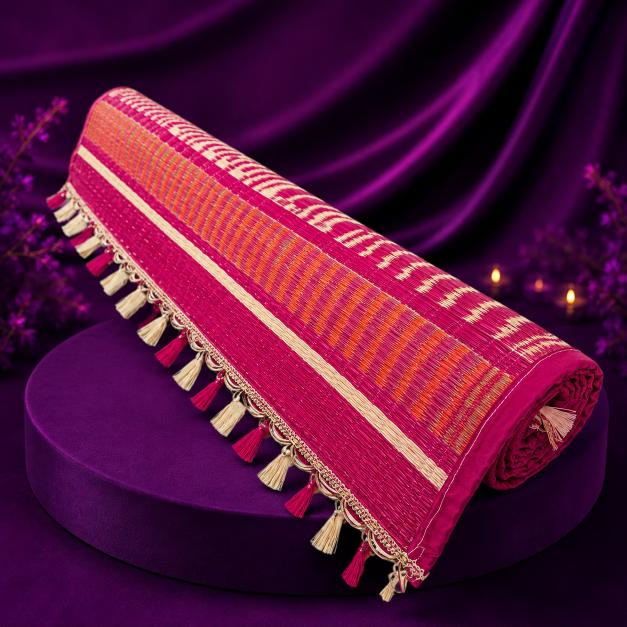
Pattu Pai Silk Mat Brahmin Marriage
Traditional Pattu Pai silk mat for Brahmin marriage ceremonies, offering elegant ritual seating for Iyer Kalyanam, Muhurtham and important Vedic wedding rituals.
Explore Religious Ceremony Experiences
Explore Other Experiences








Explore by Occasion



Pattu Pai Silk Mat for Brahmin Marriage
◆Traditional South Indian weddings are carefully arranged around sacred rituals, family customs and ceremonial practices. In an Iyer Kalyanam, the wedding environment often includes traditional accessories that support both the ritual and the overall presentation of the ceremony. Pattu Pai, a silk mat traditionally associated with ceremonial seating, can form part of this traditional wedding arrangement.
A silk wedding mat can provide a defined seating area for specific stages of the marriage ceremony. Its traditional appearance can also complement the mandapam, pooja vessels, flowers and other ceremonial elements.
The exact use and placement of a Pattu Pai can vary according to family tradition and the instructions of the Vedic priest. Families should therefore confirm the required seating arrangements before the wedding.
Understanding Pattu Pai
Pattu Pai refers to a traditional silk mat used for ceremonial purposes. The term combines the idea of silk fabric with a traditional mat or seating surface.
Its refined appearance makes it suitable for traditional wedding environments, particularly where families want to retain a classic South Indian ceremonial aesthetic.
The mat can be prepared specifically for the wedding and later preserved for future family ceremonies.
Silk Wedding Mat for Brahmin Marriage
A silk wedding mat can provide a clean and defined seating surface during selected stages of a Brahmin marriage.
Depending on the ceremony, the mat may be used by the bride, groom, priest or other participants as instructed.
Its size should be suitable for the intended seating position without obstructing movement around the ceremonial area.
Iyer Kalyanam Ritual Seating
Iyer Kalyanam involves a sequence of traditional rituals performed according to Vedic customs and family practices.
Ritual seating is an important practical consideration because the bride, groom and priest may remain in designated positions during particular ceremonies.
A Pattu Pai can help create a visually distinct seating area while complementing the traditional character of the wedding.
Muhurtham Seating
Muhurtham is the central auspicious stage of the marriage ceremony. During this period, the bride and groom participate in a sequence of important rituals under the guidance of the priest.
If a silk mat is required for a particular stage, it should be positioned before the ceremony begins.
The priest should confirm the correct placement and who should use the mat.
Vedic Ceremony Setup
A Vedic ceremony requires an organised space where the priest can conduct the prescribed rituals.
The seating area, sacred fire, pooja vessels and ceremonial materials should be arranged so that each participant has sufficient room.
A silk mat can contribute to the traditional appearance while providing a designated seating surface.
Traditional Ritual Seating
Traditional seating accessories can help maintain the cultural character of a Brahmin wedding.
A silk mat can be placed within the mandapam or another designated ceremonial area depending on the family's practice.
The mat should remain flat and stable throughout the ritual to prevent discomfort or movement.
Silk Mat Design
Pattu Pai can be available in different colours, patterns and traditional finishes.
Classic designs may feature rich borders, woven motifs or understated ceremonial patterns.
The choice can be coordinated with the bride's saree, groom's attire and overall mandapam decoration.
Choosing the Right Size
The appropriate size depends on how the mat will be used.
A compact mat can work for individual ceremonial seating, while a larger design may provide more room for extended ritual participation.
The available space within the mandapam should be measured before selecting the mat.
Traditional Silk Appearance
Silk provides a distinctive traditional appearance that can complement the richness of South Indian wedding décor.
A silk mat can work naturally alongside Kanchipuram-style sarees, traditional veshti attire, brass vessels and floral arrangements.
The result is a cohesive ceremonial environment that reflects the heritage of the wedding.
Bride's Ritual Seating
The bride may have designated seating positions during different stages of the Iyer wedding.
If the Pattu Pai is intended for her use, it should be positioned according to the priest's instructions.
The mat should provide enough room for comfortable seating without interfering with the bride's saree, jewellery or ceremonial movements.
Groom's Ritual Seating
The groom may also require a designated seating area during particular rituals.
The mat can be arranged so that he can sit comfortably and participate in the ceremony.
If multiple mats are used, they should be positioned consistently and securely.
Priest's Ceremonial Area
The Vedic priest may require a specific seating position near the sacred fire and ritual materials.
Any mat intended for the priest should be appropriate in size and positioned so that the priest can access the required Samagri.
The surrounding area should remain clear of unnecessary decorations.
Coordination With Wedding Décor
The Pattu Pai can complement the wider wedding styling through coordinated colours and traditional patterns.
Floral garlands, brass vessels, silk fabrics and traditional backdrops can create a cohesive appearance.
For modern weddings, a simple silk mat can provide a subtle traditional element without competing with contemporary décor.
Traditional Iyer Wedding Accessories
An Iyer wedding may include numerous traditional accessories, including pooja vessels, lamps, flowers, ceremonial trays and ritual materials.
The silk mat can be incorporated into this collection as a seating accessory.
Keeping all accessories organised according to the ceremony sequence makes preparation easier.
Preparing the Mat Before the Ceremony
The mat should be inspected before the wedding to ensure that the fabric is clean and in good condition.
It should be placed flat and checked for folds or loose edges.
Preparing it in advance gives the family enough time to make any necessary adjustments.
Cleanliness and Maintenance
Silk requires appropriate handling and storage.
The mat should be kept away from moisture and excessive dust before the ceremony.
After the wedding, it should be cleaned according to the fabric's care requirements and stored in a dry, protected location.
Traditional and Modern Wedding Styles
Traditional families may prefer richly patterned silk mats with classic borders.
Contemporary Iyer weddings can use simpler designs that blend with modern mandapam styling.
Both approaches can preserve the traditional purpose of the seating accessory while adapting its appearance to the overall wedding design.
Photography of the Silk Mat
A Pattu Pai can contribute to the visual details captured during the wedding.
Photographers may capture the mat alongside the bride and groom's traditional attire, ceremonial vessels and floral arrangements.
Close-up photographs can highlight the silk texture, woven details and traditional borders.
Family Wedding Traditions
Some families may already have a Pattu Pai or another traditional mat that has been used during previous generations' ceremonies.
Using a family-owned mat can add sentimental value to the wedding.
A newly purchased mat can similarly become a family keepsake for future weddings and religious ceremonies.
Sustainable Wedding Choices
A durable silk mat can be reused for future ceremonies rather than treated as a single-use wedding decoration.
Proper storage can help preserve the fabric for many years.
Reusable traditional accessories can support a more sustainable approach to wedding planning while maintaining cultural continuity.
Safety and Practicality
The mat should remain stable on the floor and should not create a tripping hazard.
Its edges should lie flat, particularly in areas where family members or guests may walk.
The mat should also be positioned at a safe distance from open flames and other heat sources associated with the ceremonial setup.
Working With the Vedic Priest
The priest should confirm whether a Pattu Pai is required and where it should be positioned.
Different Iyer families may follow variations in ceremonial seating.
Following the priest's guidance ensures that the mat supports the ritual without interfering with the established ceremony sequence.
Organising the Wedding Space
The wedding mandapam should provide clearly defined areas for seating, the sacred fire and ceremonial materials.
The Pattu Pai can be positioned as part of the designated seating arrangement.
Careful space planning is especially important when the ceremony involves several family members participating at the same time.
Large Iyer Wedding Planning
For larger weddings, several seating mats may be required for different ceremonial areas.
The mats can be labelled or stored together so that the correct ones are available when needed.
A wedding coordinator or family member can manage the setup before each major ritual.
Preserving the Silk Mat
After the ceremony, the Pattu Pai can be carefully folded or rolled according to its fabric requirements.
It should be stored away from direct sunlight, moisture and pests.
A well-maintained silk mat can remain part of the family's ceremonial collection for many years.
Traditional Wedding Keepsake
A Pattu Pai can become a meaningful reminder of the wedding ceremony.
Families may preserve the mat with other marriage keepsakes such as wedding invitations, photographs or traditional accessories.
Its continued use during future family ceremonies can add further sentimental value.
Balancing Tradition and Modern Planning
Modern wedding planning can incorporate traditional ritual seating without requiring the entire venue to follow an old-fashioned design.
A carefully selected silk mat can sit naturally within both traditional and contemporary mandapam arrangements.
This provides families with flexibility while retaining a visible connection to Iyer wedding traditions.
Complete Pattu Pai Preparation
Preparing a Pattu Pai for an Iyer Kalyanam involves selecting an appropriate size, checking the fabric, confirming the seating purpose and positioning it correctly.
The mat should be ready before the ceremony begins.
Its use should follow the instructions of the Vedic priest and the family's established customs.
Meaningful Ritual Seating
Ceremonial seating is more than a practical arrangement. It can help define the space in which important wedding rituals take place.
A traditional silk mat can provide a refined foundation for the bride, groom or other participants while contributing to the visual character of the ceremony.
Preserving the Iyer Kalyanam Experience
Iyer Kalyanam combines Vedic traditions, family participation and carefully observed ceremonial practices. A Pattu Pai silk mat can form a subtle but meaningful part of this environment when required by family custom.
The exact use and placement should always be confirmed with the Vedic priest. With suitable sizing, careful preparation and proper storage, a silk wedding mat can support the Muhurtham ceremony while becoming a lasting part of the family's traditional wedding collection.
Frequently Asked Questions
1. What is Pattu Pai?
Pattu Pai is a traditional silk mat that can be used for ceremonial seating during weddings and other traditional occasions.
2. Is Pattu Pai required for every Iyer Kalyanam?
Not necessarily. The use of a silk mat depends on the family's traditions and the requirements of the Vedic priest.
3. Who can use the silk wedding mat?
It may be used by the bride, groom, priest or another participant depending on the specific ritual and seating arrangement.
4. Can Pattu Pai be used during Muhurtham?
Yes, where it forms part of the family's ceremonial seating arrangement. The priest should confirm its placement.
5. What size Pattu Pai should be selected?
The size should depend on the intended user and the available space within the mandapam.
6. Can the silk mat match the wedding décor?
Yes. The colour, border and woven design can be selected to complement the bride's attire and the wider wedding décor.
7. How should a silk wedding mat be maintained?
It should be handled carefully, kept dry and stored away from excessive sunlight, moisture and dust.
8. Can Pattu Pai be reused after the wedding?
Yes. A well-maintained silk mat can be reused for future weddings, pooja ceremonies and traditional family occasions.
9. Is a silk mat safe around a Homam?
The mat should be positioned safely away from open flames and managed according to the priest's instructions.
10. Who should confirm the ritual seating arrangement?
The Vedic priest and family elders should confirm the appropriate seating arrangement because Iyer wedding practices can vary between families.