
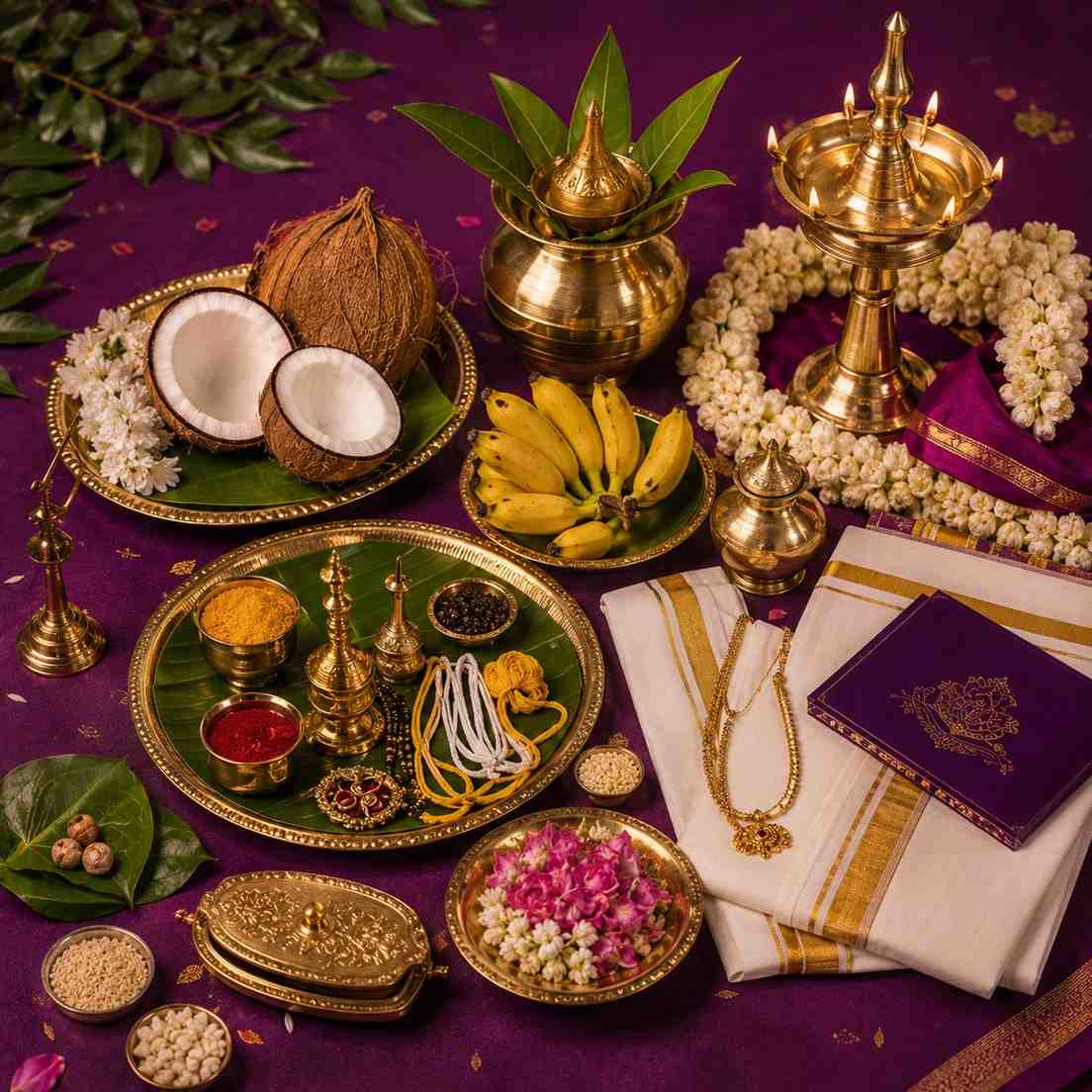
Malayalam Wedding Pooja Items
Prepare for your Kerala wedding rituals with Malayalam Wedding Pooja Items featuring traditional ceremony essentials, sacred offerings, pooja accessories, and culturally appropriate supplies for meaningful wedding ceremonies.
Explore Religious Ceremony Experiences
Explore Other Experiences




Explore by Occasion

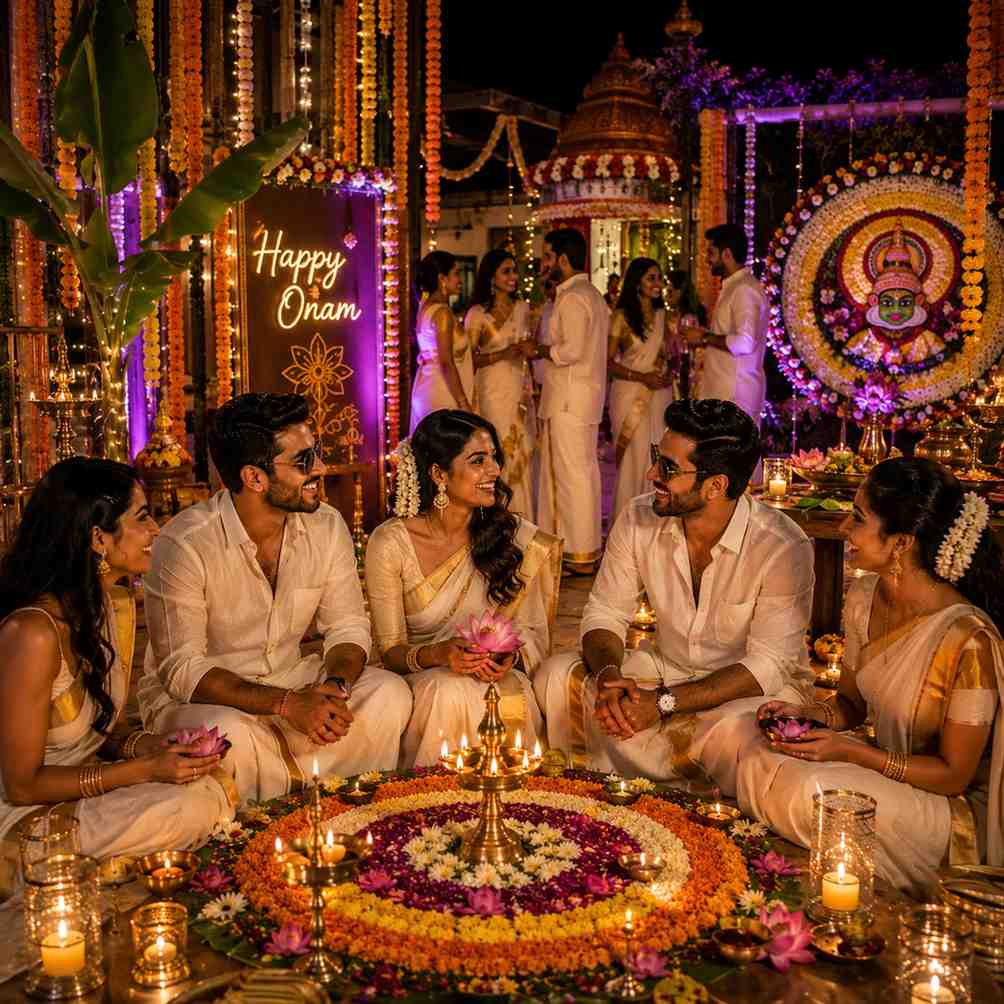
Malayalam Wedding Pooja Items for Kerala Weddings & Traditional Ceremonies in India
◆Malayalam wedding pooja items are an essential part of traditional Kerala Hindu weddings, supporting the rituals, blessings, customs, and ceremonial practices that make each marriage meaningful. Also known as Vivaha Samagri or wedding ritual essentials, these items may include traditional vessels, lamps, flowers, fruits, offerings, sacred materials, pooja accessories, thali-related items, and other ceremonial requirements used during different stages of a Kerala wedding.
In Kerala's rich wedding traditions, ceremonies often reflect regional customs, family practices, temple traditions, and community-specific rituals. From the traditional thalikettu ceremony to pre-wedding rituals, wedding pooja arrangements, blessings, and the celebratory sadhya, carefully preparing the required items helps ensure that every important part of the ceremony is conducted smoothly.
The selection of wedding pooja items may vary depending on the family's customs, community, temple traditions, priest's instructions, and specific ceremony being performed. Couples and families often consult the priest or ceremony coordinator to prepare an appropriate list before purchasing or arranging the required materials.
The thalikettu ceremony is one of the most significant moments in many Kerala Hindu weddings. The groom ties the thali or mangalsutra around the bride's neck according to the family's and community's customary practices. The thali, thali chain, ceremonial tray, flowers, lamps, and other supporting ritual items can be prepared in advance so the ceremony proceeds smoothly.
Traditional brass and metal vessels are commonly used in Kerala ceremonial settings. Items such as nilavilakku, uruli, kindi, thambalam, plates, bowls, and other traditional vessels may be incorporated into pooja arrangements depending on the ceremony and family customs.
The nilavilakku is an important traditional element in Kerala cultural and ceremonial settings. A traditional brass oil lamp may be placed at the wedding venue, entrance, mandapam, or ritual area as part of the auspicious decoration and ceremonial atmosphere.
Pooja plates and ceremonial trays help organise smaller ritual materials. Flowers, rice, turmeric, kumkum, sandalwood, fruits, betel leaves, areca nuts, lamps, and other offerings can be arranged neatly on decorated trays for easy access during the ceremony.
Flowers play an important role in Kerala weddings. Fresh jasmine, rose, lotus, chrysanthemum, marigold, tulsi, and other locally available flowers may be used for garlands, hair adornment, pooja offerings, venue decoration, and ceremonial arrangements according to the family's traditions.
Wedding garlands are an important part of many Hindu wedding ceremonies. The bride and groom may exchange floral garlands as part of the customary wedding proceedings. Garlands can be prepared using traditional flowers or customised according to the wedding theme and season.
Rice and grains may be included in different ceremonial practices. Rice can be used as an offering or as part of specific rituals according to the priest's instructions. Families may prepare clean, suitable quantities in advance along with other pooja materials.
Turmeric and kumkum are commonly associated with Hindu ceremonial practices. They may be arranged in small containers or traditional holders for use during appropriate rituals and blessings.
Sandalwood paste and other traditional devotional materials may also be included where required. These materials should be prepared and used according to the customs followed by the family and guidance provided by the priest.
Betel leaves and areca nuts are traditional ceremonial items used in many South Indian religious and wedding practices. Their use and quantity can vary according to the specific ritual and community tradition.
Fruits and traditional offerings may be arranged for pooja ceremonies and blessings. Seasonal fruits can be presented on ceremonial trays or used as offerings according to the prescribed wedding rituals.
Coconut is another important traditional item in many Hindu ceremonies. Whole coconuts may be used in auspicious arrangements, kalash preparations, offerings, or other rituals depending on the ceremony.
Kalash or ceremonial pot arrangements may be used for specific rituals. A decorated vessel may be prepared with water and traditional elements according to the priest's instructions and the customs followed by the family.
Wedding pooja arrangements may also include cotton wicks, oil or ghee for lamps, incense, camphor, matchsticks or suitable lighting accessories, sacred threads, turmeric roots, sandalwood, and other ritual materials where required.
Traditional wedding rituals may require specific items that are not part of a general pooja kit. This makes it important to obtain the priest's complete list before purchasing a standard Vivaha Samagri package.
Kerala Hindu weddings can vary significantly between communities and families. Nair, Ezhava, Brahmin, and other communities may follow different customs, while some families may incorporate temple-specific or ancestral traditions. Therefore, a generic list should always be adapted to the exact ceremony being performed.
Wedding pooja kits can simplify preparation for families. Suppliers may offer pre-arranged packages containing commonly required materials, allowing families to purchase essential items together rather than sourcing every component separately.
Custom Vivaha Samagri kits can be prepared according to a priest-provided checklist. This approach can be especially useful for destination weddings, families travelling from outside Kerala, and couples organising ceremonies at hotels or event venues.
Traditional Kerala wedding décor can also complement the pooja arrangement. Brass lamps, banana leaves, coconut leaves, flowers, traditional vessels, kasavu-inspired elements, floral decorations, and natural materials can create an authentic ceremonial atmosphere.
The wedding venue should provide a suitable area for ritual preparation. A clean and organised space near the ceremony area can be used to keep pooja materials, ceremonial trays, flowers, lamps, offerings, and other essentials ready for the priest and family members.
Storage and handling are important for fresh and delicate materials. Flowers, fruits, leaves, coconuts, and other perishable items should be purchased close enough to the ceremony to maintain freshness while ensuring that all required materials are available before the wedding begins.
Priest coordination is essential when preparing Malayalam wedding pooja items. The priest or authorised ceremony guide can confirm the exact requirements, quantities, sequence of use, and any community-specific materials needed for the wedding.
For destination weddings, families may choose to source traditional items locally or transport selected ceremonial materials from Kerala. Planning should account for availability, freshness, transportation, venue restrictions, and storage requirements.
Sadhya is an important part of many Kerala wedding celebrations. Although sadhya food items are separate from pooja materials, the dining setup can be planned alongside the wedding rituals to ensure a smooth transition from the ceremony to the traditional feast.
Traditional sadhya is commonly served on banana leaves in Kerala celebrations. Depending on the wedding and family traditions, the feast may include a variety of rice, curries, vegetable preparations, pickles, chips, payasam, and other regional dishes.
Wedding ceremony accessories may also include decorated trays, brass lamps, flower baskets, traditional containers, cloth coverings, and other presentation elements. These details can enhance the visual appearance of the ritual area while keeping essential materials organised.
Sustainable choices can be incorporated into Kerala wedding ceremonies. Reusable brass and steel vessels, natural flowers, banana leaves, traditional cloth, reusable trays, and minimal plastic packaging can help create a more environmentally conscious celebration.
Families can also create personalised wedding ritual kits as keepsakes. A traditional brass lamp, ceremonial vessel, pooja tray, or other reusable item can become part of the family's collection and be used during future religious and family celebrations.
Quality and authenticity are important when sourcing traditional wedding items. Families should choose suitable materials and verify the required specifications with their priest rather than relying solely on generic online lists or standard packages.
Quantity planning should be completed well before the ceremony. The number of offerings, flowers, coconuts, fruits, lamps, vessels, garlands, and other materials may vary depending on the number of rituals, wedding format, guest arrangements, and family customs.
Professional wedding planners can coordinate pooja item sourcing as part of complete Kerala wedding management. They can work with priests, traditional suppliers, decorators, florists, caterers, venue teams, and family representatives to ensure that the ceremony requirements are prepared on time.
In conclusion, Malayalam wedding pooja items are more than ceremonial supplies—they are an important part of preserving the rituals, traditions, symbolism, and cultural identity of Kerala weddings. From thalikettu and traditional pooja arrangements to ceremonial offerings and the celebration that follows with a Kerala sadhya, carefully prepared Vivaha Samagri helps families honour their customs and conduct the wedding with confidence. By consulting the priest, preparing a customised checklist, sourcing quality materials, and coordinating the arrangements in advance, couples can create a meaningful and well-organised traditional Kerala wedding experience.
FAQ Section
Q1: What are Malayalam wedding pooja items?
Malayalam wedding pooja items are traditional ritual materials used during Kerala Hindu wedding ceremonies. They may include flowers, fruits, coconuts, rice, turmeric, kumkum, lamps, pooja vessels, ceremonial trays, betel leaves, areca nuts, and other items required for specific rituals.
Q2: What is included in a Kerala Vivaha Samagri kit?
A Vivaha Samagri kit may contain commonly required wedding ritual materials such as turmeric, kumkum, rice, flowers, betel leaves, areca nuts, coconuts, incense, camphor, cotton wicks, ceremonial items, and other pooja essentials. The exact contents should be confirmed with the priest.
Q3: What items are required for the thalikettu ceremony?
The thali or mangalsutra and its chain are central to the ceremony, along with other ritual and ceremonial materials specified by the priest and followed according to the family's community and wedding customs.
Q4: Are Malayalam wedding pooja items the same for every Kerala wedding?
No. Requirements can vary according to community, family traditions, temple customs, priest instructions, and the specific rituals included in the wedding.
Q5: Are brass items used in Kerala weddings?
Yes. Traditional brass lamps, vessels, trays, and other ceremonial accessories are commonly used in Kerala religious and wedding settings, depending on the family's customs.
Q6: What flowers are commonly used for Kerala weddings?
Flowers such as jasmine, rose, lotus, chrysanthemum, marigold, and other locally available varieties may be used for garlands, pooja offerings, bridal adornment, and wedding decoration.
Q7: Is sadhya part of the wedding pooja items?
No. Sadhya is the traditional Kerala feast and is separate from pooja materials. However, sadhya planning is often coordinated with the wedding ceremony and overall event arrangements.
Q8: Can wedding pooja kits be customised?
Yes. A custom kit can be prepared based on a priest-provided checklist, family traditions, community-specific rituals, and the exact ceremonies planned for the wedding.
Q9: Can Malayalam wedding pooja items be arranged for destination weddings?
Yes. Traditional ritual suppliers and wedding planners can help source, pack, transport, and coordinate required items for destination weddings, subject to venue and transportation requirements.
Q10: How can Happiffie help with Malayalam Wedding Pooja Items?
Happiffie helps couples, families, and wedding planners discover trusted providers for Kerala wedding pooja materials, Vivaha Samagri, traditional ceremonial items, brass accessories, flowers, garlands, thalikettu essentials, pooja setup services, and other wedding requirements while coordinating with the family's customs and priest's instructions.