
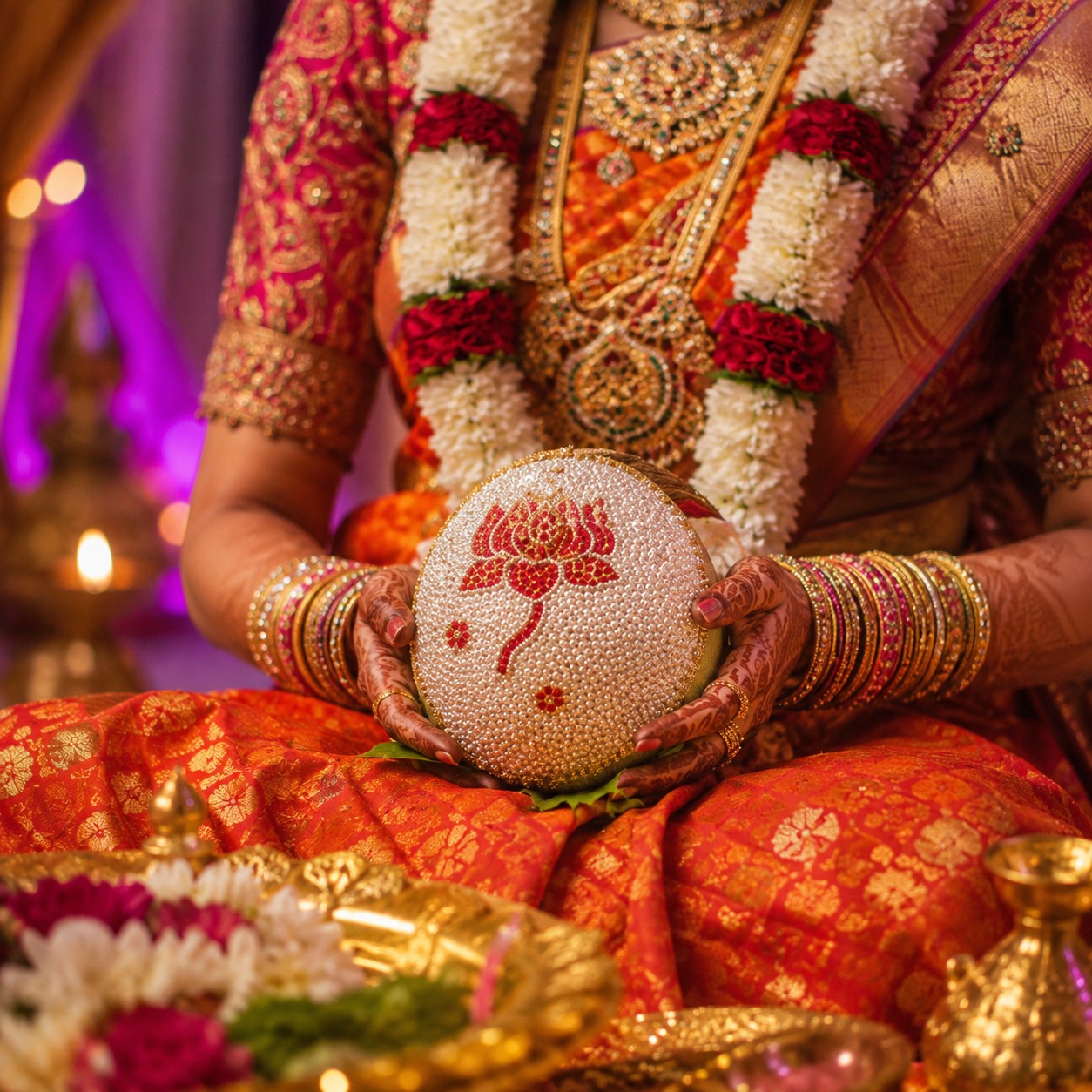
Kobbari Bondam Telugu Wedding
Traditional Kobbari Bondam Telugu wedding essentials for tender coconut rituals, Pelli ceremonies, Muhurtham preparations and sacred marriage offerings.
Explore Religious Ceremony Experiences


Explore Other Experiences















Explore by Occasion





Kobbari Bondam Telugu Wedding
◆Telugu weddings bring together sacred rituals, family traditions and meaningful ceremonial practices that have been followed across generations. Many wedding preparations involve carefully selected natural offerings and traditional accessories, each arranged according to the customs followed by the family.
Kobbari Bondam, referring to tender coconut in Telugu usage, may be included in traditional wedding preparations and ceremonial offerings according to specific family practices. Its natural appearance and association with auspicious offerings make it a distinctive element within certain wedding and religious settings.
The exact use of tender coconut during a Telugu marriage can differ according to the community, family tradition and ritual sequence. Therefore, the wedding priest and family elders should always confirm whether it forms part of the required Pelli essentials and how it should be prepared.
Understanding Kobbari Bondam
Kobbari Bondam is a commonly used Telugu term associated with tender coconut. Tender coconuts can be incorporated into traditional ceremonies as natural offerings or ceremonial items according to local and family customs.
During wedding preparation, the coconuts should be selected carefully so that they are fresh, clean and suitable for the intended ritual.
Their presentation can also be coordinated with other traditional offerings and ceremonial materials.
Tender Coconut in Telugu Weddings
Tender coconut can form part of traditional wedding arrangements when specified by the family's customs or priest.
It may be placed alongside other auspicious materials such as fruits, flowers and traditional pooja items.
Because wedding practices differ between families, the presence and purpose of the tender coconut should be confirmed before preparing the ceremonial arrangement.
Pelli Essentials
Pelli essentials refer broadly to the materials prepared for different stages of a Telugu marriage. These can include pooja vessels, flowers, fruits, coconuts, turmeric, kumkum, rice and other ritual materials.
If Kobbari Bondam is included in the family's wedding tradition, it can be prepared as part of this larger collection.
Keeping the materials organised according to the ceremony sequence helps family members and the priest access them when required.
Muhurtham Preparation
Muhurtham is an important stage of the Telugu marriage ceremony. It is the auspicious time selected for significant wedding rituals according to the family's traditions and priestly guidance.
Any tender coconut required for the Muhurtham should be prepared in advance and placed with the appropriate ceremonial materials.
The priest should confirm its exact role and positioning so that the ritual can proceed according to the family's customary practice.
Sacred Offerings
Natural offerings can hold an important place in Hindu ceremonial traditions. Fruits, coconuts, flowers and other materials may be prepared according to the particular ritual.
Tender coconut can be included where it forms part of the family's customary offering.
The exact selection of offerings should be based on the priest's instructions rather than a generic wedding checklist.
Selecting Fresh Tender Coconut
Freshness is an important consideration when preparing tender coconut for a ceremony. The coconut should be clean and free from visible damage.
Families can source it close enough to the ceremony to maintain its freshness while allowing sufficient time for inspection and preparation.
The number required should be confirmed in advance so that unnecessary last-minute sourcing can be avoided.
Presentation of Kobbari Bondam
The tender coconut can be presented alongside other traditional ceremonial materials. A clean tray, basket or suitable traditional container can provide an organised presentation.
Flowers or other decorative elements may be placed around the arrangement where appropriate.
Decorative styling should remain secondary to the ritual purpose of the item.
Traditional Telugu Wedding Setup
A Telugu wedding setup may include a mandapam, sacred fire area, ceremonial vessels, flowers, lamps and other traditional accessories.
If tender coconut is part of the ceremony, it should be positioned where the priest can access it easily.
The ceremonial area should remain uncluttered so that the bride, groom and family members can participate comfortably.
Pooja Materials and Coconut Arrangements
Coconut is associated with many Hindu rituals, although the exact use varies between ceremonies and communities.
When preparing coconut-related materials for a Telugu wedding, families should distinguish between tender coconut and other coconut requirements.
This prevents confusion when several types of offerings are needed during different stages of the wedding.
Family and Regional Customs
Telugu wedding traditions can differ between families and regions. Practices followed in Andhra Pradesh may vary from those followed in Telangana or by individual Telugu communities.
Some families may include particular natural offerings as part of their established ceremony, while others may not.
The family's priest and elders should therefore provide the final guidance regarding Kobbari Bondam.
Organising Wedding Ritual Items
A Telugu wedding can involve many ceremonial materials. Organising them in separate trays or containers can make preparation easier.
Items required for the Muhurtham can be grouped together, while materials for other pre-wedding or post-wedding rituals can be kept separately.
A checklist can help the family verify that all required items have been sourced before the ceremony.
Traditional Fruits and Natural Offerings
Fruits and natural materials can contribute to the traditional character of a Hindu wedding ceremony.
Tender coconut can be grouped with other fresh offerings when appropriate. The arrangement should remain clean and visually organised.
Families may also use traditional baskets or trays to present natural offerings in a culturally appropriate way.
Coordination With Wedding Décor
Although Kobbari Bondam has a ceremonial purpose, its presentation can complement the wedding décor.
Natural materials can work particularly well with floral arrangements, traditional fabrics and earthy decorative elements.
For modern Telugu weddings, a simple and clean presentation can integrate naturally into a contemporary mandapam without making the ritual arrangement appear overly decorative.
Traditional and Modern Wedding Styling
Modern Telugu weddings often combine established rituals with contemporary venue styling.
Traditional offerings can remain unchanged while their presentation is coordinated with the wider décor.
This allows families to preserve cultural practices while creating a wedding environment that reflects their personal preferences.
Preparing for the Ceremony
All ritual materials should be checked before the wedding begins. Tender coconuts should be inspected for freshness and placed in the designated ceremonial area.
A family member can be responsible for checking the Pelli essentials according to the priest's list.
This preparation reduces the risk of searching for materials during the time-sensitive Muhurtham ceremony.
Working With the Wedding Priest
The priest should confirm whether tender coconut is required and how it should be used.
Different Telugu wedding ceremonies can have different requirements, and a general list may not reflect every family's customs.
Following the priest's instructions ensures that the ceremonial materials are prepared appropriately.
Photography of Traditional Offerings
Natural wedding offerings can create attractive details in wedding photography. Tender coconut, flowers, fruits and traditional vessels can be photographed as part of the ceremonial preparation.
Detail photographs can document the cultural elements that might otherwise receive less attention during the larger wedding celebrations.
A clean presentation makes these photographs more visually appealing.
Sustainable Wedding Choices
Tender coconut is a natural ceremonial material, and families can complement its use with other environmentally conscious choices.
Reusable trays, baskets and traditional vessels can reduce reliance on disposable accessories.
Natural flowers and reusable decorative materials can also support a more sustainable wedding setup.
Safety and Practical Handling
Tender coconuts should be placed securely so they do not roll or fall from ceremonial trays.
If the coconut needs to be opened or prepared during a ritual, this should be handled by the appropriate person under the priest's guidance.
The ceremonial space should remain clear of unnecessary objects to allow safe participation.
Large Telugu Wedding Planning
Large Telugu weddings may involve multiple ceremonies and extensive ritual preparations. In these situations, quantity planning becomes particularly important.
The family can maintain a separate inventory for fruits, coconuts, flowers and other natural offerings.
A designated coordinator can verify that each set of materials reaches the correct ceremonial area at the required time.
Preserving Telugu Wedding Traditions
Traditional wedding materials provide a connection between present-day celebrations and family heritage.
Preparing natural offerings according to established customs allows younger generations to participate in practices that may have been followed by their parents and grandparents.
Even when the venue and décor are modern, these ritual elements can preserve the cultural identity of the wedding.
Meaningful Marriage Ceremony Preparation
A Telugu wedding is built around a sequence of rituals, each carrying significance for the couple and their families.
When Kobbari Bondam forms part of the family's customary preparations, its careful selection and presentation contribute to the overall ceremonial experience.
The preparation should always be guided by the priest and family elders.
Balancing Tradition and Modern Planning
Professional wedding planning can help families organise traditional materials alongside modern venue arrangements.
A detailed checklist can include Pelli essentials, Muhurtham requirements, natural offerings and ceremonial accessories.
This allows the family to preserve traditional practices while reducing last-minute logistical pressure.
Complete Kobbari Bondam Preparation
Preparing Kobbari Bondam for a Telugu wedding requires attention to freshness, quantity, presentation and ceremonial requirements.
The tender coconut should be sourced appropriately and placed with the other ritual materials according to the priest's instructions.
With careful preparation, it can form a natural and culturally meaningful part of the wedding arrangement where it is required by family tradition.
Preserving the Telugu Pelli Experience
Telugu weddings bring together sacred rituals, family participation and longstanding cultural practices. Natural offerings such as tender coconut can form part of this ceremonial heritage when required by the family's tradition.
The exact role of Kobbari Bondam should always be confirmed with the wedding priest and family elders. With thoughtful planning and organised preparation, the ceremonial materials can support a smooth and meaningful Muhurtham and marriage celebration.
Frequently Asked Questions
1. What does Kobbari Bondam mean in Telugu?
Kobbari Bondam is a Telugu term associated with tender coconut.
2. Is Kobbari Bondam required for every Telugu wedding?
No. Wedding customs vary between families and communities, so the priest should confirm whether it forms part of the ceremony.
3. How is tender coconut used in a Telugu wedding?
Its use can vary according to the specific ritual and family tradition. It may form part of a natural or sacred offering where prescribed.
4. How should tender coconut be selected for a wedding?
It should be fresh, clean and free from visible damage, with the quantity confirmed according to the ceremony requirements.
5. Can Kobbari Bondam be included with Pelli Samagri?
Yes, where it is part of the family's requirements, it can be organised alongside other Pelli Samagri and ceremonial materials.
6. Should tender coconut be decorated?
It can be presented neatly with suitable flowers or traditional materials, but decorative styling should not interfere with its ceremonial purpose.
7. Can tender coconut be used during Muhurtham?
It may be used if prescribed as part of the particular Muhurtham rituals. The wedding priest should confirm its role.
8. How should Kobbari Bondam be stored before the ceremony?
It should be kept clean and handled appropriately so that it remains fresh and suitable for the intended ritual.
9. Can natural offerings be part of an eco-friendly Telugu wedding?
Yes. Natural offerings combined with reusable trays, baskets and traditional vessels can support a more sustainable wedding approach.
10. Who should confirm the use of Kobbari Bondam?
The wedding priest and family elders should confirm its use because Telugu wedding rituals and ceremonial requirements vary between families.