
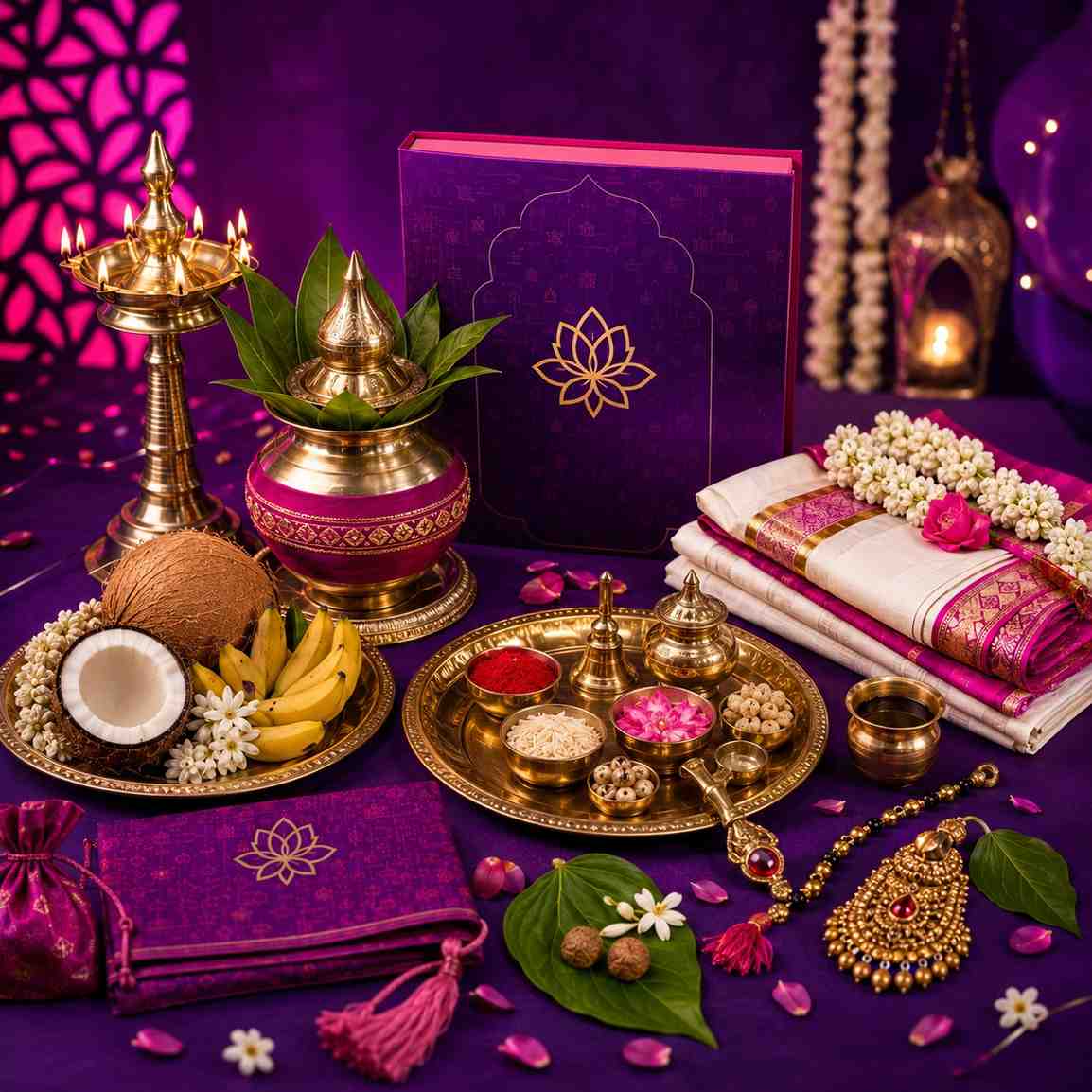
Community Wedding Pooja Items
Prepare for meaningful community wedding ceremonies with Community Wedding Pooja Items featuring traditional ritual essentials, sacred offerings, pooja accessories, and ceremony supplies suited to diverse cultural wedding traditions.
Explore Religious Ceremony Experiences



Explore Other Experiences











Explore by Occasion





Community Wedding Pooja Items for Mass Marriages & Collective Vivah in India
◆Community wedding pooja items are essential ceremonial supplies used for mass marriages, collective vivah ceremonies, community weddings, and large-scale traditional marriage gatherings. These ritual essentials help organisers, families, priests, community associations, charitable organisations, and event teams prepare multiple wedding ceremonies efficiently while respecting traditional customs and ensuring that every couple has access to the required samagri.
Mass marriage events bring together multiple couples and families at one venue, often with shared arrangements for rituals, decorations, catering, hospitality, and guest management. Organising pooja materials in advance is especially important because several ceremonies may take place simultaneously or within a closely coordinated schedule.
Community wedding pooja kits can be prepared as standard packages containing commonly required ritual materials for each couple. Individual kits make distribution easier, reduce confusion, and help priests and volunteers ensure that essential items are available at every wedding ceremony.
The exact requirements for community wedding pooja items vary according to the region, religion, community, family traditions, priest instructions, and ceremony format. Organisers should therefore prepare the final samagri checklist with the priests or authorised ceremony coordinators before purchasing supplies in bulk.
Common pooja essentials may include turmeric, kumkum, rice, akshata, flowers, coconuts, betel leaves, areca nuts, sandalwood, incense, camphor, cotton wicks, oil or ghee, sacred threads, fruits, pooja plates, ceremonial vessels, and other materials required for specific marriage rituals.
Pooja trays help keep the materials organised for each couple. A standard tray can be prepared with commonly required items and distributed to the couple or assigned priest before the ceremony begins.
Flowers are an important part of many wedding rituals. Depending on the community and ceremony, flowers may be used for garlands, pooja offerings, blessings, mandapam decoration, and bridal or groom accessories. Bulk flower procurement can help organisers manage large community events efficiently.
Wedding garlands may be prepared for each couple participating in the mass marriage. Organisers can select a standard floral design to maintain consistency or provide different options according to regional and family preferences.
Coconuts are commonly used in many Hindu ceremonial practices. For community weddings, coconuts can be purchased and distributed in predetermined quantities according to the requirements provided by the priests.
Rice and akshata may be required for blessings and different wedding rituals. Organisers can prepare clean rice or ceremonial akshata in individual packets to simplify distribution across multiple ceremonies.
Turmeric and kumkum can be packed into small containers or individual portions for easy handling. Bulk purchasing and pre-packing can reduce preparation time and ensure consistent availability for every couple.
Betel leaves and areca nuts may be included as traditional offerings depending on the ceremony and regional customs. Quantities should be determined in consultation with the priests to avoid unnecessary purchases or shortages.
Traditional lamps, pooja vessels, plates, bowls, kalash containers, and ceremonial trays may be required during community marriage ceremonies. Reusable brass or steel items can be particularly practical for organisations that conduct mass marriages regularly.
Standardised pooja kits make volunteer coordination easier. Each kit can be checked against a predetermined checklist before being distributed, reducing the risk of missing items during the ceremony.
Different community wedding formats may require different kits. A Hindu mass marriage, for example, may require one set of ritual materials, while regional or community-specific ceremonies may follow different traditions and requirements.
Priest coordination is essential when organising collective vivah ceremonies. Priests can provide the required samagri list, specify quantities, identify ritual-specific materials, and guide organisers on how materials should be arranged for each couple.
For ceremonies involving multiple priests, organisers can create separate priest kits containing commonly used ritual materials. This allows priests to access frequently required items without depending on a central supply area.
Ceremony sequencing is another important consideration. Pooja materials can be grouped according to the order in which rituals occur, allowing volunteers to distribute or place the required items at the correct stage.
Mass marriage ceremonies often involve a large number of guests. Guest arrangements should therefore be planned alongside the pooja supplies. Registration, seating, dining, water stations, rest areas, hospitality desks, and information counters can be coordinated to support families and guests.
Guest welcome kits can be prepared for participating families. These may include ceremony schedules, venue maps, identification cards, information sheets, contact details, and other useful materials in addition to the wedding pooja kit.
Name and couple identification systems are particularly useful at large community weddings. Couple IDs, registration numbers, table numbers, or colour-coded badges can help organisers match families with their assigned ceremony area, pooja kit, priest, and hospitality arrangements.
Bulk packaging can simplify the distribution of ritual materials. Pooja kits can be packed in reusable bags, cloth pouches, paper boxes, baskets, or other suitable packaging based on the event's scale and sustainability requirements.
Sustainable packaging is increasingly relevant for large community events. Reusable cloth bags, paper packaging, natural materials, reusable vessels, and minimal plastic can help reduce waste when preparing hundreds of wedding kits.
Reusable ceremonial items can also reduce long-term costs. Organisations that conduct community marriages regularly may invest in reusable brass lamps, vessels, trays, kalash containers, and other equipment that can be maintained and used across future events.
Community wedding organisers may also receive donated pooja materials from sponsors, religious organisations, local businesses, charitable groups, or community members. Sponsorship programmes can help cover the cost of samagri, wedding accessories, food, clothing, gifts, and other event requirements.
Bulk procurement can make community weddings more cost-efficient. Purchasing flowers, coconuts, fruits, pooja materials, packaging, garlands, and other supplies in larger quantities may help organisers manage budgets more effectively.
Quality control remains important even when purchasing in bulk. Organisers should check the condition, quantity, freshness, packaging, and suitability of materials before distributing them to individual wedding kits.
Perishable items require careful scheduling. Flowers, fruits, leaves, and other fresh materials should be sourced close to the ceremony while ensuring sufficient time for sorting, packing, and distribution.
Storage is particularly important for large events. A dedicated samagri storage area can help protect materials from moisture, damage, contamination, and accidental loss before the wedding begins.
Volunteer teams can be assigned specific responsibilities such as kit preparation, couple registration, distribution, priest coordination, guest assistance, venue setup, and post-ceremony collection. Clear responsibilities help large-scale community weddings operate efficiently.
Post-event collection can also be planned for reusable materials. Brass vessels, trays, lamps, stands, cloth bags, signage, and other reusable items can be collected, cleaned, and stored for future community ceremonies.
Community weddings may involve couples from different backgrounds or regions. Organisers can provide standard kits while allowing priests or families to request additional ritual-specific items where necessary.
For collective vivah events, ceremony areas can be organised in rows or designated sections. Each couple can receive an assigned space with the required pooja materials, seating, ceremonial accessories, and priest support.
Large-scale event logistics should account for transportation and venue access. Pooja materials may need to be moved from suppliers to a central warehouse or venue and then distributed to individual ceremony areas.
Professional event planners and community wedding coordinators can manage the entire process. They can work with priests, samagri suppliers, florists, decorators, caterers, volunteers, transport providers, and community representatives to ensure the ceremony requirements are completed on schedule.
Guest hospitality is an important part of collective marriage events. Families may travel long distances to attend, making drinking water, meals, seating, rest areas, medical support, transportation assistance, and information desks important considerations.
Community wedding ceremonies may also include additional arrangements such as wedding clothing, mangalsutra or thali requirements, garlands, photography, gifts, certificates, and post-wedding support. These should be coordinated separately from the core pooja samagri while maintaining a unified event plan.
In conclusion, community wedding pooja items are more than ritual supplies—they are an important part of organising efficient, respectful, and well-coordinated mass marriage ceremonies. From individual Vivah Samagri kits and priest supplies to garlands, pooja vessels, guest arrangements, volunteer coordination, and bulk procurement, every detail contributes to a smooth collective vivah experience. By consulting priests, preparing standardised kits, sourcing materials in bulk, coordinating volunteers, and planning guest hospitality in advance, community organisations can conduct meaningful mass marriages while preserving traditional wedding customs.
FAQ Section
Q1: What are community wedding pooja items?
Community wedding pooja items are ritual materials prepared for mass marriages, collective vivah ceremonies, and large community wedding events. They may include flowers, coconuts, rice, turmeric, kumkum, betel leaves, areca nuts, pooja vessels, lamps, incense, camphor, and other ceremonial essentials.
Q2: What is included in a community wedding samagri kit?
A standard kit may include commonly required pooja materials such as turmeric, kumkum, rice or akshata, flowers, coconuts, betel leaves, areca nuts, incense, camphor, cotton wicks, ceremonial items, and other materials specified by the priest.
Q3: Can one pooja kit be prepared for each couple?
Yes. Individual kits can be assembled for every participating couple, making distribution, inventory management, and ceremony preparation easier during mass marriage events.
Q4: Can community wedding pooja items be purchased in bulk?
Yes. Flowers, coconuts, fruits, pooja materials, garlands, packaging, and other supplies can be sourced in bulk to support large-scale ceremonies and improve procurement efficiency.
Q5: Can community wedding kits be customised?
Yes. Kits can be customised according to regional traditions, community practices, religious requirements, priest instructions, and the specific rituals included in the collective wedding.
Q6: What guest arrangements are needed for a mass marriage?
Depending on the scale, arrangements may include registration, seating, drinking water, dining, rest areas, transportation assistance, information desks, medical support, guest welcome areas, and family identification systems.
Q7: Can reusable pooja items be used for community weddings?
Yes. Brass lamps, pooja vessels, trays, kalash containers, cloth bags, and other reusable materials can reduce long-term costs and waste, especially for organisations that conduct community weddings regularly.
Q8: How can organisers manage pooja items for hundreds of couples?
Organisers can use standardised checklists, individual kits, bulk procurement, labelled packaging, dedicated storage areas, volunteer teams, priest coordination, and scheduled distribution to manage large quantities efficiently.
Q9: Can sponsors support community wedding pooja arrangements?
Yes. Community organisations can collaborate with sponsors, charitable groups, religious organisations, businesses, and donors to support the cost of pooja samagri, wedding supplies, guest hospitality, clothing, gifts, and other event requirements.
Q10: How can Happiffie help with Community Wedding Pooja Items?
Happiffie helps community organisations, charitable groups, wedding coordinators, families, and event organisers discover trusted suppliers for Vivaha Samagri, pooja kits, flowers, garlands, ceremonial vessels, ritual essentials, bulk wedding supplies, guest arrangements, and professional event support for mass marriage and collective vivah ceremonies.