
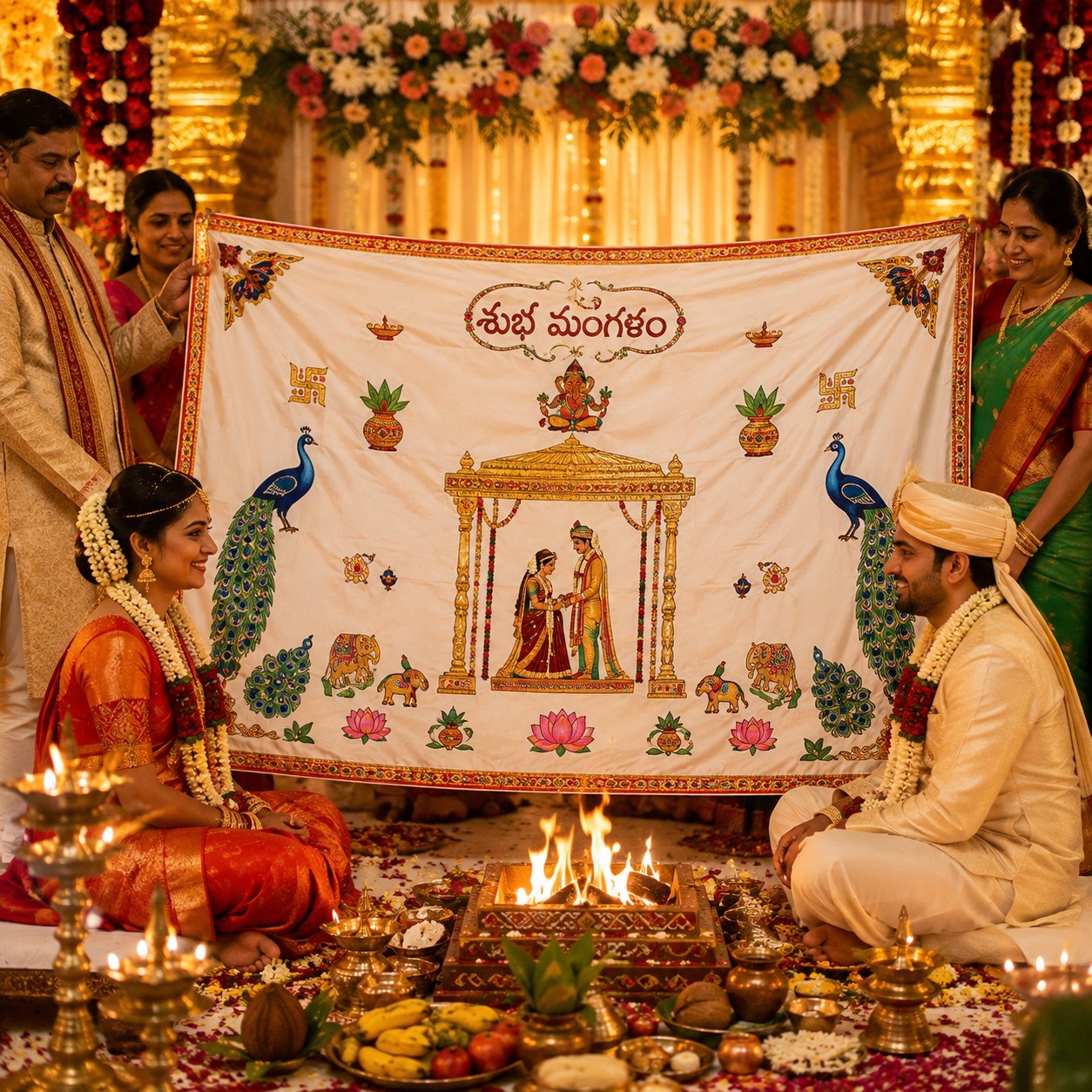
Addutera Telugu Pelli
Traditional Telugu wedding pooja items and Pelli Samagri for Muhurtham, sacred offerings and marriage ceremonies, arranged for an authentic cultural setup.
Explore Religious Ceremony Experiences

Explore Other Experiences








Explore by Occasion
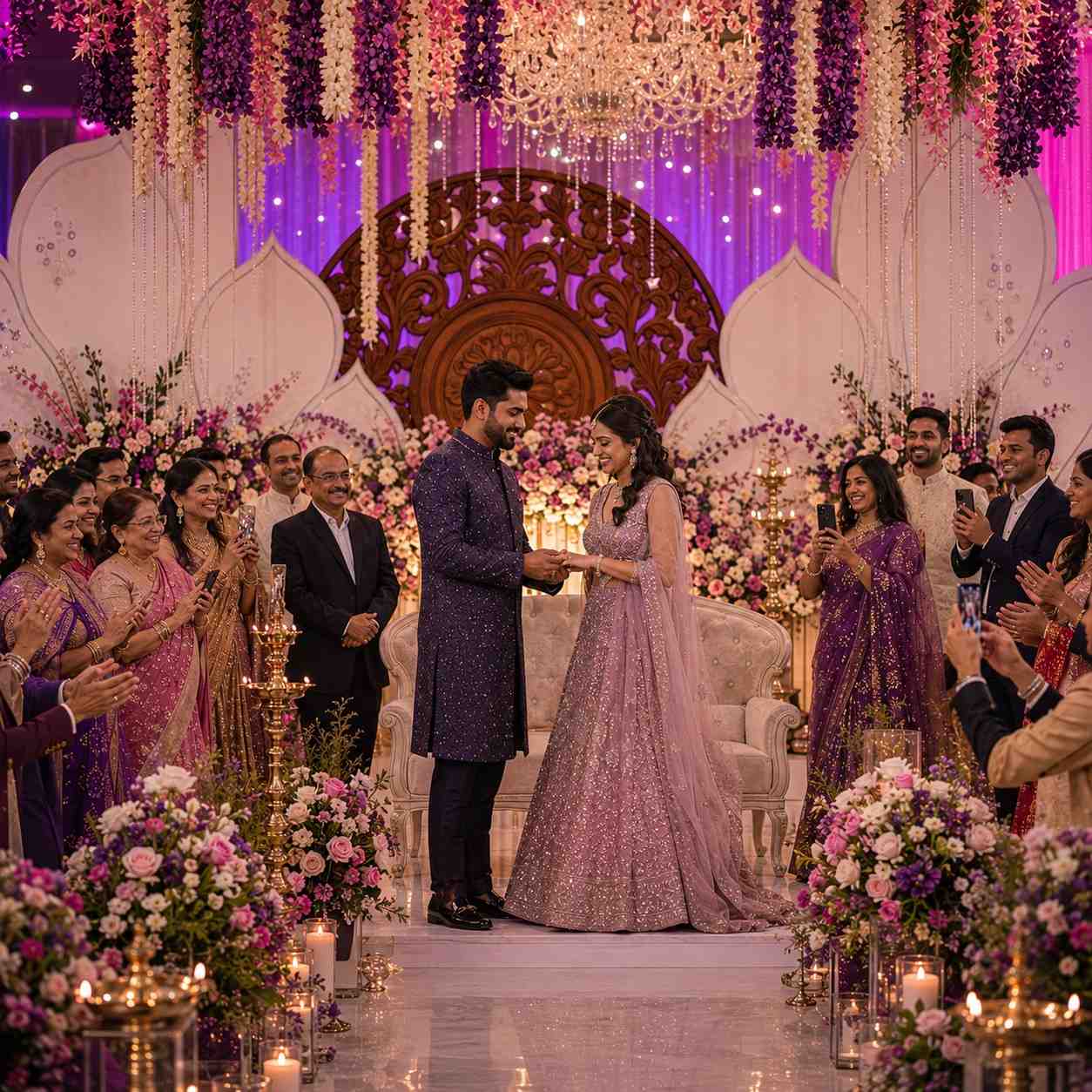




Addutera Telugu Pelli
◆Telugu weddings are celebrated through a series of traditional rituals that bring together the bride, groom, families and community. Each stage of the marriage ceremony has its own cultural significance, ceremonial preparation and customary accessories. Among these traditional elements, the Addutera or Antarpat curtain is associated with the ceremonial separation and presentation of the bride and groom during an important stage of the wedding.
An Addutera Telugu Pelli arrangement can provide a practical and visually distinctive accessory for the marriage ceremony. The curtain creates a temporary visual separation between the couple before the appropriate moment of the ritual and can also become an important feature in wedding photography.
The exact use of the curtain, its timing and the surrounding rituals can vary according to family customs and regional Telugu wedding traditions. Families should therefore follow the instructions of their wedding priest and elders when preparing the ceremony.
Understanding Addutera in Telugu Pelli
Addutera is traditionally associated with the ceremonial curtain used during particular stages of a Telugu wedding. It can create a symbolic separation between the bride and groom before they are formally brought together during the marriage ritual.
The curtain is generally positioned between the couple during the relevant part of the ceremony. Once the prescribed ritual reaches the appropriate stage, the curtain is removed or lowered according to the family's customary practice.
This creates a memorable transition within the wedding ceremony and provides an important visual moment for the couple and their families.
Antarpat Curtain for Wedding Rituals
The Antarpat curtain is a ceremonial accessory designed to temporarily separate the bride and groom. Similar curtain traditions can be found in different Indian wedding customs, although the exact practice and terminology may vary.
For a Telugu marriage, the curtain should be prepared according to the instructions of the priest. Its dimensions, material and positioning should allow the ritual to take place comfortably.
The curtain should also be easy for the designated family members or ceremony assistants to manage at the required moment.
Role During the Marriage Ceremony
The curtain serves a symbolic purpose during the relevant stage of the marriage ceremony. Rather than simply being a decorative backdrop, it contributes to the sequence of the ritual.
The temporary separation creates anticipation before the bride and groom are formally presented together.
Because the timing of the curtain's removal can be connected with the ritual sequence, the priest or designated ceremony coordinator should guide the participants.
Bride and Groom Entry
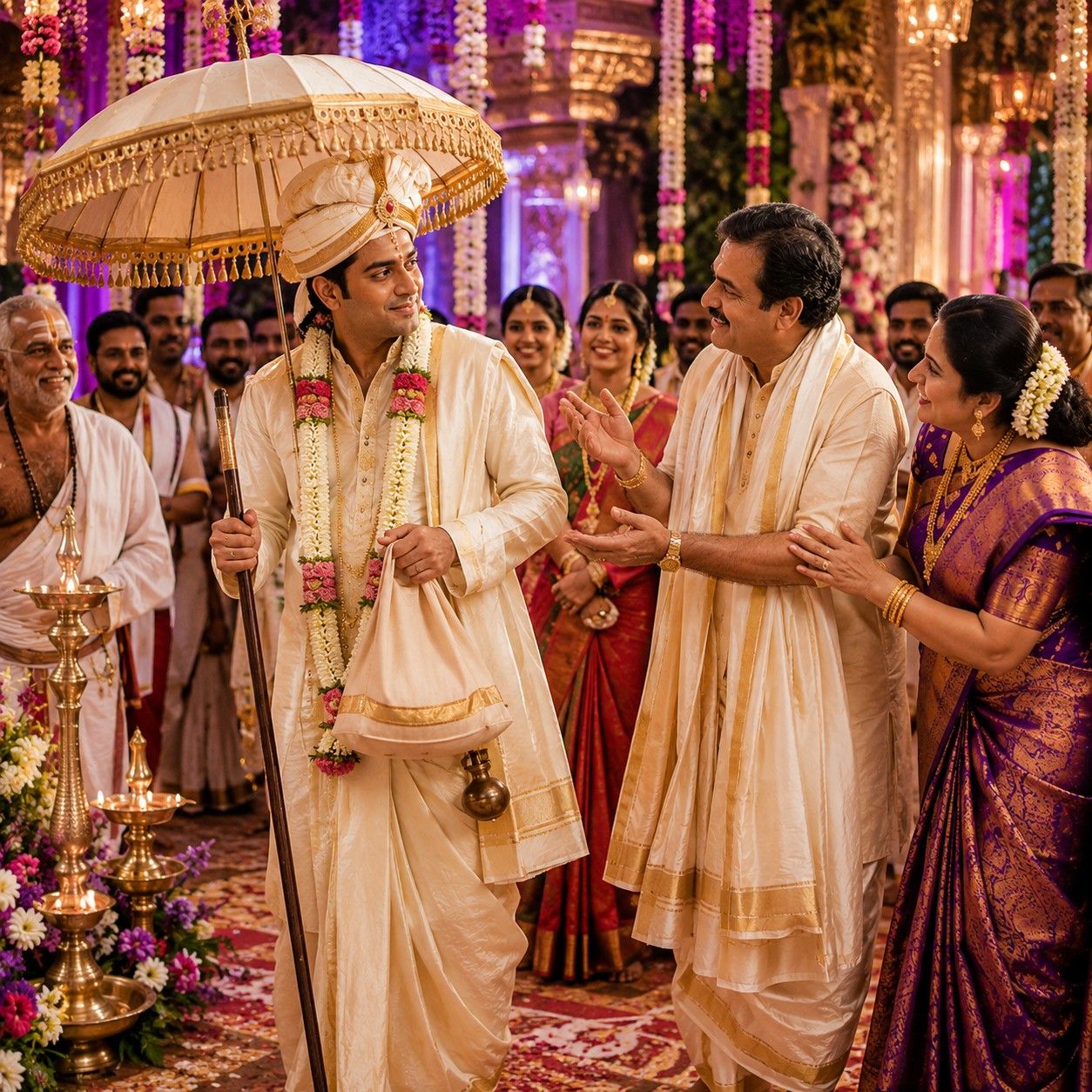
In some wedding setups, the bride and groom may enter the ceremonial space separately before taking their positions for the main rituals.
The curtain can form part of the visual arrangement as the couple prepares for the next stage of the ceremony.
The exact entry sequence depends on the family's traditions and the wedding programme. The ceremony space should therefore be arranged with sufficient room for the couple, priest and family members.
Traditional Telugu Wedding Setup
A traditional Telugu wedding setup may include flowers, sacred vessels, ceremonial platforms, lamps and other ritual accessories.
The Antarpat curtain should complement the ceremonial environment without obstructing important ritual objects.
Traditional fabrics, floral decorations and coordinated colours can be used to create a harmonious appearance while keeping the curtain functional.
Choosing the Curtain Material
The material of the curtain can influence both its appearance and practicality. Lightweight fabrics can make the curtain easier to handle, while richer materials may create a more formal ceremonial appearance.
Cotton, silk-look fabrics and other suitable textiles can be considered depending on the wedding style.
The material should be opaque enough to provide the intended visual separation while remaining easy to position and remove.
Curtain Size and Positioning
The curtain needs to be appropriately sized for the ceremonial area. It should cover the intended space between the bride and groom without creating unnecessary obstruction.
The support system should be stable and positioned safely. The curtain should not interfere with the priest, sacred fire or other essential wedding arrangements.
Testing the setup before the ceremony can help identify any practical issues.
Traditional and Modern Styling
Modern Telugu weddings can combine traditional rituals with contemporary venue styling. The Addutera curtain can therefore be designed to complement the overall wedding décor.
Traditional weddings may favour classic fabrics and floral detailing, while contemporary celebrations may use simpler materials and coordinated colours.
The styling should support the ceremony rather than overpowering the cultural significance of the ritual.
Floral Decoration
Flowers can be incorporated around the curtain to create a traditional wedding appearance. Fresh floral garlands or selected arrangements can frame the ceremonial space.
The floral colours can coordinate with the bride's attire, groom's clothing and stage décor.
Care should be taken to ensure that flowers do not add excessive weight to the curtain or interfere with its movement.
Personalised Antarpat Designs
Some families may choose a personalised curtain for the wedding. Names, initials, wedding dates or traditional motifs can be incorporated into the fabric or surrounding decoration where appropriate.
A personalised design can create a memorable visual element while allowing the couple to reflect their individual style.
For a highly traditional ceremony, however, families may prefer a simple design based on established customs.
Importance of Ceremony Coordination
The curtain needs to be managed at the correct stage of the ceremony. A designated person should understand when it needs to be positioned and when it should be removed.
The priest should guide the timing, especially when the curtain forms part of a specific ritual sequence.
Good coordination prevents unnecessary movement and allows the wedding ceremony to continue smoothly.
Photography of the Curtain Ritual
The Antarpat moment can create distinctive wedding photographs. The bride and groom positioned separately behind the curtain provide a visual representation of the anticipation before their formal union.
Photographers can capture the curtain, the couple, family members and ceremonial surroundings before and during the transition.
The moment when the curtain is removed can also provide an important photograph of the couple's first visual connection during that stage of the ceremony.
Bride's Ceremonial Position
The bride's position should be arranged according to the family's wedding customs and the priest's instructions.
The curtain should provide the intended separation without making it difficult for the bride to participate in the ceremony.
Her clothing, jewellery and floral accessories should also be considered when determining the curtain's height and positioning.
Groom's Ceremonial Position
The groom should likewise have sufficient space to stand or sit comfortably while the curtain is in position.
The setup should allow him to participate in the required rituals without the fabric interfering with his movements.
The ceremony coordinator can check the arrangement before the wedding begins.
Safety and Stability
Safety is an important consideration for any ceremonial accessory. The curtain support should be stable and should not present a risk to the couple, priest or guests.
The fabric should be kept away from open flames, particularly when the ceremonial area includes lamps or a sacred fire.
Any decorative elements attached to the curtain should be securely fixed and lightweight.
Preparing the Addutera in Advance
The curtain should be inspected before the wedding day. Families can check the fabric, support structure, dimensions and decorative elements.
A rehearsal or simple positioning test can help confirm that the curtain can be installed and removed smoothly.
Keeping the curtain with the other ceremony-specific accessories can make it easier to locate when required.
Working With the Wedding Priest
The priest conducting the Telugu marriage should confirm whether an Addutera or Antarpat curtain is required and how it should be used.
Different families may follow different variations of the wedding ceremony. The priest can therefore provide guidance on positioning, timing and removal.
Following this guidance helps ensure that the accessory supports the ritual correctly.
Traditional Wedding Accessories
The curtain forms only one part of the broader collection of Telugu wedding accessories. Other ceremonial elements may include pooja vessels, flowers, lamps, offerings and traditional décor.
All accessories should be organised according to the ceremony sequence.
A dedicated checklist can help families and coordinators ensure that each item is ready before the Muhurtham begins.
Coordinating With Wedding Décor
The curtain can be matched with the stage, mandapam or ceremonial area's decorative style.
Traditional floral arrangements, fabric drapes and other wedding décor can be coordinated to create a cohesive appearance.
For modern venues, a minimalist curtain can provide the necessary ritual function while blending naturally with contemporary styling.
Outdoor and Indoor Ceremonies
Indoor wedding venues generally provide more control over the curtain support and surrounding environment.
Outdoor weddings require additional attention to wind, uneven flooring and the stability of the support structure. The curtain should be secured properly so that it does not move unexpectedly.
Weather conditions should be considered when selecting the fabric and support system.
Sustainable Wedding Options
Families interested in sustainable celebrations can choose reusable curtain fabrics and support structures.
A durable textile can be preserved and reused for future family weddings or ceremonies.
Natural floral decoration and reusable accessories can also reduce unnecessary waste while maintaining a traditional appearance.
Preserving Telugu Wedding Traditions
Traditional accessories such as the Addutera provide a visible connection to Telugu wedding customs.
Although modern couples may choose contemporary fabrics, venues and décor, retaining meaningful ritual elements allows the cultural character of the marriage to remain central.
Family elders can help younger generations understand the significance of the ceremony and the role played by each traditional accessory.
Modern Telugu Wedding Presentation
Contemporary wedding planning allows traditional rituals to be presented in new ways. The curtain can be styled with modern fabrics, subtle decoration and coordinated colours without changing its ceremonial purpose.
Professional event planners and coordinators can also help integrate the ritual accessory into the wider venue layout.
The goal is to create a setting where tradition and modern presentation work together naturally.
A Meaningful Ceremonial Moment
The curtain creates anticipation before the bride and groom are formally brought together during the relevant stage of the wedding.
This transition can become one of the most memorable moments for the couple and their families.
Its significance comes from the ritual itself rather than simply its decorative appearance.
Complete Addutera Wedding Preparation
Preparing an Addutera or Antarpat curtain requires attention to material, size, positioning, safety and ceremonial timing.
The accessory should be ready before the Muhurtham and managed by someone familiar with the wedding sequence.
With proper preparation, the curtain can fulfil its traditional role while also contributing to the visual character of the Telugu marriage ceremony.
Preserving a Traditional Telugu Pelli Experience
A Telugu wedding combines sacred rituals, family participation and cultural traditions. The Addutera curtain contributes to one of the ceremony's visually distinctive transitions, helping create a sense of anticipation before the bride and groom are formally united.
Families should always follow their own customs and the guidance of the wedding priest when arranging the ritual. With careful planning, appropriate fabric, secure positioning and coordinated décor, the Antarpat can remain a meaningful part of a traditional Telugu Pelli celebration.
Frequently Asked Questions
1. What is Addutera in a Telugu wedding?
Addutera refers to a traditional ceremonial curtain used during a particular stage of a Telugu marriage to create a temporary separation between the bride and groom.
2. What is an Antarpat curtain?
An Antarpat is a ceremonial curtain used in certain Indian wedding traditions to separate the bride and groom before a designated stage of the marriage ritual.
3. When is the curtain used?
The timing varies according to family and regional customs. The wedding priest should confirm exactly when it is positioned and removed.
4. Can the Addutera curtain be decorated?
Yes. It can be styled with suitable fabric, floral details, traditional motifs or coordinated décor, provided the decorations do not interfere with the ritual.
5. Can the curtain be personalised?
Some families choose personalised fabrics featuring names, initials, dates or traditional motifs.
6. What fabric is suitable for an Antarpat?
A suitable lightweight or medium-weight fabric can be selected according to the desired appearance, opacity and ease of handling.
7. Can the curtain be used for bride and groom entry?
It can form part of the ceremonial arrangement surrounding the couple's entry and positioning, depending on the family's wedding customs.
8. Is an Addutera required for every Telugu wedding?
Not necessarily. Wedding traditions vary between families and communities, so the priest should confirm whether it forms part of the ceremony.
9. Can the curtain be reused?
Yes. A durable curtain and support structure can be preserved for future family weddings or traditional ceremonies.
10. Who should manage the curtain during the ceremony?
A designated family member, ceremony assistant or coordinator should manage it under the guidance of the wedding priest so that it is positioned and removed at the appropriate time.