
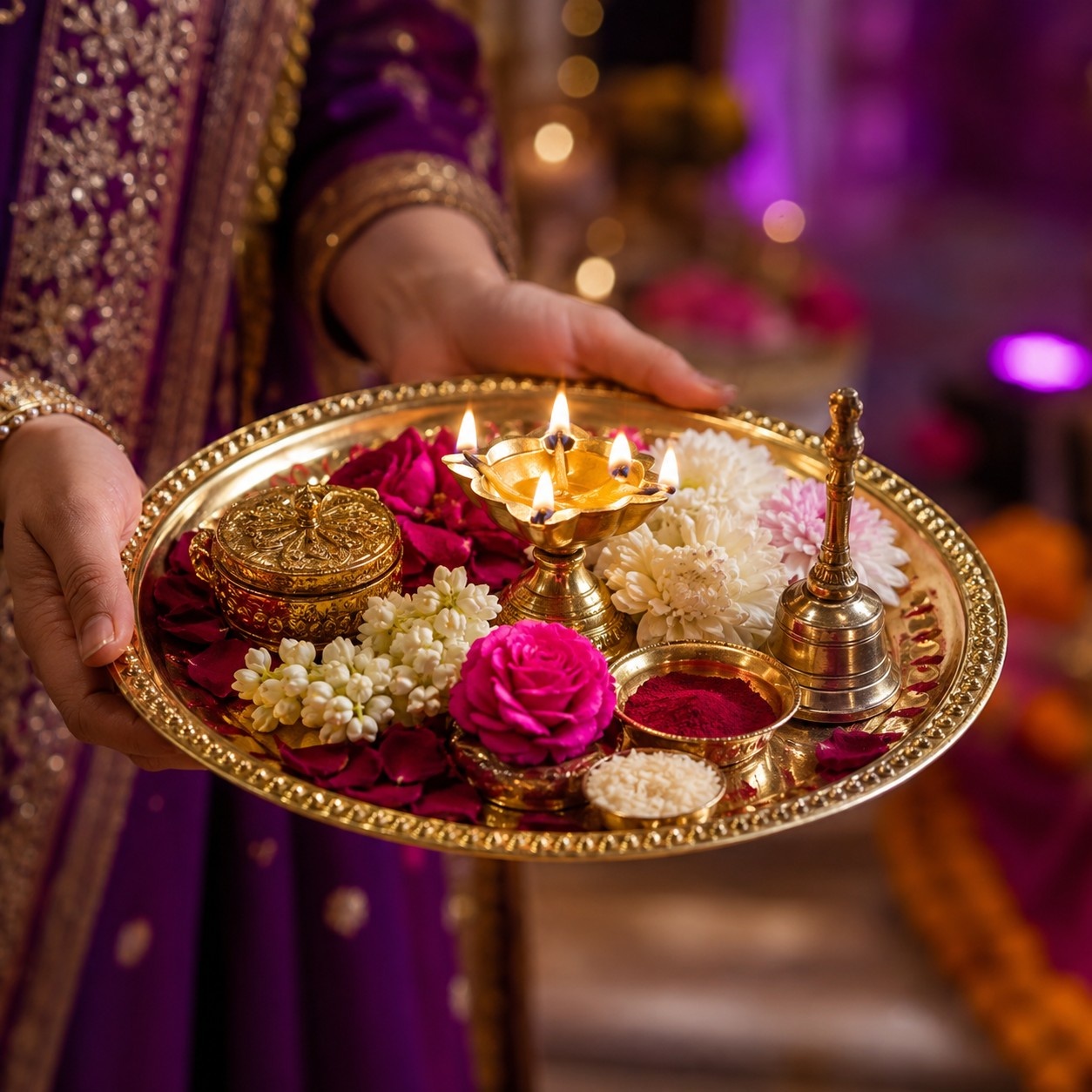
Aarthi Plates Puja Thali
Traditional Aarthi plates and Puja Thali essentials with diya, kumkum and ceremonial details for Hindu pooja setups, welcome rituals and auspicious occasions.
Explore Religious Ceremony Experiences


Explore Other Experiences















Explore by Occasion






Aarthi Plates Puja Thali for Aarti Tray
◆Aarthi and Puja Thali arrangements are an important part of many Hindu ceremonies, religious occasions and traditional welcome rituals. A carefully prepared thali brings together the ceremonial elements needed for presenting Aarti, applying kumkum and carrying out auspicious welcoming customs.
From weddings and housewarming ceremonies to religious festivals, family celebrations and formal welcomes, the presentation of the thali can add a traditional and visually appealing element to the occasion. The exact contents and ritual practices can vary according to regional customs, family traditions and the particular ceremony.
A well-organised arrangement ensures that the required items are readily available while maintaining the traditional character of the ritual.
Understanding the Puja Thali
A Puja Thali is a traditional plate or tray used to organise ceremonial and devotional items. It provides a convenient way to keep several essentials together during a pooja or auspicious ritual.
Depending on the occasion, the thali may contain a diya, kumkum, turmeric, flowers, rice and other materials required for the ceremony.
The design can range from a simple traditional metal plate to an elaborately decorated presentation tray.
Aarthi Plates for Traditional Ceremonies
Aarthi plates are commonly used during Hindu rituals where a lit lamp or diya is presented as part of the ceremony. The plate provides a stable surface for arranging the lamp and other accompanying items.
Traditional metal plates can provide a classic appearance, while decorated contemporary designs may suit modern celebrations.
The size of the plate should be appropriate for the number of items being placed on it, allowing everything to remain organised without overcrowding.
Aarti Tray Essentials
An Aarti tray can include several traditional elements depending on the ritual. A diya or lamp is often central to the arrangement, while kumkum, turmeric, rice and flowers may be positioned around it.
The exact contents should follow the family's established practice or the instructions of the person conducting the ceremony.
Keeping the items arranged neatly makes the ritual easier to perform and enhances the overall presentation.
Kumkum and Its Traditional Use
Kumkum is commonly associated with auspicious Hindu occasions and traditional welcoming rituals. It may be presented in a small container or placed directly within the ceremonial thali.
During a welcome ritual, kumkum may be applied as part of the traditional greeting. It is also used in various religious and family ceremonies.
A dedicated kumkum container can help prevent the powder from spreading across the rest of the tray.
Diya Essentials
The diya is an important element in many Hindu religious and ceremonial settings. A traditional oil lamp can be placed securely on the Aarti plate before the ritual begins.
Depending on the family's practice, the diya may use oil or another suitable traditional fuel. Cotton wicks and other necessary lamp accessories should be prepared in advance.
The lamp should always be handled carefully, particularly when the Aarti is performed among guests or in a crowded ceremonial area.
Flowers and Auspicious Elements
Flowers can add colour and natural beauty to an Aarti or Puja Thali. They may be placed around the diya or used as part of the broader ceremonial arrangement.
Rice, turmeric and other auspicious materials may also be included depending on the ritual.
Fresh materials should be prepared close to the ceremony so that the arrangement remains clean and presentable.
Hindu Ceremony Setup
A Hindu ceremony may involve several stages, each requiring different ritual materials. The Aarti plate can be prepared separately so that it is available when required.
For weddings, the thali may be used during welcoming rituals, blessings or other ceremonial moments. During religious functions, it may form part of the main pooja arrangement.
Keeping the tray separate from general décor ensures that it remains ready for ceremonial use.
Welcome Rituals
Aarti plates are often associated with traditional welcome rituals. A guest, couple, family member or important participant may be welcomed with Aarti and kumkum according to the customs being followed.
The thali can be carried by a designated family member and presented at the appropriate moment.
For weddings and formal occasions, the welcome ritual can create a warm first impression while preserving cultural traditions.
Wedding Aarti Arrangements
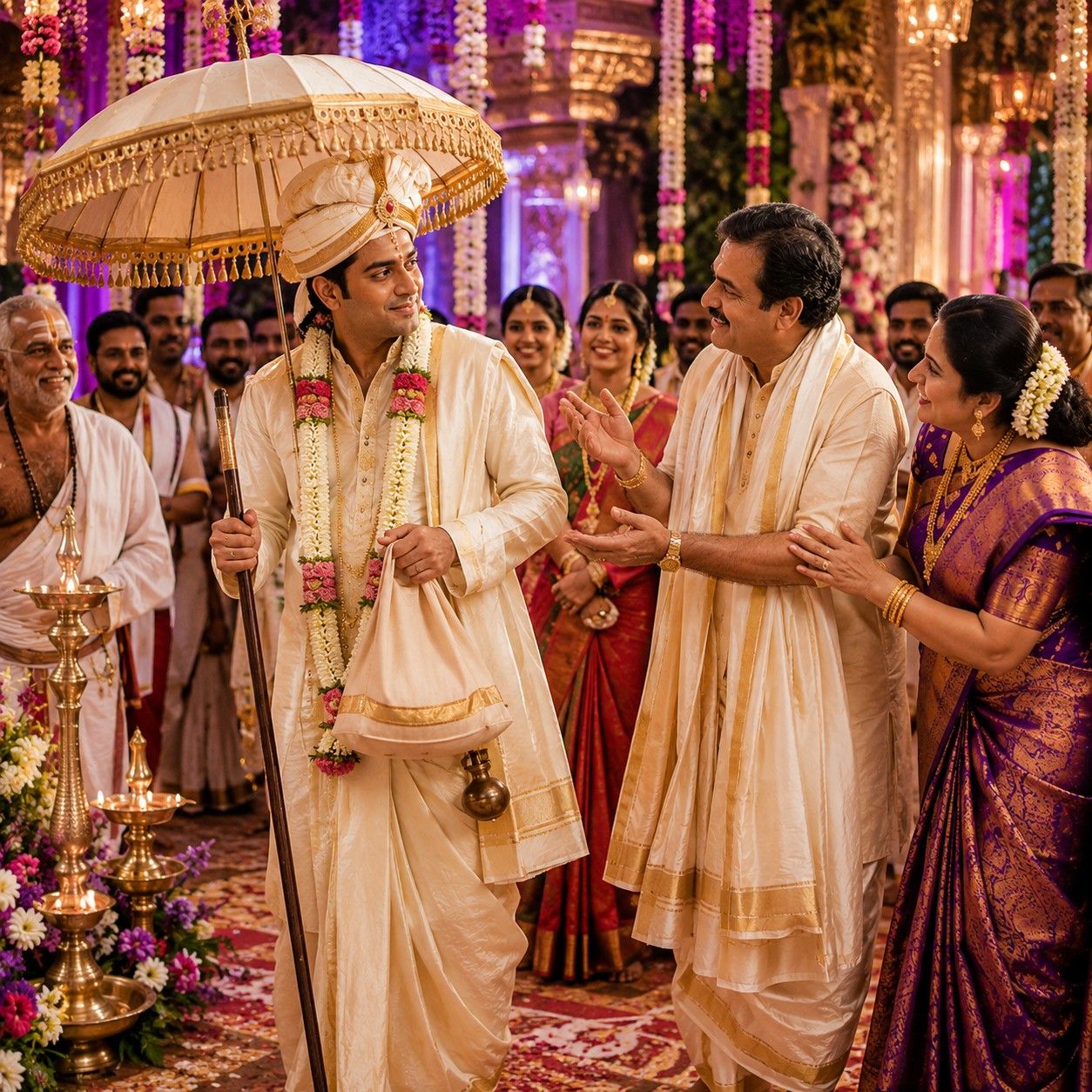
Aarti may be incorporated into different stages of Hindu weddings depending on regional and family customs. It can be used when welcoming the groom, bride or important family members.
The presentation plate can be styled to complement the wedding décor while retaining the essential ceremonial elements.
Flowers, traditional fabrics and decorative details can be used to create a coordinated appearance.
Traditional Metal Aarti Plates
Metal plates are widely preferred for traditional ceremonial use because of their durability and classic appearance. Brass, copper and stainless-steel options can provide different visual characteristics.
A brass or copper finish can create a distinctly traditional appearance, while stainless steel may offer a simpler and practical solution.
Reusable metal plates can also be preserved for future religious occasions and family celebrations.
Decorative Puja Thali Designs
Modern Puja Thalis can incorporate decorative details while retaining their traditional purpose. Floral patterns, engraved motifs, painted designs and decorative borders can add visual interest.
Some families may prefer highly traditional styling, while others may choose contemporary designs that coordinate with the event's décor.
The decorative elements should remain practical and should not interfere with the handling of the tray.
Personalised Aarti Trays
Personalisation can make an Aarti tray particularly suitable for weddings, housewarming ceremonies and special family occasions.
Names, initials, dates or meaningful motifs may be incorporated into the tray depending on the design.
A personalised tray can also become a keepsake after the ceremony, allowing the family to continue using it for future occasions.
Pooja Setup Organisation
Organisation is important when multiple ceremonial items are required. The Aarti tray should be prepared separately and checked before the ceremony begins.
Items such as kumkum, turmeric, flowers, rice, diya and other materials can be arranged in designated spaces.
A family member can be assigned responsibility for checking the tray so that everything is ready at the appropriate time.
Aarthi Plates for Housewarming Ceremonies
Housewarming ceremonies often involve several traditional rituals and welcoming practices. A Puja Thali can be prepared as part of the ceremony according to the family's customs.
The tray may contain the items required for Aarti and other auspicious practices.
After the ceremony, the same reusable tray can become part of the family's regular pooja arrangements.
Festival and Religious Celebrations
Aarti plates are also suitable for festivals and religious occasions. Families may prepare them for home pooja, temple-related celebrations or community gatherings.
The arrangement can be adapted depending on the ritual. A simple diya and kumkum setup may be sufficient for one occasion, while a larger ceremonial plate may be appropriate for another.
Following family and regional traditions ensures that the arrangement remains meaningful.
Eco-Friendly Pooja Accessories
Families interested in sustainable celebrations can choose reusable Aarti plates and Puja Thalis rather than disposable alternatives.
Metal trays, reusable containers and natural flowers can provide practical options for repeated use.
Reusable cotton wicks, traditional vessels and durable ceremonial accessories can also reduce unnecessary waste over time.
Safety During Aarti
Because an Aarti plate may contain a lit diya, safety should always be considered. The tray should be stable, and the lamp should be positioned securely.
The person performing Aarti should have sufficient space to move without accidentally coming into contact with decorations, clothing or guests.
Children should be supervised around lit lamps, and the diya should never be left unattended.
Coordinating With Event Décor
For weddings and larger celebrations, the Aarti plate can complement the event's visual styling. Flowers, fabrics and colours can be selected to coordinate with the venue.
Traditional gold-toned or brass trays can suit classic wedding décor, while minimalist trays can complement modern settings.
The ceremonial purpose should remain the priority, with decorative styling providing a supporting role.
Photography and Aarti Moments
Aarti rituals often create meaningful photographs. The illuminated diya, flowers, traditional clothing and ceremonial setting can produce memorable images.
A clean and well-arranged tray helps photographers capture the details clearly.
Close-up photographs of the Aarti plate can also preserve the smaller cultural elements that contributed to the celebration.
Selecting the Right Size
The size of the thali should depend on the number of ceremonial items required. A smaller tray can be suitable for a simple welcome ritual, while a larger plate may be useful for a detailed pooja arrangement.
The tray should remain comfortable to carry, particularly if Aarti is performed while moving around the ceremony space.
Balanced proportions help maintain both practicality and visual appeal.
Family and Regional Customs
Hindu rituals vary considerably across regions, communities and families. The contents of a Puja Thali should therefore not be assumed to be identical for every ceremony.
Family elders, priests or knowledgeable ceremony organisers can provide guidance regarding the appropriate items.
Respecting these variations helps preserve the authenticity of the ritual.
Preserving Traditional Practices
Aarthi and Puja Thali arrangements provide a simple way to continue traditional practices within modern celebrations.
Although tray designs and presentation styles may evolve, the underlying ritual significance remains important to many families.
Using reusable traditional items can also allow the same ceremonial accessories to be passed between generations.
A Meaningful Welcome Tradition
The Aarti welcome ritual can create a warm and auspicious beginning to a ceremony or celebration. The combination of a diya, kumkum, flowers and other traditional elements provides a recognisable expression of hospitality and respect.
Whether used at a wedding entrance, housewarming ceremony or religious celebration, the Aarti tray can become an important part of the overall experience.
Complete Aarti and Puja Preparation
A well-prepared Aarti plate combines ceremonial function with thoughtful presentation. From the diya and kumkum to flowers and other auspicious materials, each element should be arranged according to the requirements of the ritual.
The exact contents should always follow the customs of the family or ceremony being performed. With careful preparation, a traditional Puja Thali can support the ritual smoothly while adding cultural beauty to the occasion.
Frequently Asked Questions
1. What is an Aarthi plate used for?
An Aarthi plate is used to hold a diya or lamp and other ceremonial items during Aarti and traditional Hindu rituals.
2. What is usually included in a Puja Thali?
Contents vary by ceremony but may include a diya, kumkum, turmeric, rice, flowers and other ritual materials.
3. Can Aarti trays be used for wedding welcomes?
Yes. They can be used during traditional wedding welcome rituals according to the family's customs.
4. Which materials are suitable for Aarti plates?
Brass, copper, stainless steel and other suitable traditional or decorative materials can be used.
5. Can a Puja Thali be personalised?
Yes. Names, initials, dates and decorative motifs can be incorporated into selected designs.
6. Can Aarti plates be used for housewarming ceremonies?
Yes. A suitable Puja Thali can be prepared for housewarming rituals according to the family's ceremonial practices.
7. Are flowers necessary on an Aarti plate?
Flowers are commonly used in many Hindu rituals, but the exact requirements depend on the ceremony and family tradition.
8. How should a diya be placed on the tray?
It should be positioned securely on a stable surface with sufficient space around it to allow safe handling during the ritual.
9. Can Aarti plates be reused?
Yes. Durable metal and other reusable trays can be preserved for future pooja, weddings, festivals and family ceremonies.
10. Who should confirm the contents of a Puja Thali?
The family's priest, elders or ceremony guide should confirm the specific requirements because Hindu rituals vary according to tradition and occasion.