
Hybrid Celebration Production Platforms
Hybrid celebration production platforms connect virtual attendees with live broadcasts and remote participation during corporate seminars, conferences and functions.
Explore Digital & Tech-Enabled Event Experiences




Explore Other Experiences















Explore by Occasion




Hybrid Celebration Production Platforms and Virtual Participation for Corporate Seminars
◆Corporate seminars and professional gatherings increasingly bring together participants attending at a physical venue and guests joining remotely. Hybrid celebration production platforms provide the technology and production workflow needed to connect these audiences during a shared programme.
A hybrid production setup can combine live broadcasting, virtual attendance, remote presenters, audience interaction and onsite event production. The exact features depend on the selected platform, venue infrastructure and production requirements.
The Art of Hybrid Celebration Production
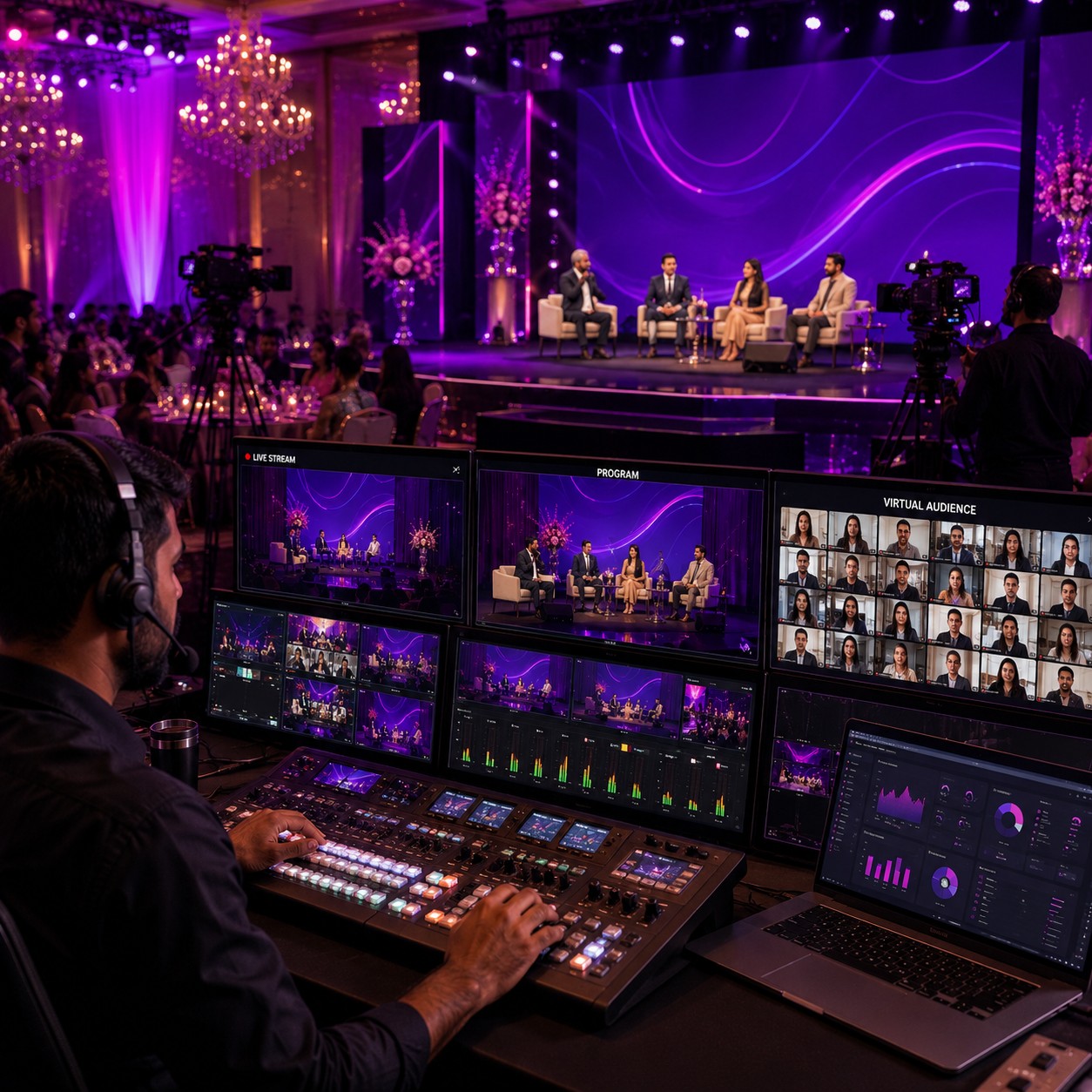
Hybrid event production connects a physical event with an online audience. Cameras, microphones, presentation systems and streaming technology can transmit selected programme segments to remote participants.
The production approach should be planned around the seminar format, audience size and level of remote interaction required.
Virtual Attendance
Virtual attendance allows participants who cannot travel to join a corporate seminar remotely. They may watch presentations, panels or other programme segments through the selected online platform.
Access requirements vary according to the event technology.
Live Broadcast
A live broadcast can transmit a seminar programme to a remote audience while the event is taking place. Camera feeds, presentation content and event audio can be combined into the broadcast where supported by the production setup.
The broadcast workflow should be tested before the event.
Remote Participation
Remote participants can engage with selected parts of a seminar through supported tools such as live questions, chat, polls or video contributions.
The interaction level should be defined during event planning.
Hybrid Corporate Seminars
Corporate seminars can use hybrid production to accommodate employees, clients, speakers or other participants located in different cities or countries.
The physical and virtual programmes should be coordinated so that remote attendees can follow the key sessions.
Virtual Audience Management
A virtual audience may require registration, access credentials and technical instructions before the seminar. Event organisers can provide joining information and support contacts in advance.
Access procedures should reflect the intended audience and privacy requirements.
Remote Presenter Integration
Speakers who cannot attend the venue can join a seminar remotely. Their video and audio can be incorporated into the onsite programme and online broadcast where the production system supports it.
Remote presenters should participate in a technical rehearsal before the event.
Hybrid Speaker Sessions
A seminar can combine speakers who are physically present with presenters joining remotely. The production team can coordinate transitions between onsite and remote speakers.
Clear programme timing helps prevent delays between segments.
Virtual Keynote Sessions
Keynote speakers can address both onsite and remote audiences through a hybrid production setup. Presentation slides, speaker video and event audio can be incorporated into the online experience.
The speaker's presentation equipment should be tested before the session.
Hybrid Panel Discussions
Panel discussions can include a combination of onsite and remote panellists. Cameras, microphones and communication systems need to be coordinated so that participants can hear and see each other appropriately.
A moderator can help manage questions and transitions.
Online Q&A
Remote attendees can submit questions through digital platforms where supported. A moderator can review and select questions for the speaker or panel.
This can help integrate virtual participation into the live discussion.
Live Audience Polling
Hybrid seminars can incorporate live polls so that both onsite and remote attendees can provide responses. Results can be displayed to the wider audience where the polling platform supports this.
The polling system should be tested across the intended audience devices.
Virtual Event Chat
A chat function can give remote attendees a channel for questions, comments or event-related communication. Moderation may be useful for larger seminars.
The organiser should establish appropriate chat guidelines before the event.
Presentation Streaming
Presentation slides can be included in the live broadcast alongside camera feeds. This allows remote attendees to follow the same presentation content as the physical audience.
The production team should confirm that slides remain legible on remote devices.
Multi-Camera Event Production
Multiple cameras can capture speakers, panels, audience views and other relevant areas of the seminar. The production team can switch between feeds according to the programme.
Camera requirements depend on the venue layout and desired broadcast style.
Professional Event Audio
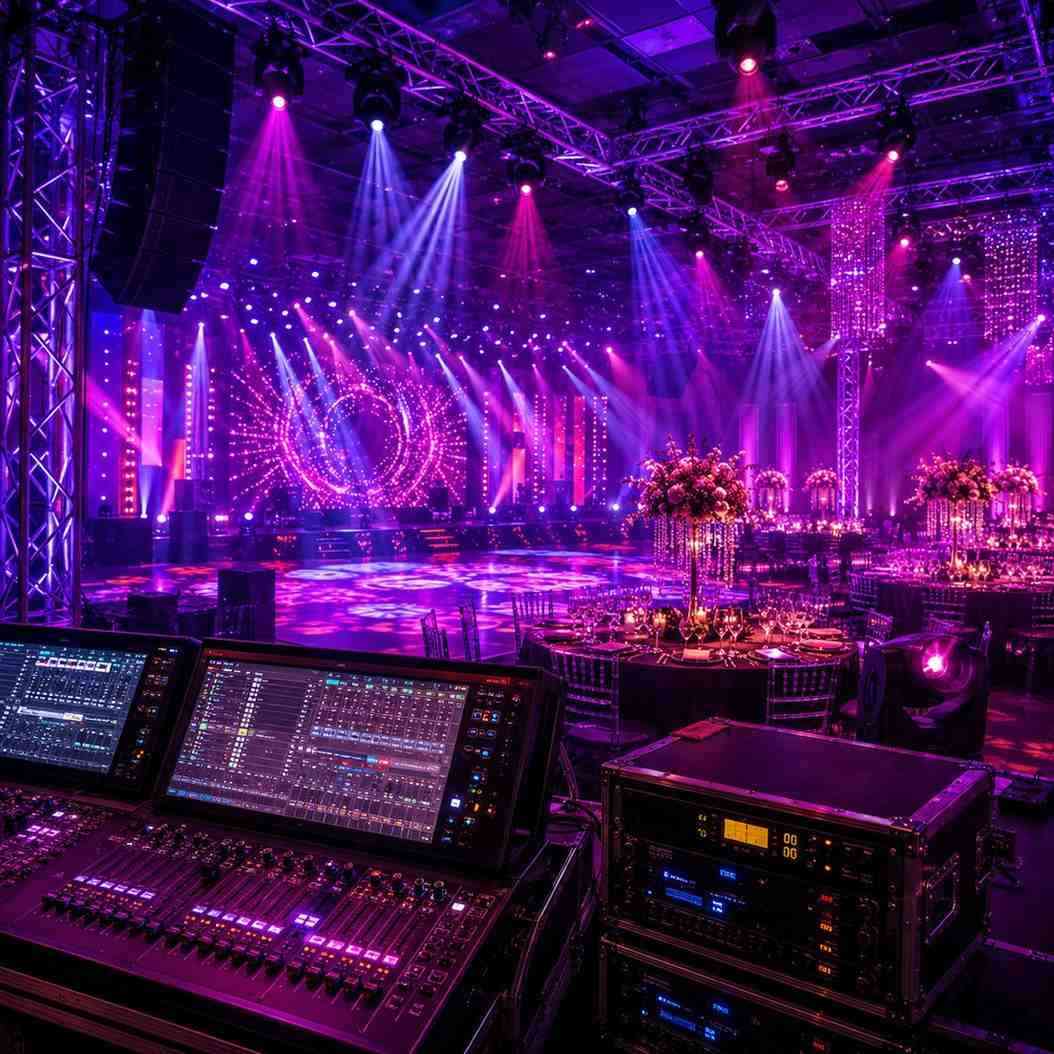
Clear audio is essential for remote participants. Microphones, mixing equipment and speaker systems should be configured so that presenters can be heard without unnecessary background noise.
Audio should be tested from the perspective of both onsite and remote audiences.
Virtual Audience Interaction
Remote attendees can participate through polls, questions, reactions or other interactive tools supported by the platform.
Interactive elements should be integrated into the programme rather than added without a clear purpose.
Hybrid Registration
Registration can collect information for both onsite and virtual participation. Attendees can receive the appropriate access instructions based on their selected attendance method.
Registration data should be maintained consistently across the event workflow.
Digital Event Access
Remote participants may receive a secure event link, access code or other digital credential. Organisers should communicate access instructions before the seminar.
The access process should be tested using the same devices and networks expected from attendees.
Virtual Attendance Tracking
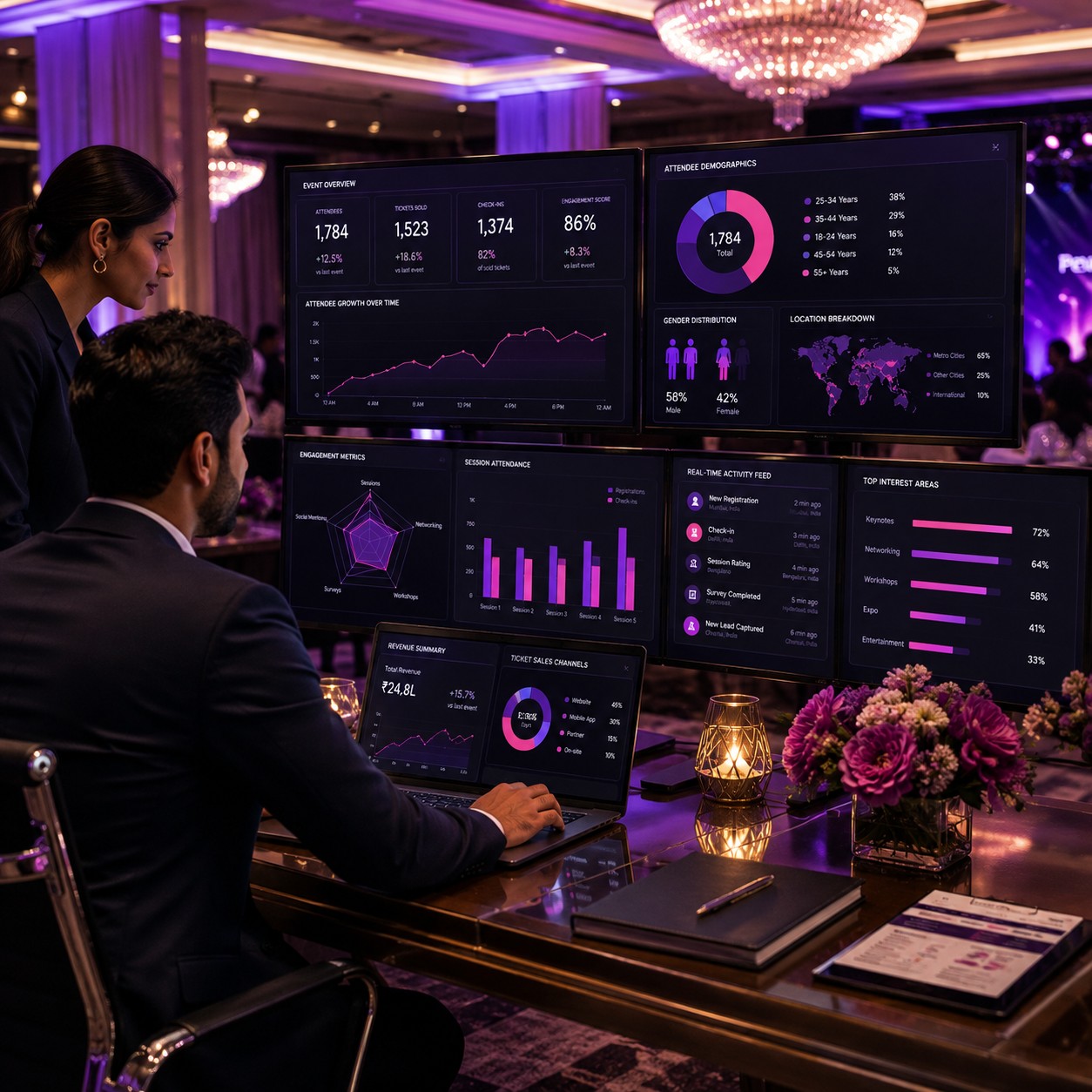
Some platforms can record virtual attendance or participation information. These records can provide organisers with information about online participation.
The available attendance metrics depend on the selected platform.
Hybrid Event Recording
A hybrid seminar can potentially be recorded for later viewing where the production and platform support recording. Organisers should determine which parts of the programme will be recorded.
Recording arrangements should be communicated to participants where required.
On-Demand Seminar Content
Recorded seminar sessions can sometimes be made available to registered participants after the live event. This can extend access for people who could not attend the original broadcast.
Availability depends on the platform and organiser's content policy.
Hybrid Event Branding
The online event interface, broadcast graphics and presentation screens can incorporate approved corporate branding. Consistent branding can help connect the physical and virtual event experiences.
Brand assets should follow the organisation's visual identity requirements.
Virtual Event Production Control
A production team can coordinate cameras, audio, presentations, graphics, remote speakers and broadcast feeds during the seminar.
The level of production support depends on the complexity of the event.
Technical Rehearsal
A rehearsal can test remote speakers, camera feeds, microphones, presentations, streaming connections and audience interaction before the live seminar.
Key presenters and production staff should participate in the rehearsal where possible.
Internet Connectivity
Hybrid production relies on stable connectivity for streaming and remote participation. Venue internet capacity should be assessed before the event, particularly when high-quality video is being transmitted.
A backup connectivity plan may be considered for important corporate broadcasts.
Virtual Technical Support
Remote attendees may experience issues with joining the event, audio, video or connectivity. A designated support process can help resolve common problems.
Participants should receive basic technical instructions before the seminar.
Hybrid Event Accessibility
Virtual participation can provide an alternative way for people who cannot travel to attend a corporate seminar. Organisers should also consider accessibility features supported by the selected platform.
Captions, readable presentation materials and other accessibility options may be available depending on the technology.
Data Privacy and Access
Hybrid platforms can process attendee registration information, participation records and communication data. Organisers should review the platform's data practices and configure access appropriately.
Recording and broadcasting settings should also reflect the privacy expectations of the event.
Planning Your Hybrid Celebration Production
Begin by defining the onsite and virtual audiences, programme format and required level of remote participation. Determine whether the seminar needs live broadcasting, remote speakers, audience polling, Q&A, recording or on-demand access.
Next, assess the venue's cameras, microphones, displays and internet connectivity. Select the production platform, configure participant access and conduct a full technical rehearsal before the event.
Booking Hybrid Celebration Production Services
When arranging hybrid celebration production, consider virtual attendance, live broadcasting, remote presenters, multi-camera production, event audio, presentation streaming, audience polling, Q&A, chat, registration, attendance tracking, recording, technical support and privacy.
A professional hybrid event production provider can connect a physical corporate seminar with a remote audience through coordinated broadcast and participation technology. Organisers should confirm platform capabilities, production requirements, connectivity, recording arrangements and technical support before the event.
Frequently Asked Questions
1. What is a hybrid celebration production platform?
It is a technology and production setup that connects a physical event with participants attending remotely through live broadcasting and digital interaction.
2. Can corporate seminars have both onsite and virtual attendees?
Yes. Hybrid seminar platforms are designed to connect physical and remote participants within the same event programme.
3. Can speakers present remotely?
Yes. Remote presenters can join selected sessions through supported video and audio systems, subject to technical compatibility.
4. Can a hybrid seminar be broadcast live?
Yes. Live broadcasting can transmit presentations, panels and other selected programme segments to remote attendees.
5. Can remote attendees ask questions?
Many platforms support digital Q&A, allowing remote participants to submit questions that can be reviewed by a moderator.
6. Can hybrid seminars use live polling?
Yes. Live polling can provide an interactive way for onsite and remote participants to submit responses during selected sessions.
7. Does hybrid production require multiple cameras?
Not always. Camera requirements depend on the event format, venue and desired production quality. Larger seminars may benefit from multiple camera views.
8. Is professional audio important for virtual attendees?
Yes. Clear microphones and properly managed audio are important so that remote participants can understand speakers and discussions.
9. Can hybrid seminars be recorded?
Some production platforms support recording. Organisers should determine recording scope, storage and access arrangements before the event.
10. What should I consider when booking hybrid celebration production?
Consider virtual attendance, live broadcast, remote participation, presenters, cameras, audio, presentation sharing, Q&A, polling, registration, recording, connectivity, technical support, accessibility and privacy.