
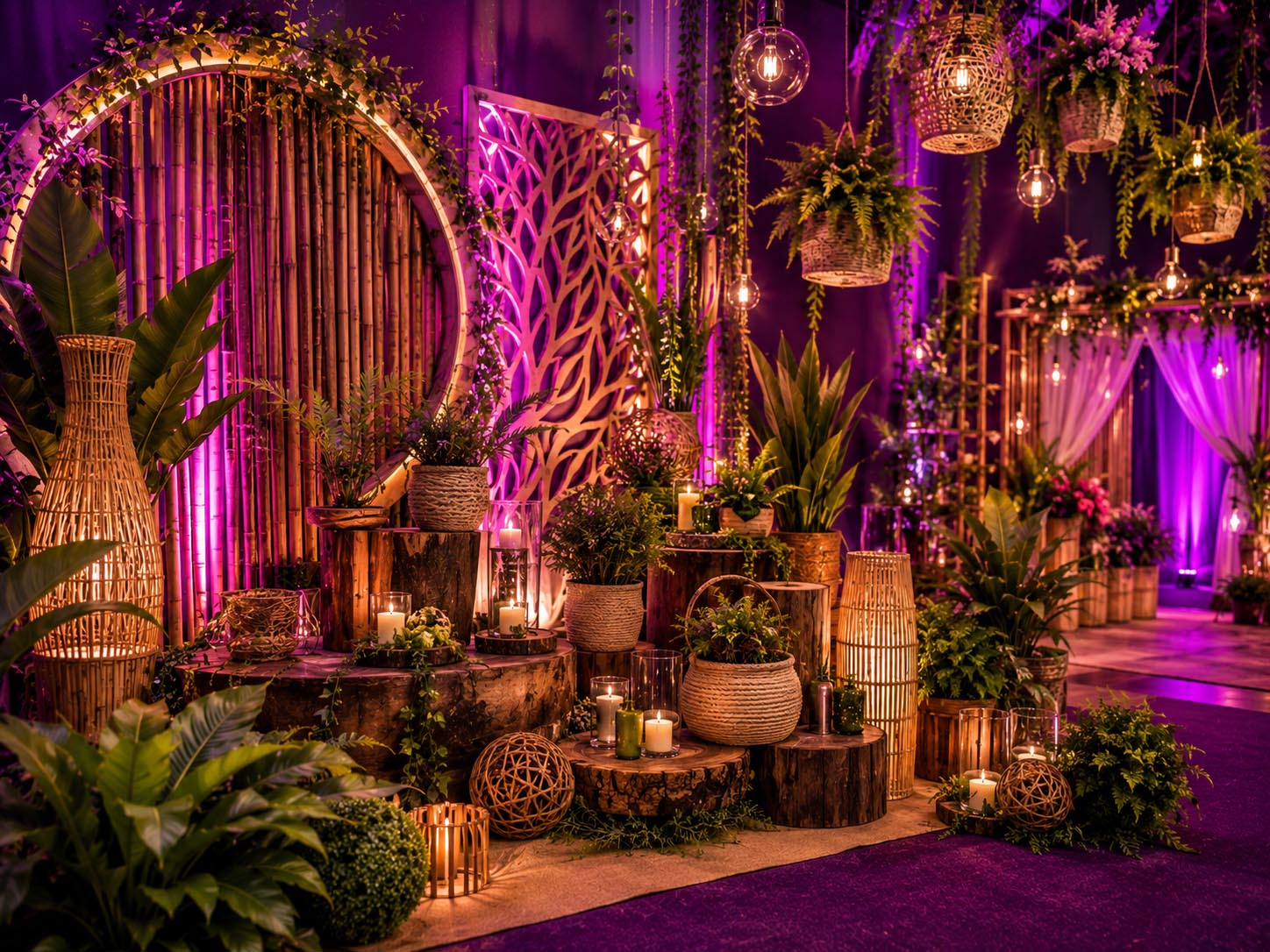
Eco Earth Friendly Biophilic Decor
Bring nature into your celebration with biophilic decor featuring living elements, botanical styling, natural textures, and earth-friendly design details that create a refreshing and elegant atmosphere.
Explore Decoration Experiences
Related Experiences

Explore by Occasion




Eco-Friendly Biophilic Decor for Natural Spaces
◆Nature has a powerful influence on how a space feels. Greenery, natural textures, organic forms, sunlight, and botanical details can make interiors feel calmer, fresher, and more connected to the surrounding environment.
Eco Earth Friendly Biophilic Decor brings these qualities into decorative and interior styling through nature-inspired concepts and living elements. Instead of treating plants and natural materials as occasional accessories, biophilic design integrates them into the overall visual experience.
Living plants, botanical arrangements, natural textures, organic shapes, sustainable materials, and carefully planned lighting can work together to create spaces that feel inviting and refreshing.
This approach can be adapted to homes, offices, hospitality spaces, celebrations, exhibitions, retail environments, and other settings. The design can be subtle and minimal or abundant and immersive, depending on the character of the space.
Happiffie helps users discover professionals who can create nature-inspired environments using thoughtful botanical styling, living elements, and sustainable design principles.
Professional Biophilic Decor for Modern Spaces
Creating a nature-inspired environment requires more than placing plants around a room. The greenery, furniture, lighting, colours, textures, and architectural features should work together.
Professional designers first study the space and its practical conditions. They consider natural light, ventilation, available floor area, maintenance requirements, movement patterns, and the desired visual atmosphere.
This helps determine which plants and natural elements will work best. A bright reception area may support larger living plants, while a compact interior may benefit from vertical greenery or smaller botanical arrangements.
Good biophilic styling feels integrated. The natural elements should appear to belong to the space rather than being added as an afterthought.
Understanding Nature-Inspired Styling
Nature-inspired styling takes visual cues from the natural world. Organic shapes, earthy tones, botanical patterns, wood textures, stone finishes, natural fibres, and greenery can all contribute to the concept.
The colour palette often includes greens, browns, soft neutrals, muted yellows, and natural shades. These colours can create a relaxed visual environment without making the space feel overly themed.
Textures are equally important. Woven materials, natural fabrics, wooden surfaces, dried foliage, and handcrafted elements can introduce depth.
The goal is not to reproduce nature literally. Instead, designers interpret natural characteristics in a way that suits the architecture and purpose of the space.
Living Elements That Transform Interiors
Living plants are among the most recognisable features of biophilic styling. They introduce colour, texture, and organic movement while creating a visual connection with nature.
Large indoor plants can become focal points in spacious areas. Smaller plants can be positioned on shelves, tables, counters, or dedicated display structures.
Hanging plants and vertical arrangements provide another option when floor space is limited. They can draw attention upward and add visual layers to otherwise plain walls.
Plant selection should always consider the environment. Light levels, temperature, humidity, watering requirements, and maintenance capacity can influence whether a particular species is suitable.
Botanical Design for Elegant Environments
Botanical design can range from minimal to highly expressive. A simple arrangement of green foliage can create a refined appearance, while layered botanical installations can produce a more immersive environment.
Leaves, branches, moss-inspired textures, dried botanicals, floral elements, and living plants can be combined according to the desired style.
For professional environments, subtle botanical accents may provide sophistication without distracting from the business setting. Hospitality spaces can use more elaborate installations to create memorable guest experiences.
Celebration spaces can incorporate botanical walls, floral greenery, natural centrepieces, and plant-based decorative features to create a fresh atmosphere.
Biophilic Decoration for Celebrations
Nature-inspired decoration can bring a distinctive character to celebrations. Instead of relying entirely on artificial props, organisers can introduce fresh greenery, natural flowers, wooden structures, woven textures, and botanical backdrops.
Outdoor-inspired concepts can be particularly effective for daytime functions. Green foliage and natural textures can create a garden-like atmosphere even within a controlled indoor environment.
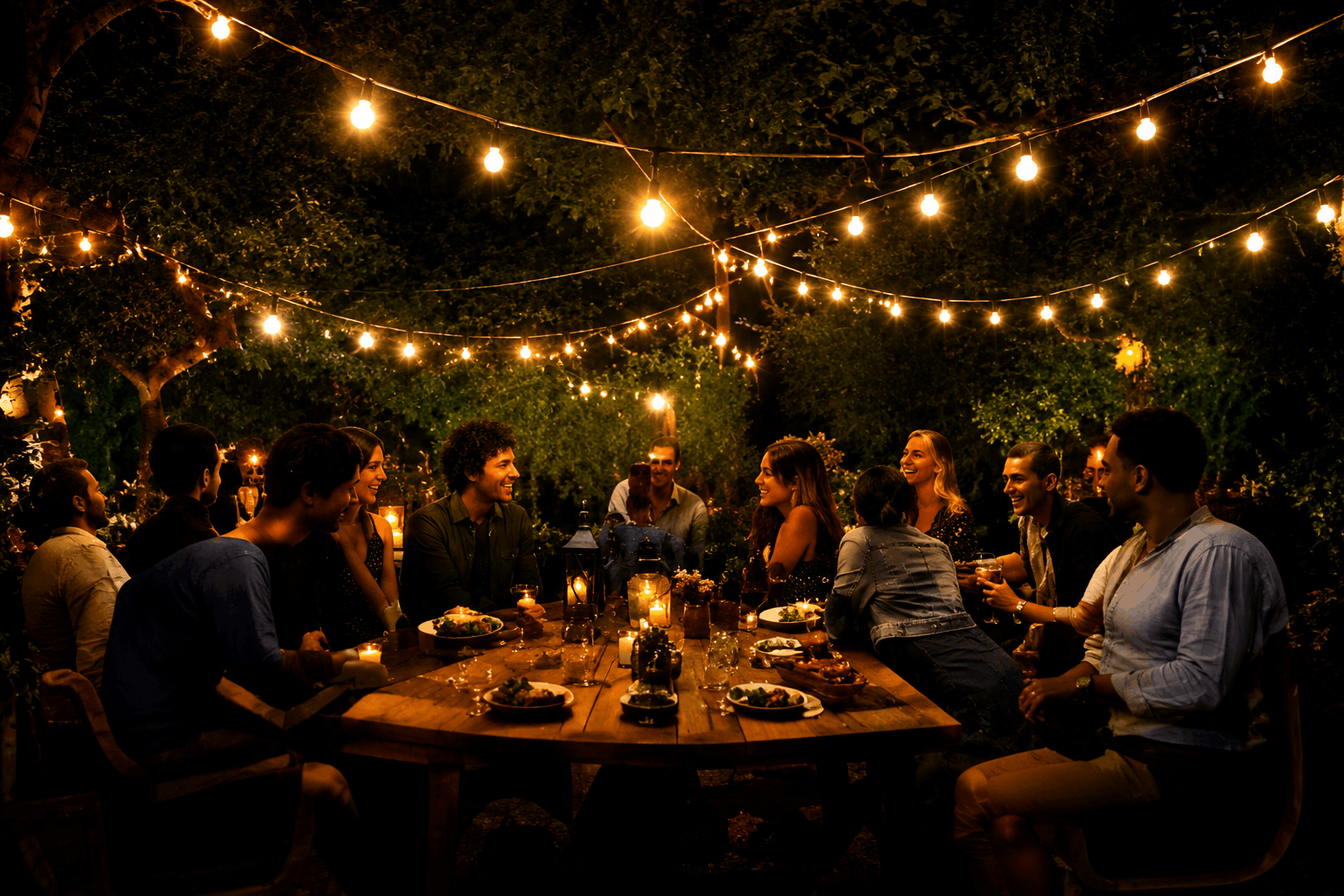
For evening celebrations, warm lighting can be combined with greenery to create a soft and inviting appearance.
The design can also be adapted to the occasion. A sophisticated family function may use understated foliage, while a larger celebration could feature an immersive botanical installation.
Green Interior Styling for Homes
Homes provide many opportunities for biophilic styling. Living rooms, balconies, dining areas, entrances, workspaces, and bedrooms can all incorporate natural elements.
Large plants can soften architectural lines and add visual interest to empty corners. Smaller arrangements can bring greenery to shelves and tables without changing the room layout.
Natural fabrics, wooden accessories, woven baskets, stone textures, and botanical artwork can complement living plants.
The result does not need to resemble a garden. A few carefully positioned natural elements can be enough to create a more refreshing interior atmosphere.
Nature-Inspired Commercial and Workplace Design
Businesses can use biophilic styling to create more welcoming environments for customers, employees, and visitors. Reception areas are particularly suitable for botanical focal points because they create an immediate visual impression.
Offices can incorporate plants around common areas, meeting spaces, workstations, and waiting zones. Retail environments can use greenery to soften displays and create a more distinctive shopping atmosphere.
Hospitality spaces can take the concept further through botanical walls, natural textures, indoor planting, and nature-inspired decorative installations.
The design should always support the business identity. Natural elements can complement branding rather than replacing it.
Choosing the Right Living Plants
Plant selection is a practical part of biophilic design. Different species have different requirements, and not every plant is suitable for every interior.
Light availability is particularly important. Some plants perform well in bright environments, while others are better suited to lower-light conditions.
Maintenance should also be considered. Businesses and households with limited time may prefer hardy varieties that require less frequent attention.
Professional plant stylists can recommend suitable options based on the space, climate, maintenance capacity, and desired appearance.
Sustainable Materials in Biophilic Styling
Sustainability can extend beyond plants. Designers can incorporate reusable, recyclable, responsibly sourced, or durable materials into the overall environment.
Natural fibres, bamboo, responsibly sourced wood, reusable containers, recycled materials, and durable decorative structures can complement botanical styling.
However, environmental claims should remain practical and transparent. A material's sustainability depends on factors such as sourcing, production, transportation, durability, reuse, and disposal.
Thoughtful material selection helps ensure that the natural aesthetic is supported by responsible design choices.
Lighting and Biophilic Ambience
Lighting plays a major role in how botanical elements appear. Natural daylight can enhance greenery and bring out subtle variations in leaf colour and texture.
Where natural light is limited, carefully selected artificial lighting can highlight plants and decorative features. Warm illumination can create an intimate evening atmosphere, while brighter neutral lighting may suit professional interiors.
Lighting should be balanced. Excessive brightness can reduce the calming quality of a nature-inspired space, while insufficient illumination may make greenery appear dull.
Professional designers consider both the plants and the surrounding architecture when developing the lighting concept.
Benefits of Nature-Inspired Decor
Biophilic styling can transform the visual character of a space by introducing natural colour, organic textures, and visual variety.
Living greenery can also soften hard architectural surfaces. This is especially useful in modern interiors where glass, metal, concrete, and polished finishes dominate.
Another benefit is flexibility. Plants and botanical elements can be adapted to different design styles, from minimal interiors to richly layered environments.
The approach also provides opportunities for seasonal changes. Different flowers, foliage, and decorative materials can refresh the appearance of a space without completely redesigning it.
Planning a Biophilic Decorative Setup
Successful biophilic styling begins with a clear understanding of the environment. Designers should assess available light, ventilation, temperature, space, and existing décor.
The purpose of the area should also guide the design. A quiet lounge may require softer greenery and natural textures, while a reception area may benefit from a dramatic botanical focal point.
Maintenance planning is essential when living elements are used. Watering, pruning, cleaning, replacement, and plant health should be considered before installation.
For temporary installations, designers should also plan transportation, setup, removal, and responsible handling of plants and materials after the occasion.
Regional and Cultural Influences
Nature-inspired design can incorporate regional plant varieties, traditional craftsmanship, local materials, and cultural decorative styles.
Using locally familiar botanical elements can give a space a stronger sense of place. Traditional woven materials, handcrafted wooden details, regional flowers, and indigenous greenery can be combined with contemporary styling.
This approach creates a design that feels authentic rather than generic.
Modern biophilic design does not have to follow a single international aesthetic. It can reflect local environments and cultural preferences while maintaining a contemporary appearance.
Best Practices for Biophilic Design
The most effective approach is to create balance. Too many plants can make an interior feel crowded, while too few may fail to create the intended visual connection with nature.
Plant placement should also consider movement. Walkways, entrances, seating areas, and functional spaces need to remain accessible.
Containers should complement the surrounding décor. Simple planters can support minimalist interiors, while handcrafted or textured containers may suit more expressive environments.
Maintenance should never be overlooked. A neglected plant can quickly reduce the quality of an otherwise sophisticated setup.
How to Choose the Right Biophilic Design Professional
Choosing a suitable professional requires looking at both creative ability and practical knowledge.
Review previous projects to understand how the designer combines plants, materials, lighting, and interior elements. Ask how they select plants and what maintenance support is available.
For temporary functions, discuss installation and removal procedures. For permanent spaces, understand how ongoing plant care will be managed.
A strong provider should be able to create a beautiful concept while considering the practical conditions that determine whether the design remains successful over time.
Why Choose Happiffie?
Happiffie helps users discover professionals who specialise in botanical styling, living plant décor, nature-inspired interiors, and sustainable decorative solutions.
Through experienced service providers, users can explore biophilic concepts suited to homes, businesses, celebrations, hospitality environments, exhibitions, and other spaces.
Whether the requirement is a subtle green accent or a complete botanical environment, professionals can develop solutions based on the available space, design preference, maintenance requirements, and desired atmosphere.
Happiffie makes it easier to connect creative ideas with specialists who understand both visual design and practical execution.
Conclusion
Biophilic styling creates a natural connection between people and their surroundings through greenery, organic textures, botanical details, natural materials, and thoughtful spatial design.
Eco Earth Friendly Biophilic Decor can transform ordinary interiors into refreshing environments while offering considerable creative flexibility. From homes and workplaces to celebrations and commercial spaces, nature-inspired design can create visual warmth without relying on excessive decoration.
With Happiffie, users can discover experienced professionals who combine botanical creativity, sustainable thinking, and practical design knowledge to create naturally elegant spaces.
Frequently Asked Questions
What is biophilic decor?
Biophilic decor incorporates natural elements such as living plants, botanical details, natural textures, organic forms, and nature-inspired materials into interior or decorative environments.
What is Eco Earth Friendly Biophilic Decor?
It combines biophilic design principles with environmentally conscious choices, including living elements, reusable materials, natural textures, and responsible decorative practices.
Which plants are suitable for indoor biophilic styling?
Suitable plants depend on light, temperature, humidity, available space, and maintenance requirements. Professional plant specialists can recommend appropriate varieties.
Can biophilic decor be used in offices?
Yes. Offices can incorporate plants, botanical walls, natural materials, and greenery into reception areas, workspaces, meeting rooms, and common areas.
Can biophilic styling be used for celebrations?
Absolutely. Botanical backdrops, greenery, natural floral arrangements, plant installations, and organic textures can create attractive celebration environments.
Does biophilic design require many plants?
No. Effective design can use a small number of carefully positioned plants to create a strong natural visual connection.
Can small spaces use biophilic decor?
Yes. Hanging plants, vertical greenery, compact planters, tabletop arrangements, and botanical artwork can work well in smaller interiors.
What materials complement botanical styling?
Natural fibres, bamboo, wood, stone textures, woven materials, recycled components, and other responsibly selected materials can complement greenery.
How important is lighting for biophilic interiors?
Lighting is very important. Natural daylight can enhance plants, while carefully planned artificial lighting can highlight greenery and create ambience during evening hours.
Is biophilic decor sustainable?
It can be, particularly when designers use responsibly sourced materials, reusable components, appropriate living plants, and practical maintenance strategies.
How do I maintain living plant decor?
Maintenance may include watering, pruning, cleaning, monitoring plant health, and replacing unsuitable plants. Requirements vary by species and environment.
How does Happiffie help with biophilic design?
Happiffie connects users with professionals who can provide botanical styling, living plant installations, nature-inspired interiors, and environmentally conscious decorative solutions.