
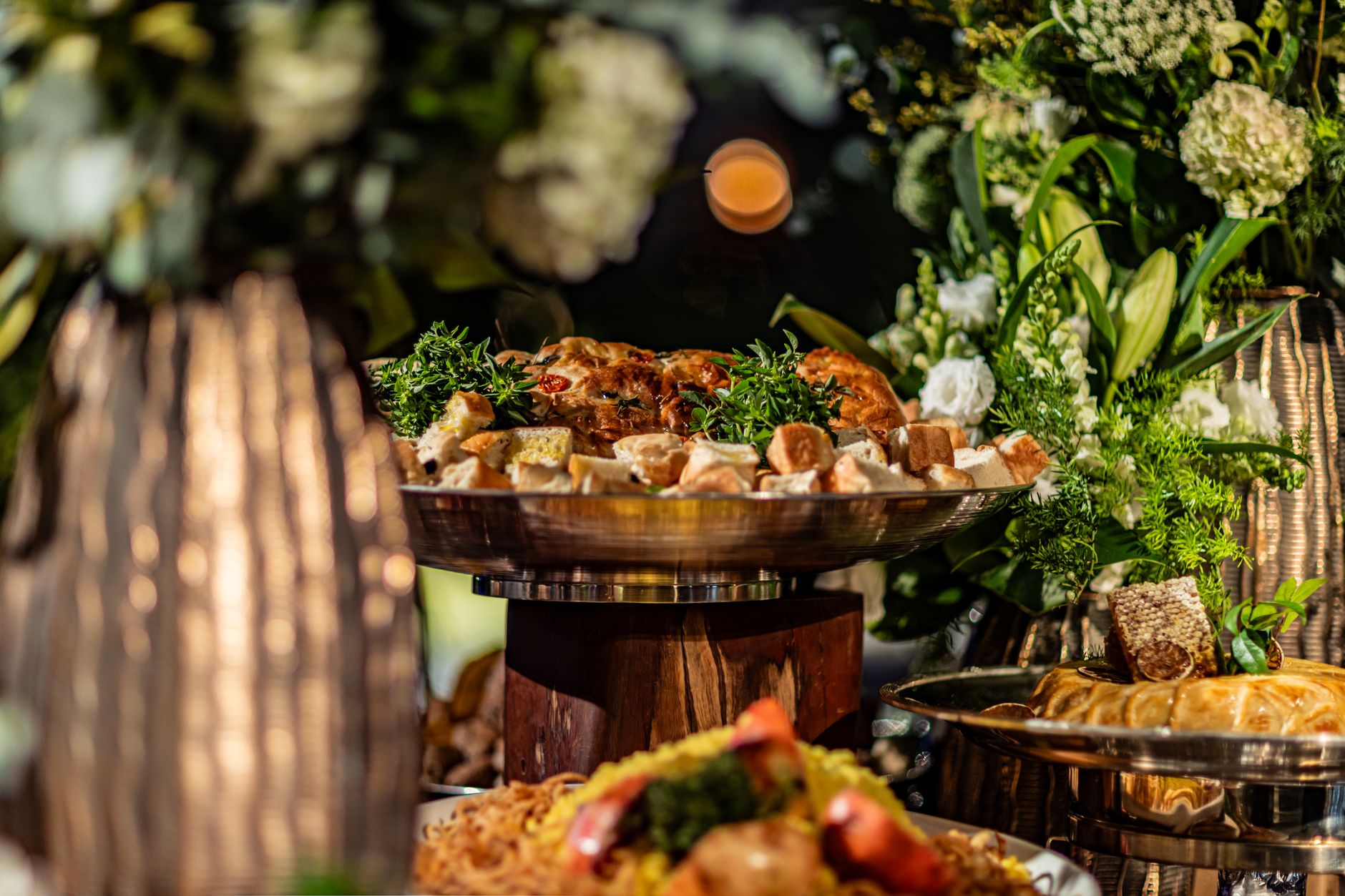
Sacred Meals, Flawlessly Served
F&B in Delhi
Traditional Ritual Catering Experts in Delhi
When a puja, mundan, griha pravesh, or multi-day shaadi demands food that honours both faith and flavour, you need traditional ritual catering experts who understand the difference between a regular buffet and a sacred meal. Delhi's dense ceremonial calendar — from Karva Chauth dawats in Punjabi Bagh to Navratri bhogs in Laxmi Nagar — calls for caterers skilled in satvik food catering for ceremonies, where every ingredient, every vessel, and every serving time aligns with religious norms. Happiffie connects Delhi families with verified specialists who combine auspicious menu planning for weddings with operational precision, ensuring no-onion no-garlic catering delhi standards and pandit-approved ingredient sourcing are met without compromise.
Quick Answer
Traditional ritual catering experts are specialised food-service professionals who plan and execute menus for religious ceremonies, pujas, and sacred wedding rituals. They adhere to satvik or community-specific dietary codes — including no-onion no-garlic preparations — source pandit-approved ingredients, and manage prasad distribution. In Delhi, these caterers serve events ranging from intimate griha pravesh gatherings of 20 guests to large temple bhogs feeding 500 or more devotees.
What Makes Traditional Ritual Catering Experts Different from Regular Caterers?
Standard event caterers focus on variety and volume; traditional ritual catering experts focus on sanctity and compliance. A regular caterer may offer a paneer butter masala without a second thought, but for a Satyanarayan Katha or a Kanjak puja, the same dish would violate tamsik restrictions. Ritual specialists maintain separate utensils that have never touched onion, garlic, or meat — a non-negotiable in satvik food catering for ceremonies. They also coordinate serving schedules around muhurat timings, so the bhog reaches the deity before guests are seated. In Delhi, where joint-family celebrations still blend multiple regional traditions — Punjabi, UP Brahmin, Marwari, South Indian — these caterers act as cultural translators, adjusting the menu based on the community's specific religious customs. That depth of knowledge simply cannot be replicated by a general-purpose caterer.
Core Services Offered by Ritual Menu Catering Services in Delhi
A full-service provider offering ritual menu catering services typically covers four pillars. First is menu consultation, where the caterer meets with the family pandit or purohit to confirm permissible ingredients — this is where pandit-approved ingredient sourcing becomes a formal, documented process rather than a verbal assurance. Second is procurement: items like Ganga-jal-washed rice, kacchi ghani mustard oil, or specific regional flours are sourced from trusted suppliers in markets like Khari Baoli or Chandni Chowk. Third is live cooking at the venue — many ritual caterers set up a dedicated chulha or induction station so food is freshly prepared on-site, not transported from a central kitchen. Fourth is prasad distribution services, where the caterer's team takes responsibility for portioning, packaging, and handing out prasad in the correct sequence — first to the deity, then elders, then guests. Religious occasion food caterers who bundle all four pillars offer families the greatest peace of mind.
How Much Does Ritual Catering Cost in Delhi?
Pricing for traditional ritual catering experts in Delhi varies by guest count, menu complexity, and service style. For an intimate puja of 20-50 guests with a standard satvik thali — dal, sabzi, poori, halwa, and charanamrit — expect to budget between Rs 350 and Rs 550 per plate. A mid-size ceremony of 100-200 guests with a five-course bhog menu, including kheer, panchamrit, and seasonal fruits, typically falls between Rs 600 and Rs 950 per plate. Large-scale religious events — Jagran langar, temple annakut, or Navratri community bhog serving 300 to 600 people — are often priced on a package basis starting from Rs 1.2 lakh, with staffing and prasad distribution services included. No-onion no-garlic catering delhi setups may carry a 10-15% premium due to dedicated kitchen segregation. Always request an itemised quote that separates food cost, service charges, and rentals for earthen or copper serveware.
Choosing the Right Caterer: Satvik Food Catering for Ceremonies vs. Full Ritual Packages
Not every ceremony requires the same level of specialisation. A griha pravesh may need only satvik food catering for ceremonies — simple, pure vegetarian dishes cooked without tamsik ingredients — while a multi-day wedding with Haldi, Sangeet, and pheras demands a caterer offering complete auspicious menu planning for weddings, where each day's menu is spiritually and gastronomically distinct. Families in areas like Rohini and Dwarka who host large North Indian Brahmin rituals often prefer puja bhog catering specialists who know the precise offering sequence: panchamrit first, then chappan bhog if resources allow, then community prasad. South Indian families in CR Park or Saket may require a caterer fluent in Tamil or Telugu ritual food traditions, including raw banana preparations and specific rice offerings. Matching the caterer's specialisation to your ceremony type is more important than choosing purely on price.
What Should You Verify Before Booking Religious Occasion Food Caterers in Delhi?
Before signing a contract with religious occasion food caterers, conduct a thorough vetting process. Ask for a tasting session that specifically mimics your ritual menu — not a generic food tasting. Confirm whether the caterer has a dedicated satvik kitchen or shares facilities with a regular catering operation; cross-contamination is a genuine concern for strict households. Verify that their staff is briefed on ritual etiquette: wearing clean attire, avoiding leather belts near the sacred space, and maintaining silence during key mantras. Check references from families in your locality — a caterer who has served Navratri bhogs in Karol Bagh may not have experience with Sindhi or Jain ceremony requirements. Finally, ensure the contract specifies prasad distribution services as a line item, so there is no ambiguity about who manages that critical last step. Traditional ritual catering experts worth their reputation will welcome every one of these questions.
Ritual Catering Setup Types: Pros, Cons & Best Use Cases
Expert Recommendation
Best for Intimate Pujas (20-50 Guests)
Best for Multi-Day Weddings with Rituals
Best for Large Community Bhogs (300+ Guests)
Best for Budget-Conscious Families
Best for Jain or Strict Vaishnav Ceremonies
Best for Destination or Outdoor Rituals
How to Choose the Right Option
✅ Pre-booking Checklist
- Confirm the caterer maintains a fully separate satvik kitchen with no shared utensils
- Share the complete ritual schedule and muhurat timings at least 3 weeks in advance
- Request a written list of all ingredients used and verify against pandit's guidelines
- Clarify whether prasad distribution services are included or billed separately
- Conduct a ritual menu tasting — not a general food tasting — before finalising
- Verify the caterer's experience with your specific community's ritual food traditions
- Confirm staffing ratios and whether team members are briefed on ceremony etiquette
- Get a line-item quote separating food, service, rentals, and any wastage charges
🎯 Selection Criteria
- Proven experience with your specific ceremony type and community dietary code
- Dedicated satvik or Jain-compliant kitchen infrastructure
- Ability to coordinate directly with your purohit for ingredient approval
- Capacity to scale from intimate gatherings to 300+ guest community events
- Transparent pricing with no hidden charges for serveware or prasad packaging
- Positive references from families in Delhi who hosted similar ceremonies
💰 Cost / Quality Factors
- Guest count: per-plate cost drops significantly above 150 guests due to economies of scale
- Menu complexity: a five-course bhog costs 40-60% more than a standard three-course thali
- Serveware type: copper and brass rentals add Rs 50-120 per person to the total bill
- Location logistics: outdoor venues in Chattarpur or Dwarka may attract a travel surcharge
- Seasonal demand: Navratri, Diwali, and wedding season inflate prices by 15-25%
- Add-on services: prasad packaging, floral garnishing, and live chulha cooking increase cost
⚠️ Common Mistakes to Avoid
- Booking a generic vegetarian caterer and assuming they can handle ritual dietary restrictions
- Skipping the pandit consultation step before finalising the menu with the caterer
- Ignoring the muhurat schedule when planning food serving times, causing ritual disruption
- Underestimating prasad quantities — always account for 10-15% buffer above guest count
- Choosing a caterer based solely on price without verifying satvik kitchen compliance
- Failing to confirm the caterer's staff etiquette protocols for sacred ceremony spaces
People Also Ask
What is the difference between satvik catering and regular vegetarian catering?
Can traditional ritual catering experts handle outdoor puja venues in Delhi?
How far in advance should I book a ritual caterer for a Delhi wedding?
Do ritual caterers in Delhi provide copper or earthen serveware?
Is no-onion no-garlic catering available for large events of 300 or more guests in Delhi?
What is prasad distribution service and why does it matter?
Can I request region-specific ritual menus, such as Bengali or South Indian?
How is auspicious menu planning for weddings different from regular wedding catering?
Related Experiences on Happiffie
Fresh, Local & Seasonal Catering in Delhi
Delhi's Finest Open Venue Catering
Kochi's Trendiest Wedding Food Trucks
Sacred Prasad Services Across Goa
Joyful Menus for Little Celebrations
All Wedding & Event Services
Frequently Asked Questions
Where in Delhi can I find traditional ritual catering experts for a griha pravesh?
Do Delhi ritual caterers offer no-onion no-garlic catering for Jain ceremonies?
What is typically included in a puja bhog catering package in Delhi?
How do traditional ritual catering experts handle large Navratri bhogs in Delhi?
Can ritual caterers in Delhi accommodate both North and South Indian ceremony food requirements at the same event?
What is pandit-approved ingredient sourcing and why is it important?
Is auspicious menu planning for weddings a separate service or part of the standard ritual catering package?
How do I verify that a ritual caterer in Delhi is genuinely satvik-compliant?
Key Takeaways
- Traditional ritual catering experts in Delhi go beyond vegetarian cooking — they align every ingredient, vessel, and serving time with religious requirements specific to your ceremony.
- Satvik food catering for ceremonies excludes onion, garlic, and tamsik ingredients, requiring a fully dedicated kitchen — verify this before booking.
- Prasad distribution services are a critical final step managed by specialist caterers, ensuring the correct ritual sequence is honoured.
- Pricing in Delhi ranges from Rs 350 per plate for simple satvik thalis to Rs 1.2 lakh-plus packages for large community bhogs with full service.
- Auspicious menu planning for weddings requires day-by-day menu differentiation across Haldi, Sangeet, and phera ceremonies — not a one-size buffet.
- Book at least 6-8 weeks ahead during peak wedding and festival seasons; top puja bhog catering specialists are booked 3 months in advance.
- Always conduct a ritual-specific tasting and share a written ingredient list with your pandit for sign-off before confirming the caterer.
- Happiffie's verified listings help Delhi families filter by community, ceremony type, and dietary code to find the right specialist quickly.
Find Verified Traditional Ritual Catering Experts in Delhi
Compare specialists, check menus, and book with confidence for every sacred occasion on Happiffie.
Explore Ritual Caterers
Are you a Vendor? Grow Your Business with Happiffie!
- High intent verified leads
- Reverse auction opportunities
- AI business tools & insights
- Dedicated vendor dashboard
- Grow your business, your way
It's free & takes less than 2 minutes!