
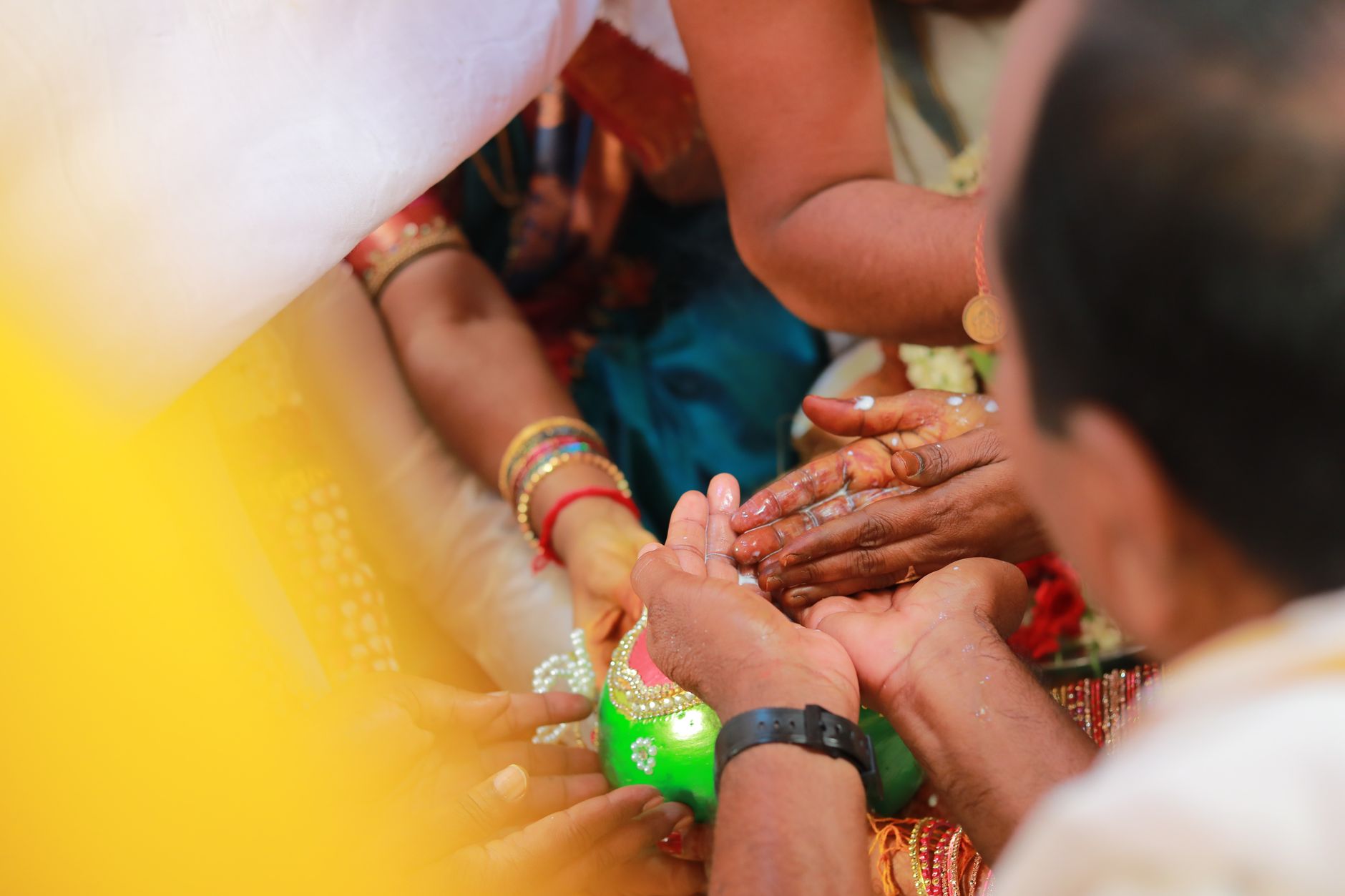
Authentic Kannada Kalasha Ceremony Items in Chandigarh
Religious cermony in Chandigarh
Kannada Kalasha Ceremony Items: Complete Guide for Chandigarh Weddings
Planning a South Indian wedding in Chandigarh means paying careful attention to every sacred ritual, and the Kalasha ceremony sits at the very heart of a Kannada wedding. Sourcing authentic Kannada Kalasha Ceremony Items in a north Indian city can feel daunting, but Chandigarh's growing South Indian community and specialty puja stores have made it far more accessible than families expect. From the brass or copper Kalasha pot and mango leaves to coconut, turmeric, and consecrated thread, every element carries deep spiritual significance. Understanding traditional Kannada wedding rituals and pairing the right Kalasha decoration setup with qualified purohits ensures your ceremony is both ritually correct and visually magnificent. Happiffie helps you connect with verified suppliers and event coordinators across Chandigarh's Sector 17, Sector 35, and Panchkula who specialise in auspicious ceremony decor for South Indian weddings.
Quick Answer
Kannada Kalasha Ceremony Items include a brass or copper water pot (Kalasha), mango leaves, a whole coconut, sacred thread (Mauli), turmeric, kumkum, betel leaves, flowers, rice, and a lamp. These items are arranged and consecrated by a purohit at the start of a Kannada wedding to invoke divine blessings. In Chandigarh, complete sets are available at South Indian specialty stores and through wedding suppliers listed on platforms like Happiffie, typically ranging from INR 800 to INR 5,000 depending on material and elaborateness.
What Are Kannada Kalasha Ceremony Items and Why Do They Matter?
Kannada Kalasha Ceremony Items are a sacred collection of ritual objects used to establish a divine presence at the beginning of a Kannada wedding or puja. The centrepiece is a metal pot, traditionally made of brass, copper, or silver, filled with holy water or water mixed with turmeric. Five mango leaves are placed symmetrically around the pot's mouth, and a whole coconut is set on top, symbolising the Trimurtis. The pot is decorated with kumkum, sandalwood paste, and a red or yellow cloth, while rice forms the base that steadies it. This setup, collectively called the Kalasha, is believed to invite positive cosmic energy and the blessings of Varunaa deva, the god of water. Without a properly assembled Kalasha, the wedding rituals are considered incomplete according to South Indian Brahmin wedding arrangements. In Chandigarh, families performing traditional Kannada wedding rituals must source each component carefully to maintain ritual purity, because even minor substitutions — such as using the wrong type of leaves — can be flagged by an experienced purohit.
Complete Checklist of Essential Kalasha Puja Essentials
Knowing every item in advance prevents last-minute scrambles on the wedding morning. Your Kalasha puja essentials list should include the following: a brass, copper, or silver Kalasha pot (capacity 500 ml to 1 litre); five fresh mango leaves (Aam ke patte) long enough to drape over the pot's rim; one whole, unhusked coconut; sacred red or yellow Mauli thread to tie around the pot; raw rice (akshata) for the base plate; turmeric powder (haldi) and kumkum for decorating the pot; sandalwood paste (chandan); betel leaves and betel nuts (paan-supari); a small brass or clay lamp (diya) with cotton wicks and ghee; camphor (kapoor); incense sticks (agarbatti); and fresh flowers, preferably marigold and jasmine. For grander Kannada wedding ceremonies, families also add silver coins, a coconut shell filled with water, and specific grains like black sesame. These Kalasha puja essentials should be collected at least two days before the ceremony so the purohit can inspect and consecrate them. Many vendors in Chandigarh's Sector 35 and the Panchkula markets supply pre-packed South Indian pooja items specifically tailored to Karnataka rituals.
How Much Do Kannada Kalasha Ceremony Items Cost in Chandigarh?
Costs depend on material quality, the number of Kalashas required, and whether you opt for a basic or premium Kalasha decoration setup. A standard brass Kalasha pot costs between INR 400 and INR 1,200; copper pots are priced INR 800 to INR 2,500; and silver-plated options start at INR 3,000. A complete basic set of Kalasha puja essentials — pot, leaves, coconut, thread, kumkum, turmeric, and flowers — can be assembled for INR 800 to INR 1,500. Mid-range packages with copper pot, silver coin, and decorative tray cost INR 2,000 to INR 3,500. Premium Kalasha decoration setups with engraved silver pots, matching pooja thali, and full floral arrangement run INR 5,000 to INR 12,000 and are popular for destination-style weddings at Chandigarh's banquet halls. Wedding ritual supplies Chandigarh vendors often bundle the Kalasha with a broader South Indian pooja items kit, saving families 10 to 20 percent compared to buying each element separately. Always factor in the purohit's dakshina separately, which typically ranges INR 3,000 to INR 11,000 in Chandigarh for a full-day Kannada wedding.
Sourcing South Indian Pooja Items in Chandigarh: Where to Look
Chandigarh has a smaller but well-organised South Indian community, and the city has steadily developed reliable supply channels for traditional Kannada wedding rituals. Specialty religious goods stores in Sector 17's market arcade and Sector 22's bazaar stock brass and copper Kalasha pots alongside standard north Indian puja items. For more specific South Indian pooja items like particular grades of sandalwood paste, Mysore-style flowers, or authentic Mauli thread, families should explore stores near Sector 35 or the Manimajra market. Online platforms and WhatsApp-based South Indian communities in Chandigarh often maintain vendor lists for Brahmin wedding arrangements, including purohits who bring their own Kalasha puja essentials. Wedding coordinators listed on Happiffie can source a complete Kannada Kalasha Ceremony Items kit on your behalf, saving considerable time. If you are hosting the wedding at a hotel or banquet hall in Zirakpur or Mohali, confirm with the venue that open flames for the diya and havan are permitted, as some premium properties have restrictions that affect auspicious ceremony decor planning.
How Should You Set Up a Traditional Kalasha Decoration Setup for a Kannada Wedding?
The placement and decoration of the Kalasha is as important as the items themselves. The pot should be positioned on a raised wooden paat or a brass tray filled with raw rice to keep it upright and symbolically elevated. The purohit draws a rangoli or kolam beneath the tray, typically in white rice flour. Mango leaves are inserted so their tips curve outward, and the coconut is placed with the tuft (shikha) facing upward. Red cloth or a piece of new silk is wrapped around the pot's body before the Mauli is tied. For a traditional Kalasha decoration setup at larger weddings, multiple Kalashas — sometimes five or nine, known as Pancha Kalasha or Nava Kalasha — are arranged symmetrically on the mandap, each representing a different deity. Fresh jasmine and marigold strings are woven around the pots for auspicious ceremony decor. Lighting is crucial: warm yellow bulbs or traditional oil lamps (deepa stambhas) complement the Kalasha rather than washing it out under harsh white LEDs. Mangalsutra ceremony preparations, which follow shortly after the Kalasha ritual, benefit from this warm, reverential ambience already established. Plan the setup with your purohit at least an hour before the muhurta to avoid a rushed arrangement.
Kannada Kalasha Ceremony Items: Setup Types Compared
Expert Recommendation
Best for Intimate Family Ceremonies
Best for Large Guest-Count Weddings
Best for Budget-Conscious Families
Best for Traditional Brahmin Weddings
Best for Destination Weddings in Chandigarh
Best for Modern Couples Balancing Tradition
How to Choose the Right Option
✅ Pre-booking Checklist
- Confirm with your purohit the exact list of Kannada Kalasha Ceremony Items required for your community's tradition.
- Decide on pot material (brass, copper, or silver) and procure at least 3-4 days before the wedding day.
- Source fresh mango leaves no more than 24 hours before the ceremony to prevent wilting.
- Verify that the coconut is whole, unhusked, and has water inside by shaking it before purchase.
- Check that your banquet hall or venue in Chandigarh permits open flames for the diya and havan.
- Arrange for your Kalasha decoration setup team or purohit to arrive at least 90 minutes before the muhurta.
- Purchase extra Mauli thread, kumkum, and camphor as these are consumed during the ritual and easy to underestimate.
- Confirm delivery addresses and timing with your wedding ritual supplies Chandigarh vendor at least one week ahead.
🎯 Selection Criteria
- Material authenticity: brass or copper is preferred over stainless steel or plastic for ritual validity.
- Freshness of organic items: mango leaves, flowers, and coconut must be sourced locally and recently.
- Purohit approval: all Kalasha puja essentials should be reviewed by your officiant before the ceremony.
- Vendor specialisation: choose suppliers who understand traditional Kannada wedding rituals, not generic puja stores.
- Quantity alignment: number of Kalashas must match the ritual format your purohit prescribes.
- Budget fit: balance quality with cost by prioritising the pot and coconut quality over decorative extras.
💰 Cost / Quality Factors
- Metal type (brass vs. copper vs. silver) is the single largest driver of Kalasha pot cost.
- Number of Kalashas required — single, Pancha, or Nava — multiplies material costs proportionally.
- Freshness sourcing: local Chandigarh markets are cheaper than delivery fees for fragile organic items.
- Decorator or setup fees for a professional Kalasha decoration setup range INR 1,500 to INR 5,000.
- Pre-packed kits offer convenience but cost 10-25% more than self-assembled South Indian pooja items.
- Purohit experience level affects dakshina, which indirectly influences overall ceremony budget planning.
⚠️ Common Mistakes to Avoid
- Using a stainless-steel or plastic pot, which is not ritually accepted for Brahmin wedding arrangements.
- Buying coconut without checking it has water inside, rendering it inauspicious for the Kalasha.
- Substituting banana leaves or any other leaf for fresh mango leaves around the Kalasha rim.
- Forgetting to coordinate setup timing with the purohit, causing a rushed arrangement at the muhurta.
- Ordering pre-packed kits without verifying freshness of organic contents like flowers and turmeric.
- Not confirming venue fire safety rules in advance, leading to last-minute removal of the diya from the Kalasha decoration setup.
People Also Ask
What items go inside a Kannada Kalasha pot?
Can I buy Kannada Kalasha Ceremony Items in Chandigarh if I am not from Karnataka?
How many Kalashas are needed for a typical Kannada wedding ceremony?
What type of metal is best for a Kalasha pot — brass, copper, or silver?
When exactly during the wedding is the Kalasha ceremony performed?
Are pre-packed Kannada Kalasha ceremony kits available in Chandigarh?
Does the Kalasha ceremony differ between different communities in Karnataka?
What common mistakes do families make when sourcing Kalasha puja essentials in a non-Karnataka city?
Related Experiences on Happiffie
Shwetambar Wedding Puja — Vizag
Authentic South Indian Bridal Styling in Delhi
South Indian Garlands for Noida Weddings
Sacred Supplies for Your Mumbai Wedding
Authentic Telugu Mangalsutra Essentials
Sacred Blooms for Your Ceremony Car
Authentic Brahmin Wedding Savouries, Lucknow
Frequently Asked Questions
Where can I buy Kannada Kalasha Ceremony Items in Chandigarh?
Can I use an aluminium or steel Kalasha pot if brass is unavailable?
How far in advance should I order Kannada Kalasha Ceremony Items in Chandigarh?
Do Chandigarh-based purohits for Kannada weddings bring their own Kalasha puja essentials?
Is a Pancha Kalasha setup necessary for a standard Kannada wedding in Chandigarh?
What is the significance of mango leaves in Kannada Kalasha Ceremony Items?
Can the Kalasha ceremony be performed outdoors at a Chandigarh farmhouse wedding?
Are there online vendors who deliver Kannada Kalasha Ceremony Items to Chandigarh?
Key Takeaways
- Kannada Kalasha Ceremony Items form the sacred foundation of every Kannada wedding and must be assembled with precision and ritual accuracy.
- Essential components include a brass or copper pot, five mango leaves, a whole coconut, Mauli thread, turmeric, kumkum, and fresh flowers.
- Costs in Chandigarh range from INR 800 for a basic set to over INR 12,000 for a premium silver-plated Kalasha decoration setup.
- Copper is the most auspicious pot material; brass is the most common and affordable alternative used in traditional Kannada wedding rituals.
- Chandigarh's Sector 17, Sector 35, and Panchkula markets stock South Indian pooja items, with Happiffie vendors offering curated sourcing services.
- Always consult your purohit before purchasing, as item specifications vary between Karnataka's Brahmin, Vokkaliga, and Lingayat communities.
- Fresh organic items — mango leaves, coconut, and flowers — should be sourced no more than 24 hours before the ceremony for ritual validity.
- Pre-packed kits offer convenience but self-assembled Kalasha puja essentials are more cost-effective when guided by a knowledgeable purohit.
Find Trusted Suppliers for Your Kannada Kalasha Ceremony in Chandigarh
Connect with Happiffie's curated network of South Indian ritual specialists, puja item vendors, and experienced purohits — all verified for Chandigarh weddings.
Explore Vendors Now
Are you a Vendor? Grow Your Business with Happiffie!
- High intent verified leads
- Reverse auction opportunities
- AI business tools & insights
- Dedicated vendor dashboard
- Grow your business, your way
It's free & takes less than 2 minutes!