
Kerala Sacred Ceremony Articles in Bengaluru
Religious cermony in Bengaluru
Kerala Sacred Ceremony Articles: Complete Guide for Bengaluru Families
Planning a sacred rite in Bengaluru and searching for authentic Kerala Sacred Ceremony Articles can feel overwhelming when the city's market spans everything from bustling Malleshwaram stores to specialised online vendors. Whether you are organising a grand Thiruvonam celebration, an intimate Satyanarayana Puja, or a multi-day Kerala wedding, sourcing the right Hindu puja samagri — brass lamps, sacred banana-leaf sets, kumkum, vibhuti, and woven coconut-shell vessels — determines the spiritual integrity of every ritual. Bengaluru's large Malayali community, concentrated in areas like Koramangala, JP Nagar, and Whitefield, has driven a thriving ecosystem of suppliers who understand Kerala wedding traditions in Bengaluru and can deliver ceremony-grade materials on short notice.
Quick Answer
Kerala Sacred Ceremony Articles are the complete set of ritual objects — brass nilavilakku lamps, sacred banana leaves, coconut, betel, turmeric, kumkum, flowers, and specific grains — required to perform traditional Kerala Hindu ceremonies correctly. In Bengaluru, these items are available through Malayali-run religious stores, pan-Indian puja samagri shops, and curated event-supply vendors. Prices range from ₹800 for a basic puja kit to ₹25,000 or more for a full multi-day wedding ceremony bundle.
What Are Kerala Sacred Ceremony Articles and Why Do They Matter?
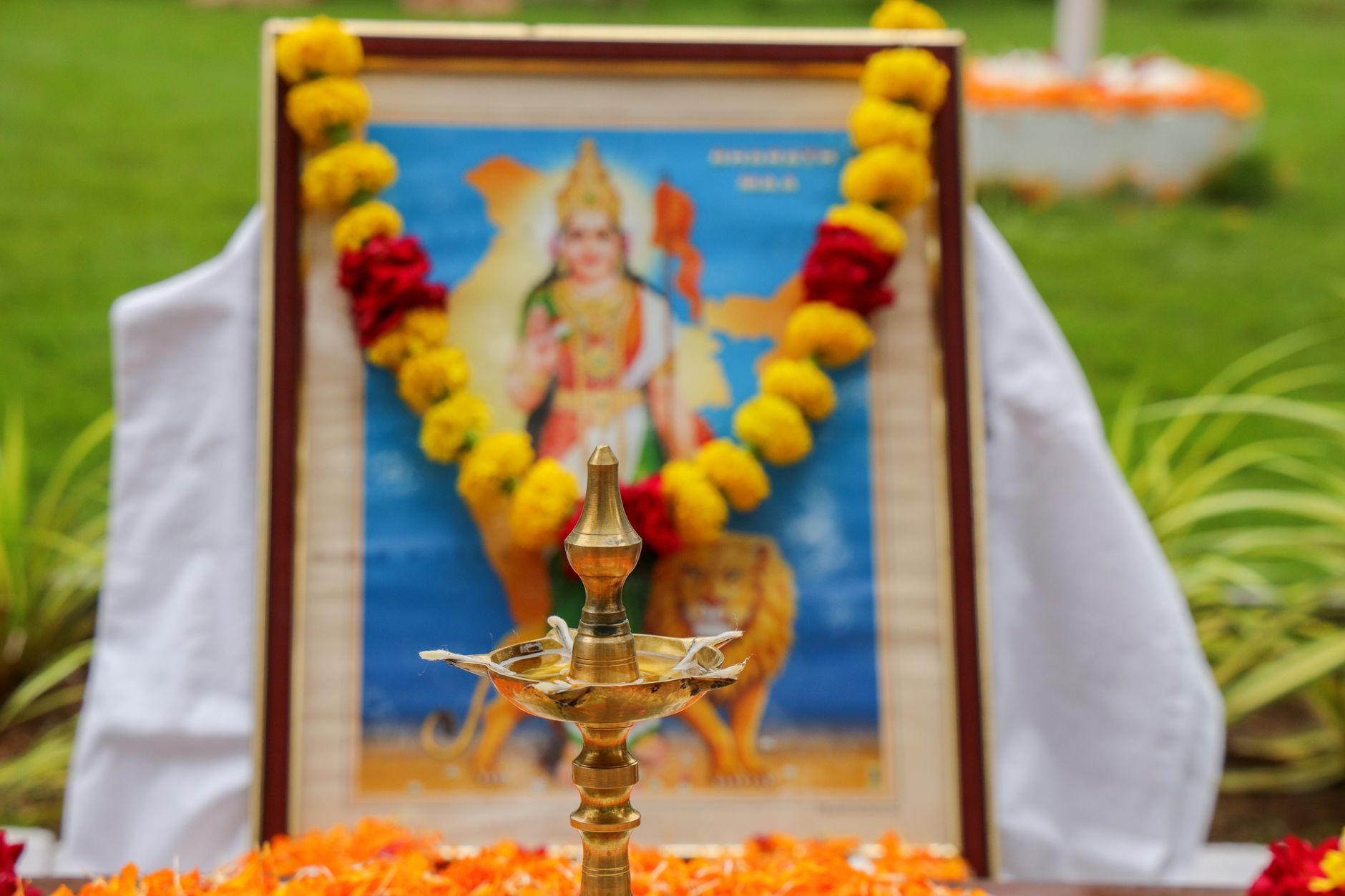
Kerala Sacred Ceremony Articles refer to the carefully prescribed ritual objects that Malayali Hindu families use to consecrate life-cycle events — births, threads ceremonies, weddings, house-warmings, and ancestor rites. Unlike generic puja kits, these articles follow the Parashurama Kshetra tradition and include items rarely found in north-Indian stores: plantain stems (vazha thandu), jackfruit-leaf cups (ela), specific varieties of red rice (rosematta), arecanut (adakka), and the iconic brass nilavilakku oil lamp. Each object carries symbolic weight. The nilavilakku, for instance, must be lit before any auspicious event begins, and its ghee must be pure cow ghee — not vegetable substitute. Sourcing correct vedic ceremony essentials ensures that the family's priest (Asan) can conduct rites without improvisation, which many families believe affects the ritual's efficacy and the blessings received. In Bengaluru, where priests often travel from Kerala or are part of the city's Iyer and Namboothiri communities, having the right articles on arrival saves time and avoids mid-ceremony delays that can disrupt muhurtham timings.
Where to Source Authentic Ritual Supplies in Bengaluru
Bengaluru offers several distinct sourcing channels for traditional ritual supplies, each with trade-offs in authenticity, price, and convenience. Malleshwaram's 8th Cross and surrounding lanes host long-standing religious goods shops that stock South Indian ceremony staples including Kerala-specific brass items and handwoven silk vastra. Rajajinagar and Gandhi Bazaar similarly carry broad puja samagri inventories. For Malayali families in East Bengaluru — Whitefield, Marathahalli, and Brookfield — specialist vendors and Malayali cultural associations often maintain curated supply lists and can connect buyers with trusted Kerala-based wholesalers who courier items. Online platforms have grown significantly post-2020, offering pre-packed Kerala Sacred Ceremony Articles with same-day or next-day delivery within Bengaluru's BBMP limits. When evaluating any supplier, ask specifically whether they stock Kerala-format items versus generic South Indian puja samagri — the two overlap only partially. South Indian ceremony décor elements such as mango-leaf toranams and banana-tree pillars are often sourced separately from florists rather than religious goods stores, so budgeting for both categories is essential.
How Much Do Kerala Sacred Ceremony Articles Cost in Bengaluru?
Costs vary sharply based on ceremony type, guest count, and whether items are rented, purchased, or custom-bundled. A basic namakaran (naming ceremony) kit covering pooja items for ceremonies — coconut, flowers, dhoop, camphor, and lamp oil — typically costs ₹800–₹2,000. An upanayanam (thread ceremony) requires more elaborate vedic ceremony essentials including the yagnopaveetam thread, havana samagri, specific grains, and a full brass set, pushing costs to ₹5,000–₹12,000. A two-day Kerala wedding demands the most comprehensive set of Kerala Sacred Ceremony Articles: nilavilakku, para (measuring vessel), ashtamangalya tray, silk cloth sets, panchaloha idols, and ritual foodstuffs, with supplier quotes ranging from ₹15,000 to ₹40,000 depending on metal quality and quantity. Renting brass and silver items reduces upfront spend by 30–50%, with reputable rental vendors in Jayanagar and BTM Layout offering cleaned, consecrated sets. Always request an itemised quote so you can cross-check with your priest's specific list — priests frequently follow regional sub-traditions that require slight variations in article selection.
Kerala Wedding Traditions in Bengaluru: What Ceremony Coordinators Need to Know
Kerala wedding traditions in Bengaluru blend the original rituals of Thiruvananthapuram or Thrissur-style ceremonies with the logistical reality of a metro city. Venues in Koramangala, Indiranagar, and Electronic City increasingly offer Kerala-format hall setups including bamboo mandap frames and pookalam (floral rangoli) specialists. However, families must still independently source Kerala Sacred Ceremony Articles because venue packages rarely include ritual objects. The Ashtamangalya set — eight sacred objects on a tray, used during the Muhurtham — is perhaps the most ceremony-critical article; it must be assembled with the priest's blessing before the main ritual begins. Auspicious date planning is equally critical: most families consult a Panchangam before booking hall or catering, and the chosen nakshatra directly influences which articles and flower varieties are required. Understanding this interdependence between auspicious date planning and article procurement saves families from last-minute scrambles. Malayali community events in Bengaluru — coordinated through associations in Jayanagar, Banashankari, and Yelahanka — often publish annual vendor directories that first-time planners should request.
How Do You Verify the Quality and Authenticity of Ritual Supplies?
Verifying the quality of Kerala Sacred Ceremony Articles is not merely about aesthetics — incorrect materials can render a rite non-compliant with shastra guidelines, according to many practising priests. For brass items, check for hallmark purity stamps and uniform patina; thin-plated items chip quickly under lamp heat. For organic materials — turmeric, kumkum, holy ash — ask vendors for source details: temple-grade items are stone-ground and chemical-free, unlike commercial cosmetic-grade alternatives. When buying pooja items for ceremonies online, look for sellers who describe articles in Malayalam or Tamil and list shastra compliance, as this indicates awareness of ritual rather than decorative use. Priests who regularly conduct Kerala ceremonies in Bengaluru are the best validators: share your procurement list with the officiating Asan at least two weeks before the event and ask for written confirmation of missing or substitutable items. For a multi-day event, hire a ceremony coordinator who specialises in traditional ritual supplies sourcing — this professional manages the checklist, supervises delivery, and liaises between the priest and the venue, preventing the most common planning failures.
Kerala Sacred Ceremony Articles: Sourcing Options Compared
Expert Recommendation
Best for intimate home ceremonies
Best for large Kerala weddings
Best for budget-conscious families
Best for traditional Namboothiri or Nair rituals
Best for destination or outstation families
Best for modern families blending traditions
How to Choose the Right Option
✅ Pre-booking Checklist
- Fix the muhurtham date with your priest before ordering any articles, as the Panchangam nakshatra determines flower and grain choices.
- Obtain a written article list from your officiating Asan at least 4 weeks before the ceremony.
- Confirm whether your priest accepts rented brass items or requires newly purchased or family-owned articles.
- Source organic and perishable items — flowers, fruits, turmeric, banana leaves — within 24–48 hours of the ceremony to maintain freshness.
- Verify that durable items such as brass lamps and silk vastra meet the purity standards of your sub-tradition (Namboothiri, Nair, Ezhava, etc.).
- Book a ceremony coordinator or assign a responsible family member to cross-check delivered items against the priest's list on the morning of the event.
- Budget separately for South Indian ceremony décor (banana trees, toranams, pookalam) and ritual articles — these are typically different vendors.
- Confirm delivery windows with vendors at least 48 hours in advance and have a backup local store identified for emergency replacements.
🎯 Selection Criteria
- Sub-tradition compliance: ensure the vendor understands the difference between Namboothiri, Nair, and Ezhava article requirements.
- Material quality: prioritise temple-grade organic materials and hallmark-stamped brass over commercial or decorative alternatives.
- Vendor reliability: choose suppliers with verifiable experience serving Kerala ceremonies specifically, not just generic South Indian rites.
- Delivery infrastructure: confirm on-time delivery capability, especially for perishable articles, within your ceremony venue's location in Bengaluru.
- Priest endorsement: where possible, use suppliers recommended by your officiating Asan to avoid article mismatches.
💰 Cost / Quality Factors
- Ceremony type and scale: namakaran kits cost ₹800–₹2,000; full wedding article sets range from ₹18,000–₹40,000.
- Metal quality: thicker, purer brass and bronze sets cost 2–3x more but are durable and ritually preferred.
- Organic versus commercial grade: temple-grade turmeric, kumkum, and vibhuti command a 30–60% premium over commercial equivalents.
- Rental versus purchase: renting reduces spend by 30–50% but requires early booking and priest approval.
- Coordinator fee: professional ceremony sourcing coordination adds 10–20% to total article cost but eliminates errors.
- Lead time and delivery: last-minute or same-day delivery from Bengaluru stores adds a 15–25% urgency premium.
⚠️ Common Mistakes to Avoid
- Ordering a generic Hindu puja kit instead of a Kerala-specific list verified by the officiating priest.
- Procuring perishable items — banana leaves, fresh flowers, fruits — more than 48 hours before the ceremony, causing spoilage.
- Forgetting to account for South Indian ceremony décor items (banana trees, mango-leaf toranams) which are sold separately from ritual articles.
- Ignoring the sub-tradition differences within Kerala Hindu practices, leading to priest rejection of incorrect items at the ceremony.
- Not confirming auspicious date planning before finalising article orders, resulting in wrong flower varieties or grain types.
- Relying solely on online photos for quality assessment of brass items without requesting material specifications or sample verification.
People Also Ask
What is included in a standard Kerala Sacred Ceremony Articles kit?
Can I rent Kerala ceremony brass items in Bengaluru instead of buying?
How far in advance should I order Kerala Sacred Ceremony Articles in Bengaluru?
Are there stores in Bengaluru that specialise in Kerala-specific puja items rather than generic South Indian articles?
What is the Ashtamangalya set used in Kerala weddings?
Do Bengaluru wedding venues provide Kerala ceremony articles as part of their packages?
How does auspicious date planning affect which ceremony articles I need?
What is the average total budget for Kerala Sacred Ceremony Articles for a full wedding in Bengaluru?
Related Experiences on Happiffie
Sacred Supplies for Your Mumbai Wedding
Gujarati Ceremony Essentials, Bengaluru
Sacred Pooja Kits for Every Event
Sacred Starts, Perfect Timing
Authentic South Indian Wedding Decor
All Wedding & Event Services
Frequently Asked Questions
Where can Malayali families in Bengaluru find Kerala-specific ceremony articles rather than generic puja items?
Do I need different Kerala Sacred Ceremony Articles for a Namboothiri versus a Nair wedding?
Can I order Kerala Sacred Ceremony Articles online for a Bengaluru ceremony and trust the quality?
What is the nilavilakku and why is it central to Kerala Sacred Ceremony Articles?
How do I handle Kerala Sacred Ceremony Articles if my wedding venue is in Whitefield or Electronic City?
Is it possible to combine Kerala ceremony articles with a non-Kerala Hindu ritual in Bengaluru?
What perishable items in the Kerala Sacred Ceremony Articles list need last-minute sourcing?
Does Happiffie help families find vendors for Kerala Sacred Ceremony Articles in Bengaluru?
Key Takeaways
- Kerala Sacred Ceremony Articles are tradition-specific ritual objects distinct from generic South Indian puja samagri and must be selected according to the family's Kerala sub-tradition.
- Bengaluru's Malayali community hubs in Koramangala, JP Nagar, Malleshwaram, and Whitefield support a growing network of authentic suppliers and cultural association vendor directories.
- Costs range from ₹800 for a basic namakaran kit to ₹40,000 or more for a full Kerala wedding article set; renting brass items reduces spend by 30–50%.
- Always obtain a priest-verified article list before purchasing, as auspicious date planning and nakshatra directly influence specific flower, grain, and deity article requirements.
- Perishable items including banana leaves, fresh flowers, and fruits should be procured no more than 48 hours before the ceremony to ensure ritual quality.
- Professional ceremony coordinators with Kerala-specific expertise can manage end-to-end procurement, priest liaison, and delivery verification for multi-day events.
- South Indian ceremony décor elements and core ritual articles are typically sourced from different vendor categories — budget and planning should account for both separately.
- Verifying material purity and shastra compliance through priest endorsement or direct supplier communication is the most reliable quality assurance method available to Bengaluru families.
Find Trusted Kerala Ceremony Article Suppliers in Bengaluru
Compare verified vendors, get priest-aligned article lists, and book with confidence through Happiffie — Bengaluru's trusted platform for sacred ceremony planning.
Explore Vendors Now
Are you a Vendor? Grow Your Business with Happiffie!
- High intent verified leads
- Reverse auction opportunities
- AI business tools & insights
- Dedicated vendor dashboard
- Grow your business, your way
It's free & takes less than 2 minutes!