
Sacred Sounds for Your Big Day
Entertainment in Ahmedabad
South Indian Ritual Music for Weddings in Ahmedabad
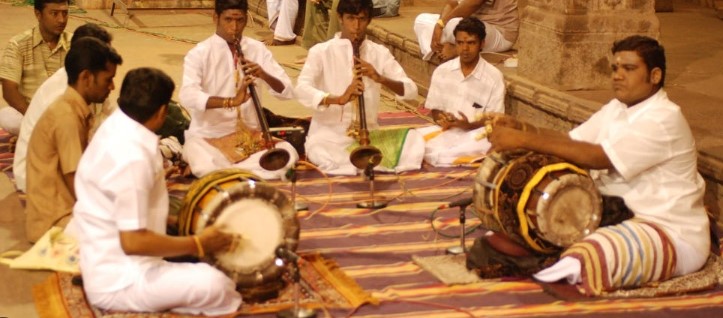
South Indian ritual music transforms a wedding ceremony from a simple gathering into a spiritually resonant event that guests remember for decades. Ahmedabad's growing Tamil, Telugu, Kannada, and Malayalam communities have created strong demand for authentic Carnatic wedding musicians who understand ragas, muhurtham timing, and the precise moments when Nadaswaram and Thavil ensemble music should fill a mandap. Whether your ceremony is held at a community hall in Satellite, a banquet in Vastrapur, or a heritage property near the old city, the right auspicious ceremony soundscape sets the devotional tone that pandit, family elders, and guests all expect. Happiffie connects you with verified, experienced performers across every South Indian music tradition.
Quick Answer
South Indian ritual music refers to the live sacred music performed during Hindu wedding ceremonies following Tamil, Telugu, Kannada, or Malayalam traditions. It typically includes Nadaswaram (a double-reed wind instrument) and Thavil (percussion), Carnatic vocal compositions, and Vedic chanting services. In Ahmedabad, these musicians are booked by South Indian families residing across Satellite, Prahlad Nagar, Bopal, and Thaltej for ceremonies ranging from intimate 50-guest gatherings to large 500-plus-guest weddings.
What Exactly Is South Indian Ritual Music and Why Does It Matter at a Wedding?
South Indian ritual music is the living sonic tradition that accompanies every sacred milestone in a Brahmin or non-Brahmin Hindu wedding following Shaivite, Vaishnavite, or Smartha liturgical frameworks. The music is not background entertainment — it is an active ritual participant. Specific ragas are played at specific moments: Kalyani during the vara-puja welcome, Madhyamavathi at the thali-tying muhurtham, and Shankarabharanam for the concluding blessings. Carnatic wedding musicians trained in these prescriptions know exactly when to modulate, when to hold a note, and when to stop, because silence too is part of the ritual architecture. Families planning weddings in Ahmedabad who are unfamiliar with local music vendors often underestimate how much the wrong ensemble — or worse, a recorded playlist — can disrupt the emotional and spiritual flow of the ceremony. Live South Indian ritual music communicates cultural authenticity to guests and earns immediate approval from elder relatives who have attended dozens of weddings in Chennai, Bengaluru, or Hyderabad. It is not a luxury upgrade; for many families, it is the single non-negotiable element of the entire event.
The Core Instruments and Formats Available in Ahmedabad
The most iconic format for South Indian ritual music is the Nadaswaram and Thavil ensemble. The Nadaswaram is one of the world's loudest acoustic instruments and carries sound across large open mandaps or garden lawns without amplification, making it ideal for outdoor venues like those near Kankaria Lake or along the Sabarmati riverfront. The Thavil drummer provides rhythmic counterpoint and signals ritual transitions through specific tala patterns. A standard ensemble consists of two Nadaswaram players and one or two Thavil players, sometimes joined by an ottu (drone pipe) player. A lighter indoor alternative is a Carnatic vocal duo accompanied by mridangam and violin, preferred for air-conditioned banquet halls in Prahlad Nagar or Sindhu Bhavan Road where amplification is controlled and a more meditative auspicious ceremony soundscape is desired. Vedic chanting services are a third category — trained pandits or chanters who recite Rig Veda, Sama Veda, or Yajur Veda hymns before and during rituals, either alongside instruments or as a standalone sacred audio layer. Some Ahmedabad families now combine all three formats across different rituals: chanting at the pre-dawn naandi, Carnatic vocal during muhurtham, and Nadaswaram at the reception entrance.
How Much Does South Indian Ritual Music Cost in Ahmedabad?
Pricing for South Indian ritual music in Ahmedabad depends on ensemble size, performance duration, travel origin of the musicians, and occasion complexity. A basic Vedic chanting services package for a two-hour ceremony typically starts around INR 8,000 to INR 15,000. A Carnatic vocal trio with mridangam and violin for a three-to-four-hour wedding day runs between INR 18,000 and INR 35,000, depending on the musicians' experience and training lineage. A full Nadaswaram and Thavil ensemble for a five-to-six-hour wedding, including pre-ceremony nadaswaram at the gate, can range from INR 40,000 to INR 90,000. Musicians who travel from Chennai or Bengaluru command a premium for airfare, accommodation, and logistics — a factor that significantly affects your South Indian wedding budget. Ahmedabad-based musicians trained in the tradition are increasingly available and offer competitive rates without travel surcharges. Always confirm whether the quoted fee includes breaks, meal arrangements for the ensemble, and any equipment the musicians bring. Happiffie's transparent vendor listings show per-package pricing so you can compare accurately before booking.
Matching South Indian Ritual Music to Your Venue and Guest Count
Venue acoustics and guest count are the two biggest practical factors in selecting the right South Indian ritual music format. For intimate ceremonies of 50 to 150 guests in closed banquet spaces — popular in localities like Bopal, South Bopal, and Thaltej — a Carnatic vocal ensemble with minimal percussion creates a refined, non-overwhelming soundscape. The Nadaswaram and Thavil ensemble is best suited to open-air or semi-open venues with 200 or more guests, where its natural volume projection fills the space without requiring excessive microphone amplification. For multi-day weddings at farmhouses on the outskirts of Ahmedabad, families often book different formats for each ritual: Vedic chanting services for the early-morning rituals, a vocal ensemble for the main ceremony, and the full Nadaswaram performance for the baraat reception or evening sangeet as a cultural showcase for mixed Gujarati and South Indian guests. Traditional Tamil ceremony music is particularly well received at venues accustomed to hosting community events in areas like Maninagar and Ellisbridge, where South Indian associations sometimes provide hall bookings. Always share your venue dimensions and estimated decibel limits with the ensemble before confirming.
How Should You Book and Brief South Indian Ritual Music Performers?
Booking South Indian ritual music at least three to four months before your wedding date is strongly recommended, especially for peak season from October to February and April to May. The best Carnatic wedding musicians book out quickly as they often perform at multiple weddings in a single weekend. When briefing performers, share a detailed ritual schedule with timestamps, the name of your pandit or purohit, the specific muhurtham time, and any family-specific variations in ritual sequence. Specify whether you follow Iyer, Iyengar, Smartha, or another tradition, as raga selections can vary. Discuss whether the traditional Tamil ceremony music or Telugu, Kannada, or Malayalam repertoire is more appropriate for your family. Confirm technical requirements: power outlets for electronic tanpura drones, seating arrangements within the mandap periphery, and whether the venue management has restrictions on acoustic instrument volume. For multi-community wedding planning in Ahmedabad — where the groom's side may be Tamil and the bride's side Gujarati, for example — brief the musicians on which segments are ritualistic (requiring raga precision) and which are celebratory (where they have more creative latitude). Happiffie allows you to message vendors directly to share all these details before confirming your booking, ensuring there are no surprises on the wedding day.
South Indian Ritual Music Format Comparison for Ahmedabad Weddings
Expert Recommendation
Best for Intimate Home or Hall Ceremonies (50-100 Guests)
Best for Grand Open-Air Weddings (300+ Guests)
Best for Budget-Conscious Families
Best for Multi-Community or Fusion Weddings
Best for Purist Traditional Ceremonies
Best for Destination Weddings Hosted in Ahmedabad
How to Choose the Right Option
✅ Pre-booking Checklist
- Confirm the specific South Indian tradition (Tamil Iyer, Iyengar, Telugu, Kannada, Malayalam) before briefing musicians on raga and ritual sequence.
- Share the muhurtham timing and full ritual order with the ensemble at least two weeks before the wedding.
- Verify venue decibel restrictions and whether Nadaswaram is permitted indoors.
- Confirm whether musicians need power outlets, seating within the mandap, or a separate green room.
- Clarify travel, accommodation, and meal arrangements for outstation musicians in writing.
- Ask for a trial performance or audio sample to verify raga accuracy before booking.
- Book at least three to four months in advance for peak-season October-to-February weddings in Ahmedabad.
- Get a written contract specifying performance hours, breaks, cancellation policy, and total fees.
🎯 Selection Criteria
- Ritual knowledge: Can the musicians name the ragas associated with each ceremony phase and explain why?
- Experience: Have they performed South Indian ritual music at weddings in non-South-Indian cities like Ahmedabad?
- Ensemble completeness: Does the quote include all required players (ottu, thavil, second nadaswaram) or only lead performer?
- Flexibility: Can they adjust to real-time muhurtham changes directed by the pandit?
- References: Can they connect you with a past Ahmedabad or Gujarat client to verify performance quality?
💰 Cost / Quality Factors
- Travel origin of musicians: Local Ahmedabad-based artists cost significantly less than those from Chennai or Bengaluru.
- Performance duration: Longer ceremony days with multiple rituals require more hours and affect pricing proportionally.
- Ensemble size: A five-player ensemble costs more than a duo but creates a fuller and more authoritative sound.
- Season demand: Peak wedding months drive up pricing for all South Indian ritual music formats.
- Reputation and lineage: Musicians trained under recognised vidwans command premium fees justified by ritual precision.
⚠️ Common Mistakes to Avoid
- Booking musicians based on price alone without verifying their knowledge of ritual-specific raga assignments.
- Assuming a North Indian Shehnai player can substitute for a Nadaswaram performer — they cannot replicate the tradition.
- Failing to brief musicians on the pandit's ritual sequence, causing music to play at the wrong ceremony moments.
- Ignoring venue acoustics and booking a loud Nadaswaram ensemble for a low-ceiling banquet hall.
- Leaving music booking to the last month, when experienced Carnatic wedding musicians are already fully booked.
- Not confirming whether the quoted fee is all-inclusive, leading to surprise charges for travel and meals on the day.
People Also Ask
Can I book South Indian ritual music performers in Ahmedabad if they are not local?
What is the difference between Nadaswaram and a Shehnai for a wedding?
How long does a Nadaswaram and Thavil ensemble typically perform at a wedding?
Is Vedic chanting the same as South Indian ritual music?
Do Ahmedabad venues have restrictions that affect South Indian ritual music performances?
What should I budget for South Indian ritual music for a 300-guest wedding in Ahmedabad?
Can South Indian ritual music be incorporated into a fusion or intercultural wedding in Ahmedabad?
How early should I book traditional Tamil ceremony music performers for a peak-season wedding?
Related Experiences on Happiffie
Expert Vedic Priests for Your Sacred Moments
Sacred Sounds for Your South Indian Wedding
Find Top Wedding Entertainment in Vizag
Stress-Free Guest Travel for Your Big Day
Sacred Aarthi Sets for Every Vizag Wedding
Sacred Sounds for Your Delhi Wedding
Frequently Asked Questions
Are there South Indian ritual music performers based in Ahmedabad, or do I need to bring them from Tamil Nadu?
Can South Indian ritual music be performed in a Gujarati-managed wedding venue in Ahmedabad?
What is the typical duration of a South Indian ritual music performance at an Ahmedabad wedding?
Will South Indian ritual music be too loud for my indoor hall wedding in Ahmedabad?
How do I verify that a musician truly knows traditional Tamil ceremony music versus just playing Carnatic film songs?
Can I book South Indian ritual music for events other than weddings in Ahmedabad?
Does Happiffie offer packages that combine Vedic chanting services with instrumental music for Ahmedabad weddings?
Key Takeaways
- South Indian ritual music is a ceremonially essential, not optional, element of Tamil, Telugu, Kannada, and Malayalam weddings, even when held in Ahmedabad.
- The Nadaswaram and Thavil ensemble is the most traditional and acoustically powerful format, best suited to outdoor or large semi-open venues.
- Carnatic wedding musicians should be briefed on the specific regional tradition and raga-by-ritual phase requirements, not just given a general time slot.
- Vedic chanting services function as a standalone or complementary layer to instrumental music, covering different ritual moments.
- Ahmedabad-based South Indian music performers are increasingly available and represent better value than flying in outstation artists.
- Budget for South Indian ritual music ranges from INR 8,000 for basic chanting to INR 90,000 or more for a full-day premium ensemble.
- Book at least three to four months in advance during October-February and April-May muhurtham seasons to secure experienced performers.
- Happiffie simplifies the search, comparison, and direct communication with verified South Indian ritual music vendors across Ahmedabad.
Find Verified South Indian Ritual Music Performers in Ahmedabad
Browse Happiffie's curated list of Carnatic musicians, Nadaswaram ensembles, and Vedic chanters — compare pricing, check availability, and book with confidence for your upcoming ceremony.
Explore Music Vendors
Are you a Vendor? Grow Your Business with Happiffie!
- High intent verified leads
- Reverse auction opportunities
- AI business tools & insights
- Dedicated vendor dashboard
- Grow your business, your way
It's free & takes less than 2 minutes!