
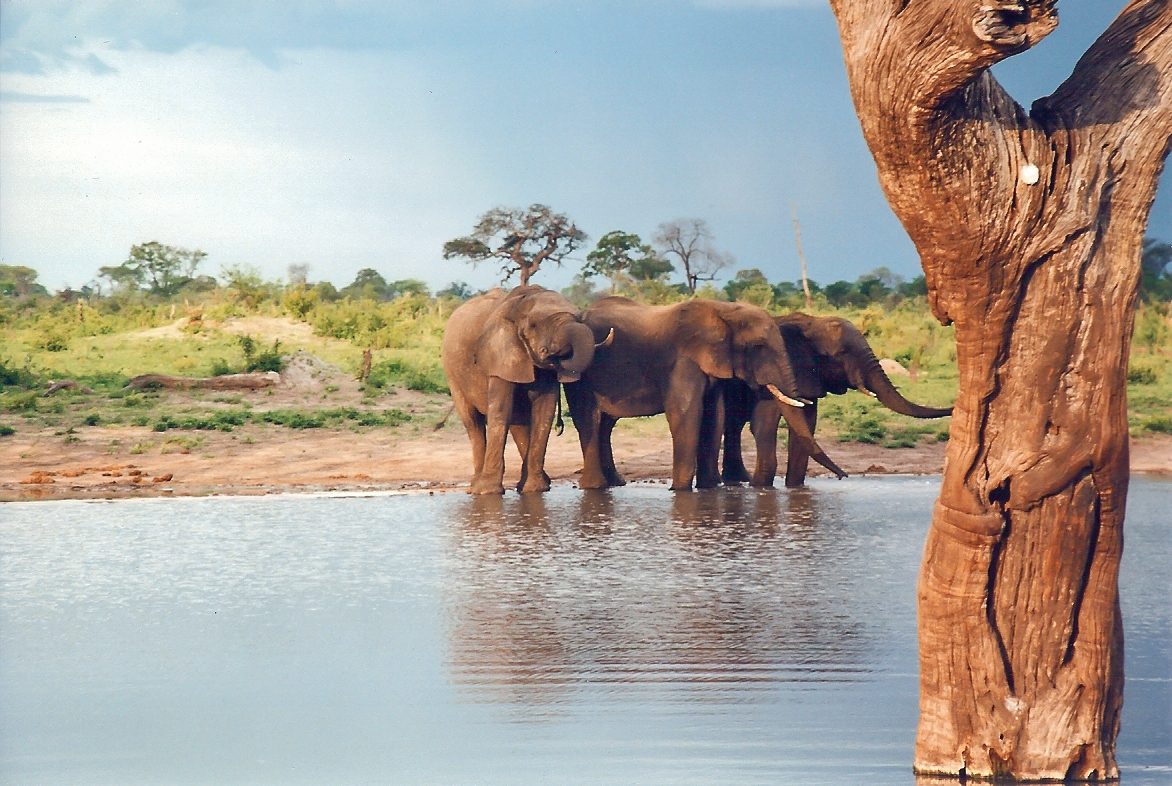
Why Hwange National Park is Perfect for Your Celebration
- Home to one of Africa's largest elephant populations — a living, breathing backdrop no ballroom can replicate
- Luxury tented camps and lodges offer intimate, fully-catered event packages in the heart of the bush
- Dry season (May–Oct) delivers reliably clear skies, cool evenings, and peak wildlife activity ideal for outdoor ceremonies
- Exclusive-use lodge buyouts allow entire properties to be reserved for a single wedding or corporate group
- Stargazing in one of Africa's darkest skies creates unforgettable evening experiences for guests
- Authentic safari activities — game drives, bush walks, sundowners — serve as natural guest entertainment across multi-day events

Compare Hwange National Park with Other Top Destinations
Frequently Asked Questions
Is Hwange National Park a good destination for a destination wedding?
Yes, particularly for intimate ceremonies of 10 to 40 guests. Hwange's luxury tented camps offer exclusive-use buyouts, allowing a single group to take over an entire property for a fully private bush wedding. The combination of wildlife, open skies, and attentive lodge hospitality creates a genuinely distinctive experience, though the remote location and limited capacity mean it suits small, well-organised groups rather than large traditional weddings.
What is the best time of year to hold an event in Hwange National Park?
The dry season — May through October — is the only practical window for events. Clear skies, firm tracks, and concentrated wildlife at waterholes make outdoor ceremonies and bush dinners reliably executable. July and August are peak months for wildlife visibility. The rainy season (November–April) brings heavy rains, impassable tracks, and dense vegetation that make outdoor events largely impractical.
How do guests travel to Hwange National Park for an event?
Most guests fly into Victoria Falls International Airport or Bulawayo's Joshua Mqabuko Nkomo International Airport, then connect via charter or scheduled light aircraft into Hwange National Park Airport or a private concession airstrip. Road transfers from Victoria Falls are possible but take several hours. All in-park movement is managed by lodge vehicles — there is no public transport or self-drive access to most concession areas.
What kinds of venues and event spaces are available in Hwange?
Hwange's event spaces are defined by its safari lodges and tented camps rather than conventional banquet halls. Properties typically offer thatched open-sided lodge areas, elevated decks overlooking waterholes, firepit boma spaces, and outdoor clearings for bush dinners. Most camps are small and intimate by design, with exclusive-use bookings being the standard format for weddings and private celebrations.
How many guests can realistically be accommodated for an event in Hwange?
Most luxury camps accommodate between 8 and 30 guests on an exclusive-use basis. Some larger lodge properties near the park boundary can host up to around 80–100 guests with careful planning. Hwange is genuinely best suited to intimate groups; events requiring significantly more than 50 guests will face real capacity constraints and may need to consider multi-property logistics.
What guest activities are available during a multi-day event in Hwange?
Game drives (morning and evening), guided bush walks, sundowner stops at active waterholes, night drives, and birdwatching are all standard offerings managed directly by lodge teams. These activities serve as natural, high-quality guest entertainment across multi-day events without requiring external vendor coordination — a significant practical advantage for event planners.
Is Hwange National Park suitable for corporate retreats and offsites?
Yes. The remote, distraction-free environment is well-suited to leadership offsites and team retreats where genuine disconnection from urban routine is the goal. Limited mobile connectivity is often treated as a feature by corporate groups. Lodges can typically provide basic meeting facilities, and the shared safari experience naturally fosters team cohesion in a way that conventional conference venues rarely achieve.
Do lodges in Hwange handle event catering and coordination in-house?
Generally yes. The leading camps and lodges are experienced in hosting private celebrations and manage catering, décor, ceremony coordination, and guest programming internally. This integrated model reduces the need for external vendors. For specialist requirements — bespoke floral design, professional photography, or entertainment — vendors typically need to be sourced from Victoria Falls or Bulawayo and transported to the park.
What is mobile and internet connectivity like for guests during an event?
Connectivity is limited. Most camps offer satellite-based Wi-Fi in common areas, but mobile phone signal is absent or very weak across most of the park. Guests should be briefed to expect genuine digital disconnection during their stay. For event planners, all critical communications with vendors and logistics teams should be completed before guests arrive at the park.
Are there any safety considerations for holding an event in Hwange National Park?
Hwange is generally safe within managed lodge and concession areas, where experienced guides accompany all bush activities. Standard safari safety protocols apply — guests do not walk unaccompanied in the bush. The primary consideration for event planners is medical access: the park is remote, and serious medical emergencies require evacuation by air. Ensuring guests have appropriate travel and medical insurance is strongly advisable.

Ready to explore venues in Hwange National Park?
Hwange National Park: Destination Wedding & Wilderness Event Venues in Zimbabwe
◆Hwange National Park is Zimbabwe's largest game reserve and one of southern Africa's premier safari destinations, best suited to small, intimate weddings, exclusive corporate retreats, milestone birthday celebrations, and social gatherings where immersion in raw African wilderness is the primary draw. The dominant vibe is Nature & Wilderness — vast savannah, iconic elephant herds, and luxury tented camps under open skies. The dry season (May through October) is the only practical window for outdoor events, delivering clear skies, accessible tracks, and peak wildlife activity. Accessibility is genuinely limited: most guests arrive via charter flights or multi-leg journeys through Bulawayo or Victoria Falls, making Hwange best suited to smaller, well-organised guest groups rather than large-scale gatherings.
Hwange National Park at a Glance
| Category | Detail |
|---|---|
| Best For | Intimate Wilderness Weddings, Corporate Retreats, Milestone Birthdays, Social Celebrations |
| Primary Vibe | Nature & Wilderness |
| Other Vibes | Exclusive & Remote, Romantic, Adventure |
| Best Season | Dry Season (May, Jun, Jul, Aug, Sep, Oct) |
Why Choose Hwange National Park?
- Unrivalled wildlife backdrop: Hwange supports one of Africa's largest elephant populations alongside lion, leopard, wild dog, and hundreds of bird species — providing a living, ever-changing backdrop that no constructed venue can replicate.
- Exclusive-use lodge buyouts: Most luxury camps in Hwange are small by design (typically 8–16 tents), making full-property buyouts genuinely practical and affordable for intimate groups, ensuring complete privacy for a wedding or retreat.
- Luxury in the wild: Several camps in the park and its private concessions deliver genuine five-star hospitality — gourmet bush dinners, plunge pools, and attentive guiding teams — without sacrificing the authentic wilderness experience.
- Exceptional stargazing and atmosphere: Hwange sits far from any major urban light pollution, producing some of the darkest skies in southern Africa — a genuinely memorable feature for evening ceremonies and dinners.
- Built-in guest programming: Morning and evening game drives, guided bush walks, sundowner stops at waterholes, and night drives provide natural, high-quality entertainment across multi-day events without any additional vendor coordination.
- Dry-season reliability: The May–October window delivers consistently clear weather, firm tracks, and concentrated wildlife at waterholes — conditions that make outdoor ceremonies and bush dinners reliably executable rather than weather-dependent gambles.
Which Celebrations Work Best in Hwange National Park?
- Intimate Destination Weddings: Hwange is particularly well-suited to couples seeking a small, deeply personal ceremony — typically 10 to 40 guests — where the setting itself is the statement. Exclusive-use camps allow the entire property to be transformed for a wedding party, with ceremonies at waterholes, bush dinners under the stars, and game drives woven into the celebration programme.
- Corporate Retreats & Leadership Offsites: The remoteness and natural grandeur of Hwange create a powerful environment for leadership teams seeking genuine disconnection from urban routine. The absence of reliable mobile connectivity is, for many corporate groups, a feature rather than a drawback — encouraging focused discussion and team bonding.
- Milestone Birthday Celebrations: A significant birthday — a 40th, 50th, or 60th — celebrated on a private game drive or at a candlelit bush dinner carries a weight of experience that a conventional hotel event rarely matches. Small, curated groups thrive in this setting.
- Social Gatherings & Anniversary Trips: Close-knit groups of friends or family celebrating anniversaries, reunions, or special occasions find Hwange's intimate camp format ideal — shared game drives and communal bush meals naturally foster the kind of togetherness that larger, more anonymous venues cannot.
Venues & Event Spaces
The event infrastructure in Hwange National Park is defined almost entirely by its safari lodges and tented camps rather than by conventional banquet halls or purpose-built event centres. Properties typically offer a central lodge area — a thatched open-sided lounge, dining room, and deck overlooking a waterhole or floodplain — which can be configured for ceremonies, dinners, and receptions. Outdoor spaces include elevated viewing decks, firepit boma areas, and open lawns or cleared bush clearings suitable for marquee-style setups during the dry season.
Most camps are deliberately small, with accommodation for between 8 and 30 guests, making them naturally suited to intimate events rather than large-scale gatherings. The exclusive-use model — where a single group books the entire property — is the standard approach for weddings and private celebrations, ensuring both privacy and a fully personalised service. Some larger lodge properties near the park boundary offer slightly greater capacity and more conventional event facilities, including covered dining areas and small conference rooms suitable for corporate groups.
Outdoor bush dinners — set up in a clearing, at a dry riverbed, or beside an active waterhole — are a signature event format in Hwange and represent one of the most distinctive celebration experiences the destination offers. These require careful coordination with camp management and are typically only feasible during the dry season when ground conditions and wildlife movement patterns are predictable.
Best Time to Celebrate
The dry season, running from May through October, is the only genuinely practical window for events in Hwange National Park, and within that window, different months offer slightly different characters:
- May and June bring cooler temperatures — particularly at night, when temperatures can drop sharply — and excellent wildlife visibility as vegetation thins and animals concentrate around permanent water sources. These months suit couples who prefer mild daytime conditions and dramatic, cool evenings.
- July and August represent the peak of the dry season: vegetation is at its most sparse, wildlife sightings are at their most reliable, and the days are warm and clear. These are the most popular months for safari events and tend to see the highest demand for exclusive-use bookings.
- September and October are hotter — October in particular can see daytime temperatures exceeding 35°C — but wildlife activity intensifies dramatically as water sources diminish further, making game drives exceptionally productive. Evening events remain comfortable, and the heat adds an authentic, elemental quality to the experience.
The rainy season (November through April) makes events in Hwange largely impractical. Heavy rainfall renders many bush tracks impassable, outdoor ceremonies and dinners become unreliable, and dense green vegetation significantly reduces wildlife visibility. Some camps close entirely during the wettest months. While the landscape is lush and photogenic in the rains, the logistical challenges for event planning are substantial and generally not worth the trade-off.
Getting There & Local Connectivity
Hwange National Park is genuinely remote, and reaching it requires deliberate planning. The most common approach for international guests is to fly into Victoria Falls International Airport (approximately 100 km north of the park) or Joshua Mqabuko Nkomo International Airport in Bulawayo (approximately 250 km to the south), then connect to the park via a scheduled or charter light aircraft service into Hwange National Park Airport (WKI) or one of the private airstrips within the park concessions. Charter flights are the preferred option for event groups, as they allow flexible scheduling and can land directly at or near the lodge being used.
Road access from Victoria Falls or Bulawayo is possible but involves several hours of driving on roads of variable quality — manageable for small groups with appropriate vehicles, but less practical for larger guest contingents. The Dete railway station on the Bulawayo–Victoria Falls line provides a nominal rail connection, though train services in Zimbabwe are infrequent and not a reliable option for time-sensitive event travel.
Within the park, movement between camps and event locations is managed entirely by lodge vehicles and guides. There is no public transport, no ride-hailing infrastructure, and no self-drive access to most private concession areas. For event planners, this means all guest logistics — airport transfers, inter-camp movement, game drive scheduling — must be coordinated directly with the lodge or through a specialist safari event operator. Mobile phone connectivity is limited to satellite or lodge-provided Wi-Fi at most properties; guests should be briefed to expect genuine digital disconnection.
Local Vendor & Hospitality Ecosystem
Hwange's hospitality ecosystem is small but genuinely specialised. The leading camps and lodges have extensive experience hosting private celebrations and can typically manage the full event experience in-house — catering, décor, ceremony coordination, and guest programming — without requiring external vendors. This integrated model is one of the destination's strengths: a single lodge team handles everything from bush dinner setup to game drive scheduling, reducing the coordination complexity that multi-vendor urban events involve.
For elements beyond the lodge's own capabilities — specialist floral design, photography, entertainment, or bespoke décor — vendors typically need to be sourced from Bulawayo, Victoria Falls, or Harare and transported to the park. This adds logistical complexity and lead time, and event planners should factor in accommodation and transport for any external vendors as part of the overall event plan. The Victoria Falls event vendor community, in particular, has grown significantly in recent years and includes photographers, florists, and event stylists with genuine safari event experience.
Catering at Hwange's better lodges is of a high standard, with kitchens accustomed to producing multi-course meals in remote bush settings — including open-fire cooking, bush braais, and formal candlelit dinners. Dietary requirements are generally well-accommodated with advance notice. The overall hospitality culture in Zimbabwe is warm and genuinely guest-focused, and Hwange's lodge teams in particular tend to be highly motivated to make private celebrations exceptional.
Pros & Things to Consider
Why Hwange National Park Works Well
- Genuinely unique, once-in-a-lifetime setting that no urban or resort destination can replicate
- Small camp sizes make exclusive-use buyouts practical and private for intimate groups
- Integrated lodge hospitality reduces multi-vendor coordination complexity
- Dry season delivers reliable, photogenic conditions for outdoor ceremonies and events
- Built-in guest programming (game drives, bush walks, sundowners) eliminates the need for external entertainment vendors
- Exceptional stargazing and natural atmosphere create memorable evening event experiences
- Warm, attentive Zimbabwean hospitality culture consistently receives strong praise from event groups
Things to Consider
- Limited scale: Most camps accommodate 10–30 guests; events requiring 100 or more guests are not well-served by the existing lodge inventory without significant logistical complexity.
- Multi-leg travel for guests: International guests typically require at least two flights plus a transfer to reach the park, which adds cost, time, and potential for disruption — particularly for older or less mobile guests.
- External vendor logistics: Specialist vendors (photographers, florists, entertainment) must often be brought in from distant cities, adding coordination complexity and cost.
- Strict seasonality: The usable event window is genuinely limited to six months; any flexibility to shift dates outside May–October is very limited without accepting significant logistical and weather risk.
- Digital disconnection: Limited mobile and internet connectivity is authentic to the experience but requires guests and planners to adapt their communication expectations during the event period.
- Wildlife unpredictability: While wildlife is a draw, it also means certain outdoor setups require flexibility — a herd of elephants at a waterhole is magical, but it may also require adjusting a ceremony timeline.
When Hwange National Park May Not Be the Right Fit
- Large guest lists (100+): The park's lodge inventory is built around intimate groups; couples or planners expecting to host a large wedding with extensive guest accommodation on-site will find the available capacity genuinely insufficient without complex multi-property logistics.
- Guests with significant mobility or health limitations: Bush terrain, game vehicle access, and the remote location make Hwange challenging for guests with limited mobility, and medical facilities are not readily accessible in an emergency.
- Events planned for the rainy season (November–April): If dates cannot be moved to the dry season, the logistical and weather challenges of the rainy season make Hwange a poor choice for outdoor-focused celebrations.
- Groups prioritising urban amenities or nightlife: Hwange offers no restaurants, bars, or entertainment outside the lodge environment — guests seeking a destination with city-side activities alongside their event will find the park's remoteness limiting rather than liberating.