
Why Hoi An is Perfect for Your Celebration
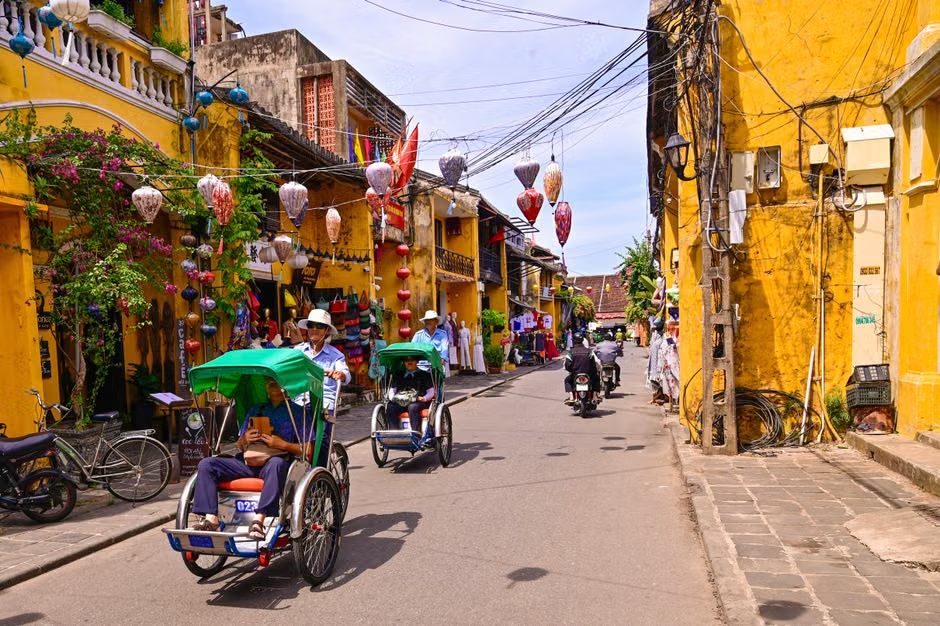
- UNESCO World Heritage ancient town provides an unmatched, photogenic backdrop for ceremonies and portraits
- Lantern-lit riverside evenings create a naturally romantic and atmospheric setting for celebrations
- Growing inventory of boutique heritage resorts and luxury beach properties within easy reach
- Rich local artisan culture — silk, lanterns, bespoke tailoring — adds unique personalisation to events
- Dry season (Feb – Aug) offers reliably clear weather for outdoor ceremonies and garden receptions
- Intimate town scale suits smaller, curated guest groups seeking an exclusive, immersive experience
Compare Hoi An with Other Top Destinations
Frequently Asked Questions
Is Hoi An a good destination for a wedding?
Yes. Hoi An is particularly well-suited to intimate destination weddings, typically for groups of up to 150–200 guests. The UNESCO-listed ancient town, lantern-lit riverside settings, and range of boutique heritage and beachfront luxury resorts create a genuinely distinctive atmosphere. It works best for couples prioritising cultural character and visual uniqueness over large-scale production capacity.
What is the best time of year to hold an event in Hoi An?
The dry season from February through August is the recommended window. March and April are often the most comfortable months — clear skies, manageable temperatures, and low rainfall. May through August remains suitable but is hotter, so outdoor events should be scheduled for late afternoon or evening. September through November brings typhoon risk and flooding, making it unsuitable for outdoor events.
How do international guests get to Hoi An?
The nearest airport is Đà Nẵng International Airport, which receives direct flights from major Asian hub cities including Singapore, Bangkok, Kuala Lumpur, Seoul, and Tokyo, as well as frequent domestic connections from Hanoi and Ho Chi Minh City. The road transfer from Đà Nẵng Airport to Hoi An takes approximately 45 minutes to one hour, with private transfers and shuttle services readily available.
What size guest group does Hoi An realistically suit for a destination event?
Hoi An is best suited to small-to-medium groups, generally up to around 200–300 guests. Intimate weddings and curated social events in this range are well-supported by the local venue and accommodation inventory. Very large groups exceeding 400 guests may find it challenging to accommodate everyone comfortably within a single property or close cluster of venues.
What kinds of venues are available for events in Hoi An?
Hoi An offers two broad venue zones: boutique heritage and riverside properties within or adjacent to the ancient town, suited to intimate ceremonies and receptions; and larger beachfront luxury resorts along the nearby coastline, offering expansive outdoor lawns, pool terraces, and ballroom spaces. Villa-style properties available for exclusive group buyouts are also an option for smaller, private celebrations.
Can guests stay within the ancient town itself?
Yes, though accommodation within the ancient town core tends to be boutique in scale. A range of heritage hotels and riverside properties are located in and immediately around the old town. For larger groups, accommodation is typically spread across a combination of town-centre properties and the beachfront resort cluster to the east, with resort shuttle services connecting the two areas.
Is local transport easy to arrange for a group in Hoi An?
Generally yes, with advance planning. The ancient town itself is largely pedestrianised, which suits guests exploring on foot. For movement between accommodation, event venues, and the town, private vehicle hire and resort shuttle services are the standard approach. Pre-arranging dedicated group transport is strongly advisable rather than relying on ad-hoc options, particularly for larger groups.
How experienced are local vendors and hospitality teams with destination events?
Hoi An has a mature hospitality ecosystem relative to its size, with a growing destination wedding market. Major resort properties have experienced event teams and English-speaking staff. Local catering is a genuine strength, drawing on Hoi An's celebrated culinary identity. Specialist décor, floral, and entertainment vendors are available, though some niche suppliers may need to be sourced from Đà Nẵng.
What makes Hoi An's setting distinctive compared to a typical resort destination?
Hoi An's UNESCO World Heritage status means the ancient town itself — its lantern-lit streets, centuries-old merchant houses, and riverside character — functions as an immersive event backdrop rather than just a location. The local artisan economy in silk, lanterns, and handcrafted goods also allows for genuinely place-specific event personalisation that is difficult to replicate elsewhere.
Are there any heritage or regulatory considerations for events in the ancient town?
Yes. Hoi An's UNESCO-protected status means that large-scale structural installations, amplified sound, and certain types of décor within the ancient town core may be subject to local heritage regulations. Event planners should work with their venue and local coordinator to understand what is permissible in specific locations, particularly for events that incorporate the town's public spaces or heritage buildings.
Is Hoi An safe for international guests attending a wedding or event?
Yes. Hoi An is generally considered very safe for international visitors. The town has a long-established international tourism presence, and petty crime rates are low relative to many comparable destinations. Standard travel precautions apply, and guests should be aware of road traffic conditions when moving between venues, as motorbike traffic is a feature of Vietnamese roads outside the pedestrianised town core.

Ready to explore venues in Hoi An?
Hoi An: Destination Wedding & Cultural Event Venues in Vietnam
◆Hoi An is a UNESCO World Heritage ancient town on Vietnam's central coast, best suited to intimate weddings, anniversary celebrations, cultural gatherings, and curated social events. Its primary vibe is cultural and timeless — lantern-lit streets, riverside heritage architecture, and a rich artisan tradition define the experience. The dry season running from February through August offers the most reliable conditions for outdoor events. Accessibility is via Đà Nẵng International Airport, roughly 30 km away, making it reachable for international guests with a regional connection. The destination suits small-to-medium guest groups particularly well; very large-scale events may find the local venue inventory limiting.
Hoi An at a Glance
| Attribute | Detail |
|---|---|
| Best For | Intimate Weddings, Anniversary Celebrations, Cultural Events, Social Gatherings |
| Primary Vibe | Cultural & Timeless |
| Other Vibes | Romantic, Boutique, Heritage, Riverside |
| Best Season | Dry Season (Feb, Mar, Apr, May, Jun, Jul, Aug) |
Why Choose Hoi An?
- Unrivalled heritage backdrop: The ancient town's preserved merchant houses, Japanese Covered Bridge, and lantern-strung alleyways provide a visually distinctive setting that purpose-built event venues simply cannot replicate.
- Genuine cultural immersion: Guests experience Vietnamese, Chinese, and Japanese architectural and culinary traditions woven into the fabric of daily life — making the destination itself part of the celebration, not just a backdrop.
- Boutique and luxury resort diversity: From intimate riverside heritage properties within the ancient town to expansive beachfront luxury resorts along Ha My and An Bang beaches, the accommodation and event-space range suits varied group styles.
- Artisan personalisation: Hoi An's thriving silk, lantern-making, and bespoke tailoring culture allows couples and event planners to commission genuinely unique décor, favours, and guest experiences that are specific to this place.
- Reliable dry-season weather: February through August delivers consistently clear skies and low rainfall, giving outdoor ceremonies and garden receptions a high degree of weather confidence across a broad planning window.
- Intimate town scale: Unlike large resort cities, Hoi An's compact geography means guests can walk between the ancient town, riverside dining, and nearby beaches — reducing logistical complexity for smaller groups.
Which Celebrations Work Best in Hoi An?
- Intimate destination weddings: Hoi An is particularly well-suited to smaller weddings — typically under 150 guests — where the emphasis is on atmosphere, cultural richness, and a memorable guest experience rather than sheer scale. The riverside and heritage resort settings lend themselves naturally to ceremony and reception formats that feel personal and curated.
- Anniversary and vow renewal celebrations: The romantic, lantern-lit character of the ancient town makes it an especially fitting choice for milestone anniversaries and vow renewals, where the setting itself carries emotional weight.
- Cultural and heritage-themed events: Groups with an interest in Vietnamese culture, history, or cuisine will find Hoi An's living heritage — cooking classes, lantern festivals, artisan workshops — integrates naturally into multi-day event programmes.
- Social gatherings and group retreats: The town's walkable layout, diverse dining scene, and range of boutique accommodation make it a strong choice for curated group travel experiences, milestone birthday celebrations, and corporate social retreats seeking something beyond a standard hotel conference setting.
- Pre- and post-wedding celebrations: Hoi An's proximity to Đà Nẵng and the broader central Vietnam coast makes it a natural anchor for multi-day wedding programmes, with guests able to extend their stay for beach time, cultural exploration, or day trips.
Venues & Event Spaces
Hoi An's event venue landscape divides broadly into two distinct zones. Within and immediately adjacent to the ancient town, heritage properties and boutique riverside resorts offer intimate indoor and garden settings — typically suited to ceremonies and receptions of up to 150–200 guests — where the surrounding architecture and lantern-lit ambience are integral to the event design. Along the coastline to the east, a cluster of larger beachfront luxury resorts provides expansive outdoor lawns, pool terraces, and dedicated ballroom spaces capable of accommodating larger groups, with the added dimension of beach ceremony options.
General venue types available in and around Hoi An include: riverside heritage boutique hotels with courtyard and garden spaces; large beachfront resort complexes with multiple indoor and outdoor event venues; villa-style properties suited to exclusive buyouts for smaller groups; and open-air garden venues that take advantage of the dry-season climate. The town's UNESCO-protected status means that large-scale structural installations within the ancient town core are subject to local heritage regulations, which event planners should factor into their design brief.
Best Time to Celebrate
The dry season from February through August is the recommended window for events in Hoi An. During this period, rainfall is generally low, humidity is manageable (particularly in the earlier months of February, March, and April), and outdoor ceremonies carry a high degree of weather reliability. March and April are often considered the sweet spot — temperatures are warm but not at their peak, skies are consistently clear, and the ancient town is vibrant without being at maximum tourist density.
May through August brings progressively higher temperatures, with July and August being the hottest months. Outdoor daytime events during this period benefit from careful scheduling — late afternoon and evening ceremonies are strongly preferable to midday formats. The heat is manageable, however, and rainfall remains low, so this stretch is still well within the recommended planning window.
September through November represents the typhoon and heavy rainfall season for central Vietnam. Hoi An is notably flood-prone during this period — the ancient town has historically experienced significant inundation from the Thu Bon River during typhoon events, and outdoor events face a high risk of disruption. This window is genuinely unsuitable for events that depend on outdoor spaces or reliable access to the ancient town.
December and January are cooler and wetter shoulder months. While not as severe as the typhoon season, rainfall is still elevated compared to the dry season, temperatures drop noticeably (particularly in January), and the overall conditions are less reliable for outdoor celebrations. These months are not recommended for events where outdoor elements are central to the programme.
Getting There & Local Connectivity
The primary gateway for Hoi An is Đà Nẵng International Airport, which receives direct international flights from a range of Asian hub cities including Singapore, Bangkok, Kuala Lumpur, Seoul, Tokyo, and Hong Kong, as well as frequent domestic connections from Hanoi and Ho Chi Minh City. The transfer from Đà Nẵng Airport to Hoi An takes approximately 45 minutes to one hour by road, and private transfers, taxis, and shuttle services are all readily available — making the journey straightforward for arriving guests.
Đà Nẵng Railway Station also connects the region to Vietnam's national rail network, with services running along the coastal line between Hanoi and Ho Chi Minh City. For guests travelling domestically by train, this provides a scenic and practical alternative to flying, though the onward road transfer to Hoi An still applies.
Within Hoi An itself, the ancient town core is largely pedestrianised, which is part of its charm but also means that vehicle access for large groups requires coordination. For guests staying at beachfront resorts outside the town, resort shuttle services and private vehicle hire are the standard means of moving between accommodation, the ancient town, and event venues. For a group of any meaningful size, pre-arranging dedicated transport is advisable rather than relying on ad-hoc options.
Local Vendor & Hospitality Ecosystem
Hoi An has developed a mature hospitality ecosystem relative to its size, driven by decades of international tourism and a growing destination wedding market. English-language proficiency among hotel and resort staff is generally good, particularly at the larger luxury properties, and international event planners will typically find local counterparts who are experienced in working with overseas clients and their specific requirements.
The local catering scene is a genuine strength — Vietnamese cuisine is among the most celebrated in Southeast Asia, and Hoi An in particular has a strong culinary identity (the town is associated with specific regional dishes that carry genuine cultural significance). Catering teams at the major resorts are experienced in producing both Vietnamese and international menus for event groups.
For décor and styling, the local artisan economy — particularly in silk, lanterns, and handcrafted goods — provides a distinctive resource that event planners can draw on to create genuinely place-specific aesthetics. Bespoke lantern installations, silk table runners, and locally crafted favours are all practically achievable here in a way that would require importation elsewhere.
Photography and videography vendors with international wedding experience are available, though for very specific stylistic requirements, some couples choose to bring their primary photographer from their home country and supplement with local assistants. Floral design, music, and entertainment vendors are present and experienced, though the range is naturally narrower than in a major metropolitan event market.
Pros & Things to Consider
Why Hoi An Works Well
- UNESCO heritage setting provides a genuinely unique and photogenic backdrop unavailable in most destinations
- Strong dry-season weather window (February–August) gives planners a broad, reliable scheduling range
- Diverse venue types — from intimate riverside heritage properties to expansive beachfront luxury resorts — suit different group sizes and event styles
- Rich local artisan culture enables distinctive, place-specific event personalisation
- Mature hospitality ecosystem with English-speaking staff and international event experience at major properties
- Compact, walkable ancient town creates a naturally immersive multi-day guest experience beyond the event itself
- Strong culinary identity adds genuine character to catering and dining elements of the programme
Things to Consider
- Venue capacity is generally better suited to smaller, intimate groups — very large guest lists (300+) may find the local inventory limiting compared to major resort cities
- International guests require a connecting flight via Đà Nẵng or another Vietnamese hub; there are no long-haul direct services into the destination itself
- Heritage protection regulations within the ancient town core may restrict certain types of large-scale décor installations or amplified sound in some areas
- The typhoon and flood season (September–November) is a genuine operational risk — events planned in or near the ancient town during this window face real disruption potential
- Peak dry-season months (July–August) can be very hot, requiring careful scheduling of outdoor daytime elements
- The vendor ecosystem, while mature for the destination's scale, is narrower than in a major city — some specialist suppliers may need to be sourced from Đà Nẵng or further afield
When Hoi An May Not Be the Right Fit
- Very large guest lists: Groups significantly exceeding 300–400 guests may find that the combined venue and accommodation inventory in and around Hoi An cannot comfortably absorb the full group without dispersing guests across a wide area, which adds logistical complexity.
- Events planned for September through November: The typhoon season and associated flood risk in the ancient town make this window genuinely unsuitable for events where outdoor spaces, riverside settings, or access to the heritage core are central to the programme.
- Guests with very limited international travel experience or complex visa situations: Vietnam's entry requirements and the multi-leg journey for guests from some regions may add friction for groups where a significant proportion of attendees are less experienced international travellers.
- Events requiring very large-scale production infrastructure: Hoi An's heritage character and relatively intimate scale mean it is not the natural choice for events requiring stadium-scale staging, very large outdoor concert formats, or extensive temporary infrastructure that would be difficult to install within or near the protected town area.