
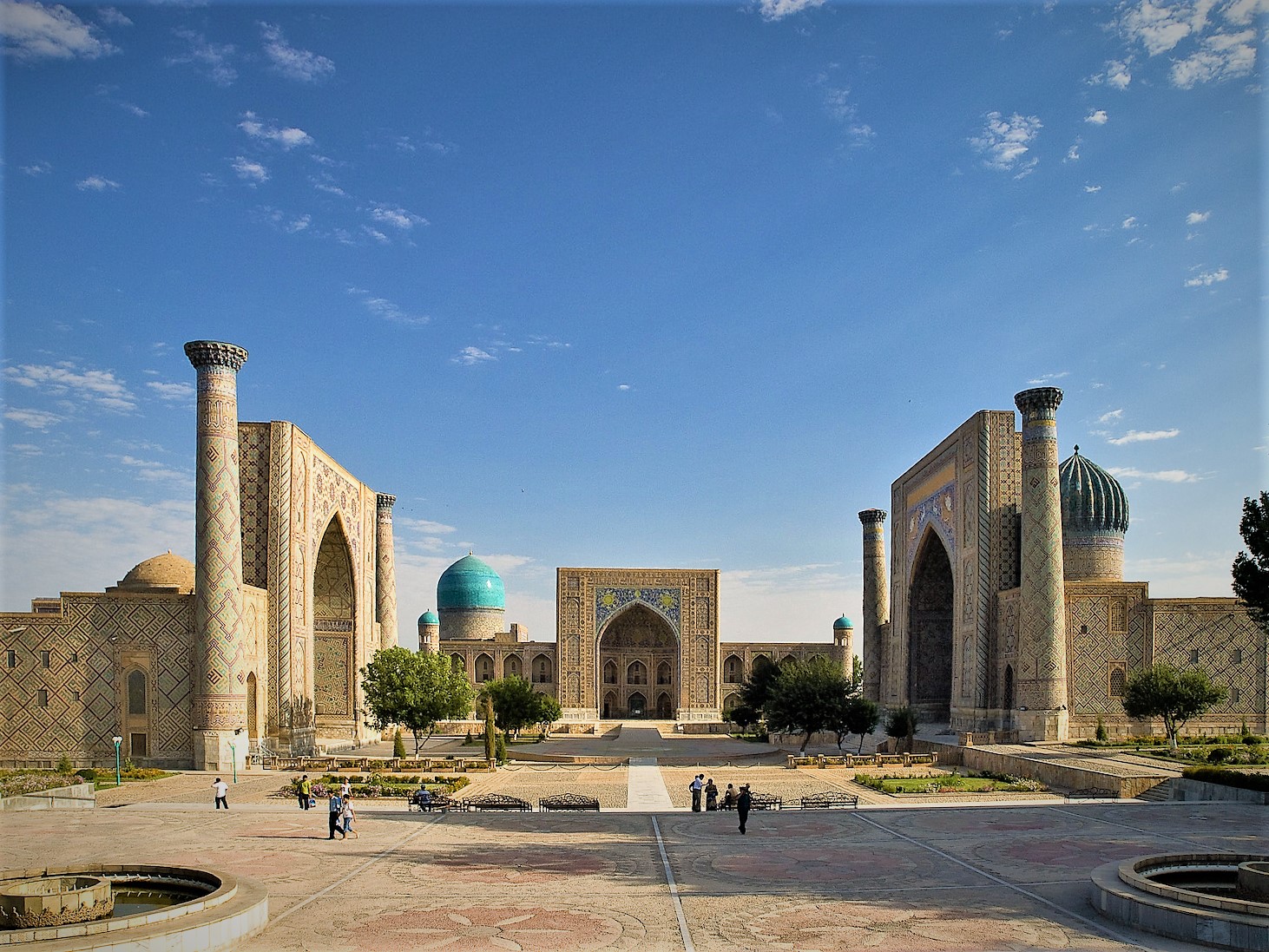
Why Samarkand is Perfect for Your Celebration
- UNESCO-listed Registan Square and Timurid monuments provide an unmatched ceremonial backdrop
- Deep-rooted Uzbek tradition of lavish, multi-day celebratory feasting suits large wedding formats
- Spring and early autumn offer reliably mild, photogenic weather with clear blue skies
- High-speed rail link to Tashkent makes the city accessible for guests arriving via the capital
- Growing luxury and boutique hotel inventory within the historic city core
- Authentic local cuisine, music, and craft traditions enrich the guest experience organically

Compare Samarkand with Other Top Destinations
Frequently Asked Questions
Is Samarkand a good destination for a wedding celebration?
Yes, particularly for couples seeking a culturally rich and visually extraordinary setting. Samarkand's UNESCO-listed Timurid monuments, deep Uzbek tradition of lavish communal celebration, and growing luxury hospitality infrastructure make it genuinely well-suited to destination weddings — especially intimate to mid-sized ceremonies where the historic setting can be fully appreciated. It is a stronger fit for couples who value cultural authenticity over resort-style convenience.
What guest group sizes can Samarkand realistically accommodate for an event?
Samarkand can comfortably accommodate events ranging from intimate gatherings of 30–50 guests up to larger celebrations of 300–500 guests, particularly when using the city's dedicated banquet complexes alongside hotel venues. Very large events requiring 500+ guests in a single contiguous venue may find the local inventory more stretched, and accommodation for very large groups may need to be distributed across multiple properties.
What is the nearest airport to Samarkand, and how do international guests typically get there?
Samarkand has its own international airport (SKD), located just a few kilometres from the city centre, with connections to regional hubs including Tashkent, Istanbul, Dubai, and Moscow. Most international guests — particularly from South Asia, Europe, or the Gulf — will connect via Tashkent or Istanbul. Guests arriving at Tashkent can also take the high-speed Afrosiyob train to Samarkand in approximately two hours.
What is the best time of year to plan a celebration in Samarkand?
Spring (March, April, May) and early autumn (September, October) are the best windows. Temperatures are mild — typically 12°C–28°C — skies are clear, and outdoor spaces are fully usable. April, May, and September are generally the most reliable months. Summer (June–August) brings extreme heat exceeding 35°C, making outdoor events uncomfortable, while winter (November–February) is cold and limits outdoor programming significantly.
What kinds of event venues are available in Samarkand?
Samarkand offers a range of venue types: luxury and upper-midscale hotels with banquet halls, courtyard gardens, and rooftop terraces in the historic centre; large purpose-built banquet complexes experienced at hosting Uzbek-style weddings at scale; and smaller boutique heritage guesthouses with private courtyard settings suited to intimate ceremonies. Outdoor lawns and terraces are particularly attractive during the spring and autumn seasons.
Do guests need a visa to travel to Uzbekistan for an event in Samarkand?
Many nationalities can obtain an Uzbekistan e-visa online, which has simplified access significantly in recent years. However, visa requirements vary by passport, and some nationalities may face additional steps. Event planners should advise guests to check their specific visa situation well in advance — typically 6–8 weeks before travel — to allow sufficient processing time and avoid last-minute complications.
How easy is it for guests to get around Samarkand once they arrive?
Samarkand's historic core is relatively compact, and most hotels, monuments, and event venues are within a short drive of one another. Private transfers and taxis are readily available. For large guest groups, coordinated minibus or coach transfers are the standard approach and can be arranged through local operators. The city's layout makes multi-day event itineraries — moving between ceremony, reception, and cultural excursion venues — logistically manageable.
What does the local catering and hospitality ecosystem offer for events?
Samarkand has a strong local catering tradition rooted in Uzbek wedding culture, which is inherently elaborate and large-scale. Local caterers are experienced at banquet-format feasting — traditional plov, shashlik, and multi-course Uzbek spreads are of a high standard. Established hotels can accommodate international dietary requirements and hybrid menus. For highly specialised international vendor requirements, some specialists may need to be brought in from outside Uzbekistan.
What makes Samarkand culturally distinctive as an event destination?
Samarkand sits at the heart of the ancient Silk Road and was the imperial capital of Timur's empire in the 14th–15th centuries. Its UNESCO-listed monuments — the Registan, Shah-i-Zinda, and Gur-e-Amir — provide a ceremonial grandeur unmatched in Central Asia. Local traditions of silk weaving, hand-painted ceramics, traditional music, and elaborate communal feasting give events an authentic cultural texture that purpose-built resort destinations cannot replicate.
Can cultural experiences be incorporated into a multi-day event programme in Samarkand?
Yes, and this is one of Samarkand's genuine strengths. Monument visits, traditional craft workshops (silk weaving, ceramic painting, embroidery), Uzbek cooking experiences, and traditional music performances can all be woven into a multi-day event itinerary. Local artisans can also provide distinctive handcrafted guest gifts. These experiences add genuine substance to a celebration beyond the event itself and are typically well-received by international guests.
Is Samarkand safe for international guests attending a wedding or event?
Yes, Samarkand is generally considered safe for international visitors. Uzbekistan has invested significantly in tourism infrastructure and security in recent years, and the city is accustomed to receiving international guests. Standard travel precautions apply — as with any international destination — but the city does not present unusual safety concerns for event groups. Most established hotels and event venues have professional security arrangements in place.

Ready to explore venues in Samarkand?
Samarkand: Destination Wedding & Cultural Event Venues on the Silk Road
◆Samarkand is one of the world's most historically significant cities and a genuinely distinctive destination for weddings, cultural celebrations, and milestone social events. Its primary vibe is Cultural & Timeless — anchored by UNESCO-listed Timurid monuments, Silk Road grandeur, and a deep Uzbek tradition of lavish communal celebration. The destination suits intimate destination weddings, cultural ceremonies, heritage-themed social gatherings, and corporate milestone events particularly well. The best season runs through spring (March–May) and early autumn (September–October), when temperatures are mild and the city is at its most photogenic. Accessibility is moderate — Samarkand has its own international airport and a high-speed rail link to Tashkent, though most international guests will require a connecting flight via a hub city.
Samarkand at a Glance
| Attribute | Detail |
|---|---|
| Best For | Destination Weddings, Cultural Ceremonies, Heritage Social Events, Milestone Celebrations |
| Primary Vibe | Cultural & Timeless |
| Other Vibes | Imperial, Romantic, Exotic, Ceremonial |
| Best Season | Spring (Mar, Apr, May, Sep, Oct) |
Why Choose Samarkand?
- Unrivalled monumental backdrop: The Registan ensemble, Shah-i-Zinda necropolis, and Gur-e-Amir mausoleum provide a ceremonial grandeur that is genuinely rare — few cities on earth offer this density of UNESCO-listed architecture as a natural event setting.
- Deep-rooted celebratory culture: Uzbek wedding and feast traditions are among the most elaborate in Central Asia, with local caterers, musicians, and artisans who have spent generations perfecting large-scale communal celebrations — this cultural infrastructure translates naturally to destination events.
- Manageable city scale: Samarkand is compact enough that guests can move between monuments, hotels, and event venues without long transfers, making multi-day itineraries logistically straightforward.
- Growing luxury hospitality: The city has seen meaningful investment in its hotel sector over the past decade, with several well-appointed properties now operating within or immediately adjacent to the historic core.
- High-speed rail connectivity: The Afrosiyob high-speed train connects Samarkand to Tashkent in approximately two hours, giving guests arriving at the capital's larger international hub a comfortable onward journey.
- Authentic sensory richness: Local silk weaving, traditional music (shashmaqam), hand-painted ceramics, and Uzbek cuisine create an immersive guest experience that no generic resort destination can replicate.
Which Celebrations Work Best in Samarkand?
- Destination Weddings: Samarkand's combination of monumental architecture, intimate boutique properties, and a culture that treats weddings as major communal events makes it particularly well-suited to couples seeking a ceremony with genuine historical weight and visual drama. The city's scale supports both intimate gatherings and larger multi-day celebrations.
- Cultural & Heritage Ceremonies: For couples or families who want a celebration rooted in a specific cultural or historical aesthetic — Central Asian, Islamic architectural, or Silk Road-themed — Samarkand offers an authenticity that purpose-built resort destinations simply cannot match.
- Milestone Social Celebrations: Significant anniversaries, family reunions, and milestone birthday gatherings benefit from the city's ability to offer curated cultural experiences — monument visits, traditional craft workshops, Uzbek feast evenings — that give a multi-day event genuine substance beyond the celebration itself.
- Corporate Milestone Events: Companies seeking an internationally distinctive backdrop for leadership retreats, incentive travel, or milestone recognition events will find Samarkand's combination of accessibility (via Tashkent hub) and visual impact genuinely compelling, particularly for groups from South Asia, the Middle East, and Europe.
Venues & Event Spaces
Samarkand's event venue landscape is shaped by its historic urban fabric. The most distinctive spaces are those integrated into or immediately adjacent to the city's monumental core — properties with courtyard gardens, traditional iwan-style architecture, and views of the turquoise domes that define the city's skyline. Luxury and upper-midscale hotels in the historic centre typically offer banquet halls, landscaped outdoor lawns, and rooftop terraces that can be configured for ceremonies, receptions, and multi-course Uzbek feast dinners.
Beyond the hotel inventory, the city has a number of purpose-built event and banquet complexes that cater to large local weddings — these are often vast in scale, capable of hosting several hundred guests, and staffed by experienced local event teams. For couples seeking something more intimate, boutique heritage guesthouses within the old city offer private courtyard settings that suit smaller ceremonies of 30–80 guests particularly well.
Outdoor event spaces — including garden terraces and open-air plazas — are genuinely usable during the spring and early autumn seasons, and the quality of natural light during these months makes them especially attractive for photography-focused celebrations. Indoor banquet facilities are available year-round and are typically well-equipped for sound, lighting, and catering at scale.
Best Time to Celebrate
The curated best season for events in Samarkand is spring (March, April, May) and early autumn (September, October). These windows share several practical advantages:
- March–May: Temperatures typically range from around 12°C to 25°C, with clear skies and the city's gardens and surrounding landscape in bloom. April and May are particularly popular for outdoor ceremonies, as the light is warm and golden without the intensity of summer heat. Occasional spring showers are possible in March, so contingency indoor arrangements are advisable for early-spring events.
- September–October: Arguably the most reliable window. Summer heat has dissipated, temperatures settle into a comfortable 18°C–28°C range, and the city's stone monuments glow particularly warmly in the lower autumn sun. October can begin to cool noticeably toward month's end, so earlier in the month is generally preferable for outdoor-heavy programmes.
- June–August (avoid for outdoor events): Samarkand's continental climate produces genuinely harsh summer heat, with temperatures regularly exceeding 35°C and occasionally reaching 40°C. Outdoor ceremonies and receptions become uncomfortable and logistically challenging; guests travelling from cooler climates may find the conditions difficult. Indoor air-conditioned events are possible but limit the use of the city's most spectacular outdoor settings.
- November–February (avoid for most event formats): Winter in Samarkand is cold, with temperatures frequently dropping below freezing overnight and occasional frost or light snow. While the monuments are beautiful in winter light, the season is poorly suited to outdoor celebrations and significantly limits the guest experience of the city's open-air heritage sites.
Getting There & Local Connectivity
Samarkand is served by its own international airport (SKD), located just a few kilometres from the city centre, which operates direct or one-stop connections to a range of regional hubs including Tashkent, Moscow, Istanbul, Dubai, and several other cities. For most international guests — particularly those travelling from South Asia, Western Europe, or the Gulf — a connection via Tashkent or Istanbul is the most common routing. Tashkent's Islam Karimov International Airport is the primary international gateway for Uzbekistan and offers a broader range of long-haul connections.
The high-speed Afrosiyob train between Tashkent and Samarkand is a genuinely comfortable and efficient option for guests arriving at the capital — the journey takes approximately two hours and deposits passengers at Samarkand's central railway station, which is well-positioned relative to the main hotel and monument areas. A slower conventional rail service also connects Samarkand to Bukhara, making multi-city itineraries straightforward for guests who wish to extend their trip.
Within the city, movement between hotels, monuments, and event venues is generally manageable by private transfer or taxi. The historic core is relatively compact, and most of the key sites and hospitality properties are within a short drive of one another. For large guest groups, coordinated coach or minibus transfers are the standard approach and are readily available through local operators. The city's road infrastructure is adequate for event logistics, though narrow lanes in parts of the old city may require some planning for large vehicle movements.
Local Vendor & Hospitality Ecosystem
Samarkand has a well-established local hospitality and events ecosystem, shaped by centuries of hosting large communal celebrations. Uzbek wedding culture is inherently elaborate — multi-day, multi-course, and involving significant numbers of guests — which means local caterers, musicians, decorators, and event coordinators are genuinely experienced at scale. Traditional Uzbek cuisine (plov, samsa, shashlik, and an extensive range of breads, salads, and sweets) is of a high standard locally and can be presented at banquet scale without difficulty.
For destination events with international guest lists, the more established hotels in the city have experience working with outside event planners and can accommodate requests for hybrid menus, international dietary requirements, and customised décor. That said, the ecosystem for highly specialised international wedding vendors — certain floral styles, specific AV production standards, or niche entertainment formats — is less mature than in major South Asian or European destination wedding markets, and couples with very specific vendor requirements may need to bring some specialists from outside Uzbekistan.
Local artisans — silk weavers, ceramic painters, embroiderers — can be engaged to provide genuinely distinctive guest gifts, décor elements, and interactive experiences that add authentic cultural texture to an event programme. This is one of Samarkand's genuine strengths as a destination: the local craft tradition is living and accessible, not merely decorative.
Pros & Things to Consider
Why Samarkand Works Well
- Genuinely unique visual and cultural setting — no other destination offers this specific combination of Timurid architecture, Silk Road heritage, and Uzbek celebratory tradition
- Compact city layout makes multi-day event logistics manageable for groups
- Strong local catering and hospitality culture, experienced at large-scale celebrations
- High-speed rail link to Tashkent provides a comfortable secondary access route for guests
- Spring and early autumn seasons offer reliably pleasant outdoor conditions
- Rich programme of cultural add-ons (monument visits, craft workshops, traditional music evenings) gives multi-day events genuine substance
Things to Consider
- Most international guests will require at least one connecting flight, which adds travel time and complexity compared to more directly accessible destinations
- Uzbekistan's visa requirements, while simplified in recent years (e-visa available for many nationalities), add an administrative step that some guests may find unfamiliar
- The local vendor ecosystem for highly specialised international wedding production is still developing — couples with very specific requirements may need to import certain vendors
- Summer heat (June–August) effectively rules out outdoor event formats for a significant portion of the year
- English-language communication with local vendors and service providers can require additional coordination, particularly outside the main hotel properties
- The city's luxury hotel inventory, while growing, is more limited in total room count than major South Asian or European destination wedding markets — very large guest groups may need to spread accommodation across multiple properties
When Samarkand May Not Be the Right Fit
- Guests with limited international travel experience or complex visa situations: If a significant portion of the guest list holds passports that face visa complications for Uzbekistan, or if the group is not accustomed to multi-leg international travel, the logistical overhead may outweigh the destination's appeal.
- Very large events requiring 500+ rooms in a single property: Samarkand's current hotel inventory, while growing, does not yet support the kind of single-property mega-event scale that some South Asian resort destinations can accommodate. Groups requiring very large contiguous room blocks may find the local supply stretched.
- Outdoor-heavy celebrations planned for June, July, or August: The summer heat in Samarkand is genuinely severe and makes outdoor ceremonies and receptions uncomfortable. If the event format is heavily dependent on outdoor spaces and the dates are fixed in summer, a different destination would serve the brief better.
- Couples or planners seeking a fully turnkey international wedding production ecosystem: If the event vision requires a dense ecosystem of internationally experienced wedding photographers, specialist florists, high-end AV production companies, and niche entertainment vendors all available locally, Samarkand's current market depth may require significant vendor importation, adding complexity and cost.